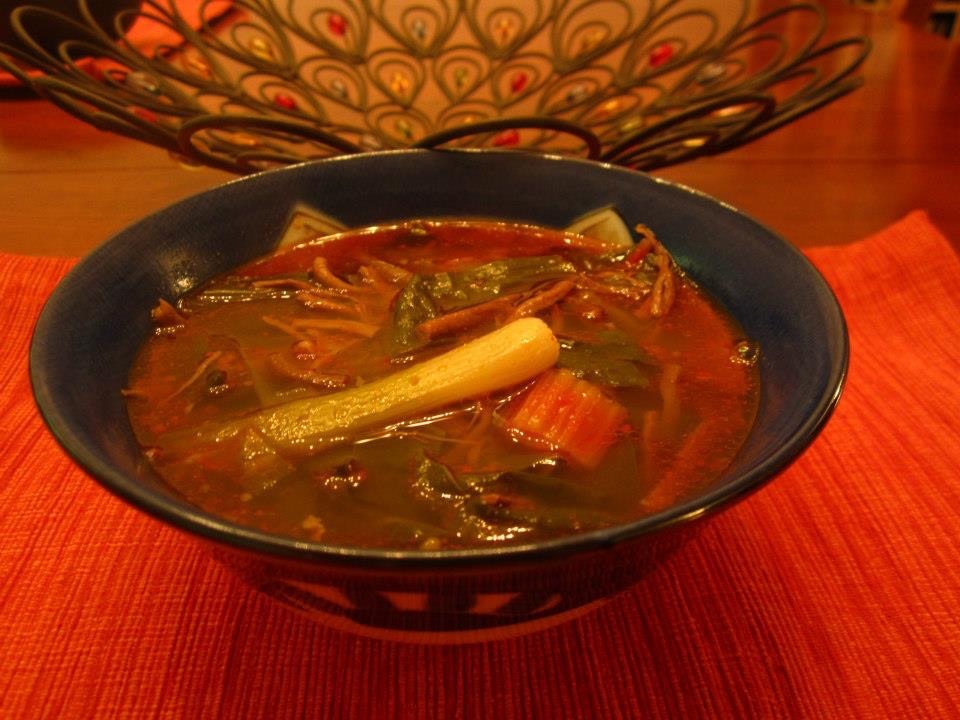
This is one of my favorite winter soups, recipe courtesy of my aunt Haeran. Soak (1) 3 lb bone-in beef shank or short rib bones and (2) 2 to 2 ½ lb beef brisket or chuck (see Note 3 below) in water for 10 minutes, then drain and place beef in a stock pot with lots of water (about 4 quart, i.e. 16 cups) and a four large onions, peeled and halved lengthwise. Bring to a boil, then reduce to medium. Skim off any protein scum as needed (this is most likely to occur with short rib bones than bone shanks). Cover and let cook until meat is fork tender and the shank meat falls off the bone (about 2 hours). Remove meat from bones, discard bones and any fat and shred beef into bite-sized pieces. Mix meat with homemade yangnum sauce (see Note 1 below), then return to pot. If the broth has reduced substantially by this point, add about 4-6 cups water and bring back to a low boil. Add 1 bunch of Swiss chard (cut into 1 inch pieces) and about 12 oz drained fernbrake (gosari), each, cut into bite-sized pieces (see Note 2 below). Bring pot to a boil, then let simmer for 20 minutes. Add 3 bunches of scallions, cut into straws (3-4 straws per stalk), and let cook for another 15 minutes. Separately, in a small sauce pan, heat 1 Tbsp toasted sesame oil and add 1-2 tsp red pepper powder. Stir on low heat until the mixture is fragrant (make sure not to burn it). Add pepper paste directly to the soup pot, and then stir. Season with salt to taste, then serve with short-grain rice. (Feb. 2013)
Note 1: “Yangnyum” refers to a simple mixture of soy sauce, sesame oil, and some seasonings. For 5 lb cooked beef, the yangnyum mixture will be about 3-4 Tbsp soy sauce, 2-3 Tbsp toasted sesame oil, 1-2 Tbsp Korean red pepper flakes (no seeds), and 2 tsp garlic powder. The sauce is according to taste, so that’s why the measurements are approximate. When determining the heat level of the yangnyum, remember that this is not the only time you will add heat to the soup – at the last step, you will add red pepper-infused sesame oil.
Note 2: If you cannot find fernbrake, you can substitute with reconstituted dried shiitake mushrooms. I have used 10-12 small to medium dried shiitakes, soaked in hot water and covered with a lid until the mushrooms are tender. Drain, then cut off the stem and cut the mushroom caps into ½ inch slices. (There is no need to keep the mushroom liquid.) I have found that reconstituted dried shiitakes add more umami than fresh shiitakes. Note 3: We find brisket works best because it does not fall apart or dry out. We cut the slab into 3 chunks (about 3”x2”) before placing in the pot. We leave the fat cap on for making the broth, but once the meat is cooked, we discard the fat cap before shredding the cooked meat. We also have used 4 lb boneless chuck roast (which is less expensive than brisket) and skipped bones entirely, and it has turned out well. We would not recommend beef flank or bottom round; they are too lean to add sufficient flavor to the soup, and the marinated meat is not succulent.
 Cooking Adventures