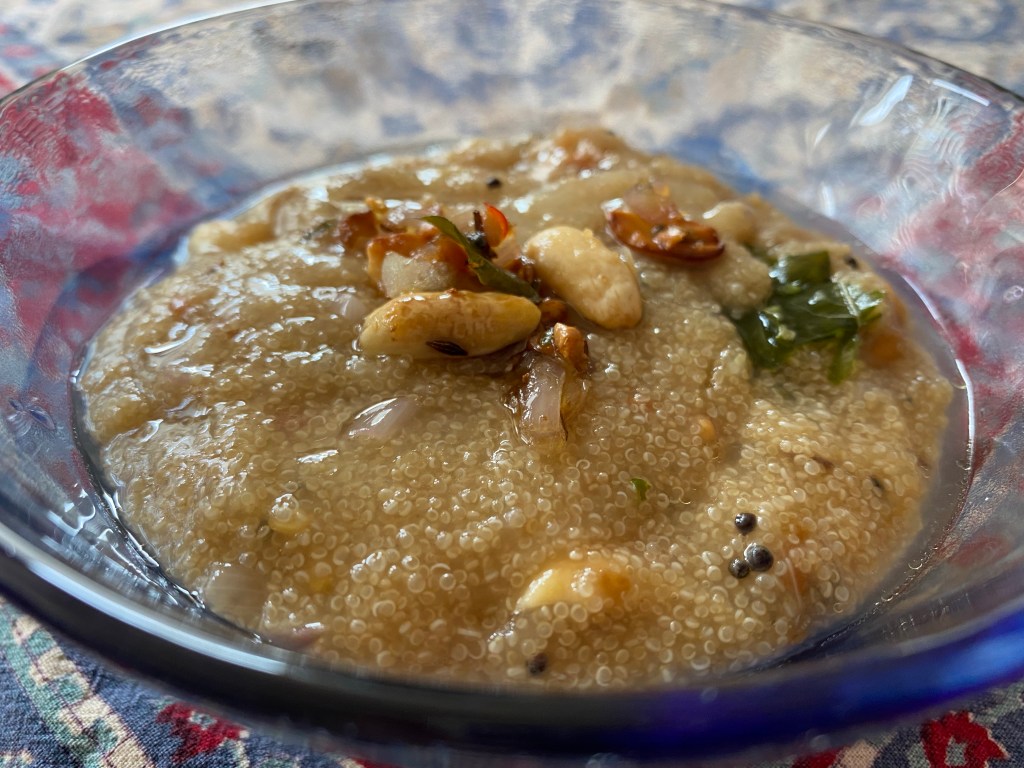
For weekend breakfasts, we routinely make amaranth porridge drizzled with maple syrup. However, one day after cooking the amaranth seeds (but prior to adding any seasonings), I craved a savory breakfast. We figured out how to make upma with the already-cooked amaranth.
First, follow this NYT recipe: https://cooking.nytimes.com/recipes/1014313-amaranth-porridge?smid=ck-recipe-iOS-share, which provides instructions for cooking 1/2 cup amaranth seed in water (we increase the amount to 1.5 cups plus 2 Tbsp water). After simmering for 30 mins, the yield will be about 1 1/2 cups of cooked amaranth. (With the additional 2 Tbsp of water, the consistency will be less viscous and more porridge-like.)
Second, while the amaranth is simmering, follow these instructions for upma aromatics (essentially, everything except for semolina): https://www.indianhealthyrecipes.com/upma-recipe-how-to-make-upma/ Our modifications: first, because my husband prefers sweet amaranth porridge, I typically make only a half-recipe of upma (thus, half the NYT amaranth recipe). Here are proportions: (1) heat 1 Tbsp ghee in a small pan, then add 1/4 tsp each mustard seeds and cumin seeds; (2) 1/2 tsp urad dal and 3/4 tsp split chickpea (chana) dal; 1 Tbsp peanuts (we use unsalted roasted Virginia peanuts, halved) and 4 raw cashews (halved, we use Swad brand); a small pinch of hing (asefoetida); 1 tsp ginger (we microplane frozen ginger root) and 1 Thai bird’s eye chili (finely diced); and 1 small shallot (diced). We often omit curry leaves based on our pantry. We then pour the contents of these hot oily aromatics into the amaranth pot (which contains only half of the NYT recipe), then mix gently. When serving, we added a squeeze of fresh lime juice. This was a simple shortcut recipe that yielded a delicious and satisfying breakfast. (Sept. 2022)
 Cooking Adventures