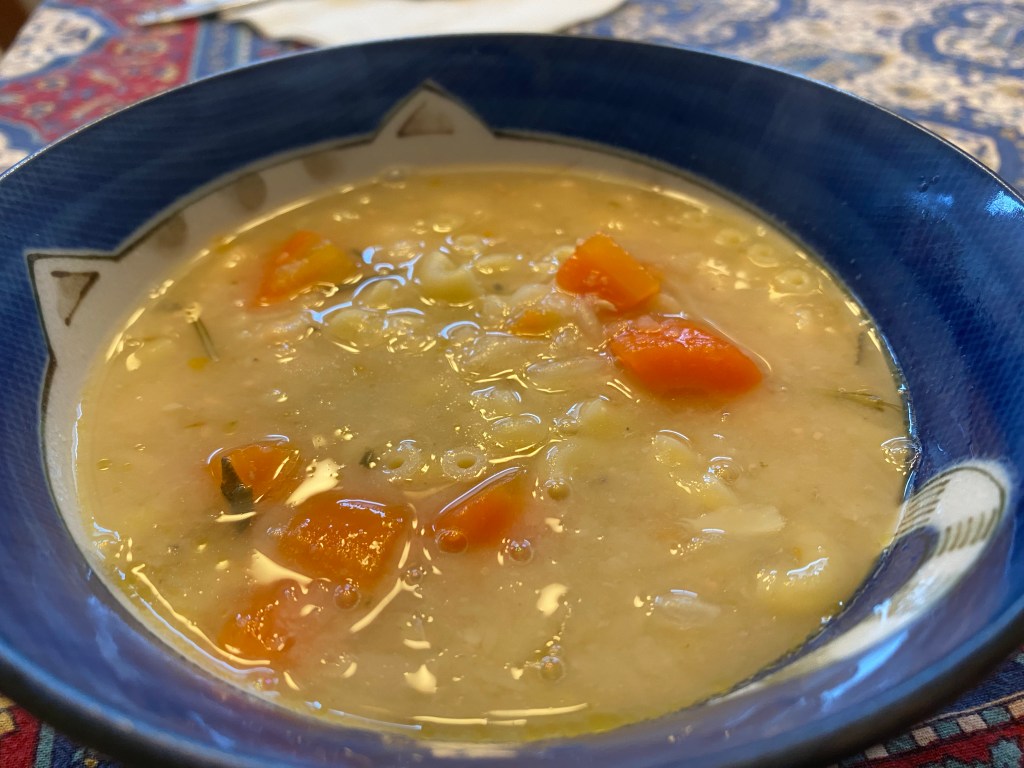
We had the most delicious pasta e fagioli at our favorite local Italian restaurant. But unlike other pasta e fagioli recipes, the restaurant’s version was heavy on the beans (tender, nearly disintegrated, velvety), light brown, and had virtually no other vegetables.
We suspected the soup’s foundation was homemade bean broth (as opposed to stock plus canned beans added later). We searched far and wide and finally found this recipe for a Tuscan version of pasta e fagioli: https://www.seriouseats.com/pasta-e-fagioli-italian-bean-pasta-soup-recipe This recipe was helpful overall, although vague at times (e.g., it called for “salted water” but didn’t specify how much salt).
Our modifications: first, we couldn’t find dried borlotti or cannelini beans, so we used dried navy beans (see Note). For when soaking the beans overnight, we added 2 tsp salt (not 2 Tbsp, as directed in the NYT How to Cook Beans guide) and made sure to cover the dried beans by at least 2 inches of water. We soaked in the fridge overnight.
Second, when cooking the beans, we used a large, high walled Dutch oven. We found that 10 cups of water was the right amount. In addition to a 50:50 ratio of sage and rosemary, we recommend adding a Parmesan rind (omit if vegetarian), 1 tsp salt (to slightly salt the cooking water), and 1/8 tsp baking soda (which aids the beans’ creamy texture).
Third, we made 1/2 lb small elbow macaroni. We cooked it al dente (not less than that) because we had no plans to place any pasta in the soup pot. We tossed the cooked pasta in a light drizzle of olive oil.
Finally, to serve, we added about 3 Tbsp cooked pasta in a soup bowl and then added the bean broth on top. This was not quite as delicious as the restaurant’s version, but the closest we have come so far. It’s a humble, soulful dish. (Feb. 2024)
Note: In the future, we may try dried pinto beans, which we suspect (based on color and texture) is what our local restaurant used for their version of pasta e fagioli.
 Cooking Adventures