-
I cook as a hobby, and I maintain this blog primarily to keep track of recipes that my family has enjoyed over the years. I started blogging back in 2015, in response to requests from friends for recipes they had seen me post on Facebook (but that I couldn’t easily catalog). My original blog was on another platform that became less user-friendly over time. I migrated my blog to WordPress earlier this year, and I’ve spent more time than expected reformatting the migrated posts.
This blog is and always will be a work in progress. For example, I currently provide Tags for posts, but I have not coded for Categories. I also generally try to share the recipes themselves in my posts, but in cases where the recipe is not available online, I try to identify the source (e.g., the cookbook title and author) as needed. In some cases, such as where a family has shared their recipe with me but hasn’t authorized me to share it widely, I post a photo of the dish with that proviso.
I recently added a Search widget to this blog. On the desktop version, the Search bar appears prominently on the left hand side. But for some reason, it is hidden on the mobile app. If you’re on your phone, tap on the SHOW tab at the top left of the home page. That will reveal another screen with the Search bar.
I hope you enjoy exploring my blog and find some recipes to try.
-
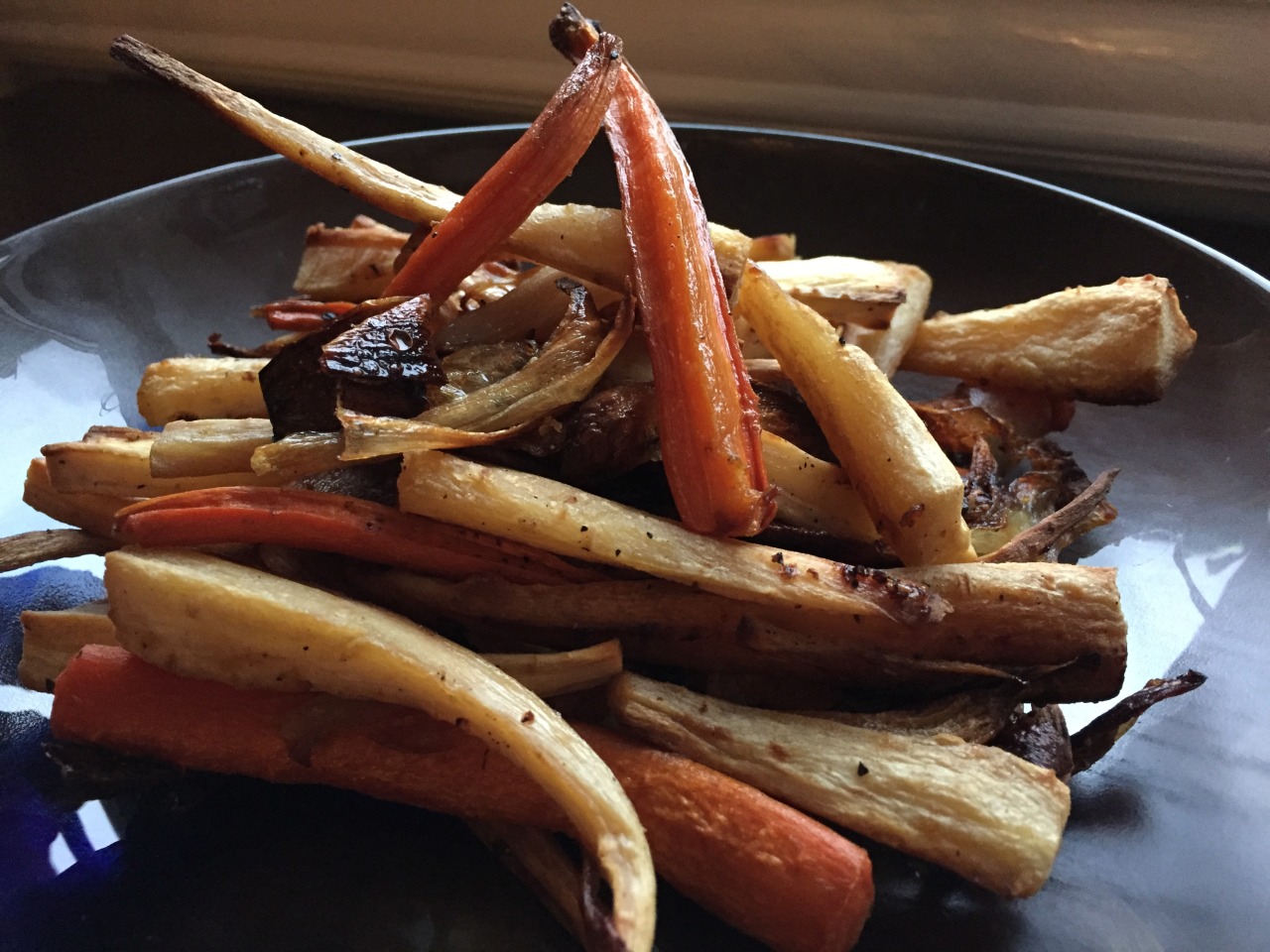
Preheat oven to 350. Peel 1 ½ lbs parsnips (about 9 parsnips) and ½ lb carrots (about 3 carrots) and cut them into vertical pieces (I cut the parsnips into vertical quarters and the carrots into vertical halves to make the root vegetables as uniform as possible, but it depends on the size and shape of yours). Peel and cut about 6 shallots into ½ inch-thick slices. Spray a cookie sheet with olive oil, then add the parsnips, carrots, and shallots, spreading out in a single layer. Drizzle with olive oil and sprinkle with salt and pepper. (I also sprayed additional olive oil for pieces that looked untouched by the olive oil drizzle.) Bake at 350 until browned and crisp (about 1 hour 50 mins), turning over the vegetables midway to ensure both sides brown. We roasted these vegetables one row below, and during the second half of cooking, our roast turkey for Thanksgiving. (Nov. 2015)
-
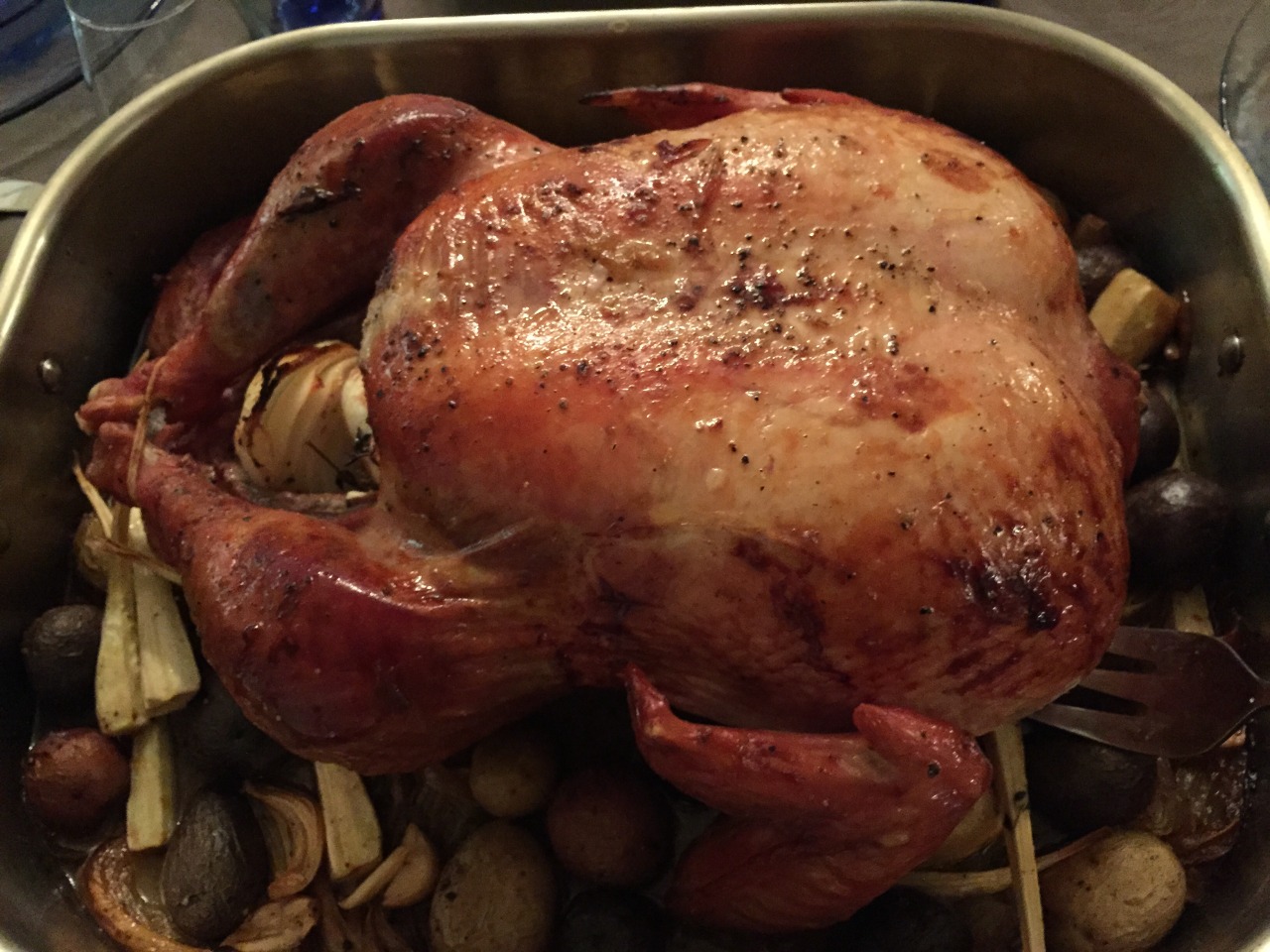
We followed Ina Garten’s Perfect Roast Turkey recipe, the version that included roast vegetables: http://www.foodnetwork.com/recipes/ina-garten/perfect-roast-turkey-recipe2.html. For a 14 lb turkey, we made the following modifications: first, for the first part of cooking, we placed the turkey breast side down to increase the likelihood the breast would not dry out. Also, instead of adding two sliced onions to the pan at the start of roasting, we added half a sliced onion and 6 sliced shallots. Second, after roasting for 1 hour 40 minutes, we carefully turned the bird so it would be breast side up. We coated the breast side (including drums and wings) with another 2 Tbsp melted, unsalted butter. We also added 1 lb tri-colored baby potatoes, peeled cloves from 1 bulb garlic, and about 3 parsnips (peeled and cut into four vertical quarters) lightly seasoned with salt, black pepper, and olive oil, to the pan. At that time, we covered the turkey wing tips with foil. We then cooked the turkey and veggies for an additional 1 hour 50 minutes and then removed the entire pan from the oven (rather than leaving the vegetables in on their own). We placed an aluminum tent over the turkey and let the entire pan (including veggies) rest at room temperature for 20 mins. Note: we used a brined turkey from Whole Foods that came chilled (but not frozen). Around 3 hours prior to cooking, we removed the turkey from the packaging and patted the outside and inside dry with paper towels. We then lined a large plastic tub with paper towels, placed the turkey in the tub, lodged a few paper towels inside the cavity and on top of the turkey to let the skin dry out further. We had read that this would allow the skin to crisp up while roasting, and it did. (Nov. 2015)
-
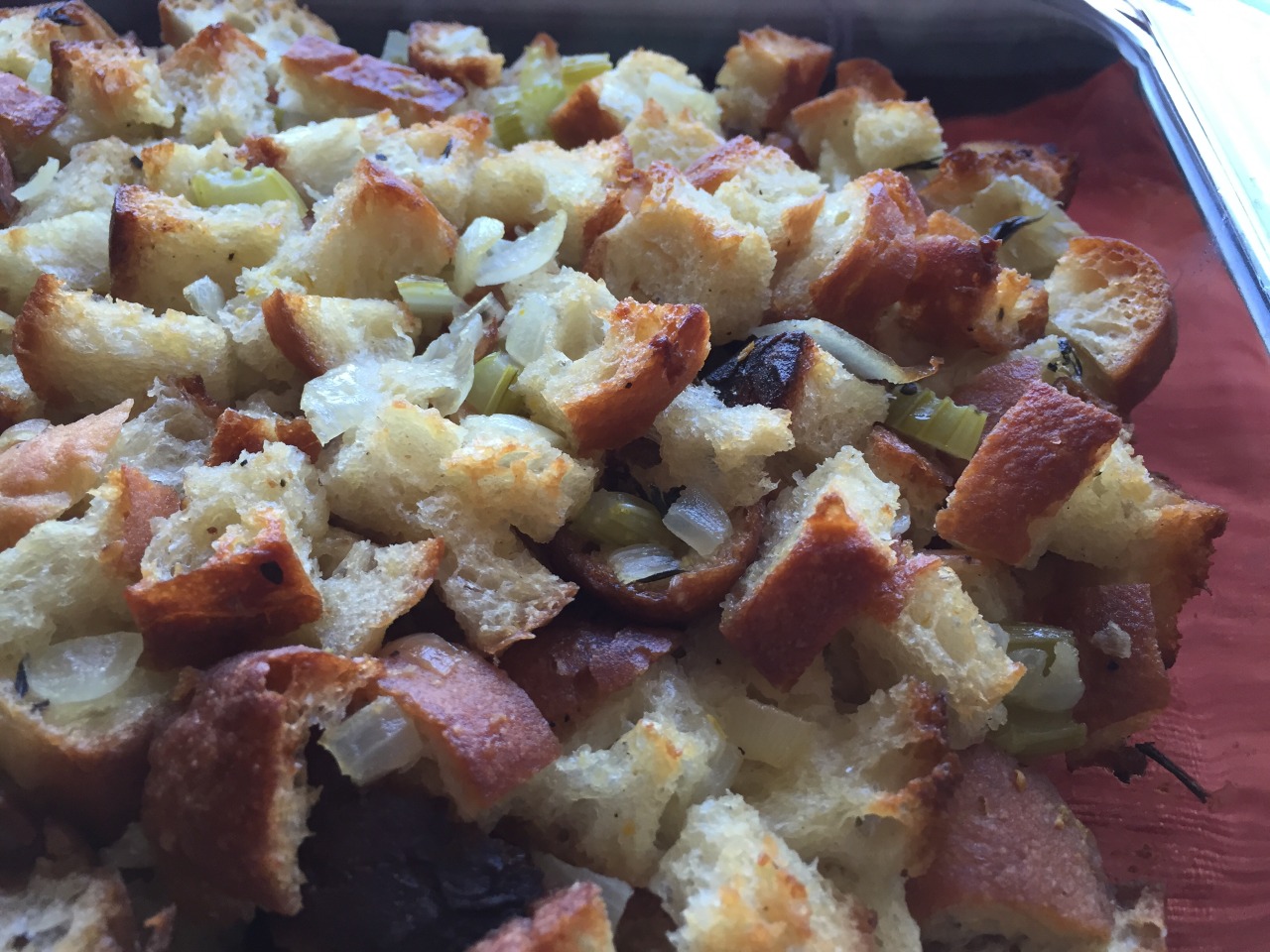
We had this dish at my sister’s sister-in-law’s Thanksgiving in 2012, and it was my favorite dish of that meal. We used 1 ½ loaves ciabatta bread and fresh herbs (thyme, sage, and rosemary) that we had frozen. We baked this in a 9×12 baking dish (rather than stuffing the turkey), so technically we made dressing. Following the recipe, we baked this at 375, adding ¼ cup chicken stock every 15 minutes (for a total cooking time of 45 mins). Recipe here: http://www.boston.com/lifestyle/food/articles/2008/11/24/traditional_bread_stuffing/ (Nov. 2015)
-
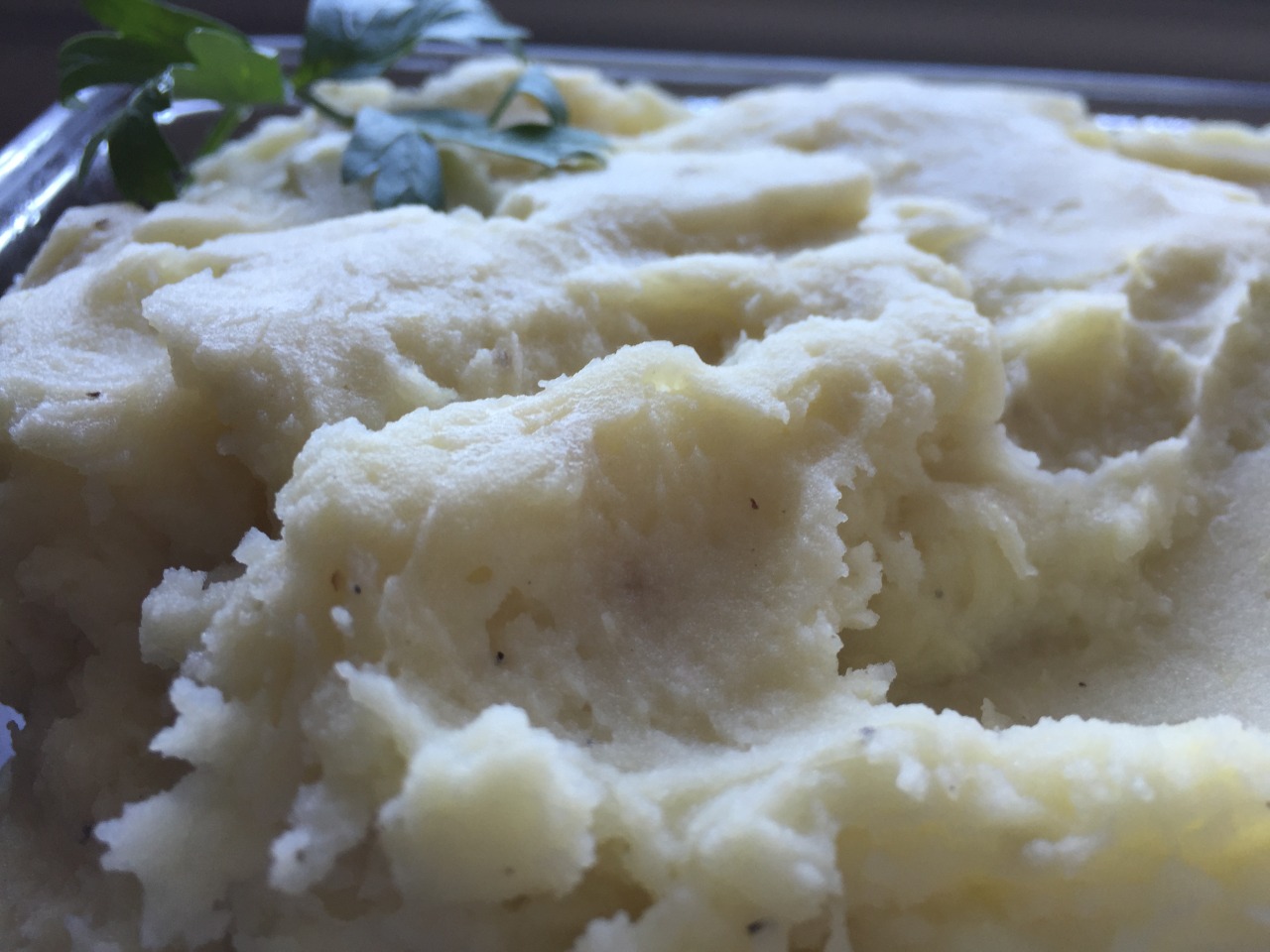
This is a recipe from my childhood, one that we learned from a family friend, Yvonne Francis, who hosted us at her Cranston, RI home for a memorable Thanksgiving in the 1980s. Using a stockpot, bring about 12 cups of water to a boil, adding a little (about 1 tsp) salt. Peel 6 medium-large Russet potatoes (or 7 Yukon) and then cut into 3-inch chunks (I do this by cutting each peeled potato in half vertically, then cutting each vertical half into 3 chunks). Add the potatoes to the boiling water, cover, reduce heat to medium/medium-high so that the water is at an active boil (but not a furious one), and then cook until potatoes are fork-tender (about 18-20 mins). Drain the potatoes in a colander, then transfer to a large, high-walled mixing bowl. Separately, heat about ¾ cup milk in the microwave on high for 1 minute. Place about 2 Tbsp of room-temperature unsalted butter into the hot potato mixture, then using a hand-mixer, blend the potatoes to make them relatively smooth. Slowly pour in ½ cup of the hot milk (¼ cup at a time), blending the potatoes. Fold in salt and pepper to taste (I use about 2 tsp salt and 1 tsp black pepper). Taste the mashed potatoes. If they are not creamy enough, you can blend in an additional 1 Tbsp of butter and the remaining ¼ cup of hot milk – but play it by ear, depending on the moisture level of the potatoes. Serve and enjoy. Or you can make this dish a day before Thanksgiving; it reheats well in the microwave. (Nov. 2015)
Note: I used to prefer Yukon, but as of 2020, I think Russets yield a fluffier texture. (Aug. 2020)
-
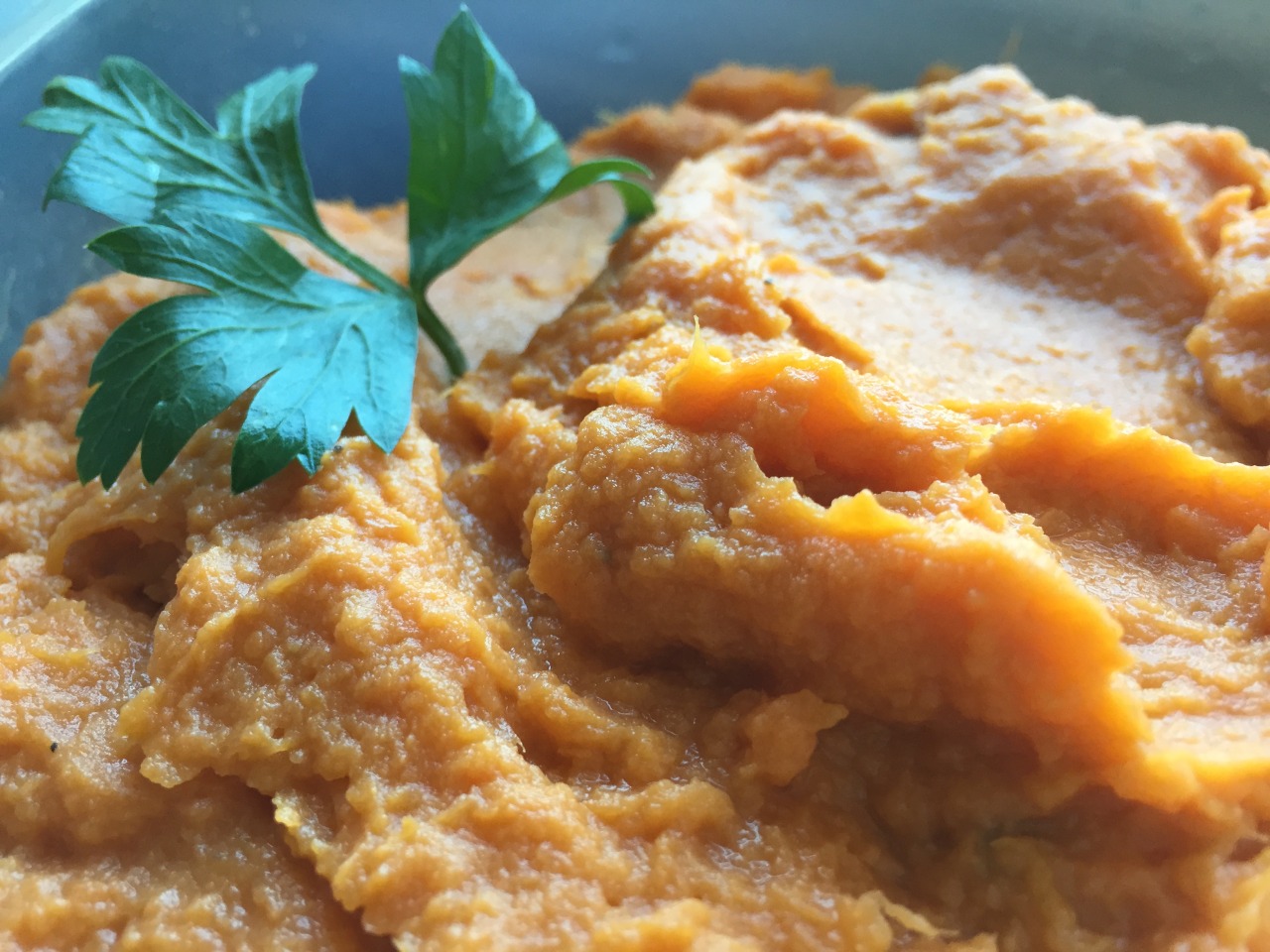
This is another recipe from my childhood, one that we learned from a family friend, Yvonne Francis, who hosted us at her Cranston, RI home for a memorable Thanksgiving when I was in elementary school.
Using a stockpot, bring about 12 cups of water to a boil, adding a little (about 1 tsp) salt. To prepare the sweet potatoes: trim the ends off of 6 large, orange-skinned sweet potatoes, but leave the skin on. Cut each sweet potato into 3-inch rounds (about 3-4 pieces per tuber). Add the sweet potato chunks to the boiling water, cover, reduce the heat to medium/medium-high for an active boil (but not a furious one), and cook until chunks are fork-tender (about 18-20 mins). Drain in a colander, then remove the skin from each chunk (I do this using two forks to manipulate the skin off the flesh) and place each peeled chunk into a large, high-walled mixing bowl. Separately, heat about ½ cup milk (I microwave high on high for 1 minute). Add about 3 Tbsp of unsalted, room temperature butter to the sweet potato mixture. Using a handheld mixer, mix on medium-low the mixture until most lumps are gone. Slowly fold in ¼ cup of hot milk. Then fold in about 3 Tbsp brown sugar, 2 tsp salt, and 1/2 tsp black pepper. (You can continue using the handheld mixer on low or switch to a large silicone spatula when adding the seasonings.)
Taste the mixture and adjust seasoning as needed. If the mixture does not seem creamy enough, add an additional 1 Tbsp butter and the remaining ¼ cup of hot milk. (Note: I find that sweet potatoes retain more moisture than regular potatoes, and that is why I use less milk for this recipe than for classic mashed potatoes. But I also find that it needs a little more butter than regular mashed potatoes.)
You can either serve immediately, or make ahead the day before Thanksgiving; this dish reheats well in the microwave. (Nov. 2015)
-
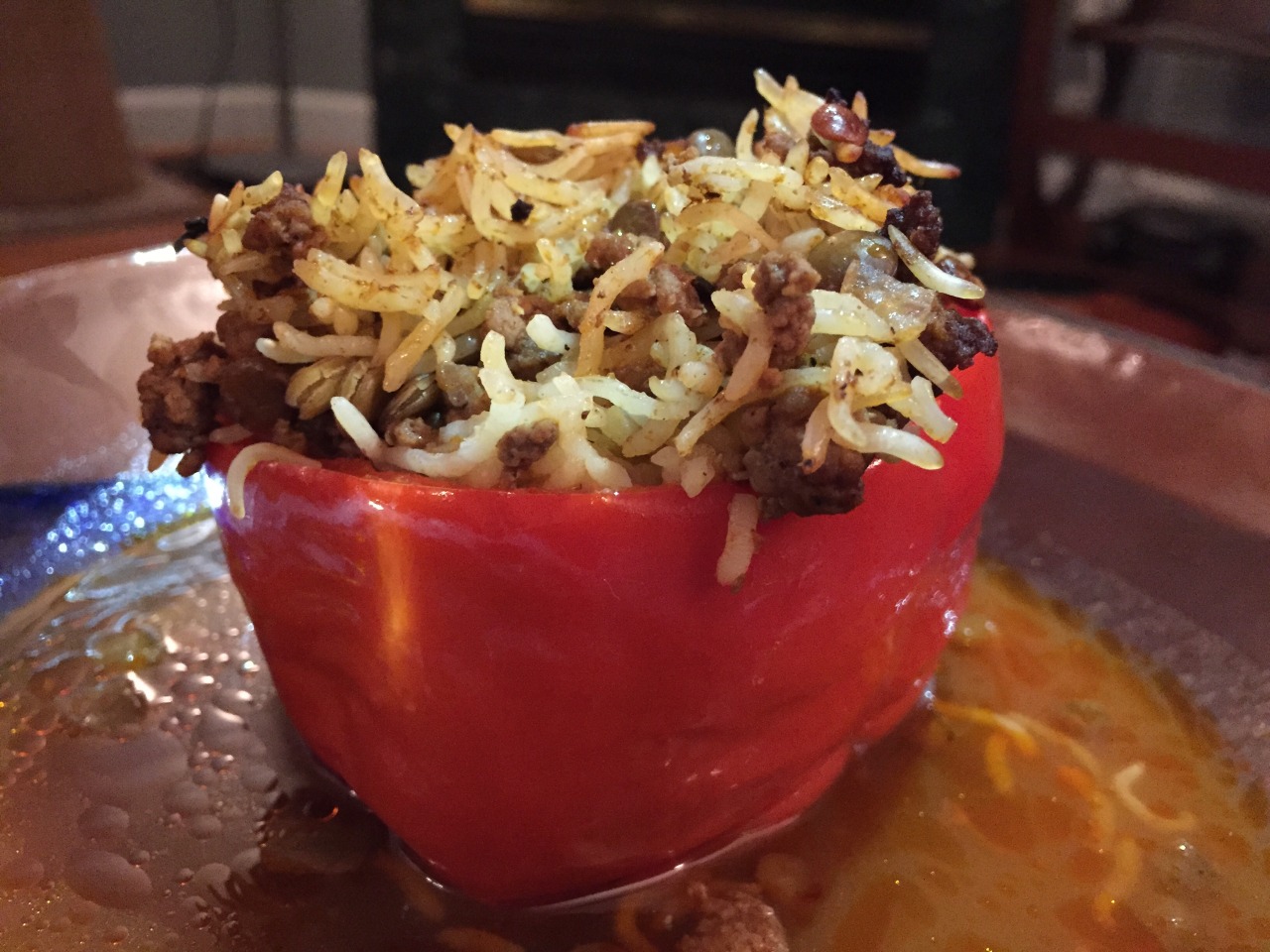
Recipe here: http://www.foodnetwork.com/recipes/food-network-kitchens/lightened-up-stuffed-peppers-recipe.html. We used uncooked basmati rice. In lieu of ½ tsp cinnamon (which I sometimes find cloying in savory dishes), we used ¼ tsp each nutmeg and cinnamon. We even had enough stuffing to fill a fifth bell pepper. (Note: we used the five leftover pepper tops for a Lebanese farmer’s salad, which we served on the side.) The next time, I will use 1 ½ cups chicken broth (instead of water) and add a bay leaf to the braising liquid; it could use more flavor. But the stuffed pepper itself is delicious. (Nov. 2015)
-
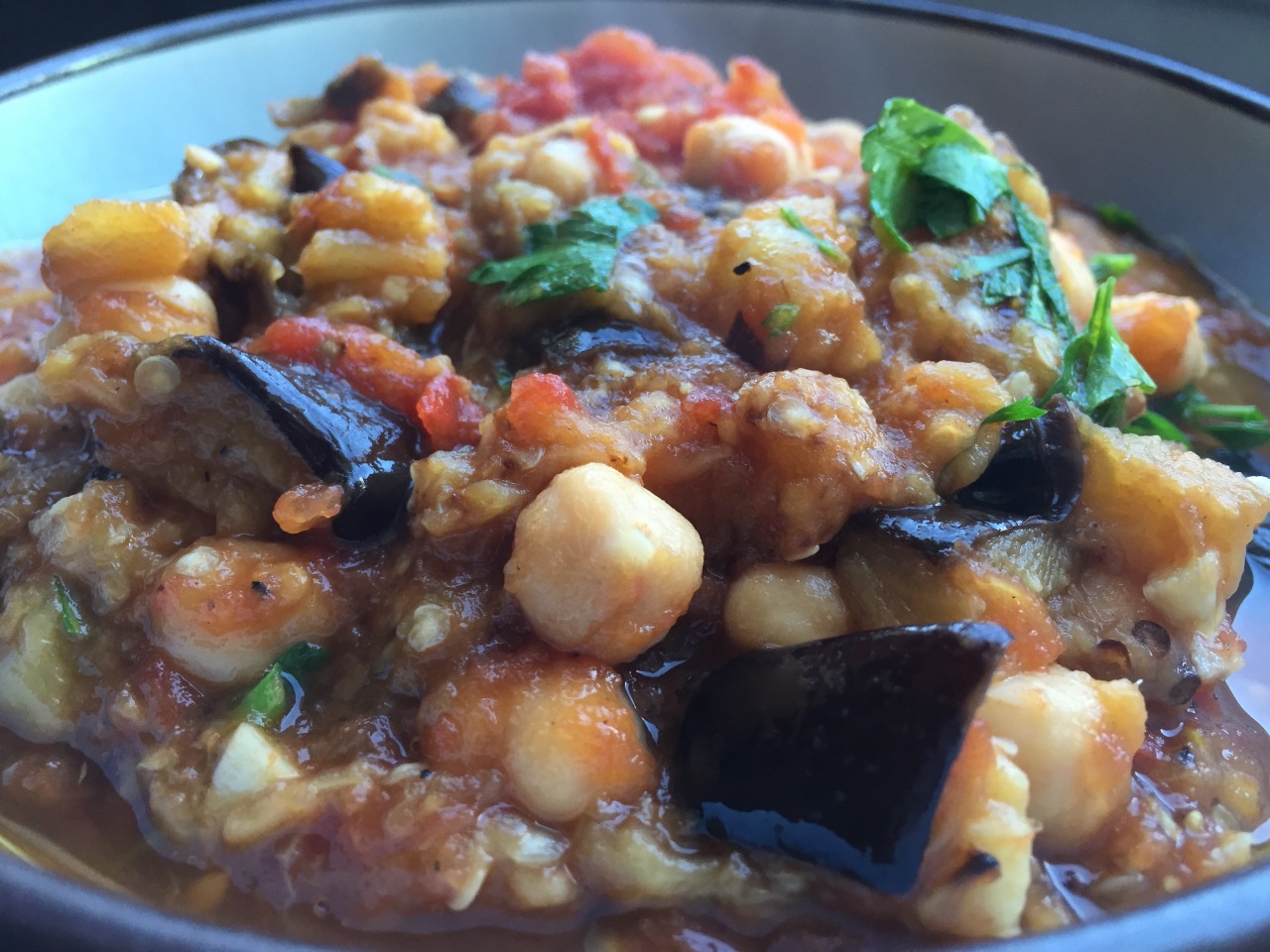
The key ingredient is pomegranate molasses. Recipe from Martha Rose Shulman at the NYT: http://cooking.nytimes.com/recipes/1013763-sweet-and-sour-eggplant-tomatoes-and-chickpeas I added juice from half a lemon at the end for brightness. (Nov. 2015)
-
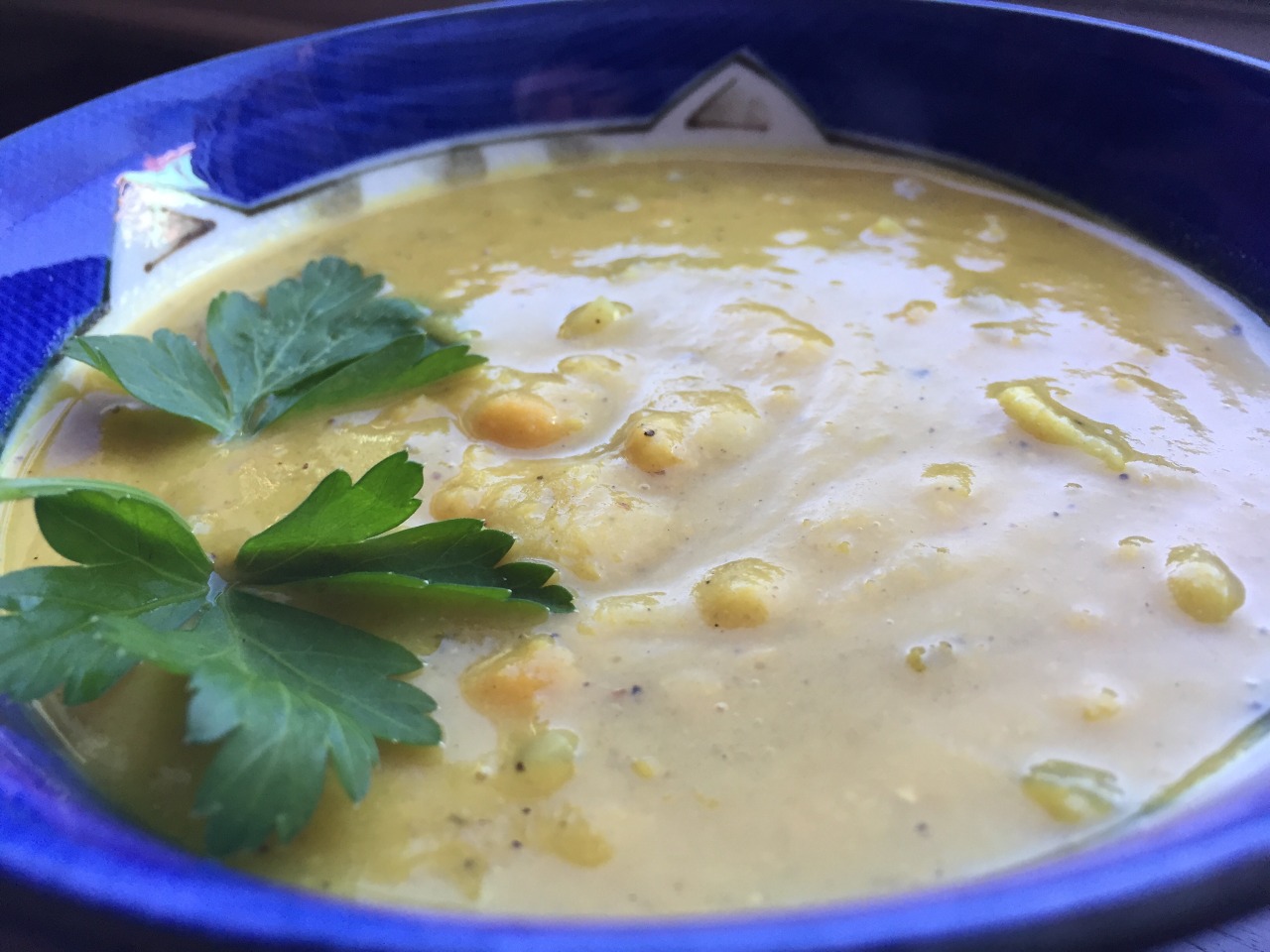
Straightforward recipe that takes less than an hour to make. It tastes creamy yet is dairy-free. For the 1 Tbsp curry powder, we used 1 ½ tsp McCormick curry powder and 1 ½ tsp Jamaican curry powder. If you use vegetable stock instead of chicken broth, this can be vegetarian. We used an immersion blender but purposely left about 1/3 to ½ of the split peas intact for texture. Serve with crusty bread. Recipe from Alton Brown: http://www.foodnetwork.com/recipes/alton-brown/curried-split-pea-soup-recipe.html (Nov. 2015)
Note: 12 oz dried legumes = 1 ½ dry cups.
-
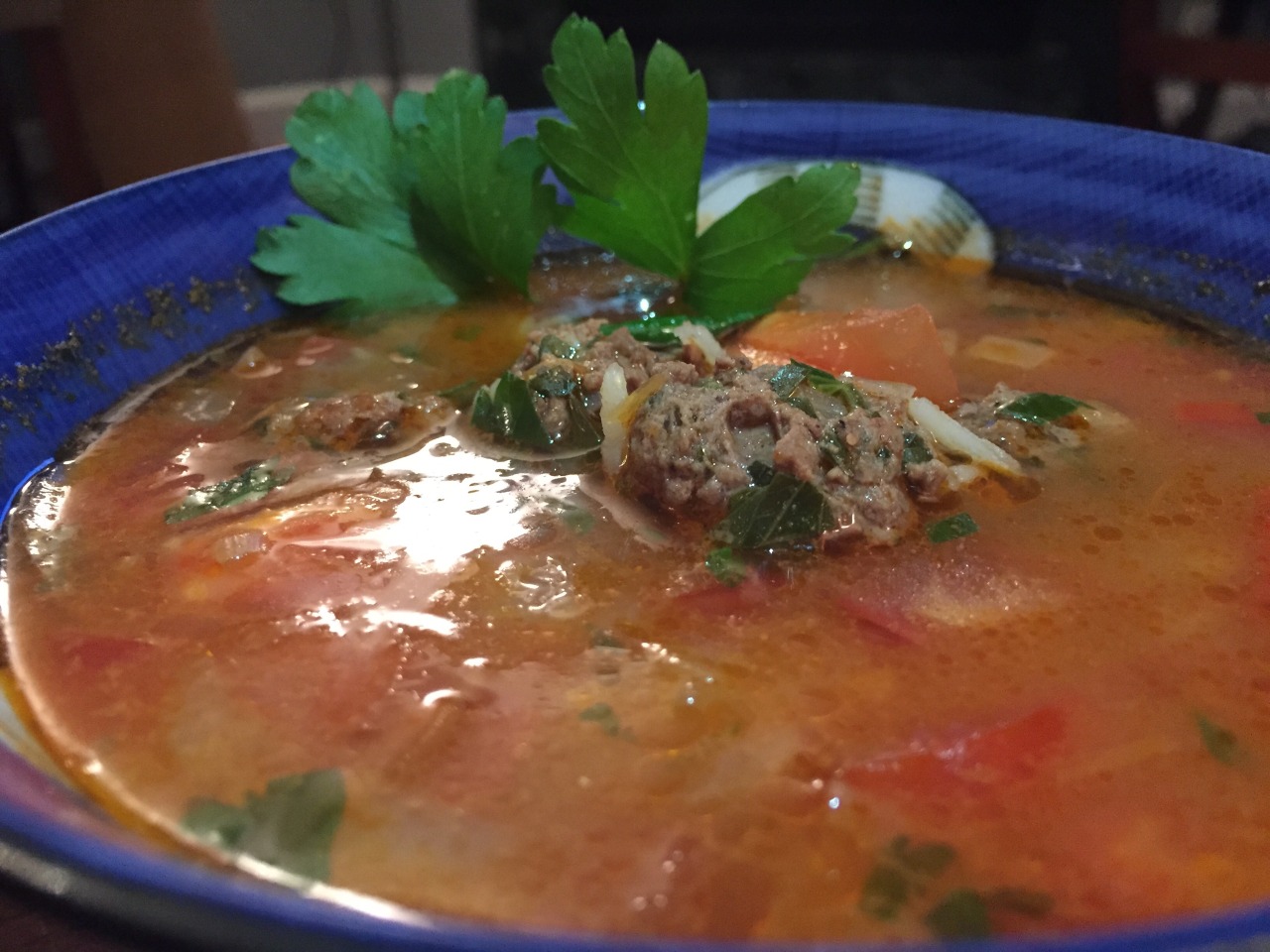
For the meatball mixture, combine 1/3 cup minced onion (patted dry with paper towels), ¼ cup finely chopped Italian parsley, 1 ½ tsp balsamic vinegar, ½ tsp salt, ¼ tsp each black pepper and allspice, 1/8 tsp cinnamon, and 1/16 tsp each cloves and nutmeg. Mix by hand, then using a mounded tsp, form by hand into small meatballs (about 30). Heat a large Dutch oven with 3 Tbsp olive oil, then add the meatballs, gently sautéing on medium-high heat until browned. Remove the meatballs and set aside. Using the same pot, sauté 1 cup diced onion and ½ tsp salt. When onion is tender, add 6 cups chicken broth, 2 Tbsp tomato paste, and ½ cup basmati rice. Bring to a boil, then add the cooked meatballs, reduce to a simmer, cover, and cook for 15 mins. Add 1 chopped tomato, 2 Tbsp lemon juice, and 2 Tbsp finely chopped parsley. Simmer for 1 additional minute, then serve with crusty bread. This recipe is from Classic Lebanese Cuisine by Chef Kamal Al-Faqih. (Nov. 2015)
-
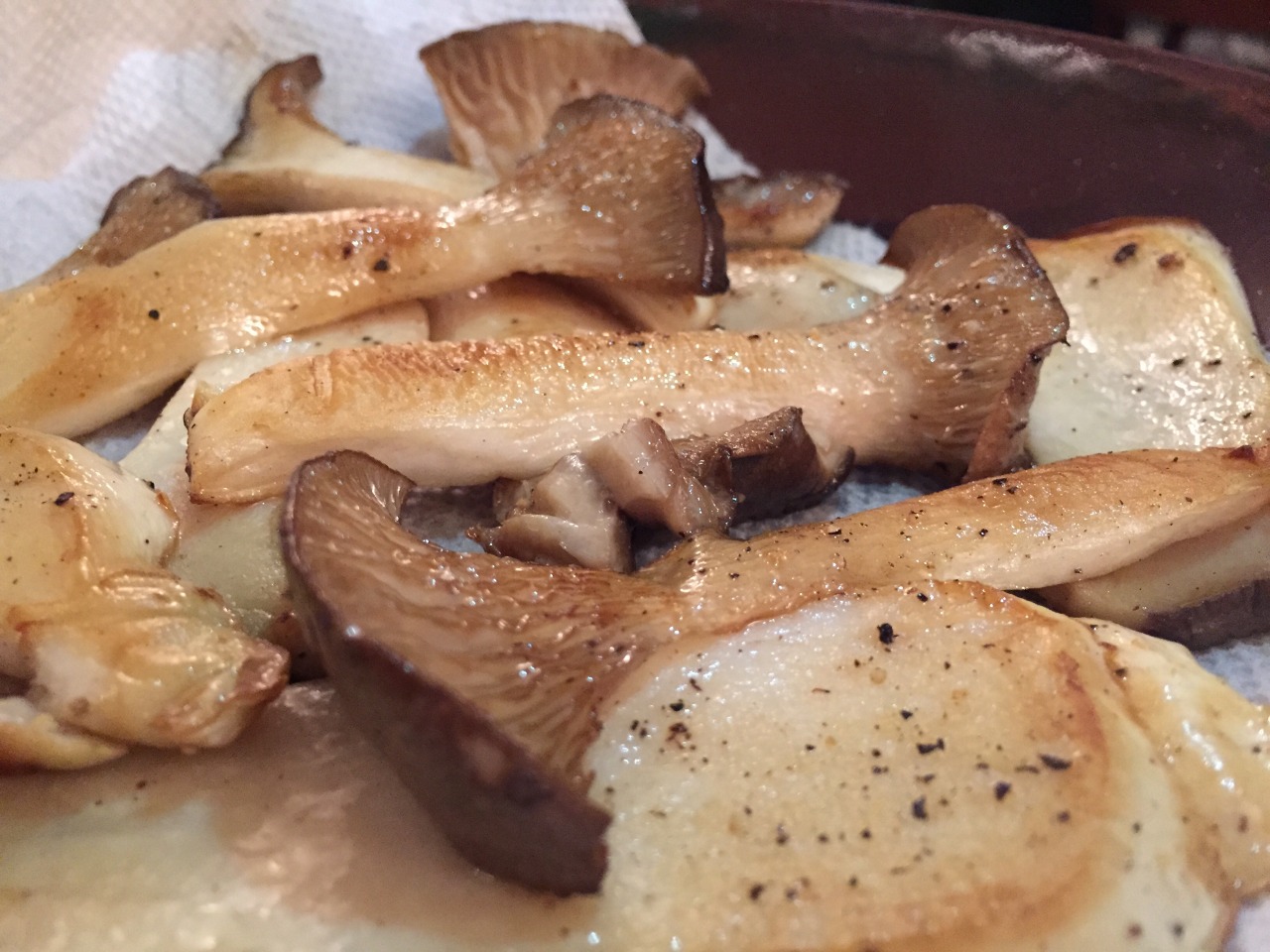
Cut 2-3 large king oyster mushrooms lengthwise into ¼ inch Slices. Heat 1 Tbsp oil (here, a 2:1 ratio of toasted sesame oil and grape seed oil) in a pan, then brown slices on both sides. Lightly season with salt and black pepper. (Nov. 2015)
-
Subscribe
Subscribed
Have a WordPress.com account? Log in now.

