-
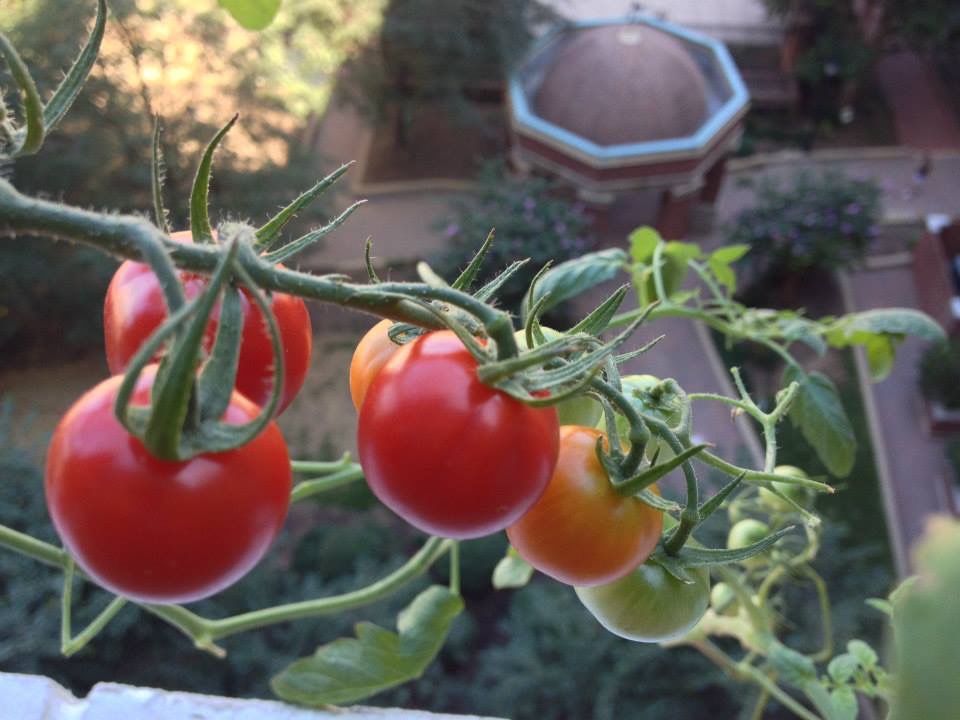
I cook as a hobby, and I maintain this blog primarily to keep track of recipes that my family has enjoyed over the years. I started blogging back in 2015, in response to requests from friends for recipes they had seen me post on Facebook (but that I couldn’t easily catalog). My original blog was on another platform that became less user-friendly over time. I migrated my blog to WordPress earlier this year, and I’ve spent more time than expected reformatting the migrated posts.
This blog is and always will be a work in progress. For example, I currently provide Tags for posts, but I have not coded for Categories. I also generally try to share the recipes themselves in my posts, but in cases where the recipe is not available online, I try to identify the source (e.g., the cookbook title and author) as needed. In some cases, such as where a family has shared their recipe with me but hasn’t authorized me to share it widely, I post a photo of the dish with that proviso.
I recently added a Search widget to this blog. On the desktop version, the Search bar appears prominently on the left hand side. But for some reason, it is hidden on the mobile app. If you’re on your phone, tap on the SHOW tab at the top left of the home page. That will reveal another screen with the Search bar.
I hope you enjoy exploring my blog and find some recipes to try.
-
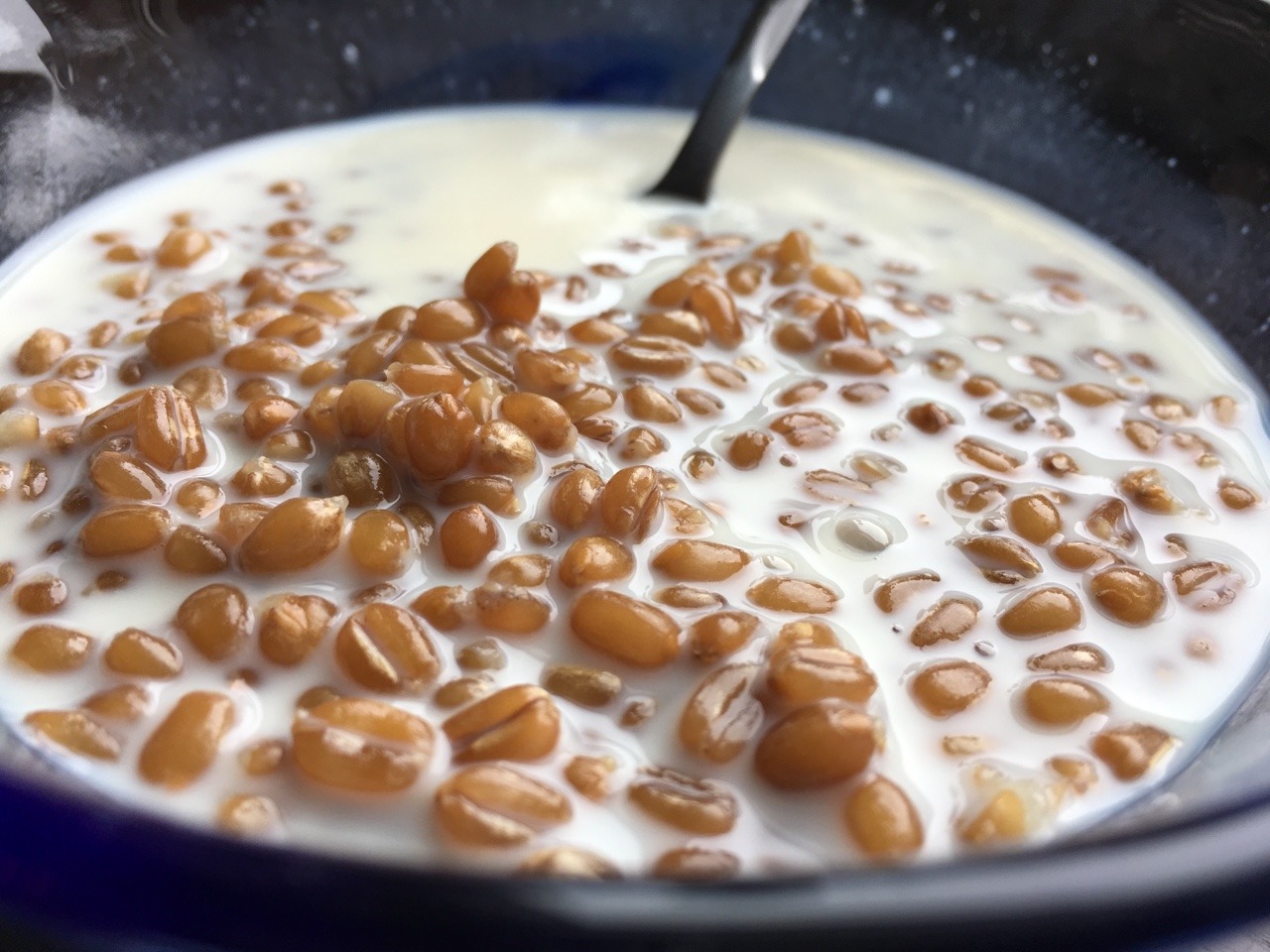
We tried this recipe: https://www.aprettylifeinthesuburbs.com/wheat-berry-cereal/ Our modifications: first, we halved the recipe to ½ cup wheat berries (kernels), 1 ½ cups water, and sprinkle of salt. Second, following a time-saving tip, the night before, we placed the wheat berries in a stainless steel pot, poured in boiling water, and sprinkled a little salt, and placed a lid on the pot. We let it sit on the stovetop (no heat) overnight. Then in the morning, we brought the pot to a boil, removed the lid, and then reduced to a very low simmer; the kernels were done (chewy but not crunchy) in about 30-35 mins. Third, we drained the cooked kernels in a sieve, then we poured about ¾ cup soy creamer into the just-used pot. We gently heated the creamer that way. We served the cooked kernels with (soy) creamer and brown sugar, as recommended by the recipe. We also added a drizzle of maple syrup. (Feb. 2018)
-
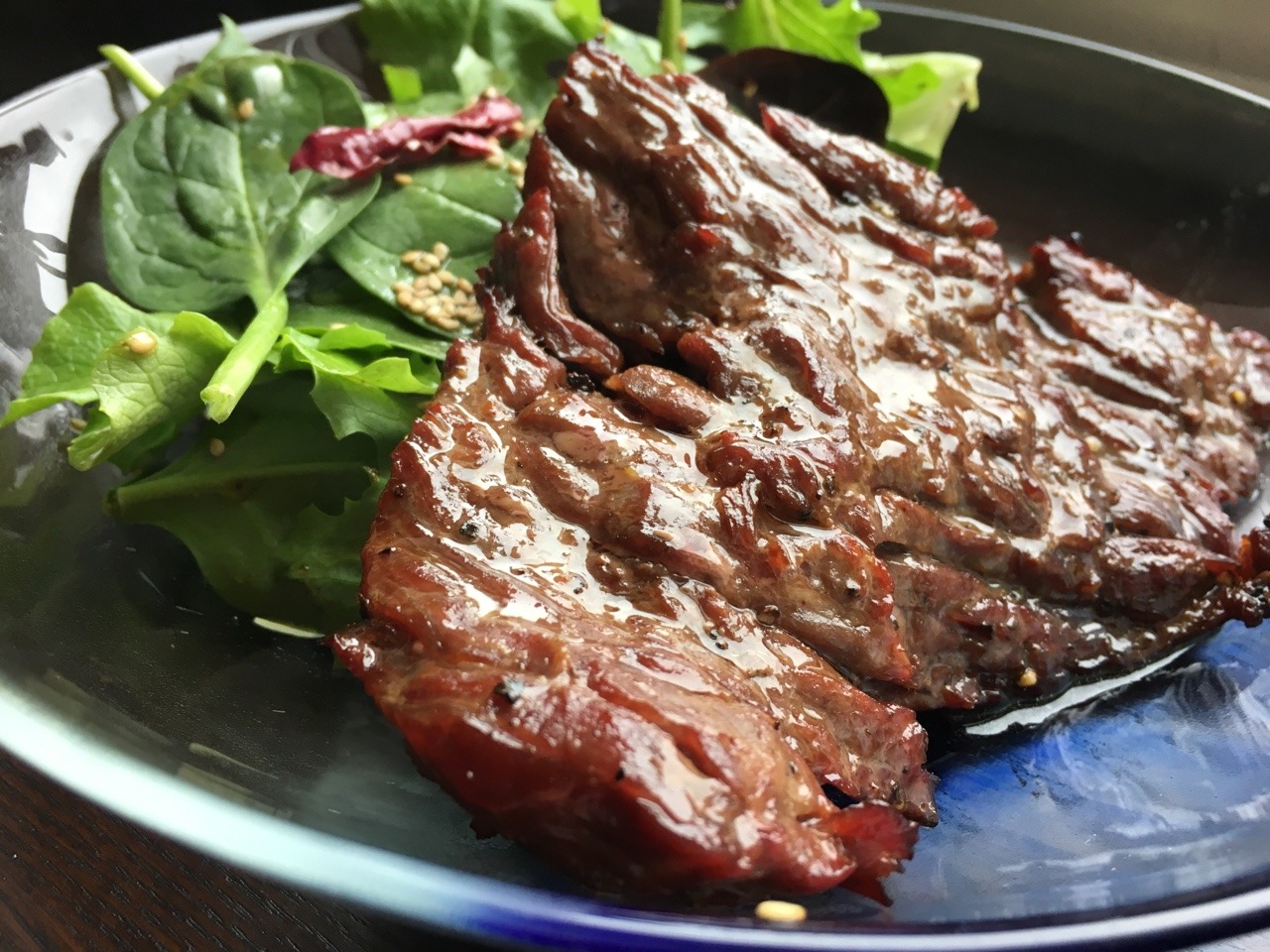
We marinated 1 lb skirt steak in my grandmother’s bulgogi marinade (we halved the marinade recipe): http://piglettedc.tumblr.com/post/164274307806/halmonis-bulgogi-we-made-my-beloved. Using a metal skewer, we poked tiny holes in the whole steak and marinated the steak in the fridge for 2 hours. We preheated the oven to 450. We cut the steak in half and then placed it (shaking off the marinade) on an oil-sprayed rack placed inside a foil-lined baking sheet. We oven-roasted it got a total of 30 mins (see Note below), turning over once midway. We then replaced the foil (to avoid smoke and splatter) and placed the steak under the broiler on high (4 inches from the flame) and browned each side for a few mins each. We served this with jasmine rice and a mixed green salad lightly seasoned with 2 tsp Marukan seasoned rice vinegar (yellow label), ½ tsp sesame oil, and ½ tsp roasted sesame seeds.
Note: Depending in the thickness of the skirt steak, oven-roasting for 30 mins may yield a medium rare steak. Increase roasting time as needed.
-
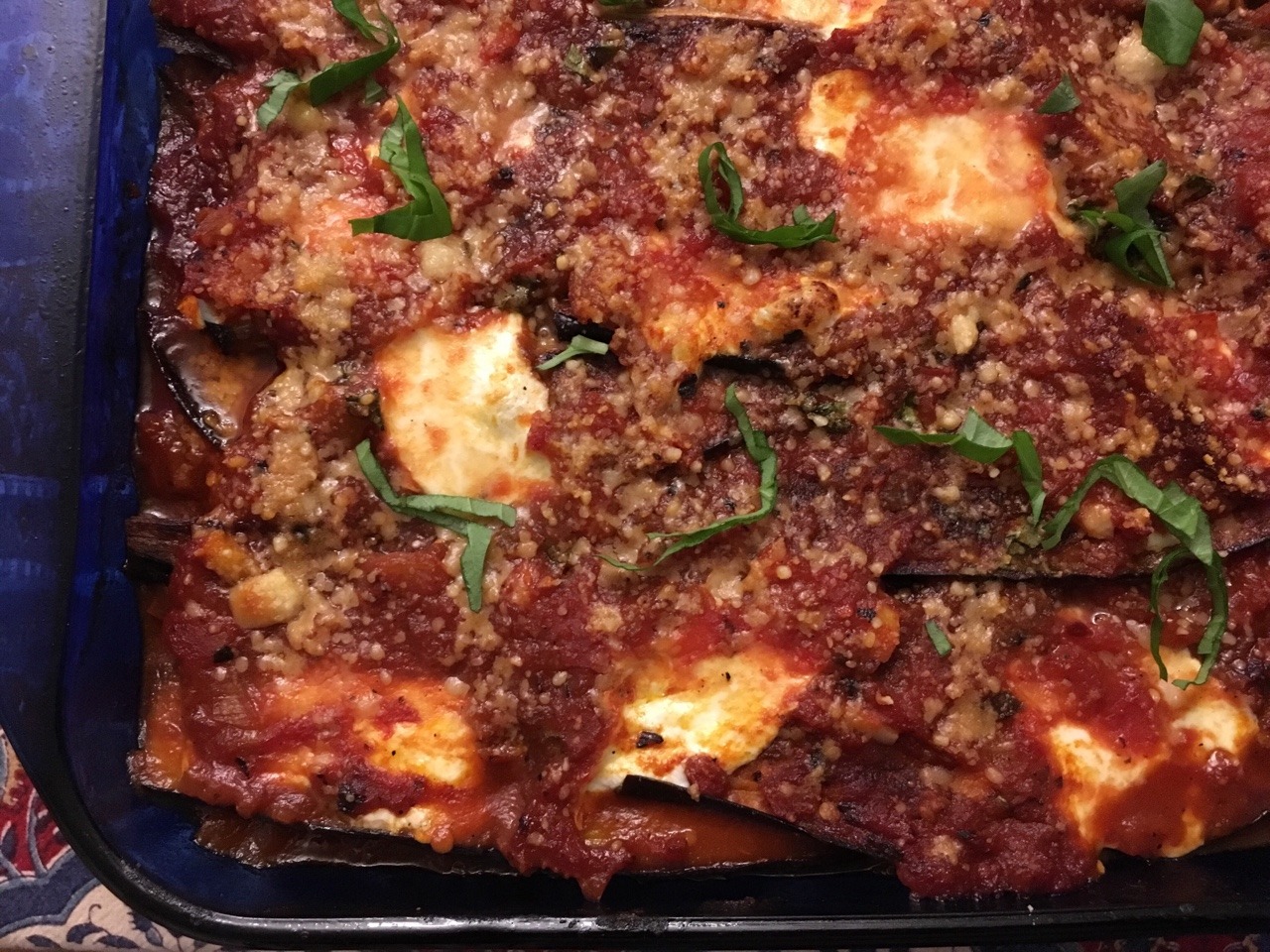
We tried this Cookie & Kate recipe, which uses oven-roasted, non-breaded eggplant slices: https://cookieandkate.com/2017/italian-eggplant-parmesan-recipe/ Our modifications: first, we doubled the amount of sauce because we prefer saucy casseroles. Even so, we almost ran out of sauce for the final layer (we had three layers of eggplant). Second, we did not have a 9×9” baking dish, so we used a deep 8×8” baking dish, which we lightly sprayed with oil before assembling the casserole. We served this over cooked pasta. (Feb. 2018)
-
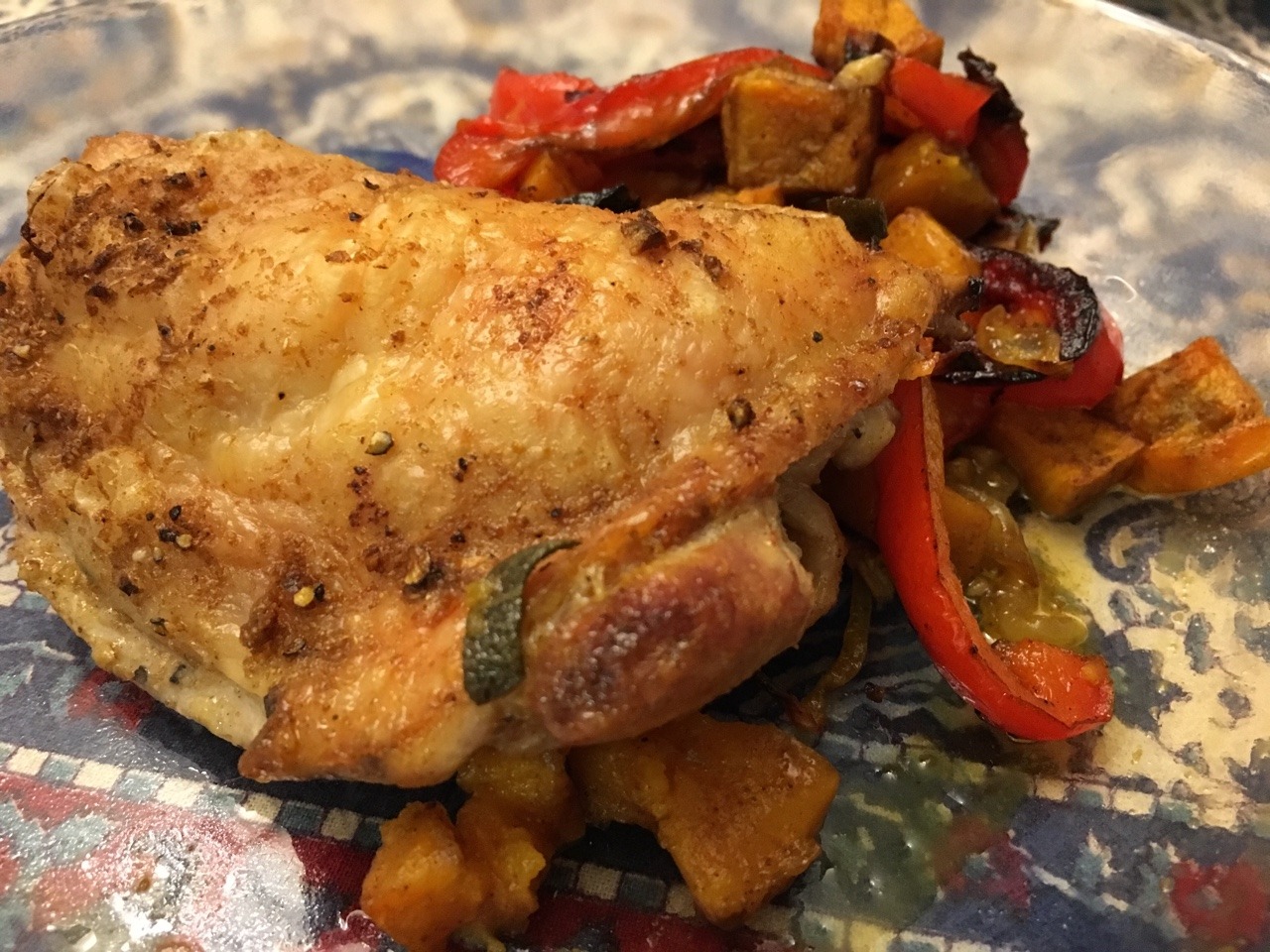
We tried this NYT recipe: https://cooking.nytimes.com/recipes/1019161-sheet-pan-chicken-with-sweet-potatoes-and-peppers Our only modification was to place the chicken thighs (skin side up) on a lightly oiled baking sheet first and then surround the thighs with the sweet potato-pepper mixture. (Feb. 2018)
Note: The second time we made this, we skipped the onion vinegar topping. The dish is fine without the acid. If you need acid, you can lightly drizzle with Marukan seasoning rice vinegar (the yellow label). (Mar. 2018)
-
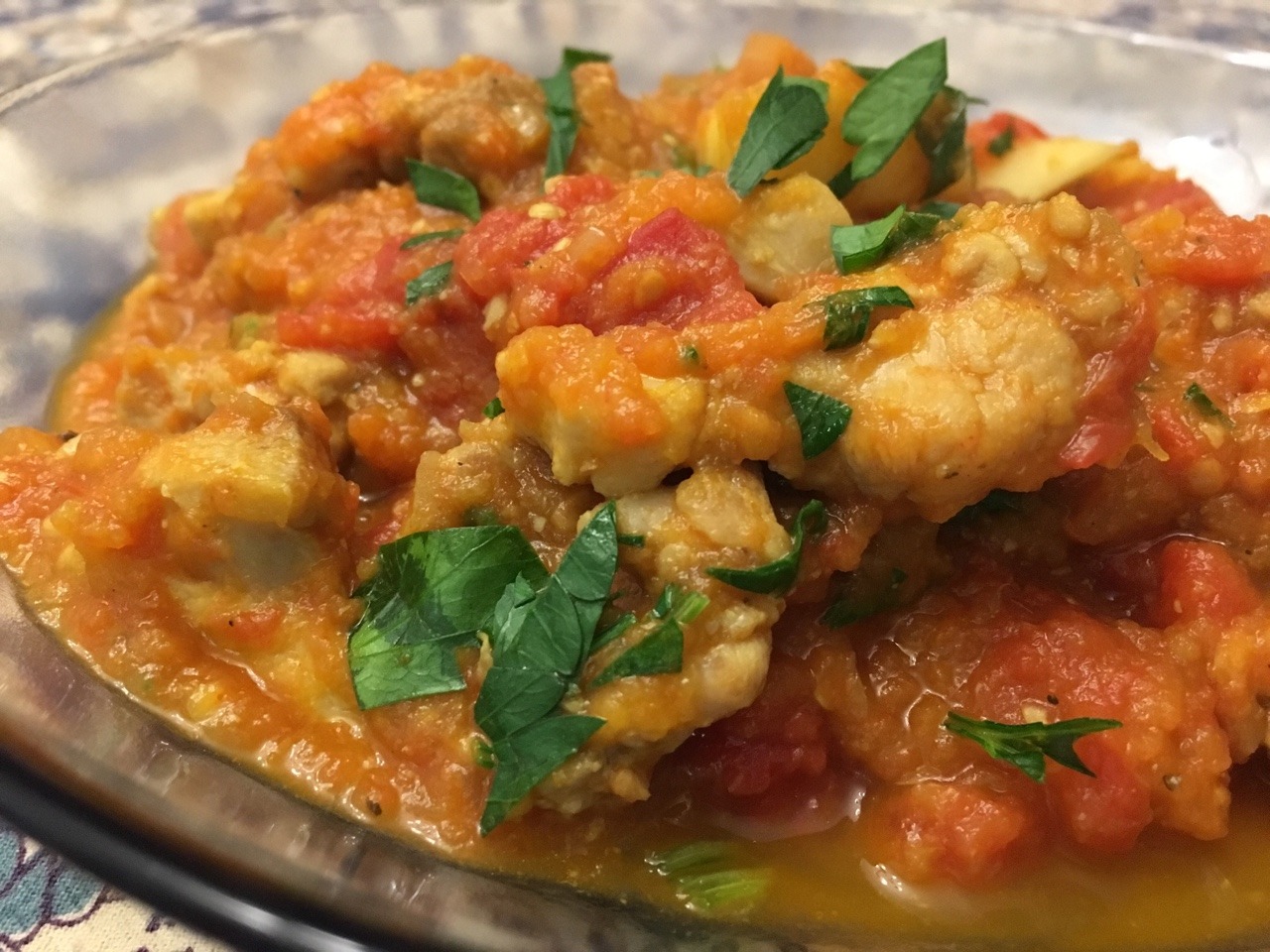
We tried this recipe, which uses eggplant and tomato purée: https://pinchofyum.com/one-pot-spanish-chicken-potatoes but made significant modifications. First, we increased the boneless chicken (cut into large bite-sized pieces) to 2 ½ lbs, the potatoes to 3 Yukon potatoes (but a better ratio may be 2 potatoes), and the tomatoes to a combination of 4 hothouse tomatoes, 14.5 oz canned diced tomatoes, and 14.5 oz whole peeled tomatoes (gently squeezed into pieces by hand). Second, in lieu of 1 tsp all purpose seasoning, we added the following to evoke Spanish flavors: ½ tsp each cayenne pepper and smoked paprika; ¼ tsp each garlic powder, onion powder, turmeric, and cumin; 1 large bay leaf, and 1/8 tsp saffron threads (see Note below). Finally, in terms of method, we used an immersion blender to purée the eggplant tomato sauce directly in the stainless steel Dutch oven. So we browned the chicken in a nonstick sauté pan, and then added the chicken to the stew. Then we browned the potato slices (1/2” thick) and added them to the stew. We let this simmer, covered, until the potatoes were tender, about 25-30 mins. We had planned to serve over rice, but it was fine on its own. (Feb. 2018)
Note: We extracted Spanish flavors from these two websites: (1) http://spanishsabores.com/2015/07/12/spice-up-your-life-with-these-essential-spanish-seasonings/ and (2) http://www.grouprecipes.com/125764/homemade-spanish-all-purpose-seasoning.html
-
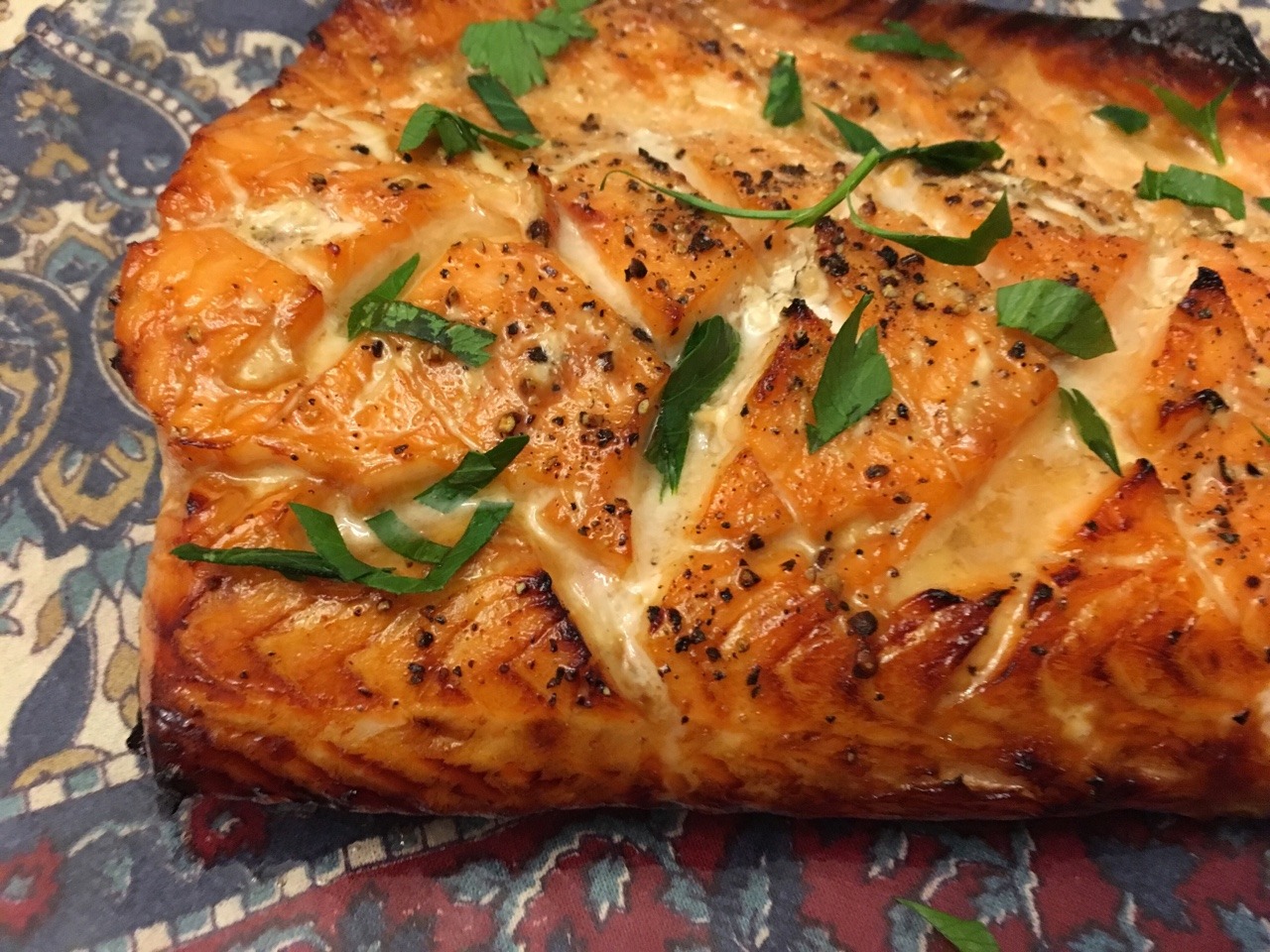
Following these instructions, we preheated the oven to 425: https://www.thekitchn.com/how-to-cook-salmon-in-the-oven-cooking-lessons-from-the-kitchn-204559
We drizzled about 1 Tbsp soy sauce, 2 Tbsp mirin, and 2 tsp honey, and 1 tsp freshly ground black pepper over 1 ½ lb salmon fillet (see Note below). We let the salmon sit for about 10 mins while we prepped the side dishes (such as portobello and asparagus). We lined a baking sheet with foil, then placed a baking rack on top. We sprayed the rack with oil, then placed the salmon – skin side down – on the oiled rack (see Note 2 below). We baked until the fish was flaky (about 20-25 mins). We then lightly sprayed the top of the salmon with some oil and broiled (on low) about 4 inches from the flame until the surface was nicely caramelized. We carefully plated the salmon, garnishing it with some chopped parsley. (Jan. 2018)Note: We lightly scored the skinless side of the salmon, but this resulted in albumen coagulating on the salmon’s surface, which was innocuous but unappetizing. The next time we will try it without any scoring.
Note 2: To avoid steaming or stewing the salmon in the oven, we gently shook off the excess marinade from the fillet and discarded any leftover marinade liquid. In other words, we tried to give the salmon an opportunity to oven-roast and to create a drier crust, which would not have been possible with excess liquid.
Note 3: This worked well as a weeknight meal: we cooked the salmon in the middle rack for 25 mins. After 5 mins, we added the portobello mushrooms in a casserole dish on the top rack (for 20 mins, turning the mushrooms once): http://piglettedc.tumblr.com/post/170288221966/baked-portobello-mushrooms-we-loosely-followed Then for the last 10 mins of cooking, we placed the asparagus on the bottom rack: http://piglettedc.tumblr.com/post/114455586296/oven-roasted-asparagus-preheat-oven-to-425 From start to finish, dinner took 45 mins to make. We served these three dishes with some jasmine rice.
Note 4: Instead of baking this, you can use a Foreman Grill. We recommend cutting the 1 ½ lb salmon fillet into serving size pieces (4 pieces) before marinating it. If needed, spray the surface plates of the Foreman Grill with a little oil before preheating the grill. Place the pieces at least 1 inch apart – we typically grill two pieces at a time – and then serve immediately.
-
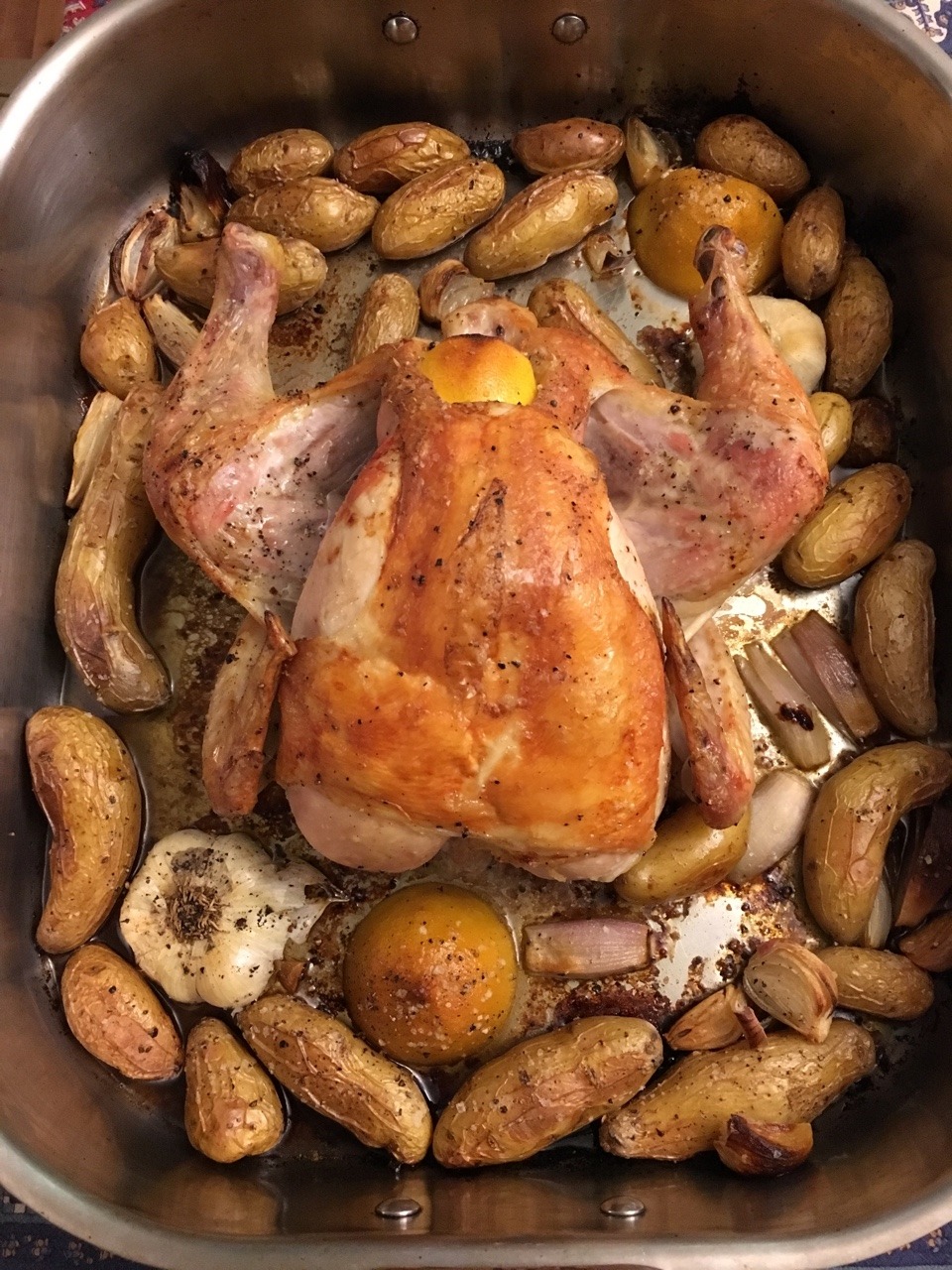
We tried this recipe: https://www.bonappetit.com/recipe/no-fail-roast-chicken-with-lemon-and-garlic We used ¼ cup melted butter, as directed. Our modifications: first, we added 1 lb fingerling potatoes and 5 shallots (peeled and rough-cut) to the roasting pan along with the half-lemon and garlic bulbs cut crosswise. We drizzled the vegetables with olive oil and lightly seasoned with salt and black pepper. Second, we used paper towels to pat dry the chicken – the outside, the cavity, and the cut, exposed parts of the quarters – in order to maximize crispy skin. Third, we cut a second lemon in half and placed both halves in the cavity. Finally, because we used a larger chicken (5 lb), we increased the cooking time to 70 mins (1 hour 10 mins) and then let it sit for 10 mins before carving. (Jan. 2018)
-
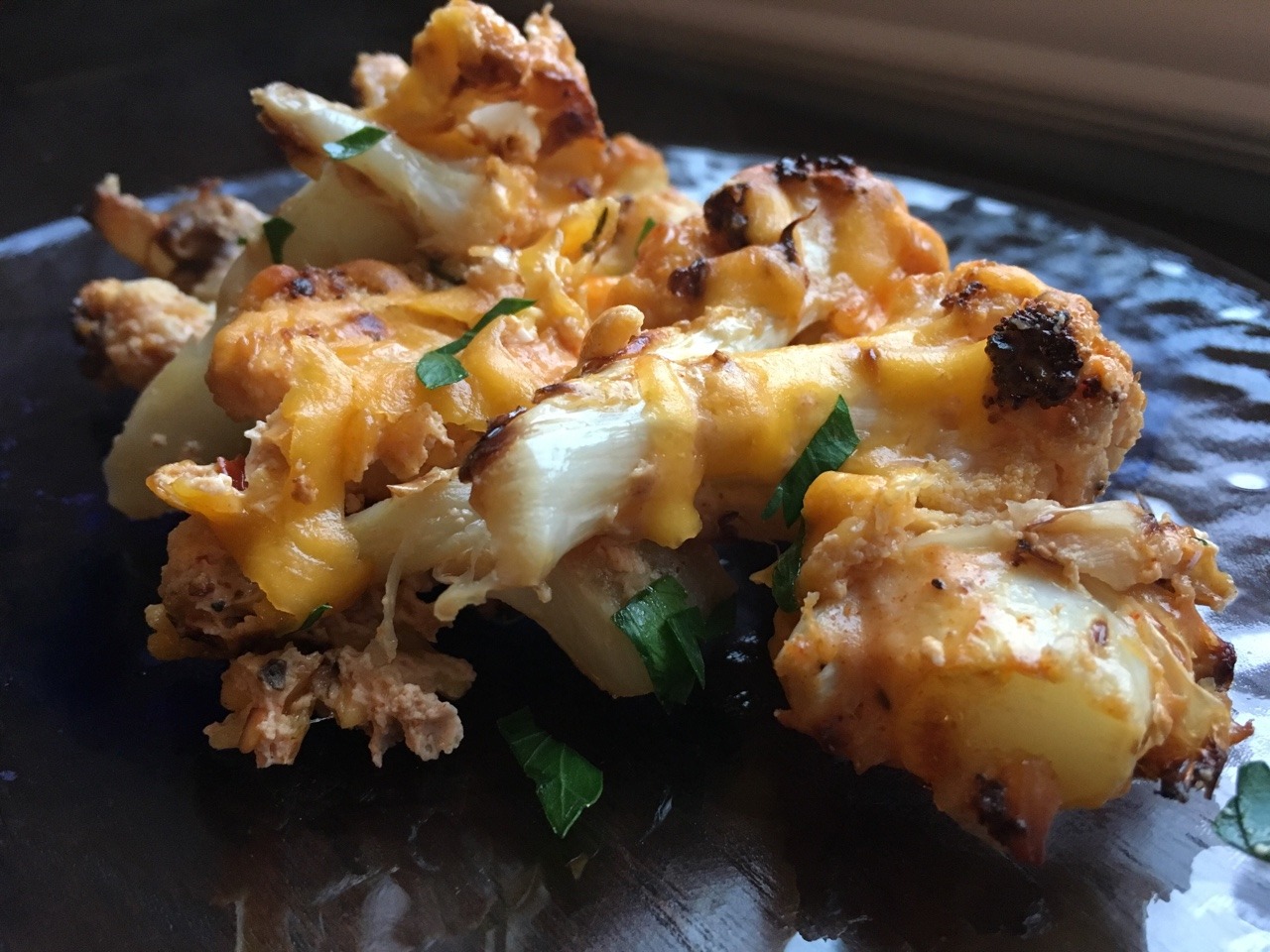
We tried this recipe: http://www.foodandwine.com/recipes/cauliflower-casserole-with-cheddar Our modifications: first, instead of parboiling the cauliflower florets, we tossed them with a little olive oil and oven-roasted in a baking sheet at 400 for 30 mins (tossing midway). Second, for the sauce, we replaced half (4 oz = ½ dry cup) of sour cream with ½ dry cup nonfat plain Greek yogurt (see Note below). We also sprayed the baking dish with oil instead of buttering it. Third, we used mild yellow cheddar instead of white cheddar and reduced the amount of smoked paprika to ¾ tsp. Finally, at the end of 30 mins at 350, we broiled the casserole on high to brown the top (2 mins). (Jan. 2018)
Note: If we had full fat plain Greek yogurt, we could have substituted all of the sour cream. See https://www.thekitchn.com/heres-how-to-substitute-yogurt-for-sour-cream-tips-from-the-kitchn-219130
-
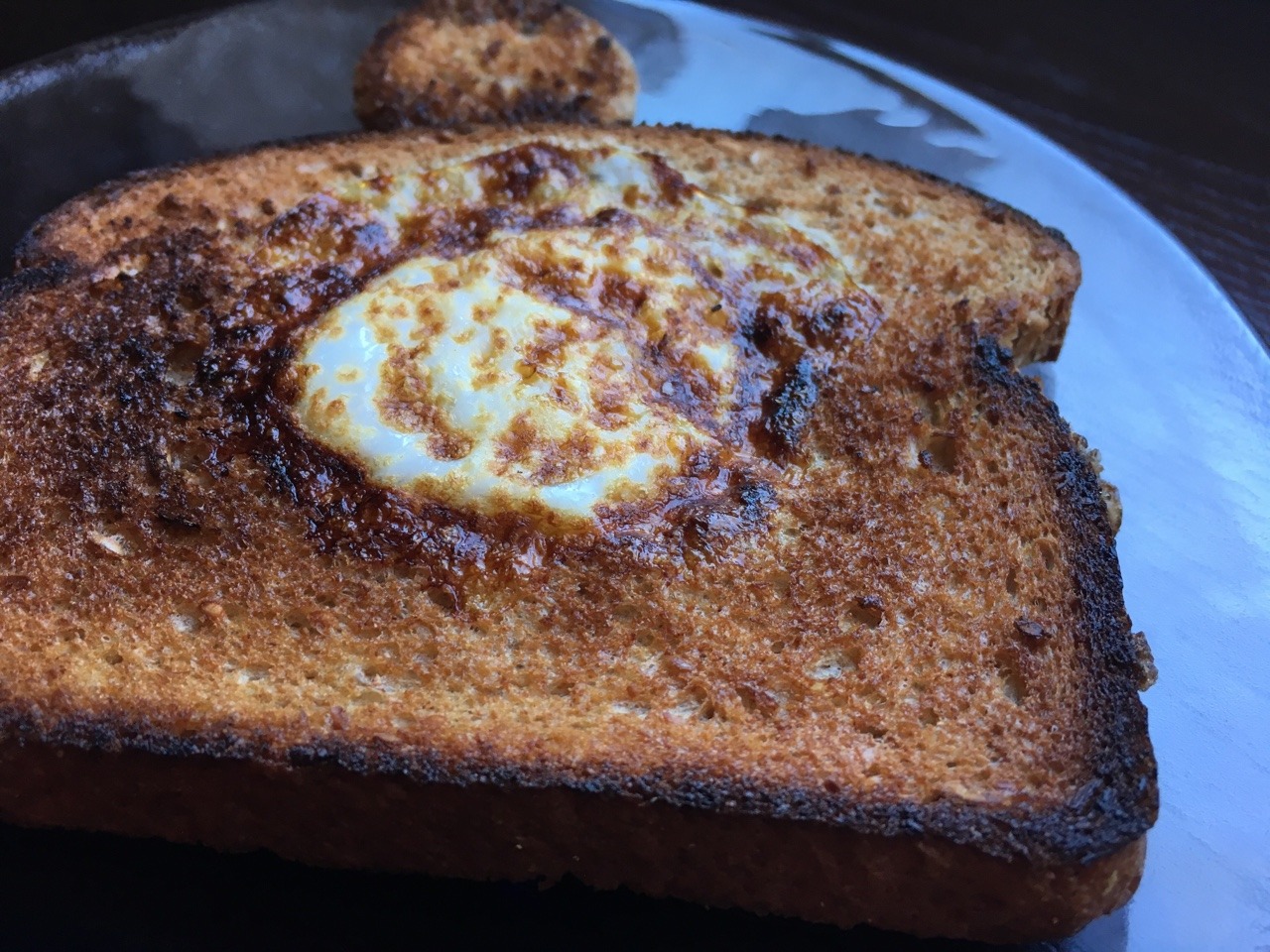
We followed this basic recipe: http://allrecipes.com/recipe/187850/egg-in-a-hole/ To make it healthier, we sprayed oil in a nonstick pan instead of using bacon grease. (Jan. 2018)
-
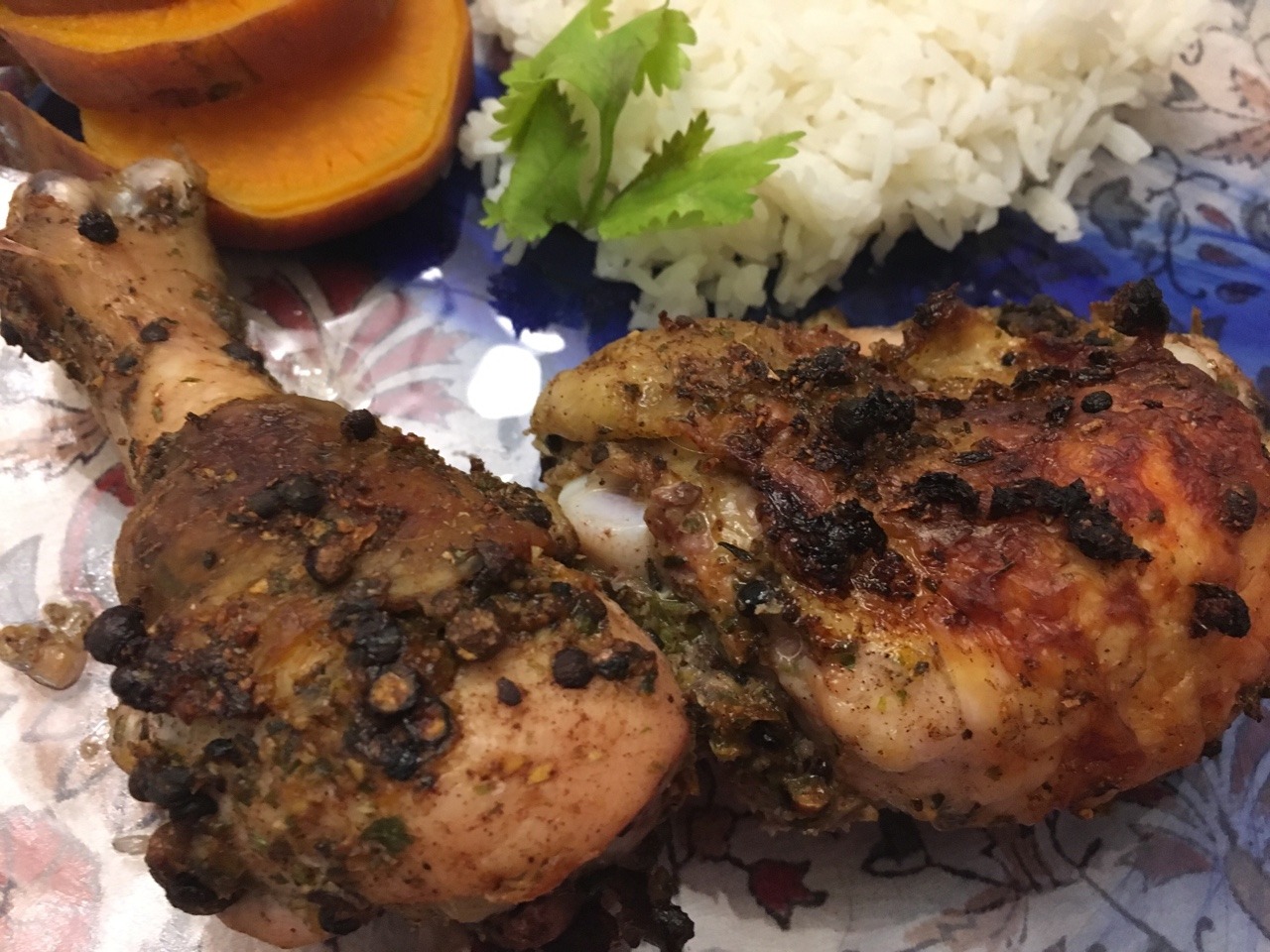
We tried this recipe, which uses a homemade jerk paste (instead of dry jerk seasoning): https://cooking.nytimes.com/recipes/1014722-no-fuss-jerk-chicken Based on our pantry, we used a mix of skin-on, bone-in thighs and drumsticks instead of chicken quarters (thighs and bones connected). We did not love this recipe and probably won’t make it again.
For the marinade, to lower sodium content, we reduced the salt and soy sauce by half; we also used 1 ½ habaneros (rather than 2). Also, one tip we subsequently learned from fellow NYT Cooking readers is to grind the dry seasonings (esp. the allspice berries and whole black peppercorns) first, before adding the wet ingredients; otherwise, the berries and peppercorns will remain intact. (Jan. 2018)
Note: We baked this dish concurrent with oven-roasted sweet potatoes, which we normally roast at 400: http://piglettedc.tumblr.com/post/114603785616/oven-roasted-korean-sweet-potato-gogoma In order to do this, we increased the oven temp to 375 and cooked for slightly less than 1 hour.
Note 2: For flavor and texture, we prefer this version of jerk chicken, which uses dry seasoning: http://piglettedc.tumblr.com/post/157462410341/baked-jamaican-jerk-chicken-marinate-2-3-lb
-
Subscribe
Subscribed
Have a WordPress.com account? Log in now.

