-
I cook as a hobby, and I maintain this blog primarily to keep track of recipes that my family has enjoyed over the years. I started blogging back in 2015, in response to requests from friends for recipes they had seen me post on Facebook (but that I couldn’t easily catalog). My original blog was on another platform that became less user-friendly over time. I migrated my blog to WordPress earlier this year, and I’ve spent more time than expected reformatting the migrated posts.
This blog is and always will be a work in progress. For example, I currently provide Tags for posts, but I have not coded for Categories. I also generally try to share the recipes themselves in my posts, but in cases where the recipe is not available online, I try to identify the source (e.g., the cookbook title and author) as needed. In some cases, such as where a family has shared their recipe with me but hasn’t authorized me to share it widely, I post a photo of the dish with that proviso.
I recently added a Search widget to this blog. On the desktop version, the Search bar appears prominently on the left hand side. But for some reason, it is hidden on the mobile app. If you’re on your phone, tap on the SHOW tab at the top left of the home page. That will reveal another screen with the Search bar.
I hope you enjoy exploring my blog and find some recipes to try.
-
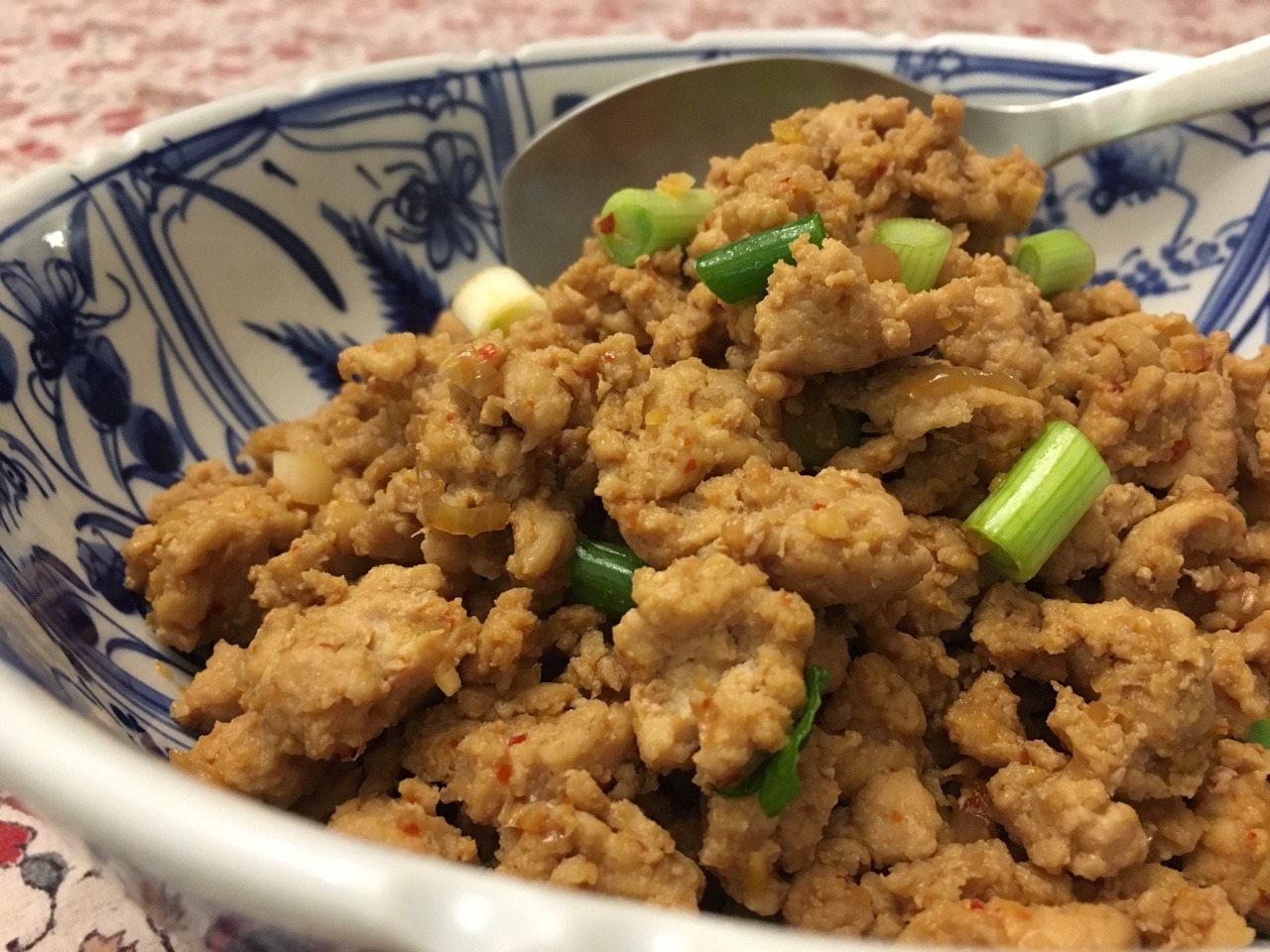
We followed this recipe: https://www.kawalingpinoy.com/korean-ground-beef/ Our modifications: first, for health reasons, we used minced chicken instead of minced beef; because the chicken emitted a lot of liquid, we removed all possible liquid (about ¼ cup) before adding the marinade. Second, to reduce sodium, we doubled the amount of protein, garlic, and ginger (to 2 lb) without changing the marinade amount. We found the dish well-seasoned and flavorful, without being too salty. Third, we added a shallot (cut into ¼ inch crosswise slices) and sautéed it in a little oil before adding the minced garlic and ginger. We served this with rice and romaine lettuce leaves. (Jan. 2018)
-
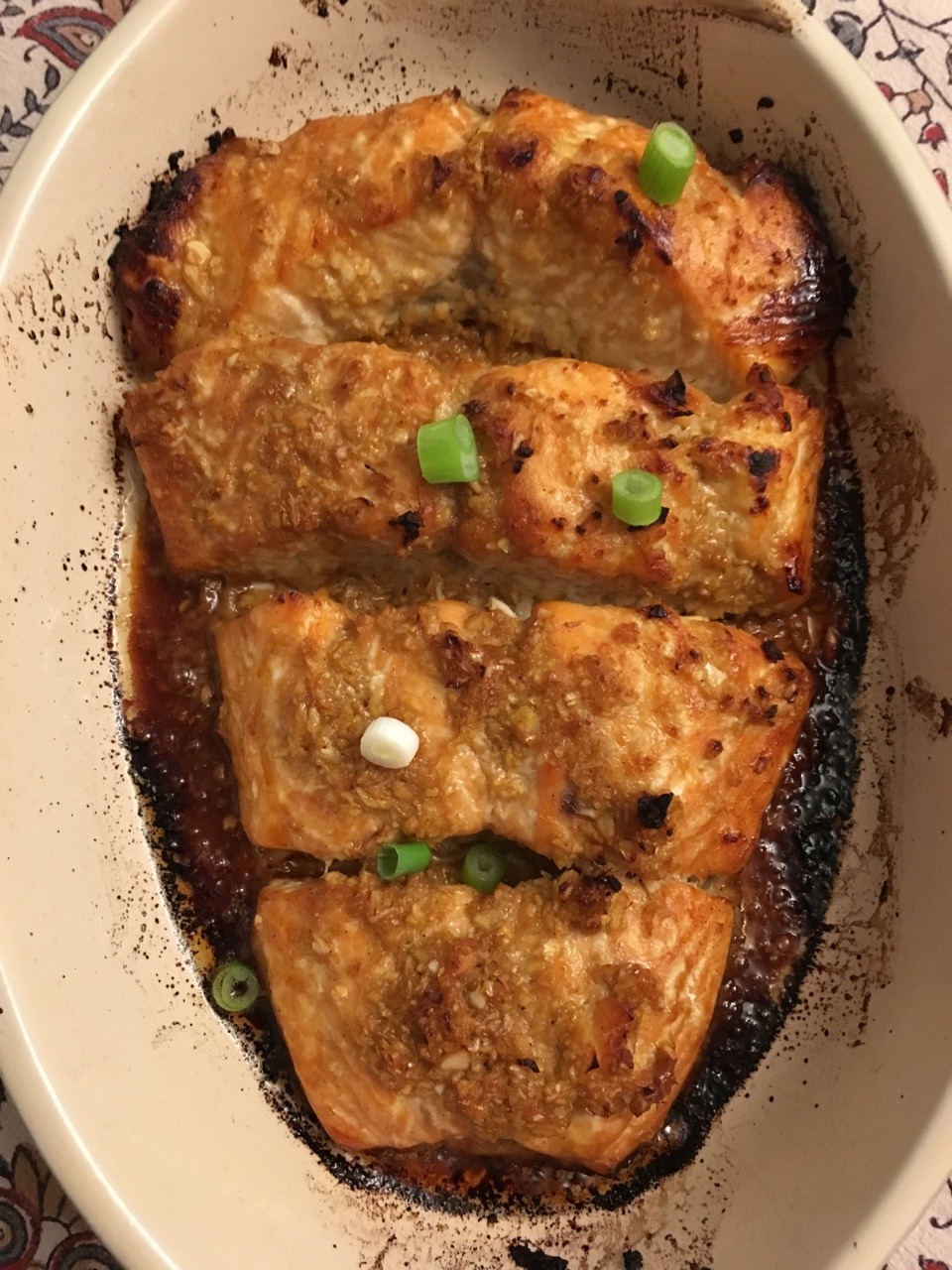
We tried this recipe: http://rasamalaysia.com/ginger-garlic-baked-salmon/2/ Our modifications: first, we reduced the soy sauce from 1 ½ Tbsp to 1 Tbsp and did not add salt to the marinade. Second, rather than using a baking sheet, we placed our salmon filet pieces in a Le Creuset stoneware casserole dish that we lightly sprayed with oil. We also poured the remaining marinade on the salmon and then lightly sprayed the top surface of the marinated salmon with some oil. We baked at 375 for 20 mins and then finished by broiling on high (with the rack 8 inches from the broiler) until nicely browned. This was a nice marinade, but the skin was not crispy. (Jan. 2018)
Note: As a side dish, we roasted cauliflower following this recipe but skipped the tahini sauce: http://piglettedc.tumblr.com/post/144070024406/armenian-style-roasted-cauliflower-with-tahini We did this by preheating the oven to 450, placing the cauliflower pieces (lightly oiled and sprinkled with a little salt and black pepper) on a baking sheet, roasting for 30 mins (tossing midway) while the salmon was marinating at room temperature. We then lowered the oven temp to 375. Seeing that the cauliflower was fully roasted, we removed it from the oven while the salmon baked. The next time, we may roast the cauliflower for only 15 mins before lowering the temp to 375 and then concurrently bake both the cauliflower (on the lower rack) and the salmon (on the middle rack) for 15-20 mins.
-
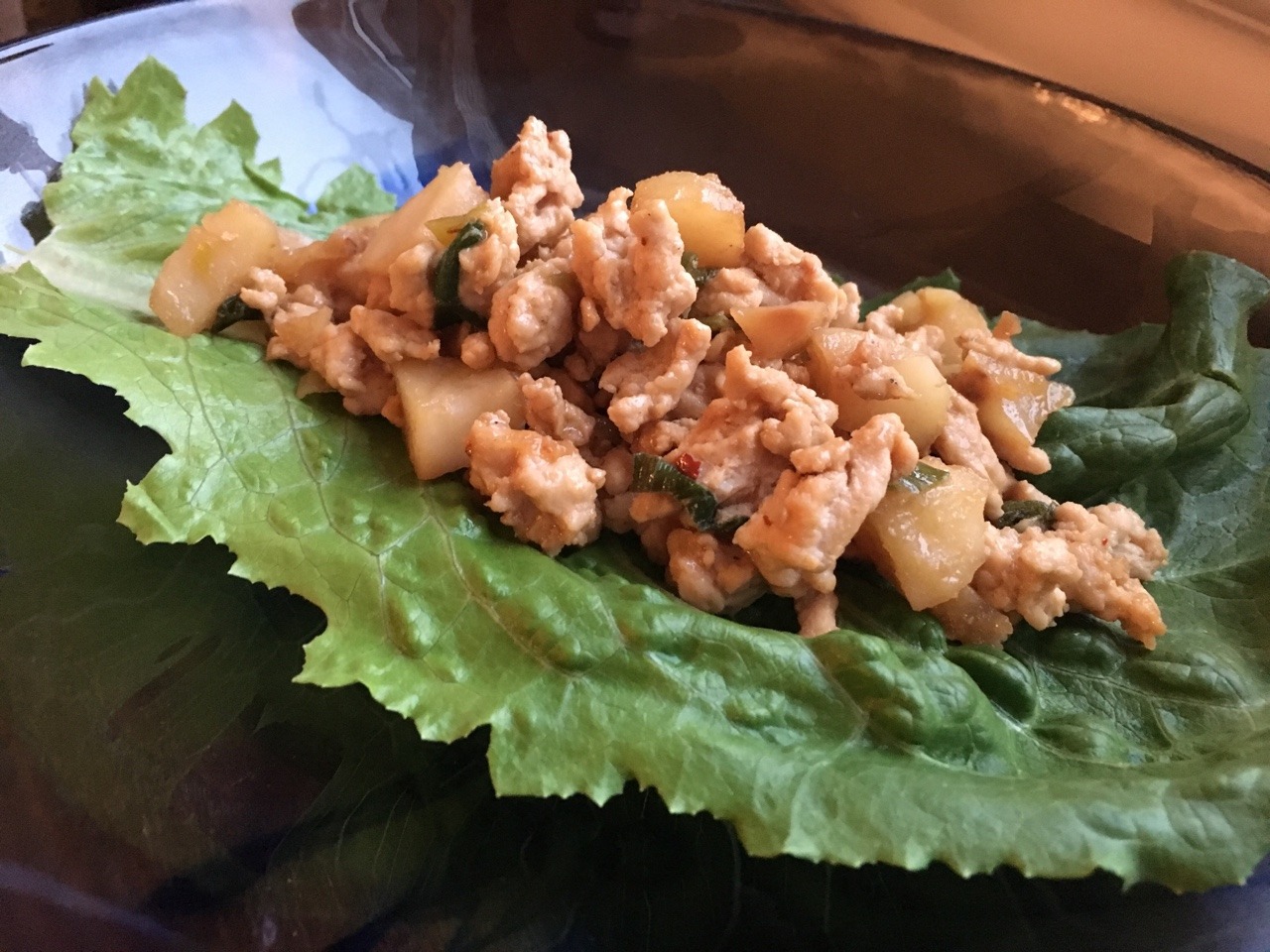
We generally followed this recipe https://shewearsmanyhats.com/chicken-cashew-lettuce-wraps/ but made several modifications: first, for the marinade, we reduced the soy sauce to 1 ½ Tbsp (and that was all of the soy sauce we used for this entire recipe). Second, using a wok, we first sautéed 2 chopped scallions (instead of onions) and 2 minced garlic cloves in about 1 Tbsp oil. Third, we added ½ lb minced chicken breast (instead of 2 diced chicken breast) and cooked until no longer pink. We omitted the additional 1 tsp soy sauce and poured in the marinade. Finally, instead of ¼ cup chopped cashews, we added 4 oz drained, chopped water chestnuts (cut into ½ inch dice), which we added to the chicken mixture after adding the marinade. We served the mixture with romaine lettuce; this made enough to fill 5 romaine lettuce leaves. (Jan. 2018)
-
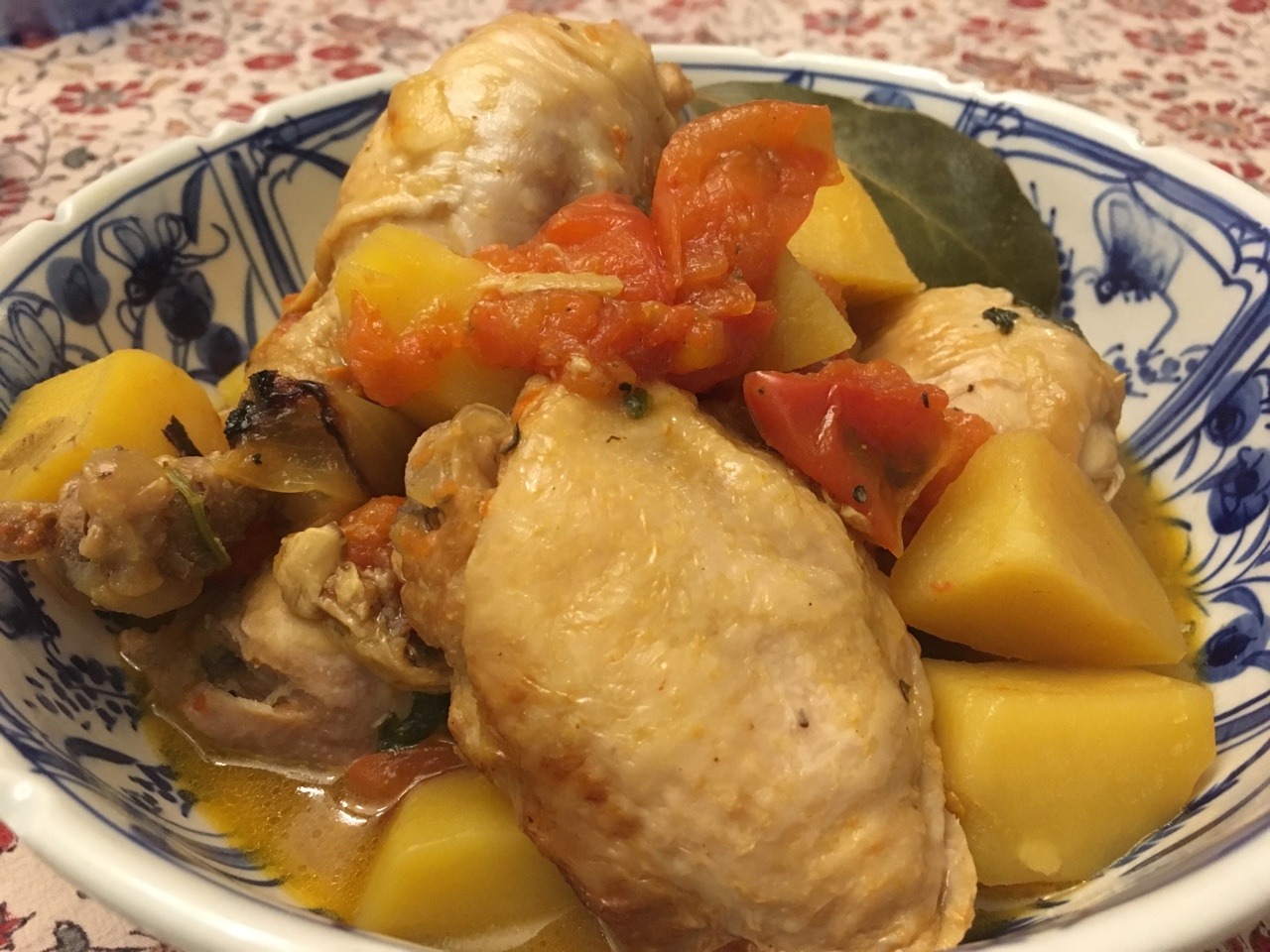
We tried this recipe: http://www.seriouseats.com/recipes/2012/05/colombian-chicken-stew-with-potatoes-tomato-onion-recipe.html Our modifications: first, in the pressure cooker bottom, we sautéed 1 onion (sliced along the grain) and 6 large garlic cloves (rough-cut) in 2 tsp olive oil. Second, after placing the skin-in, bone-in chicken pieces in the pot, we added 1 Tbsp Colman’s dry mustard, 1 tsp low-sodium Worcestershire sauce, leaves from 1/8 bunch each cilantro and parsley, and a little salt and black pepper. We then added the fresh tomatoes and potatoes (peeled), each cut into large bite-sized pieces. We mixed the higher-layer contents of the pot but kept the chicken on top of the sautéed onion and garlic. Third, we locked the lid on the pressure cooker. It took about 8 mins to reach high pressure, which we then kept steady for 25 mins before doing a quick release. (Jan. 2018)
-
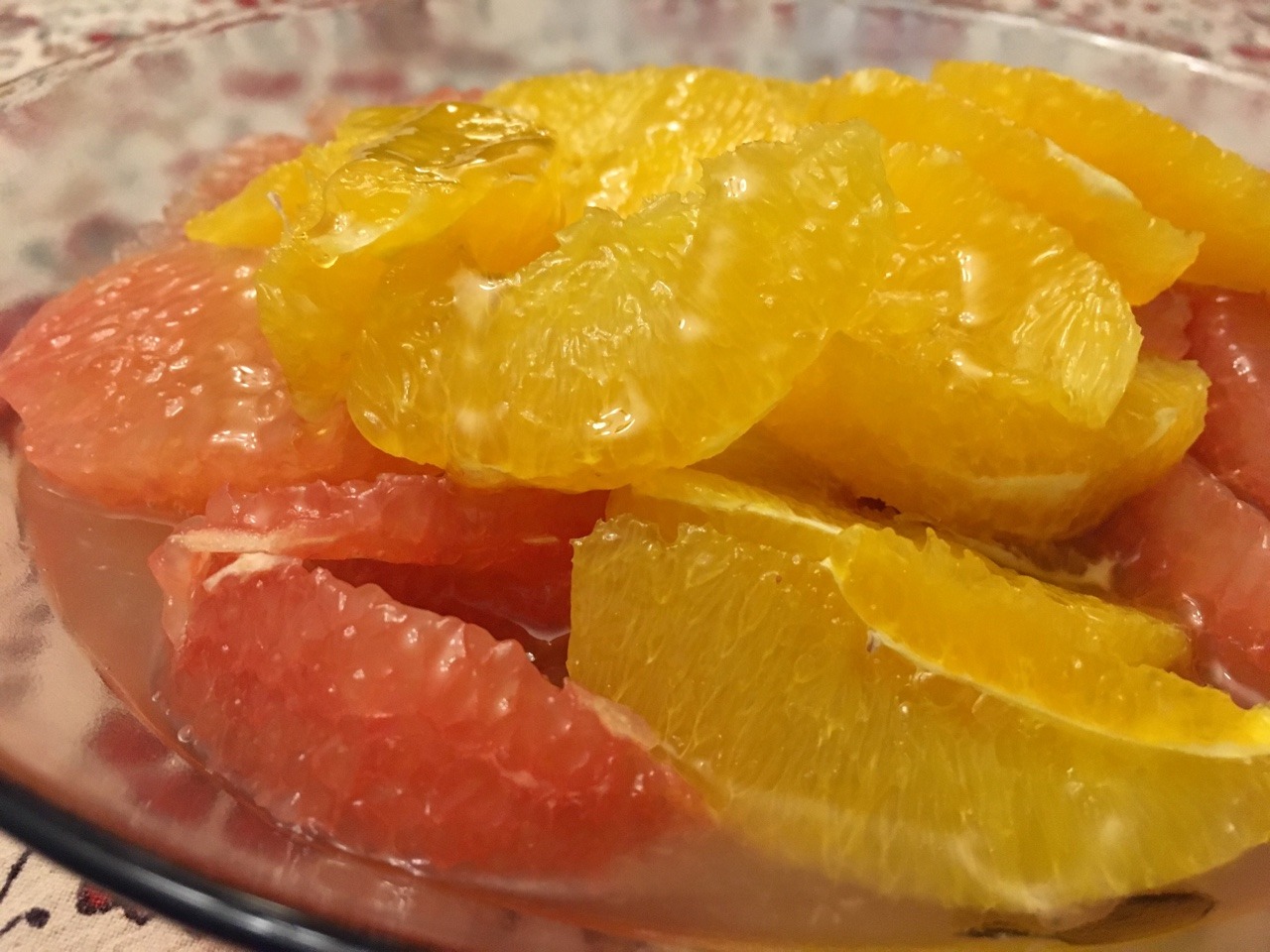
Peel and section two grapefruit and two navel oranges. Drizzle with honey (about 1 tsp). (Jan. 2018)
-
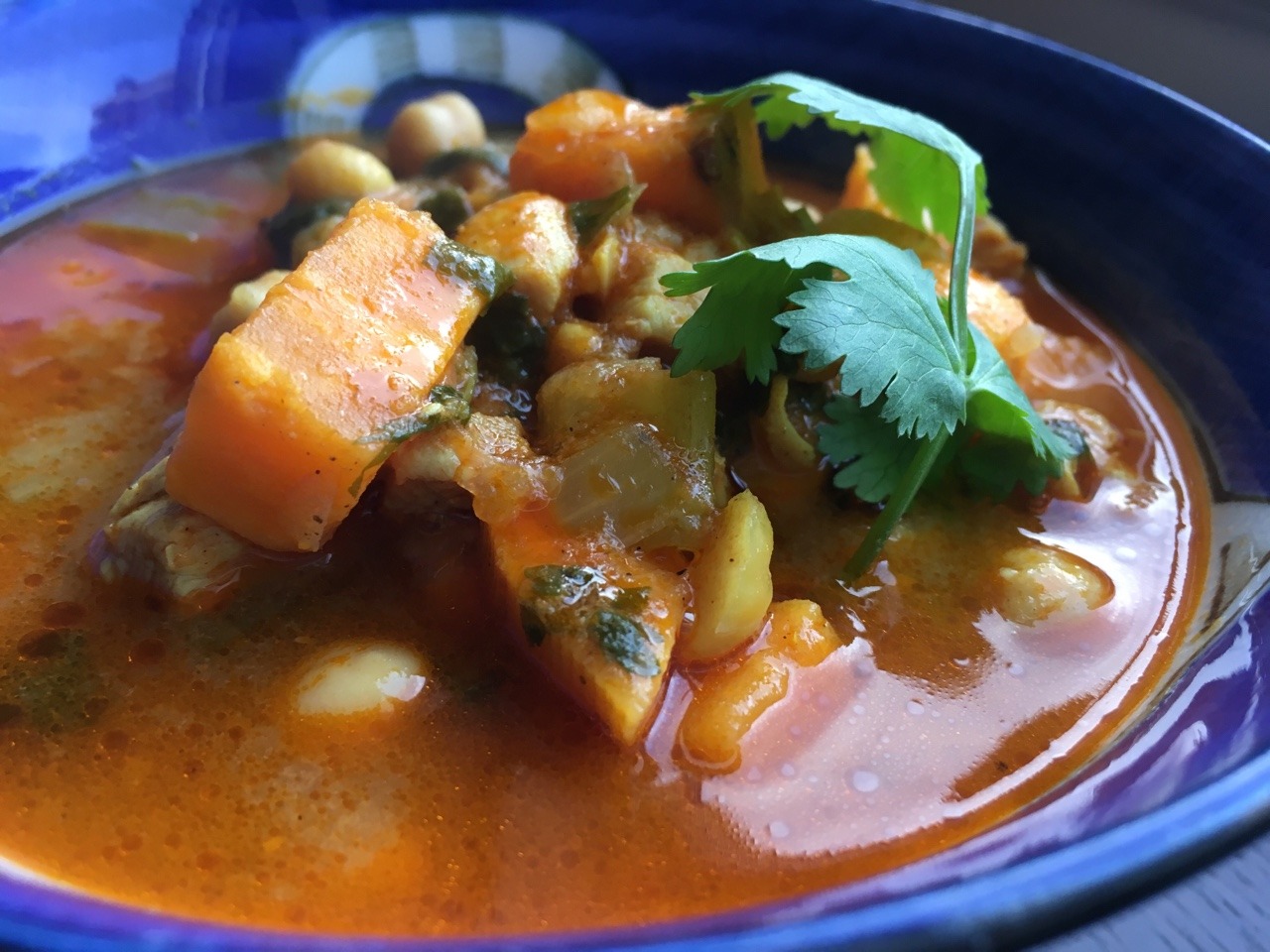
We tried this NYT recipe, which features Middle Eastern-style flavors: https://cooking.nytimes.com/recipes/1017914-fragrant-chicken-soup-with-chickpeas-and-vegetables Our modifications: First, we omitted the turnip based on our pantry; instead, we increased the celery from 2 to 5 stalks and doubled the amount of chickpeas. Second, we increased the chicken broth by 1 cup (to avoid it being a too-thick stew) and added about 1 tsp tomato paste. Third, we used 5 bone-in chicken thighs; we removed the skin, deboned, and chopped the chicken. We added the bones and meat to the broth; we removed the bones after the cooking finished. Fourth, we increased the lemon juice from 1 tsp to a whole lemon. Finally, we reduced salt wherever possible, including using no-salt chicken broth, chickpeas, and tomato paste. We seasoned with salt as needed. (Jan. 2018)
Note: I normally find cinnamon cloying in savory dishes, but it mellowed out during the simmering process and nicely seasoned the final stew. So I am glad we stuck with the recipe’s instruction to use ¾ tsp cinnamon.
-
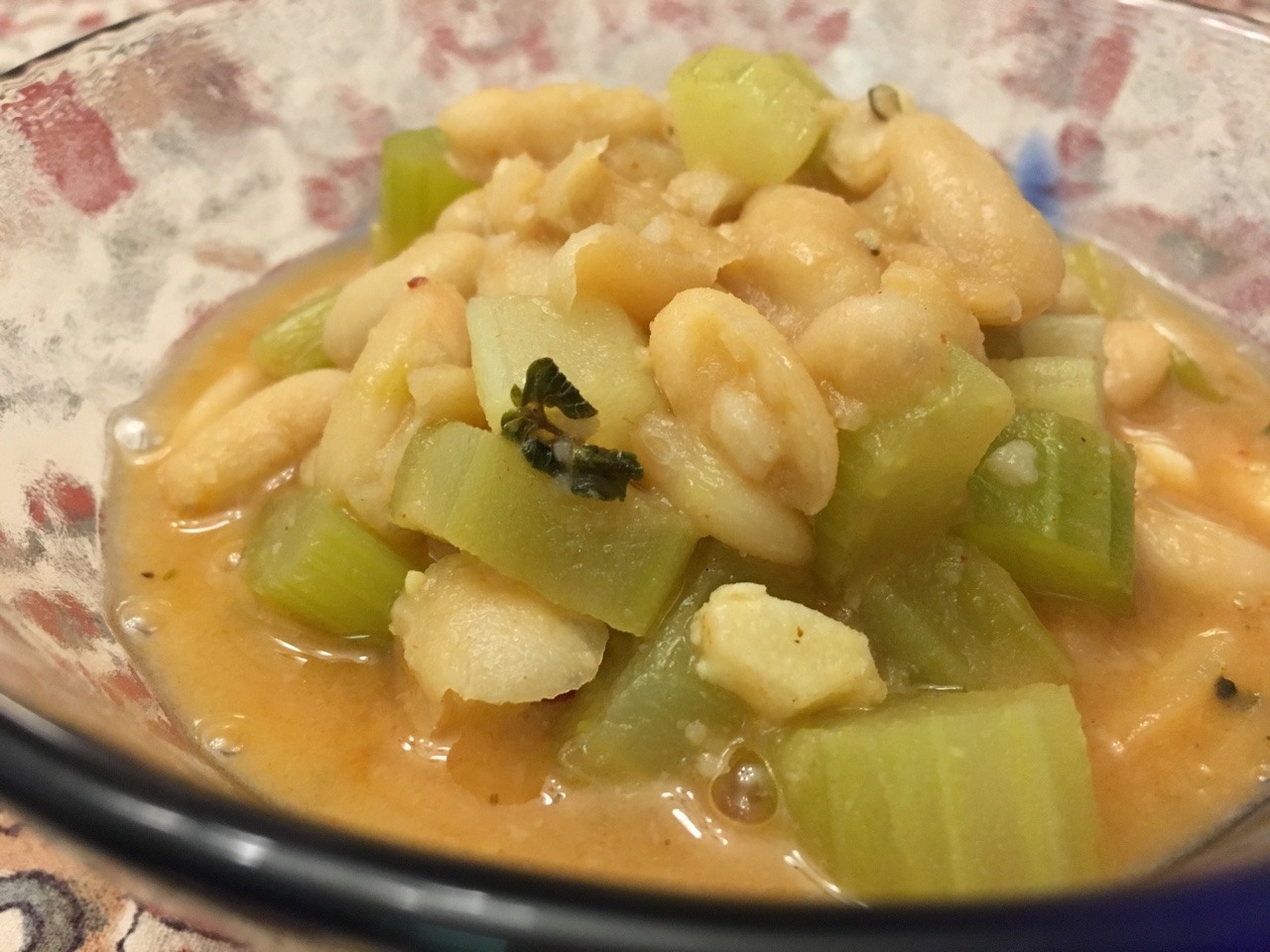
We tried this recipe: https://cooking.nytimes.com/recipes/1012634-white-beans-with-celery Our modifications: first, we used no-salt canned cannellini (4 x 13.4 oz quattro-carton), which we rinsed and drained in lieu of soaking and cooking dried white beans. For the bean draining liquid, we used a mix of water and some of the liquid captured while rinsing the beans; we did not use the bean liquidy from the cartons. Second, for 5 cups celery, we used an entire small head of celery, diced. Third, we sautéed the celery and garlic in a stainless steel low-walled, oven-proof Dutch oven, which we used for the remainder of cooking. (Jan. 2018)
Note: We found this a bit bland. We added some dried Greek oregano and crushed red pepper (about ½ tsp each) at the end, but the next time we will add the seasonings before the stew bakes.
-
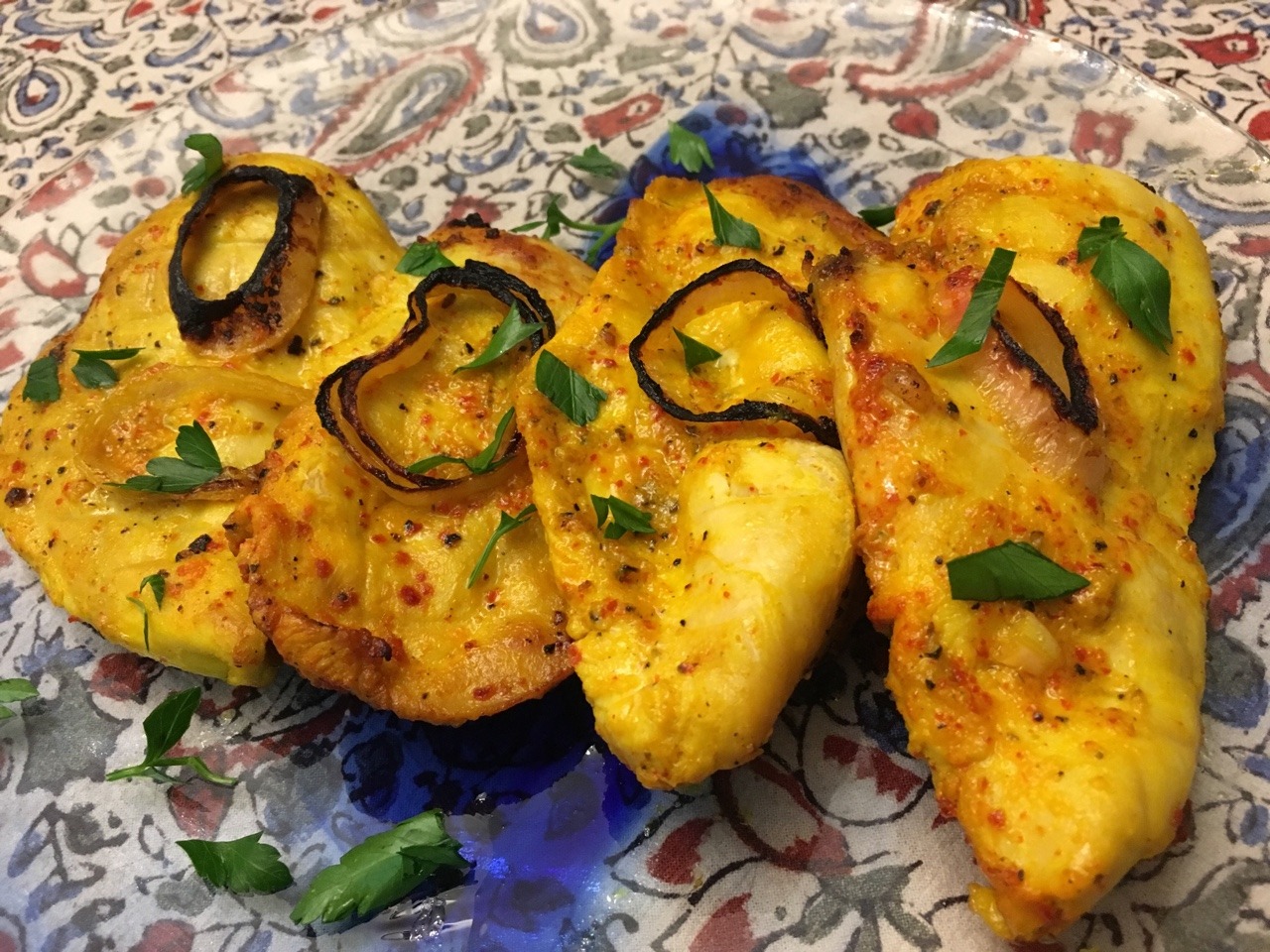
We tried this NYT recipe: https://cooking.nytimes.com/recipes/1014920-chicken-thigh-kebabs-with-turmeric-chile-and-saffron Our modifications: First, we used 4 chicken breast cutlets instead of thighs, and we kept the cutlets intact. We marinated the chicken overnight. Second, we used Korean red pepper powder for the chile. Third, we oven-broiled the chicken. We lined a baking sheet with foil, then placed a baking rack inside. We sprayed the rack with oil before placing the cutlets (lightly dressed with onion), 1 inch apart, on the rack. We first broiled, then baked; however, this resulted in thick pieces of chicken being pink. I think a better method would be to oven-bake at 350 until nearly fully cooked (maybe 8-10 mins), then to shift to high broil with the flame 8 inches from the chicken, flipping so that both sides are browned. We also saved the rest of the marinade and onion and heated them in a sauce pan while the chicken baked in the oven. (Jan. 2018)
-
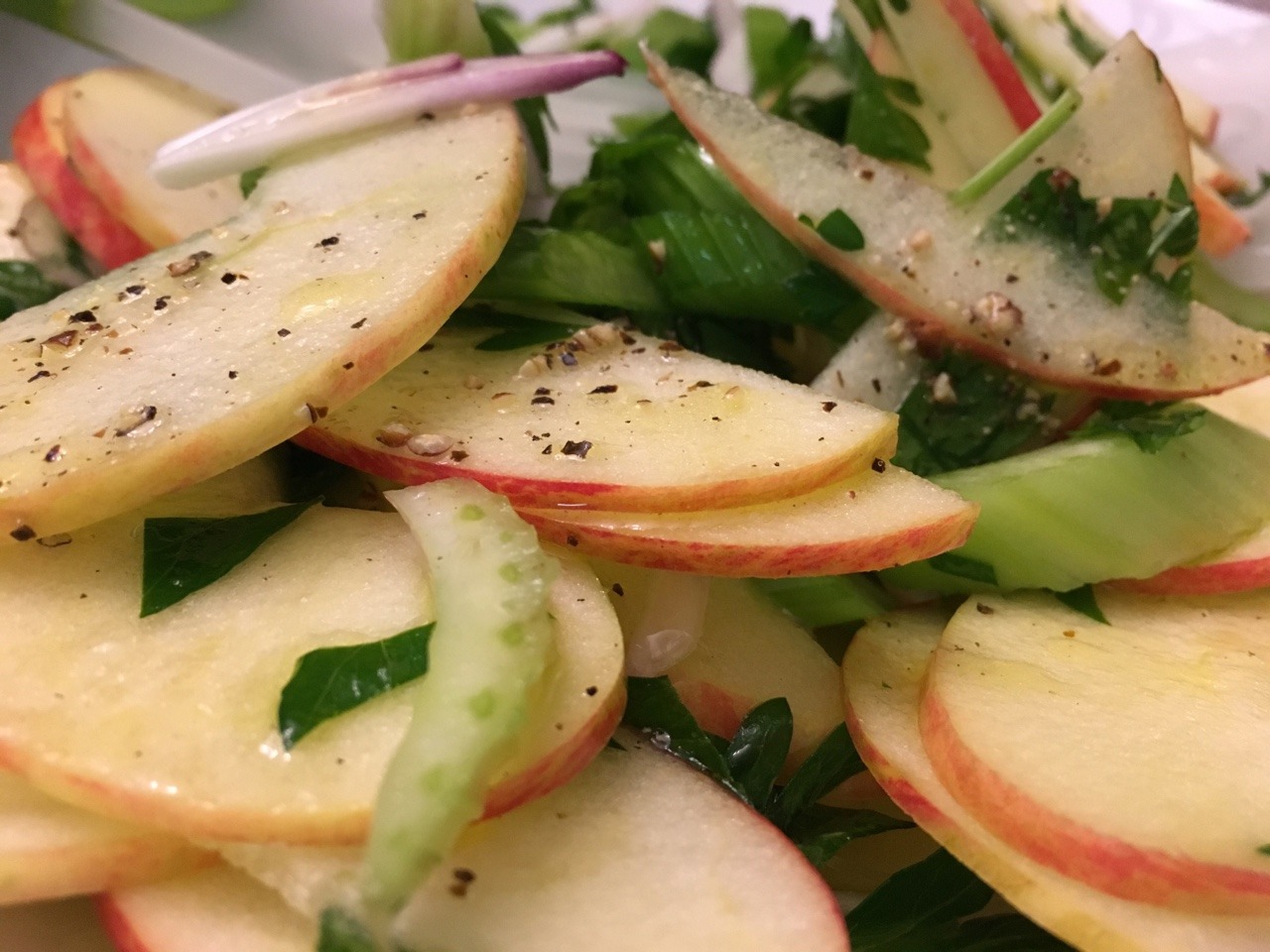
We tried this recipe: http://www.myrecipes.com/recipe/celery-apple-salad The recipe called for 2 cups each honey crisp apple and celery; we estimated this to be 1 large honey crisp apple (1/4” slices with skin on) and 4 stalks celery (cut in 1/2” diagonal slices). We increased the dressing to the juice of one lemon (not just 2 Tbsp) and a corresponding amount of olive oil. For the parsley, we estimated ½ cup to be 1/3 to ½ a bunch of leaves, roughly chopped into 1/2” pieces). For the red onion, we used one thinly sliced shallot bulb, cut along the grain, which we soaked in icy water (with a splash of white vinegar) for 10 mins to remove the sharp flavor and then drained before adding to the salad (see https://www.thekitchn.com/take-the-bite-out-of-raw-onions-with-this-one-simple-step-61685). (Dec. 2017)
-
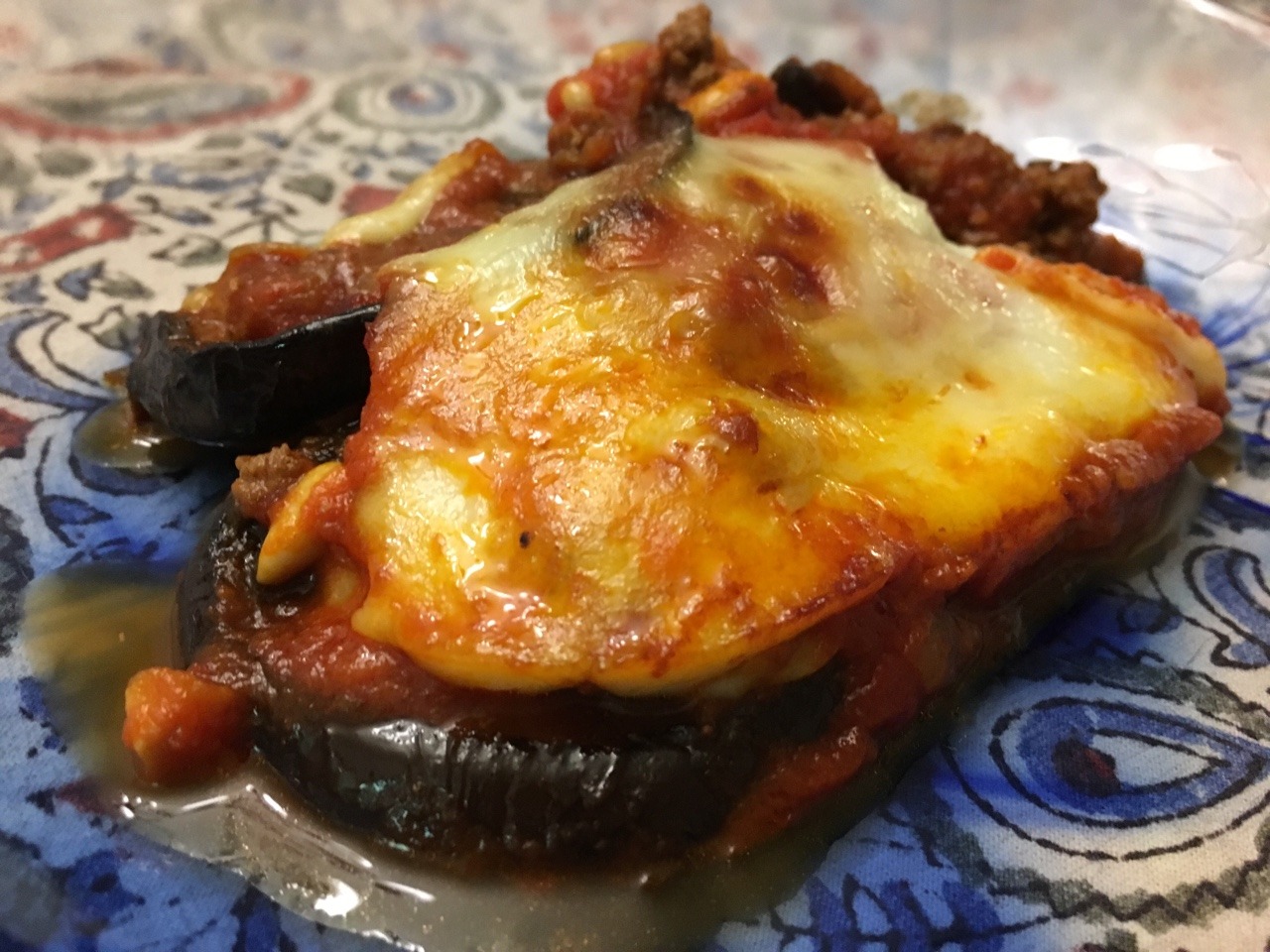
We tried this recipe: https://cooking.nytimes.com/recipes/1017426-eggplant-with-lamb-tomato-and-pine-nuts Our modifications: First, we used ½ lb each minced pork and minced bison in lieu of 1lb minced lamb. To reduce sodium, we used no-salt tomato sauce. Second, because we find cinnamon cloying, we used a combo of ¼ tsp cinnamon and ¼ tsp nutmeg. Third, instead of broiling the oil-brushed ½ inch eggplant rounds, we oven-roasted them at 450 for 30 mins total (flipping halfway through), following this recipe: http://piglettedc.tumblr.com/post/143686120171/oven-roasted-eggplant-preheat-oven-to-450-cut Fourth, the NYT recipe calls for 1 cup of warm water to be added to the perimeter of the 9×12 baking pan; this is a water bath method of baking (see Note below). Finally, at the end of cooking at 375, we placed the casserole (still in water bath) on the top rack, about 8 inches from the flame, and broiled on high to brown the mozzarella. The NYT recipe recommends serving the casserole with rice, but we found the casserole filling as it is. We served it with a light salad. (Dec. 2017)
Note: How we made the water bath: We placed the 9×12 pan in a slightly larger 10×13 pan, then carefully poured the 1 cup of water into the larger pan. At the end of 90 mins, the water had evaporated, so we added another 1 cup warm water into the larger pan at the same time that we placed the mozzarella slices onto the casserole. To prevent any glass baking dishes from cracking, it is important to use warm water and for neither glass pan to be refrigerated before being placed in the hot oven. More info on water bath baking here: https://food52.com/blog/12677-how-to-use-a-water-bath-without-landing-in-hot-water
Note 2: To make this a little healthier, we skipped the butter and toasted the ½ cup pine nuts in the toaster at 325/350 for a few mins. Keep a close eye to prevent burning. (Aug. 2018)
-
Subscribe
Subscribed
Have a WordPress.com account? Log in now.

