-
I cook as a hobby, and I maintain this blog primarily to keep track of recipes that my family has enjoyed over the years. I started blogging back in 2015, in response to requests from friends for recipes they had seen me post on Facebook (but that I couldn’t easily catalog). My original blog was on another platform that became less user-friendly over time. I migrated my blog to WordPress earlier this year, and I’ve spent more time than expected reformatting the migrated posts.
This blog is and always will be a work in progress. For example, I currently provide Tags for posts, but I have not coded for Categories. I also generally try to share the recipes themselves in my posts, but in cases where the recipe is not available online, I try to identify the source (e.g., the cookbook title and author) as needed. In some cases, such as where a family has shared their recipe with me but hasn’t authorized me to share it widely, I post a photo of the dish with that proviso.
I recently added a Search widget to this blog. On the desktop version, the Search bar appears prominently on the left hand side. But for some reason, it is hidden on the mobile app. If you’re on your phone, tap on the SHOW tab at the top left of the home page. That will reveal another screen with the Search bar.
I hope you enjoy exploring my blog and find some recipes to try.
-
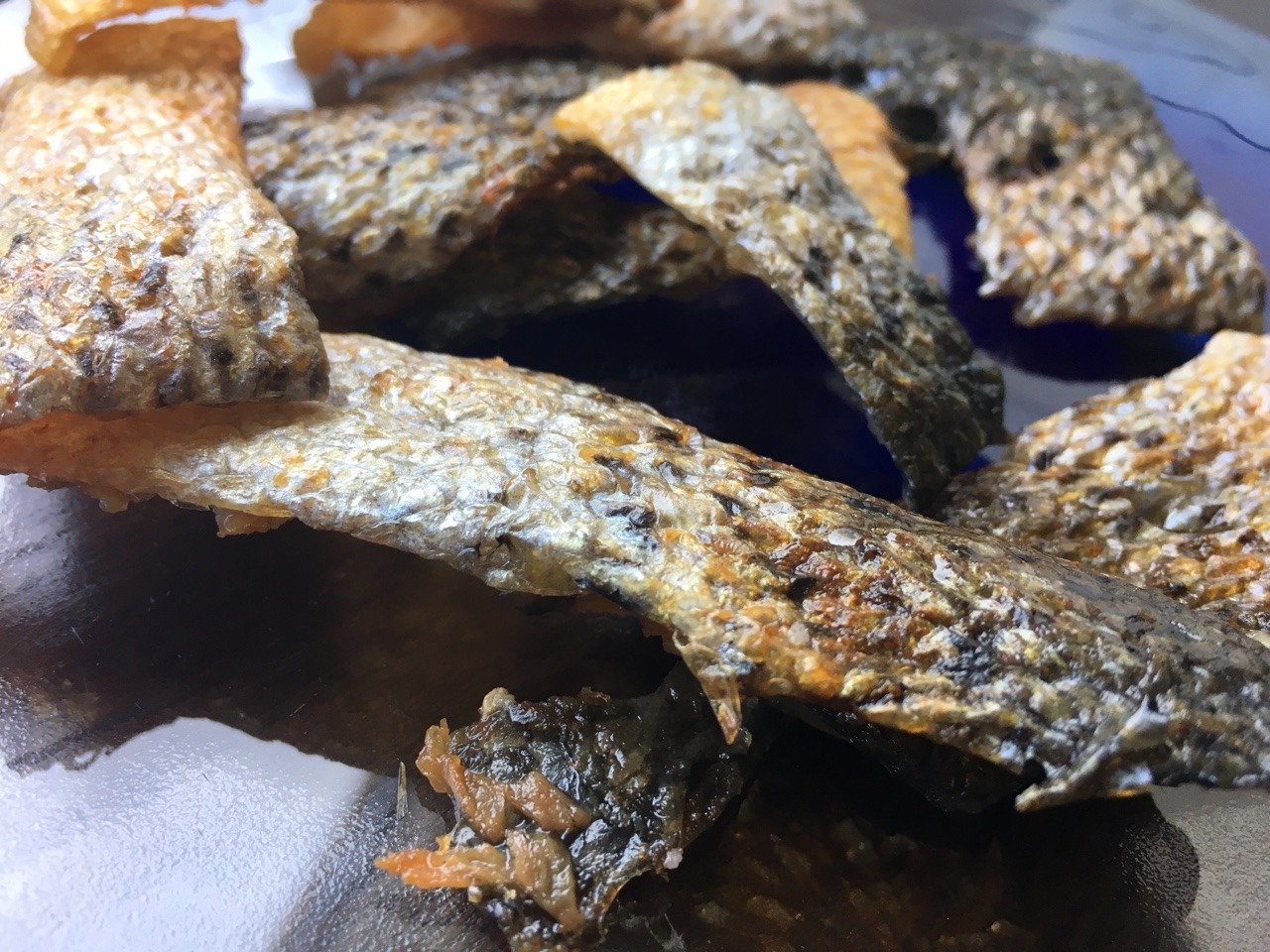
Inspired by Andrea Nguyen’s Viet World Kitchen Facebook post (July 1, 2017), we tried broiling strips of salmon skin. Using skin that remained from the Japanese seasoned salmon flakes (http://piglettedc.tumblr.com/post/157742349226/japanese-seasoned-salmon-flakes-our-salmon), we cut the semi-crisp skin into 3-inch long strips, placed them on a foil-lined baking sheet (skin side down), lightly sprayed the foil and the salmon skin pieces with canola oil, and lightly sprinkled with salt. We broiled on low, about 4 inches from the flame, for 2-3 mins. (Aug. 2017)
Note: Another option is to preheat the oven to 425, then oven-roast the skin (prepared as above) until brown on one side, then flip over. This should take about 5 mins total. (Jan. 2019)
-
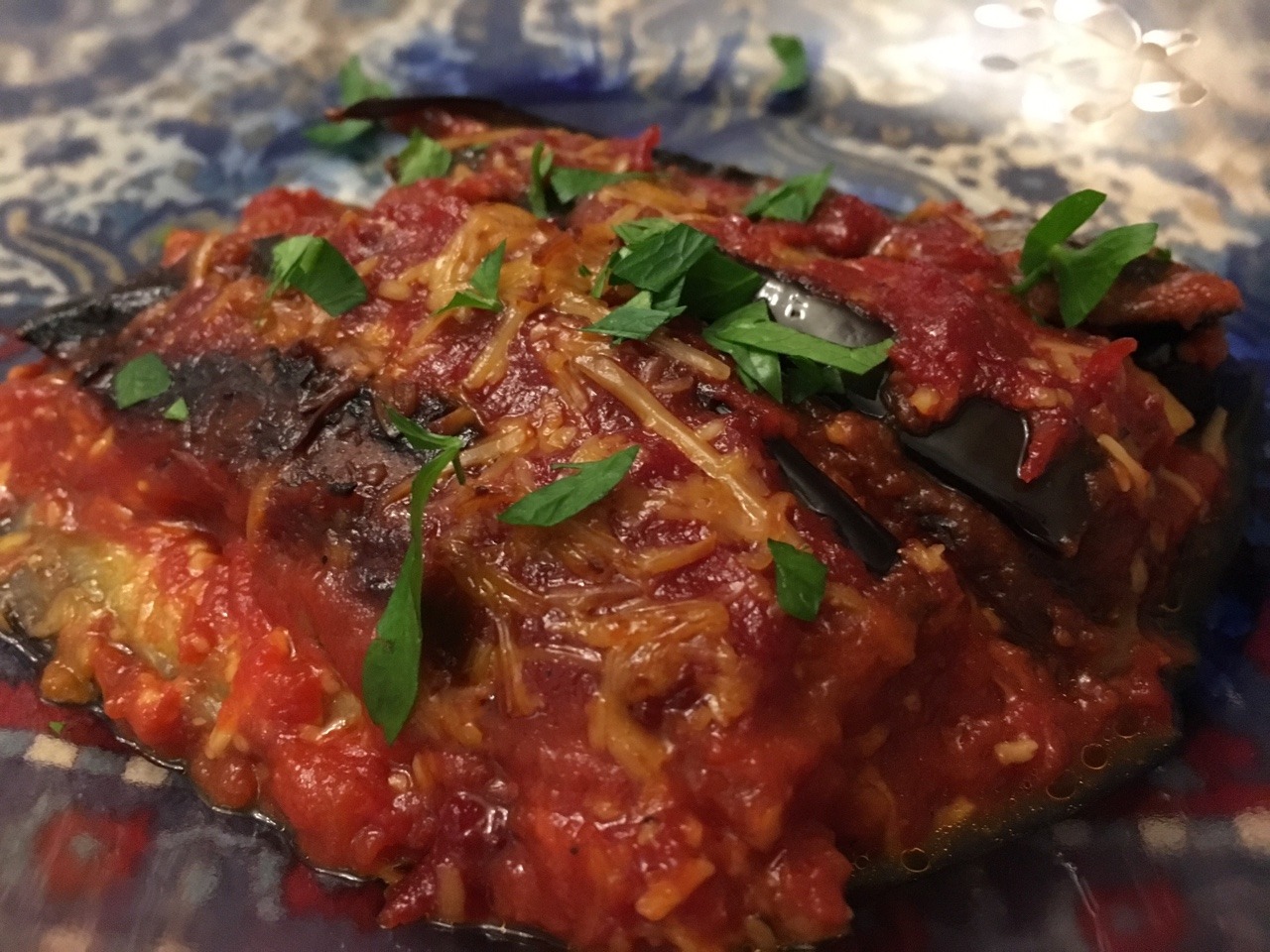
We tried a variation of the NYT recipe for zucchini parmesan, using 2.5 lb eggplant in lieu of zucchini: https://cooking.nytimes.com/recipes/1017523-zucchini-parmesan?login=email
We followed our modifications to the original recipe, details here: http://piglettedc.tumblr.com/post/163022801851/zucchini-parmesan-casserole-we-had-an-abundance We found that the eggplant slices took more time to roast, becoming brown on both sides after about 20 mins at 450.As a shortcut, we used 56 oz canned crushed tomatoes instead of fresh tomatoes; we also balanced out the sauce flavor with a dash of red wine vinegar, sugar, and fruit-infused white balsamic vinegar. (July 2017)
-
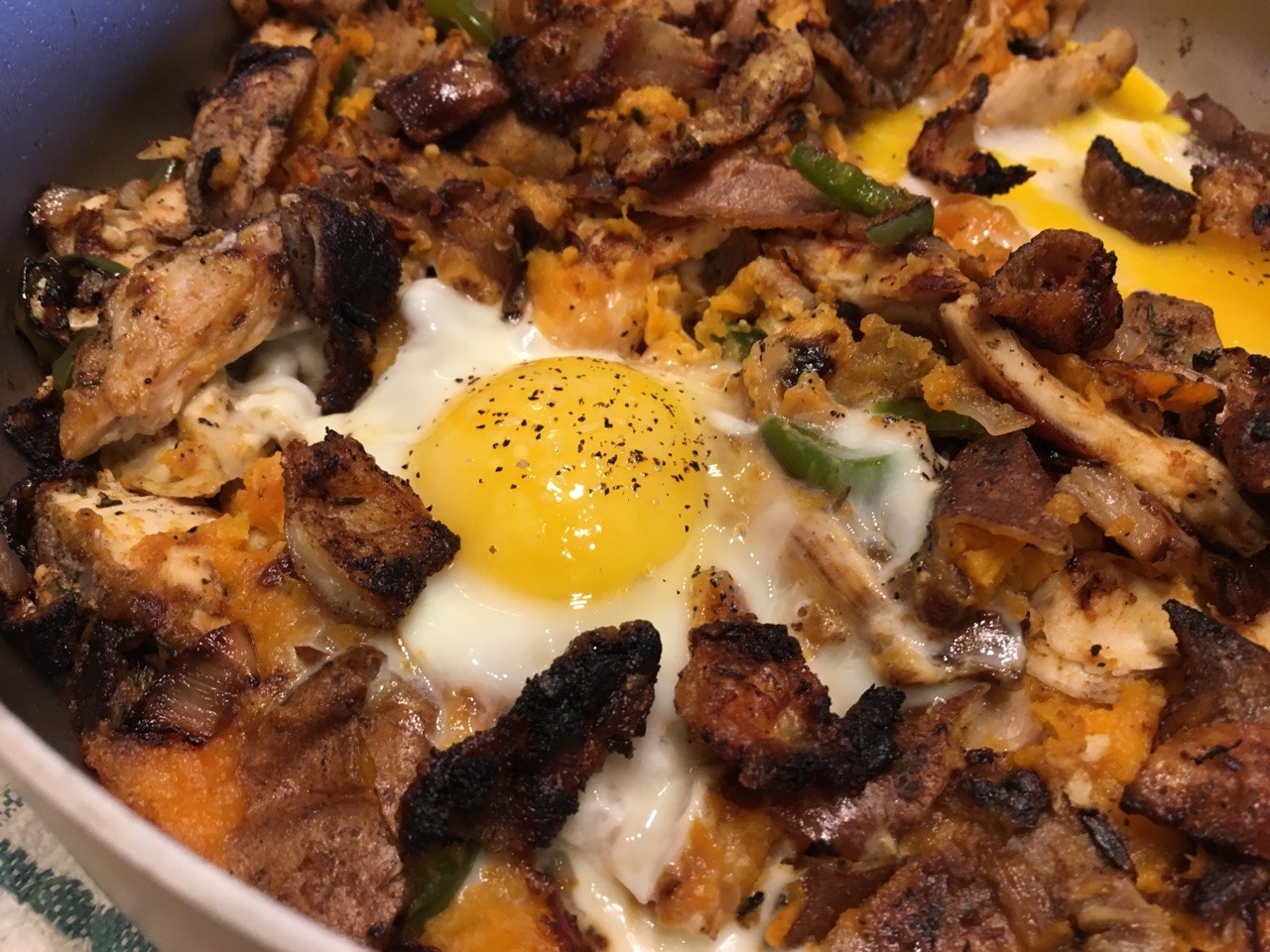
We tried this recipe for our leftover homemade roast jerk chicken and whole roasted sweet potato:
http://www.foodandwine.com/recipes/chicken-hash-eggsOur modifications: first, before adding any oil or butter to the pan, we removed the seasoned skin from thigh and breast, cut the skin into bite sized pieces, and sautéed them until crispy, then set aside. The skin already was seasoned with dry jerk seasoning, which we hoped would infuse the drippings. Second, we used the chicken skin drippings and 1 tsp butter for the pan, to which we added one minced shallot, four minced cloves garlic, and one jalapeño pepper (seeded and cut into half-moons slices). Third, we added handtorn pieces of one roasted Caribbean chicken thigh and breast, as well as one roasted, skin-on sweet potato, cut into bite sized pieces (half-rounds). We omitted a baked regular potato. Finally, because it was just the two of us, we reduced the number of eggs to just two; because my husband prefers his yolks cooked, I broke one of the yolks to let it run and cook more evenly. (July 2017)
-
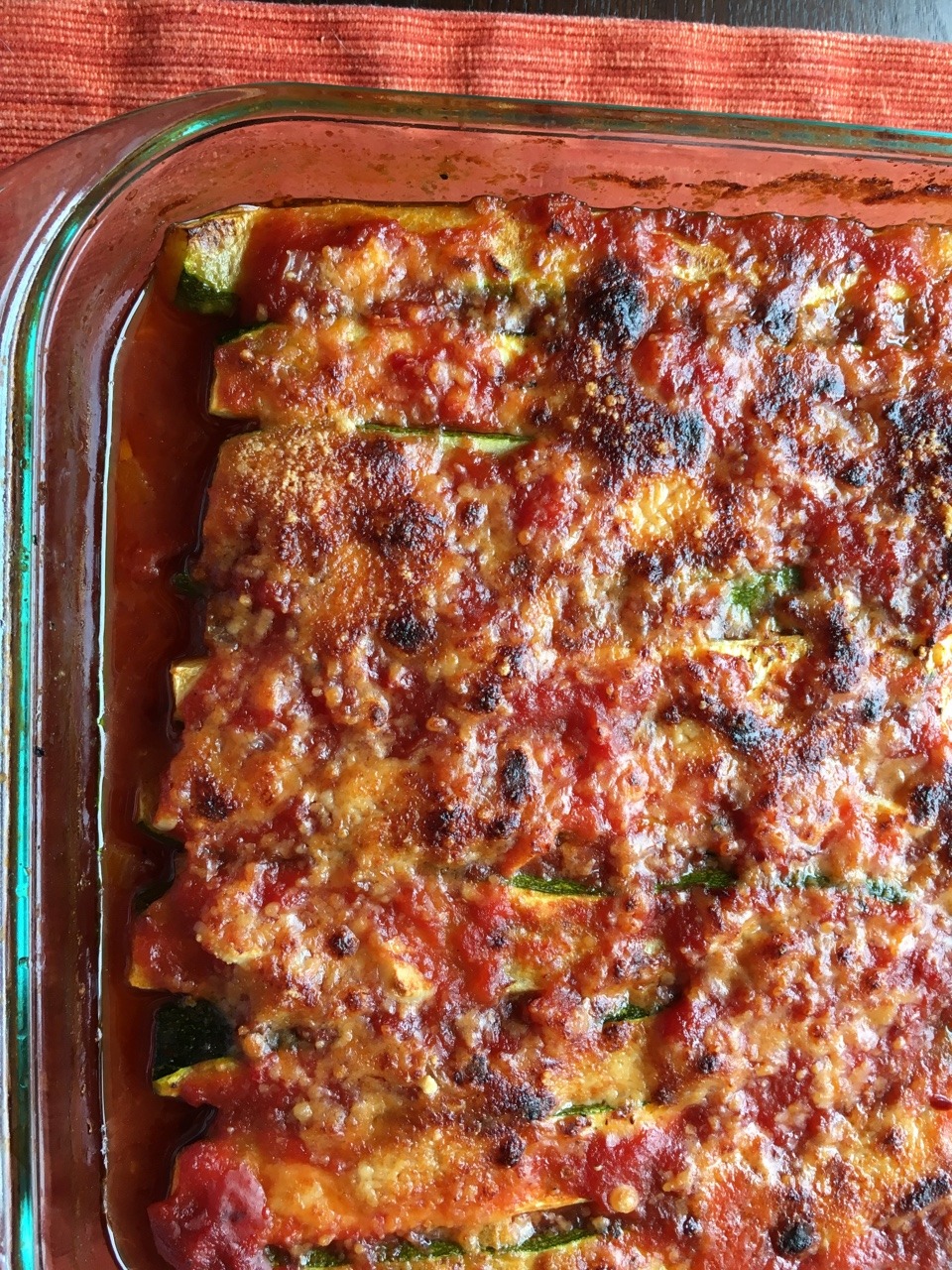
We had an abundance of zucchini, so we made this with our pantry ingredients: https://cooking.nytimes.com/recipes/1017523-zucchini-parmesan Our modifications: First, we used one shallot instead of a small onion. Second, in lieu of 2.5 lb fresh tomatoes, we used two 28 oz cans whole peeled canned tomatoes. To save time, we puréed the canned tomatoes before adding them to the onion-garlic mixture. Third, we omitted the basil (we didn’t have any). Fourth, we found that 2.5 lb of zucchini is about 5 medium zucchini. We roasted them on three parchment-lined sheet pans. Finally, we used a 3 quart (9×12) baking dish instead of a 2 quart. After baking at 375 for 35 mins, we broiled in the oven for 2-3 mins to brown the top. (July 2017)
Note: We found that cutting the zucchini lengthwise in half, and then slicing each half lengthwise into long ½ inch thick slices worked well. A mandolin would yield too-thin slices that would not have survived oven-roasting.
-
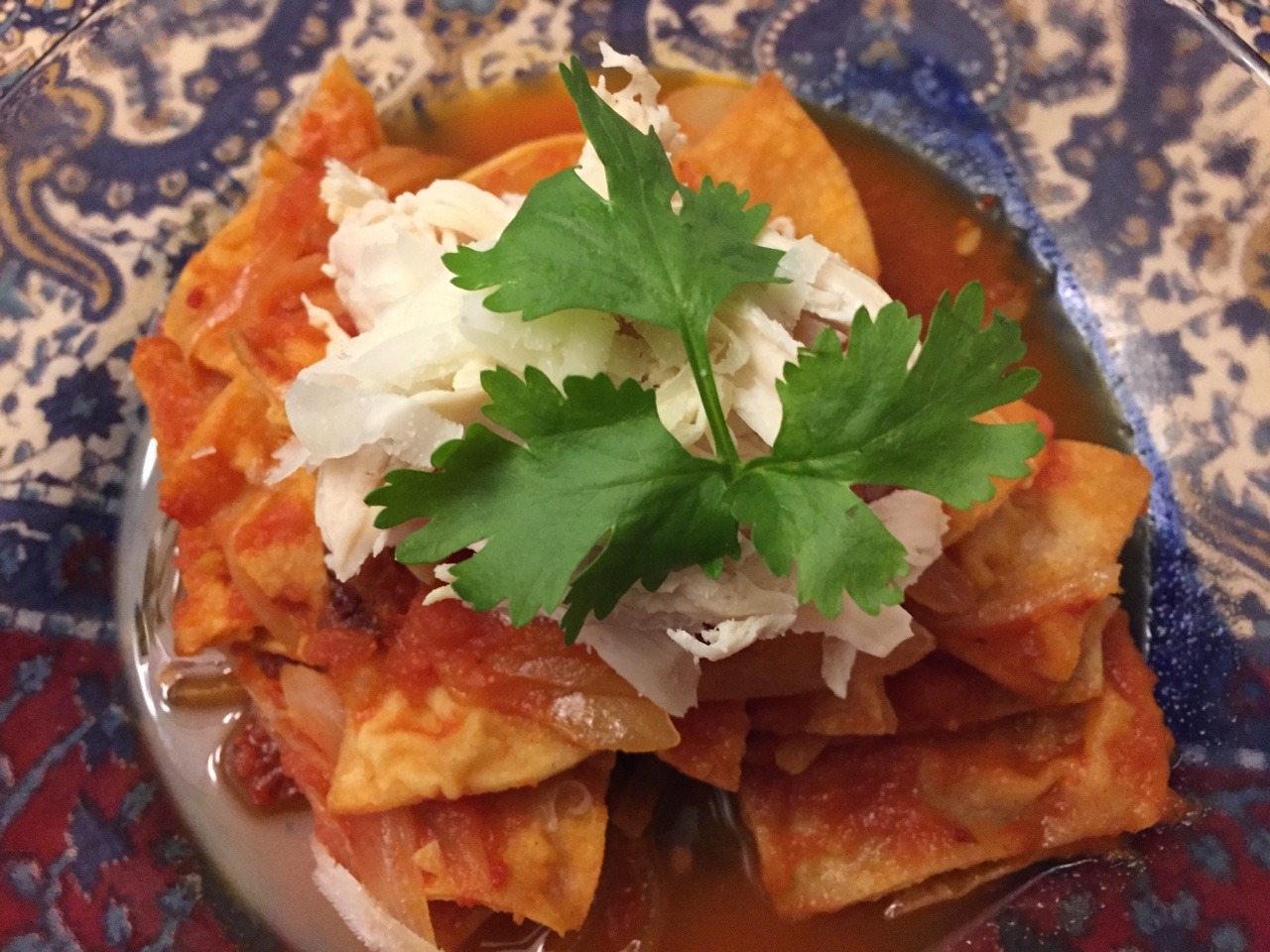
We followed this recipe: http://www.foodandwine.com/recipes/chipotle-chilaquiles. We had 13 fresh 5-inch diameter white corn tortillas, which we cut into 6 pieces (2″ x 1″ strips), tossed in olive oil, and then baked single layer on 2 baking sheets at 425 for 10 mins (tossed halfway), based on these instructions: https://blog.williams-sonoma.com/baked-chilaquiles/ We also simmered 1 skinless, boneless chicken breast in chicken broth-flavored water (about 1 tsp Better Than Bouillon in 2 cups water), plus more water to top off the chicken while simmering. (July 2017)
Note: The tortilla chips quickly soak up the sauce and become soggy, so we submerged only half of the chips into the sauce. (We set aside the remaining chips – still crispy and dry – and the remaining sauce separately for a later meal.) We plated the sauced chips, topped with shredded poached chicken (about ¼ cup per serving), garnished with shredded manchego cheese (substitute for oaxacan or chihuahua cheese) and some cilantro, and served immediately.
-
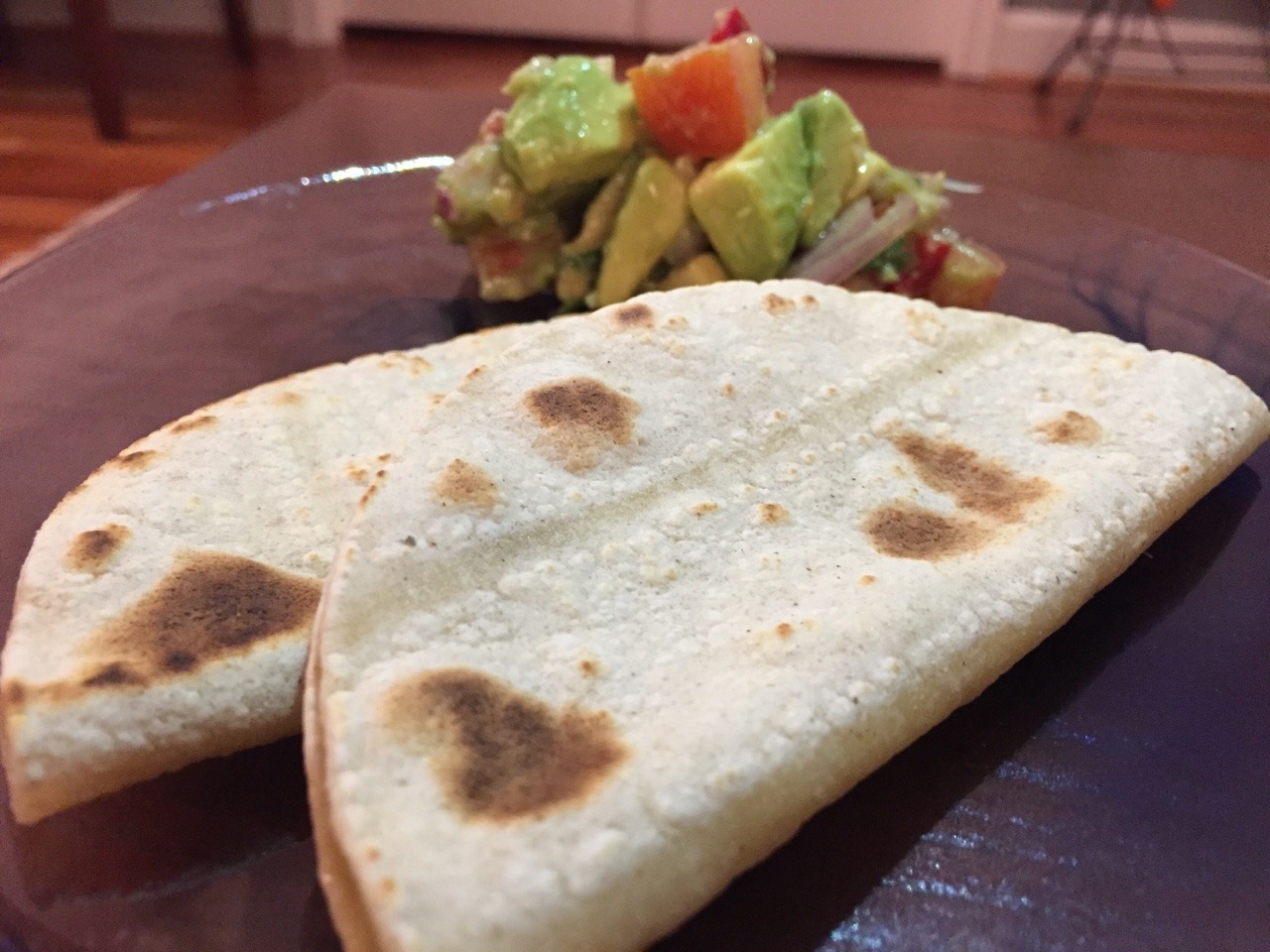
We tried this quesadilla recipe, using white corn tortillas, manchego cheese (which we shredded on a large-hole mandolin), and a nonstick 9″ pan: https://www.google.com/amp/mexicanfoodjournal.com/quesadillas-and-sincronizadas/amp/ (July 2017)
We served these quesadilla with guacamole, recipe here: http://piglettedc.tumblr.com/post/148260873751/simple-guacamole-recipe-here
-
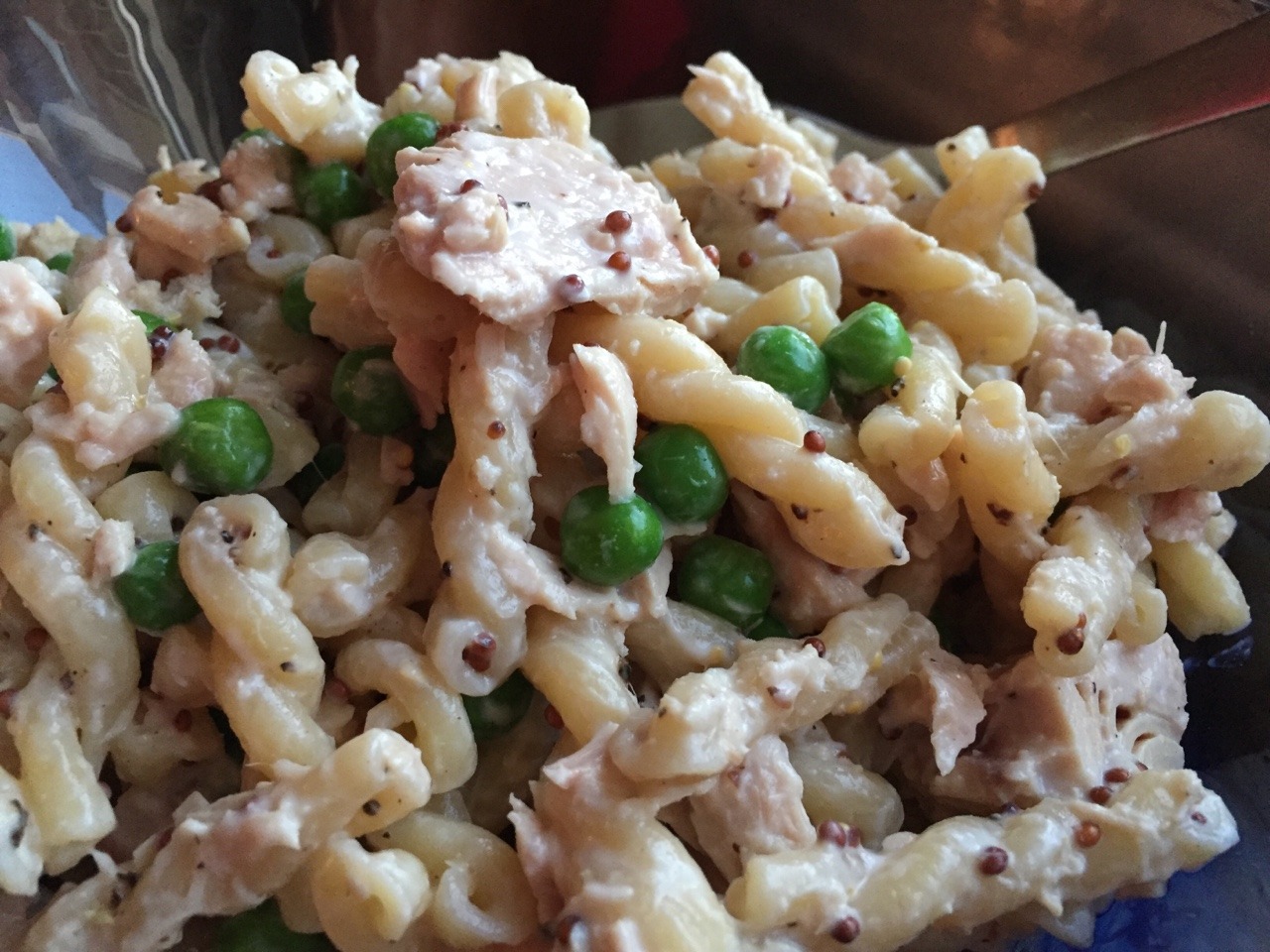
We tried this recipe: https://lexbake.wordpress.com/2012/05/28/tuna-macaroni-salad/ Our modifications: to make this dish lighter, we decreased the pasta from 1 lb to ¾ lb (here, gemelli) and the mayonnaise from 1 cup to ¼ cup. We also used two 5-oz cans (10 oz total) drained tuna. We still used 1 cup green peas (frozen, which we rinsed in room temperature water and then drained), 1 Tbsp whole grain mustard (such as Maille Old Style mustard), and salt and pepper to taste. We omitted the onion. Rather than making it hours ahead of time, we served it immediately. (June 2017)
As my friend Heidi suggests, you can add a dash of white vinegar for brightness. A later time, we added about 1 Tbsp white vinegar. -
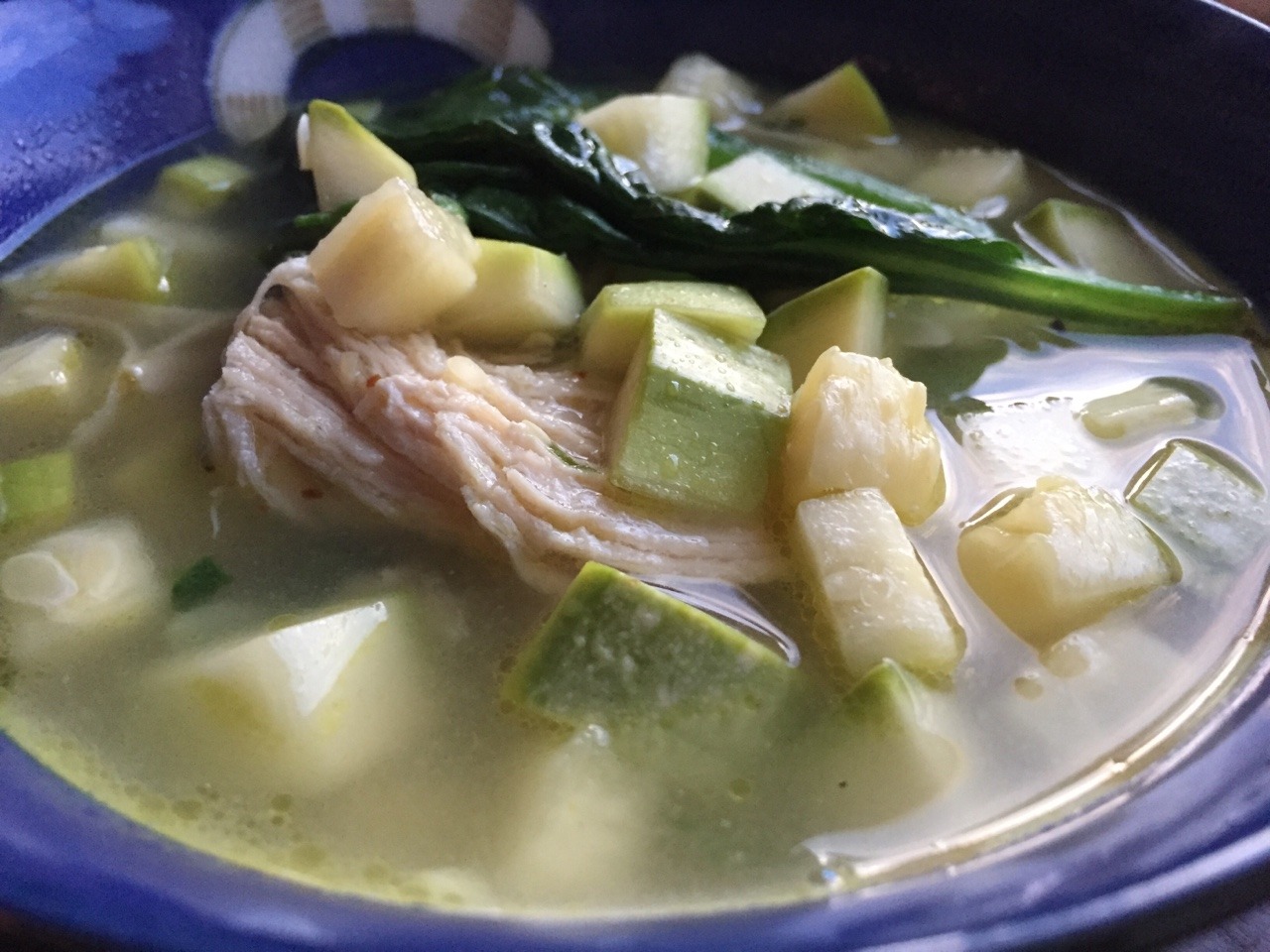
We had an abundance of pipian (aka cousa) squash, so we tried this soup: https://web.archive.org/web/20170709080152/http://myhalalkitchen.com/hearty-chicken-zucchini-soup/
Our modifications: 3 pipian squash in lieu of zucchini; two boneless, skinless chicken breasts with one chicken neck (to add depth to the chicken stock); increased garlic cloves to 8; added 6 oz fresh spinach (not frozen) during the last 3 mins of simmering (not 15 mins, which would have overcooked the spinach); and added a dash of marash pepper at the end. Rather than dicing the cooked chicken breasts, we fork-shredded them. We also omitted the cheese. (June 2017)
Note: At the end of cooking, if the soup tastes underseasoned, we sometimes add a dash of garlic powder and/or Korean beef soup seasoning (sogogi dashida).
Note 2: Another time, we used 8 cups homemade chicken broth from 1 boneless chicken breast, chicken fat and skin from 5 thighs (without the thigh meat), 2 stalks celery (cut into 2” pieces), 1 large carrot (cut into 2” pieces), 1 medium onion (peeled and halved), 2 garlic cloves, 2 bay leaves, a few sprigs whole parsley (about 1/4 cup), 1 tsp kosher salt, and 8 cups water. It took about 20 mins to get to full pressure and another 10 mins maintained at that pressure. Following natural release, we shredded the chicken breast, measured out the broth (it was nearly 8 cups), and discarded the remaining solids. Even after making our own broth, we added 1 tsp Better Than Bouillon chicken concentrate for depth. Also, because we already had garlic in our homemade broth, for the zucchini we added only 4 small cloves garlic (minced) along with zucchini. (Jan. 2026)
-
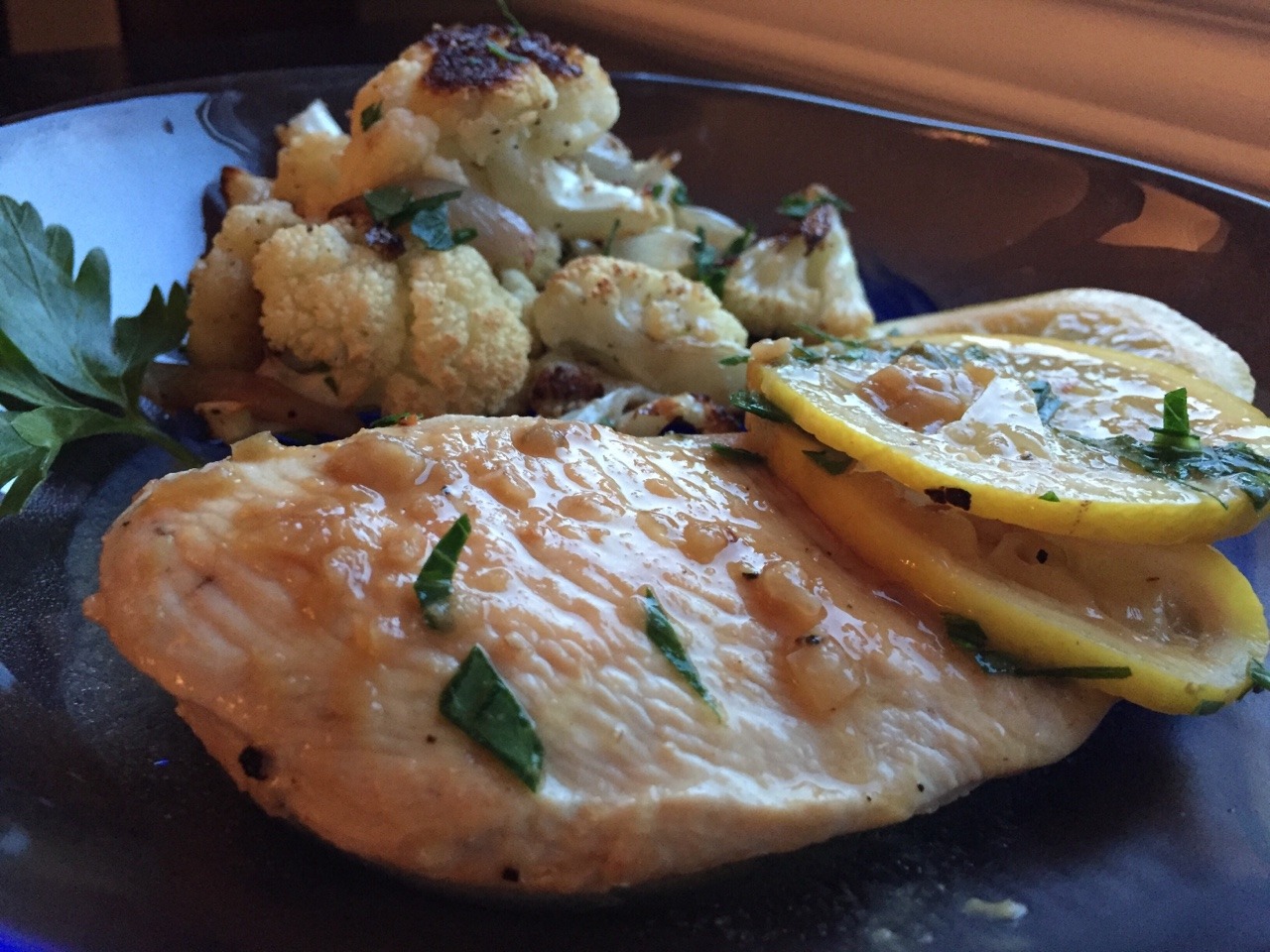
Details here: http://www.cookinglight.com/recipes/charred-lemon-chicken-piccata. The chicken cutlets took longer to cook than expected, perhaps because they were not thin enough.
We served this with oven-roasted cauliflower, which we made except for tahini dressing (we also added some shallots): http://piglettedc.tumblr.com/post/144070024406/armenian-style-roasted-cauliflower-with-tahini (June 2017)
-
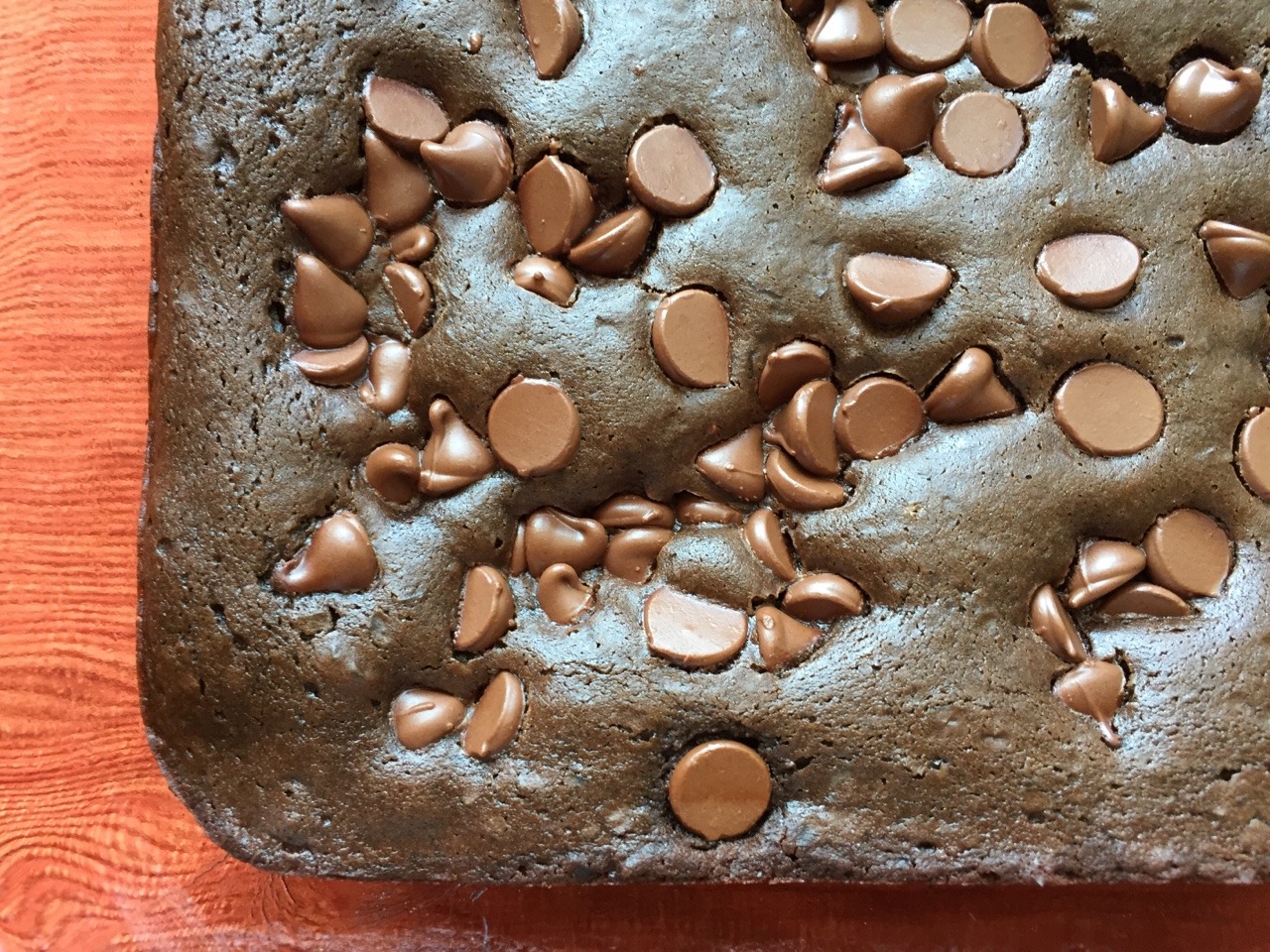
We tried this recipe, which ingeniously uses black beans in lieu of flour and butter. We forgot to use parchment paper, and we used 1% milk instead of almond. We used an 8×8 baking dish instead of 9×9. http://www.skinnytaste.com/amazing-flour-less-brownies/ (June 2017)
-
Subscribe
Subscribed
Have a WordPress.com account? Log in now.

