-
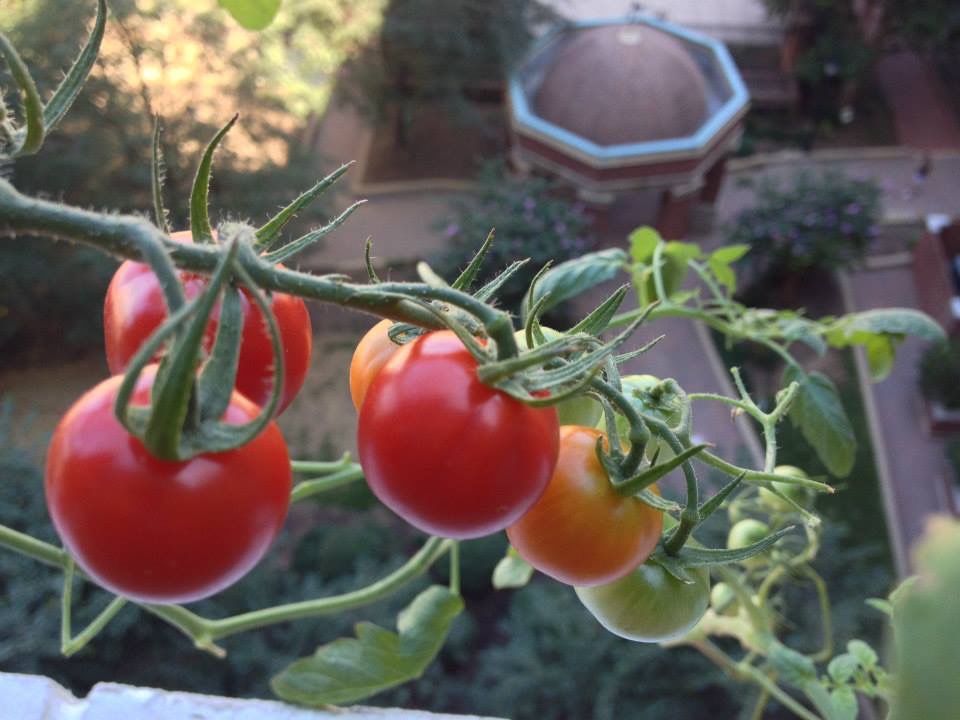
I cook as a hobby, and I maintain this blog primarily to keep track of recipes that my family has enjoyed over the years. I started blogging back in 2015, in response to requests from friends for recipes they had seen me post on Facebook (but that I couldn’t easily catalog). My original blog was on another platform that became less user-friendly over time. I migrated my blog to WordPress earlier this year, and I’ve spent more time than expected reformatting the migrated posts.
This blog is and always will be a work in progress. For example, I currently provide Tags for posts, but I have not coded for Categories. I also generally try to share the recipes themselves in my posts, but in cases where the recipe is not available online, I try to identify the source (e.g., the cookbook title and author) as needed. In some cases, such as where a family has shared their recipe with me but hasn’t authorized me to share it widely, I post a photo of the dish with that proviso.
I recently added a Search widget to this blog. On the desktop version, the Search bar appears prominently on the left hand side. But for some reason, it is hidden on the mobile app. If you’re on your phone, tap on the SHOW tab at the top left of the home page. That will reveal another screen with the Search bar.
I hope you enjoy exploring my blog and find some recipes to try.
-
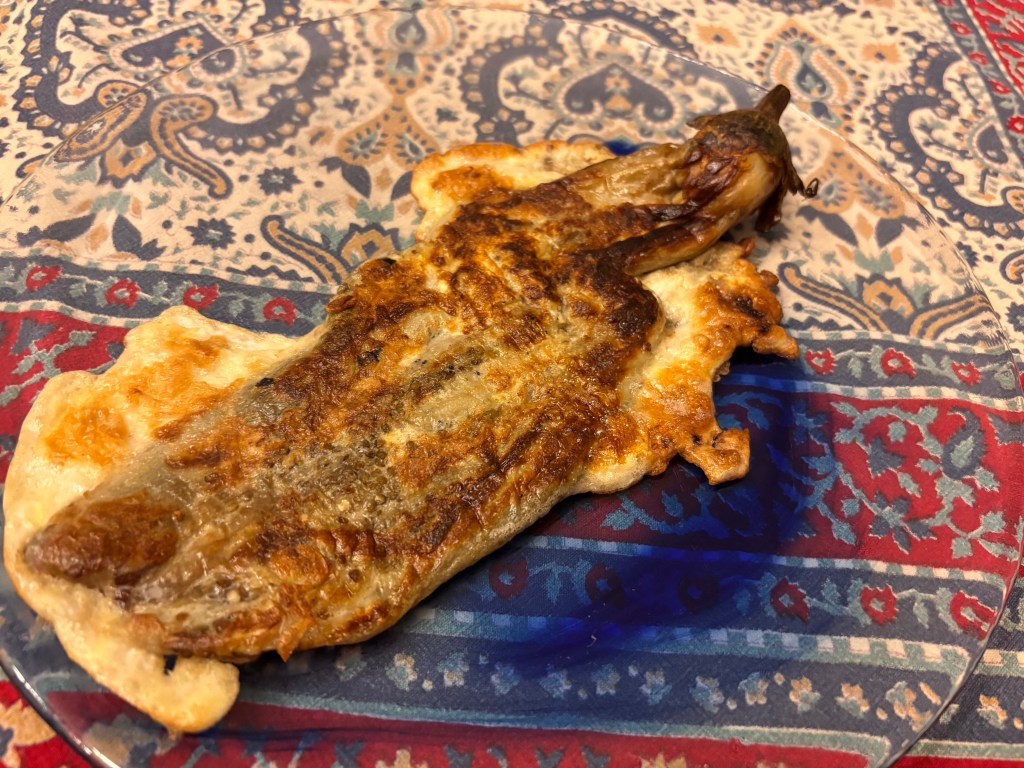
We have been intrigued by this Filipino recipe and tried it with Chinese eggplant: https://panlasangpinoy.com/filipino-vegetable-food-eggplant-omelet-tortang-talong-recipe/.
Our modifications: first, we made only one eggplant (a quarter of the recipe). We grilled the Chinese eggplant directly on our gas burner on medium heat. We charred it until the skin turned brown and the flesh appeared to soften (about 10 mins), but the stem in particular was undercooked. The next time, we will make an effort to grill it more evenly throughout the entirety of the eggplant.
Second, we scrambled one large egg in a medium mixing bowl. The next time, we will place the scrambled egg in a shallow ceramic bowl while dipping in the fanned-out eggplant. We followed the rest of the recipe. (Oct. 2026)
We served this with Filipino sour soup: https://cookingadventures.blog/2025/10/16/filipino-sour-soup-with-minced-pork-and-vegetables-sinigang-na-baboy/.
-
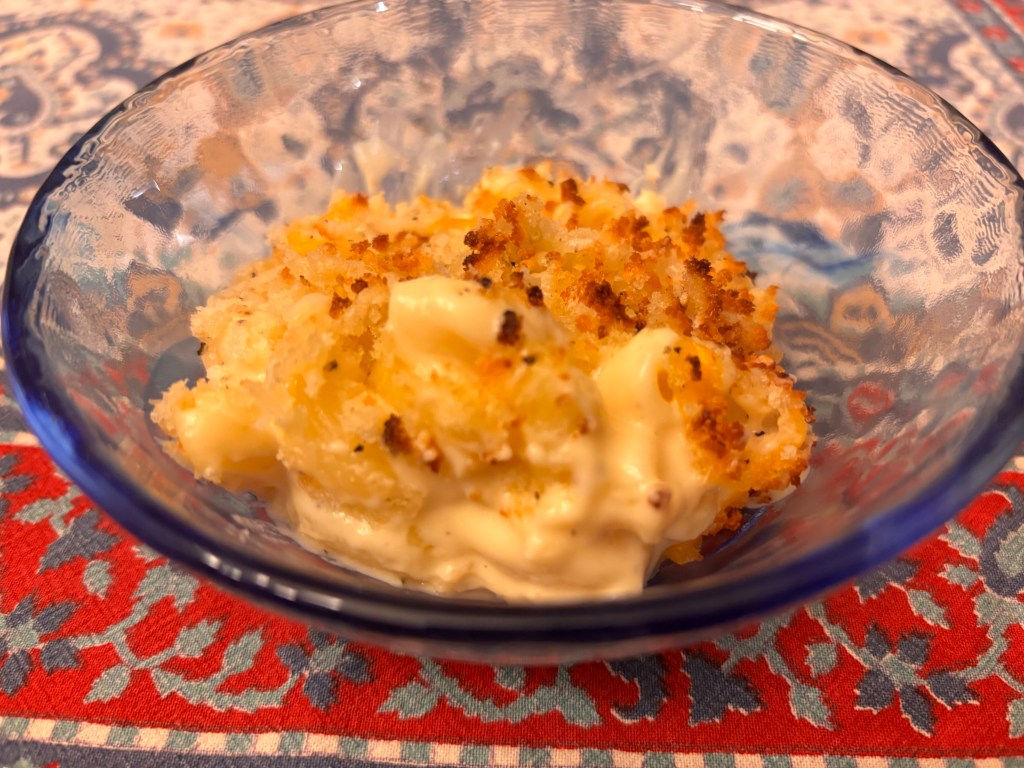
My husband loves mac and cheese, and we decided to try this recipe: https://cooking.nytimes.com/recipes/791299472-creamy-mac-and-cheese-with-buttered-crumbs?unlocked_article_code=1.G1E.ourk.neG1O0njXeTE&smid=ck-recipe-iOS-share
Our modifications: first, we halved the recipe as follows: for the main body, 12 oz (minus 1/4 cup, set aside) Trader Joe’s Ooey Gooey Cheese Blend (https://www.traderjoes.com/home/products.html), which is a combo of cheddar, gruyere, and havarti (see note below); 2 Tbsp unsalted butter, 3/4 tsp dry mustard powder, 2 Tbsp flour, 2 cups milk, 1/2 lb (8 oz) large elbow pasta, and 1/4 tsp freshly grated whole nutmeg. We used a splash of hot pasta water. We placed the contents in an 8×8” buttered baking dish.
Second, for the topping, 1/2 cup panko, 1 Tbsp melted butter, 1/8 tsp each salt and black pepper, and 1/4 cup of the set-aside Trader Joe’s Ooey Gooey.
Third, we found that the mac and cheese cooled too quickly. We broiled the casserole at the broiler setting on Low. But the main dish was not warm, so we then heated the entire casserole at 350 for 10 mins. (Oct. 2026)
We served this dish with this salad: https://cookingadventures.blog/2015/03/25/pear-avocado-and-spinach-salad-i-learned-this/ (we used honeycrisp apple instead of pear).
Note: The next time, we may hand-shred an 8 oz block of cheddar and a 6 oz block of gruyere, for a total of 14 oz shredded cheese.
-
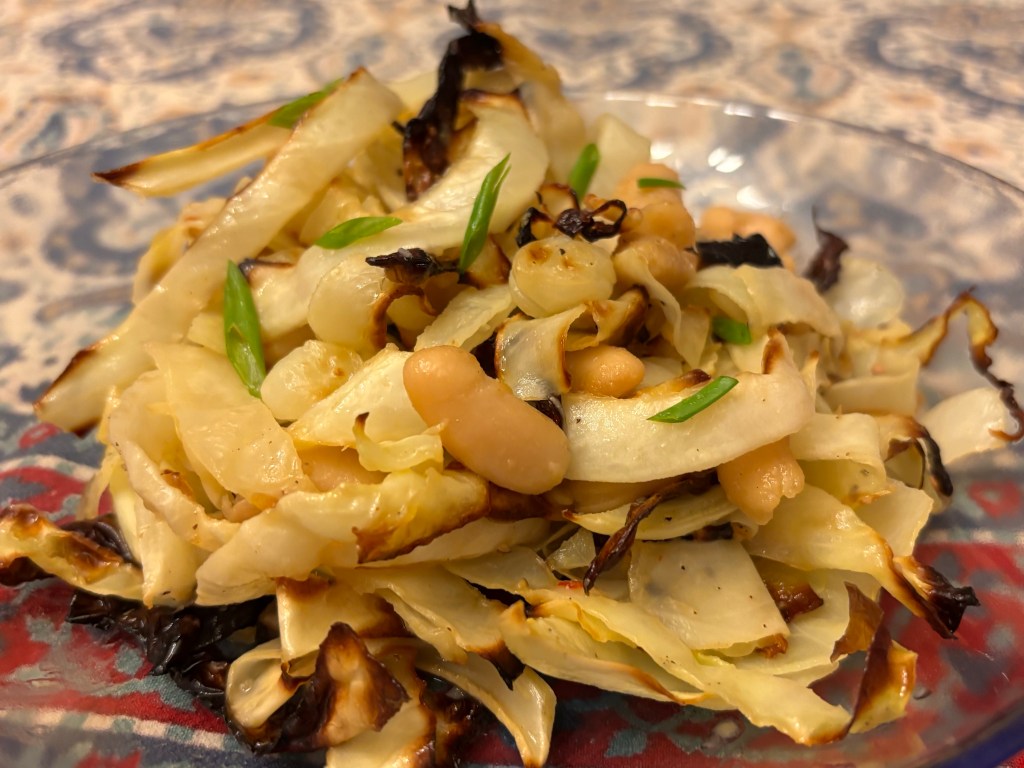
We had half of a medium green cabbage in our fridge, and we tried this recipe featuring Sicilian flavors: https://cooking.nytimes.com/recipes/1027365-roasted-cabbage-and-butter-beans?unlocked_article_code=1.GVE.83ft.KgNNjUppQSZc&smid=ck-recipe-iOS-share. This was a surprisingly delicious and complex recipe; definitely a keeper.
Our modifications: first, we halved the recipe as follows: 1/2 medium cabbage (see Note below), 1 Tbsp avocado oil (for roasting) 2+ Tbsp olive oil (for sauteeing and drizzling), 13.5 oz cannellini beans (rinsed and drained), 1 garlic clove (microplaned), 1/4 tsp crushed red pepper, and juice from 1/2 medium lemon. The next time, we’ll also include 2 Tbsp minced parsley.
Second, we preheated the oven to 425 (multirack convection) instead of 400. After coring the cabbage and cutting into 1/2” slices, we placed them into a large mixing bowl, drizzled 1 Tbsp avocado oil, and tossed together. We placed the sliced cabbage on 3 foil-lined rimmed baking sheets and roasted for 20 mins (until edges were browned).
Third, at that point we took the roasted cabbage out of the oven and placed the slices back in the large mixing bowl. We then heated a large nonstick frying pan with 2 Tbsp olive oil, added 1 tsp anchovy paste (which is the equivalent of 2 anchovy fillets), microplaned garlic, and crushed red pepper. We sauteed on medium until fragrant, then folded in the roasted cabbage.
Finally, we sauteed the cabbage with the bean and anchovy mixture. We then drizzled with olive oil and juice from 1/2 fresh lemon. We didn’t have parsley, so we garnished with minced scallion greens. (Oct. 2026)
Note: Given that half a medium cabbage yielded enough for 3 baking sheets, we are skeptical we could ever make the full recipe (which calls for a full head of cabbage).
-
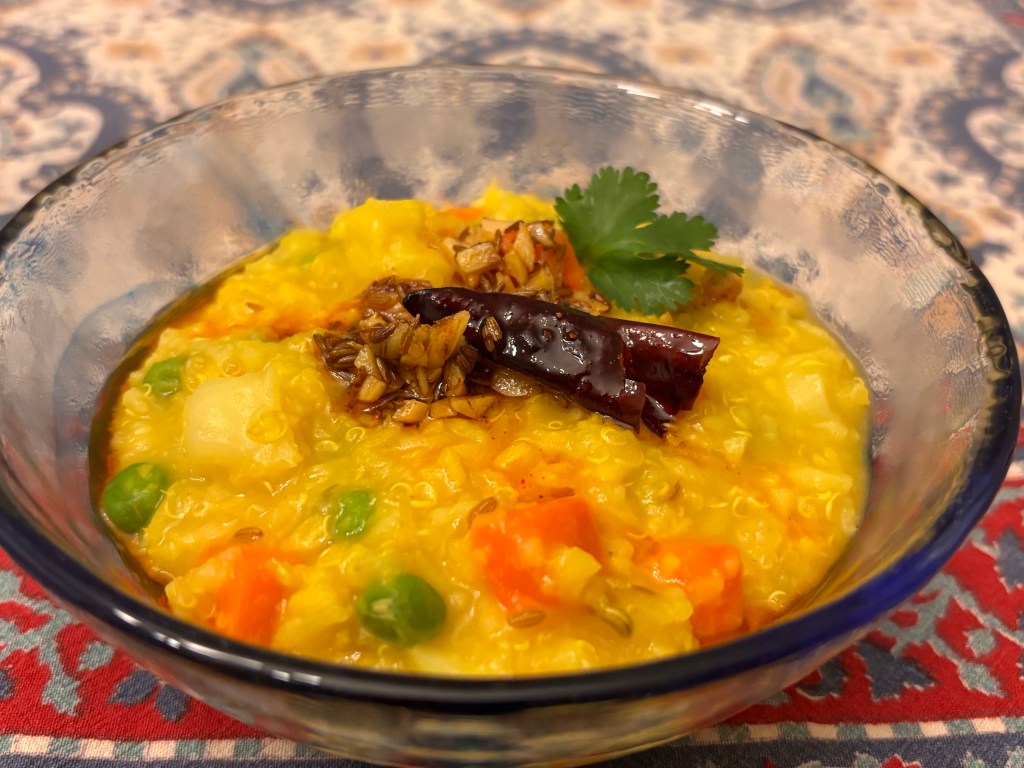
We tried this recipe from Bon Appetit: https://www.bonappetit.com/recipe/simple-khichari. We especially liked the addition of quinoa, which we had not seen in other kichidi recipes.
Our modifications: first, due to our pantry, we omitted the curry leaves. Instead, we added 1/8 tsp asofoetida, 1/4 tsp cumin seeds, and 1 large dried bay leaf to the turmeric.
Second, we used a mix of diced cauliflower (1/4 head, or approx 1.5 cups) and 1 medium carrot (approx. 3/4 cup). At the end of cooking, we added 1/4 cup frozen peas and made sure they warmed through.
Third, we aren’t huge fans of fennel seeds. Instead of 1 tsp fennel seeds in the recipe, we used 1/2 tsp fennel seeds and 1/2 tsp cumin seeds.
Finally, we found the original kichidi recipe mild and a little bland. So we made tadka: we heated 2 Tbsp ghee, 1 tsp cumin seeds, 2 minced garlic cloves, 2 dried chilis, and 1/4 tsp Kashmiri chili pepper. After a few mins on medium heat, we drizzled the sizzling tadka over the kichidi. We based the tadka on this recipe: https://cookingadventures.blog/2022/12/25/kichidi-savory-indian-rice-and-legume-porridge-version-2/.
We garnished with fresh cilantro and freshly squeezed lime juice. (Sept. 2026)
-
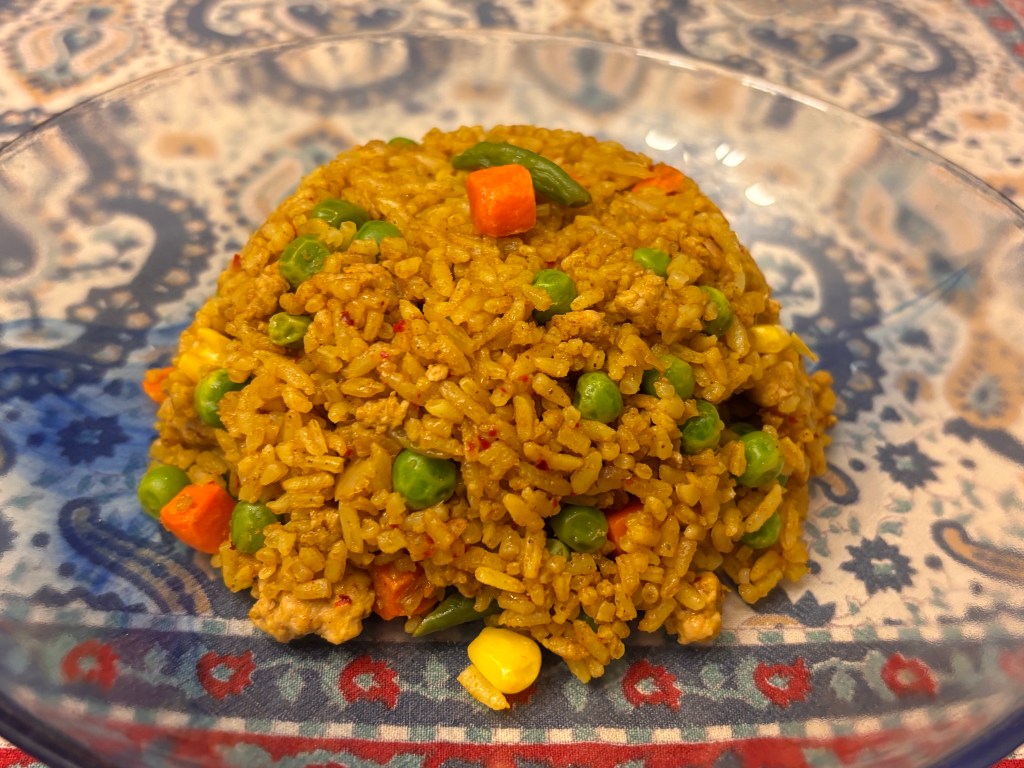
We noticed this recipe on the No Recipe blog: https://norecipes.com/curry-fried-rice/. We found the ingredient measurements hard to follow.
We also doubled the recipe and used these proportions: 4 Tbsp vegetable oil, 1 cup finely minced onion (1 medium onion), 1/2 lb minced turkey, 4 cups cooked rice, 2 Tbsp Japanese (S&B) curry powder, 2 tsp McCormick curry powder (our addition), 2 tsp salt, 1/2 tsp Korean red pepper powder (our addition), and 1/4 tsp sugar (our addition).
For the vegetables, we skipped the bell pepper. We used 1 cup frozen mixed vegetables and 1/2 cup frozen green peas. We added these frozen vegetables prior to the curry powder, to ensure they were fully warmed up.y lm to a
We did not have chonou sauce, so mixed 2 Tbsp no-salt ketchup with 2 Tbsp Worchestershire sauce; however; we found that sauce too fruity and tangy, which is why we offset with red pepper powder. (Sept. 2026)
-
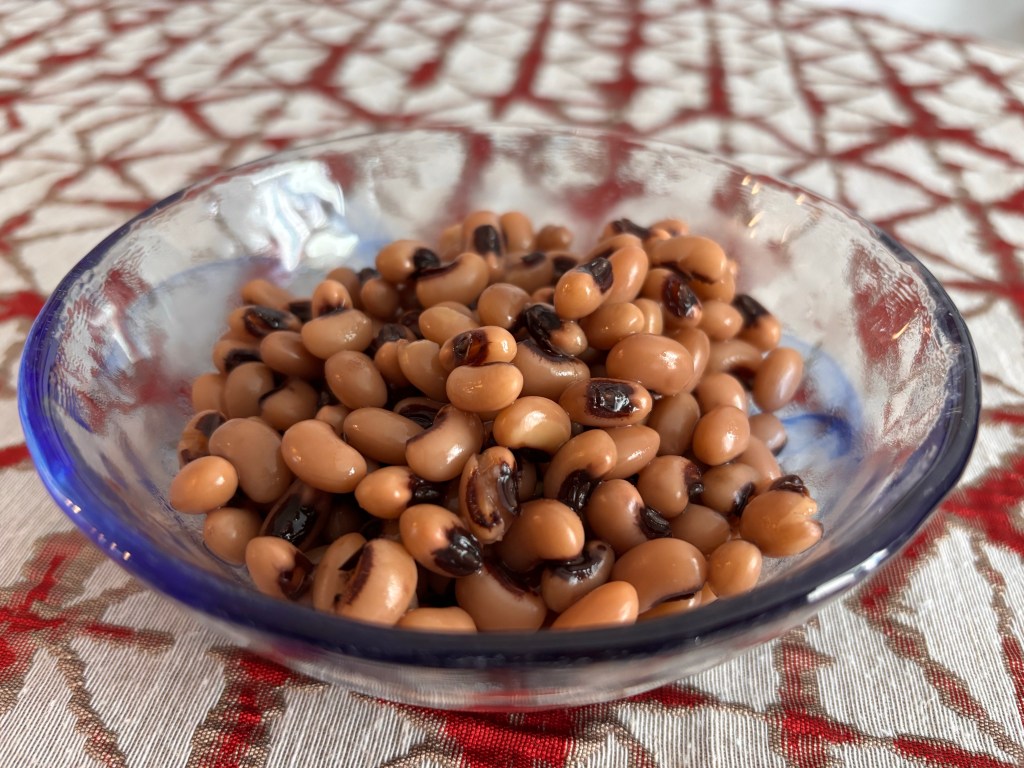
We need cooked black-eyed peas for a recipe, so we followed this easy method for cooking 1 lb dried black-eyed peas in the Instant Pot: https://beanrecipes.com/instant-pot-black-eyed-peas/
We followed the instructions for manual timing and manual release (despite warnings to the contrary on the Instant Pot panel). The peas turned out very well: perfectly cooked but not mushy. 1 lb dried black-eyed peas yielded approx. 7-8 cups drained, cooked black-eyed peas. (Sept. 2026)
-
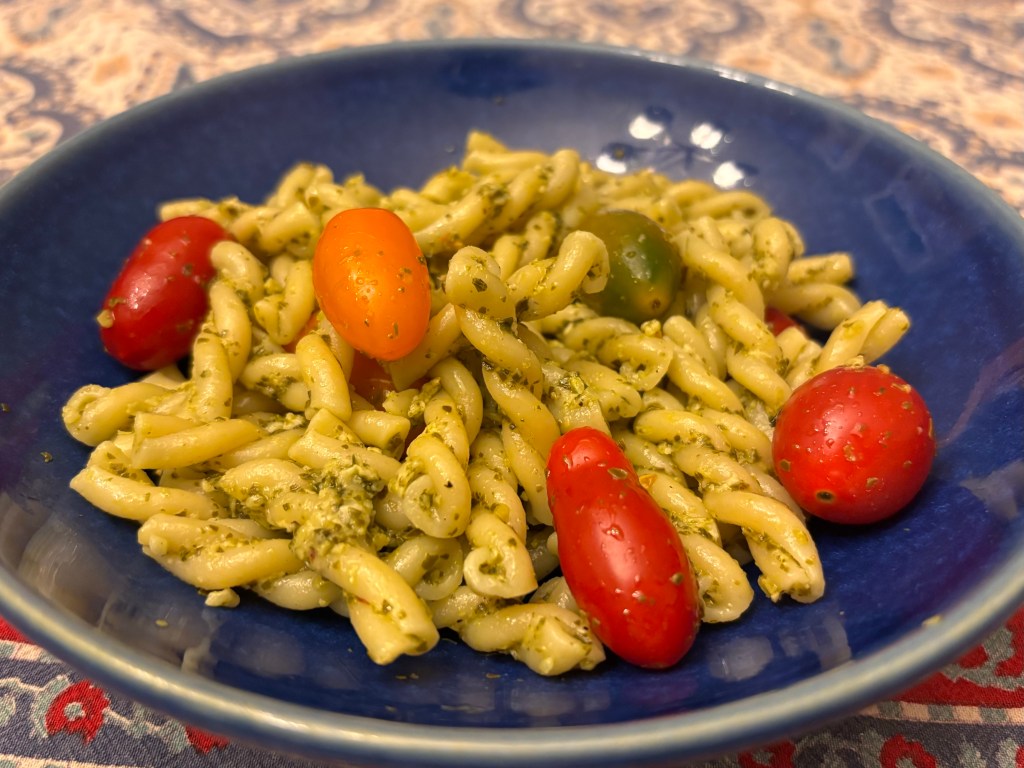
This is an easy weeknight meal that is barely a recipe. I’m posting it mainly to record our method and additional ingredients that brighten the dish. We love Severino pesto (available at Whole Foods in 6.5 oz containers), Sartori shredded parmesan, and grape tomatoes.
First, cook 1 lb pasta (we prefer gemelli or penne) until al dente. Before draining, save 1 cup pasta water and set aside. Drain, but do not rinse, and return the drained pasta to the pasta pot.
Second, while the pasta is still hot, fold in 1 Tbsp pasta water, 6 heaping Tbsp (approx. 1/3 of a cup, or 6 oz) pesto, 1/4 cup shredded parmesan, and 1/2 tsp crushed red pepper. Taste and adjust pesto and parmesan as needed. Add juice from 1/2 lemon. Season with kosher salt and black pepper to taste.
Just before serving, scoop the pesto pasta in a mixing bowl, then fold in 2 cups grape tomatoes. Then divvy up into bowls. (Sept. 2026)
-
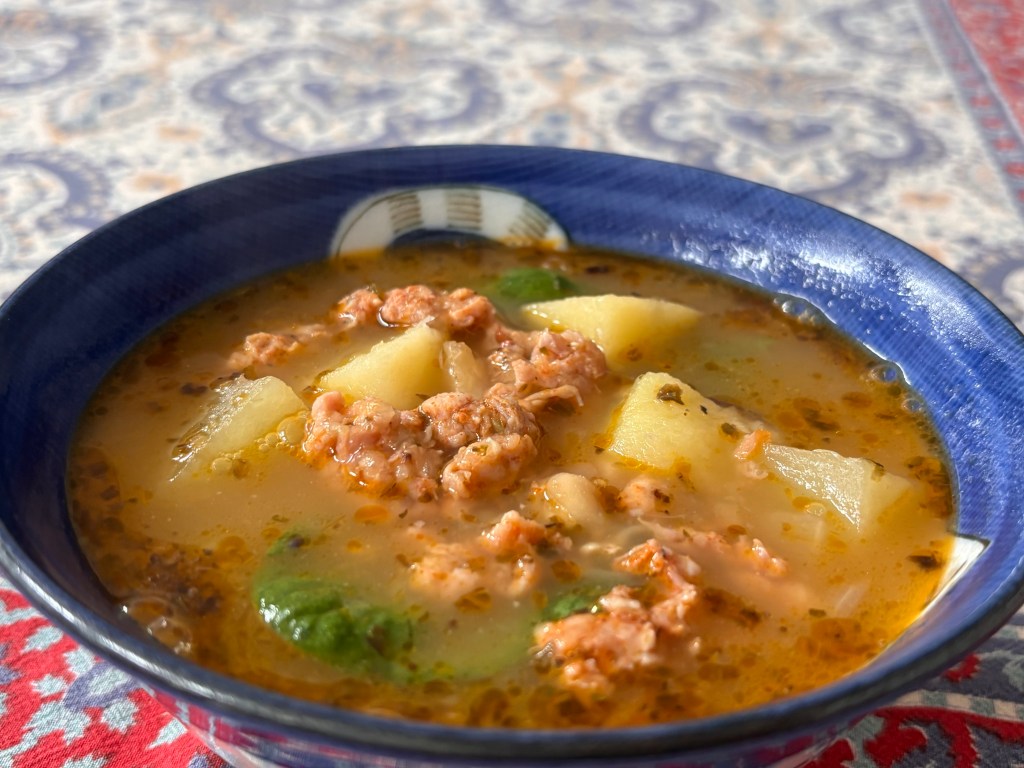
We tried this recipe as an option for a packed lunch: https://www.skinnytaste.com/creamy-sausage-and-potato-soup/. This was delicious and easy to make.
Our modifications: first, the amount of sausage was vague to us, so we used 3 links of raw spicy Italian chicken sausage (about 1.15 lb), which we removed from its casing. The next time, we will reduce to between 3/4 and 1 lb of sausage. We also used a 15 oz can of cannellini beans (rinsed and drained) and 2 tsp dried Italian seasoning.
Second, we found that 1 large and 1 small-medium Yukon potatoes equals about 4 cups of potato.
Third, we did not chop the spinach. We used whole fresh baby spinach, which we added to each soup bowl and poured the soup overtop just before serving.
Finally, we found the soup a little chunky, so we added an extra 1/2 cup of chicken broth (for a total of 4 1/2 cups broth). We used no-salt chicken broth for 4 of the cups and supplemented with a 1/2 cup of Better Than Bouillon chicken broth. (Aug. 2026)
-
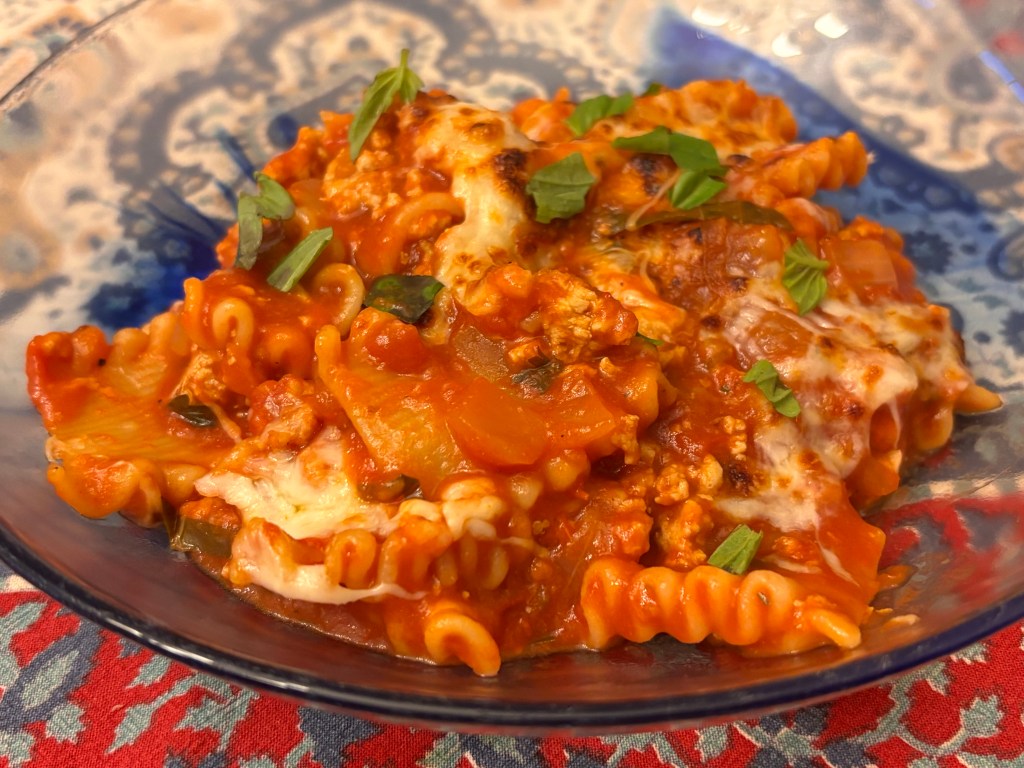
We had a craving for lasagna, but didn’t have time to make a classic version. This skillet version is excellent and simpler to execute: https://www.skinnytaste.com/skillet-lasagna/. We used our oven-safe Ultimate pan. We also omitted the cottage cheese mixture entirely.
Our modifications: first, instead of 8 oz minced beef, we used minced chicken. Because chicken has less fat and emits more liquid than beef, we used olive oil to brown the chicken and sopped up the excess liquid with paper towels.
Second, for the pasta we used 8 oz rustichine, a bite-sized version of lasagna (we like the Bottega Ditalia brand from The Italian Store).
Third, for the crushed tomatoes we used 2.5 cups (all but 1/2 cup of a 28 oz can) of Sun of Italy. We started with 2.5 cups unsalted chicken broth and added 2 Tbsp julienned basil. But after simmering the pasta on medium heat for 18 mins, we found the sauce too reduced and supplemented with 1 Tbsp additional broth. We seasoned the sauce to taste with a dash of sugar, salt, crushed red pepper, and black pepper.
Fourth, we omitted the cottage cheese entirely. Instead, we topped the cooked pasta and sauce with shredded mozzarella and shredded parmesan. And then broiled on high for 2-3 mins. We garnished with fresh basil. (Aug. 2026)
-
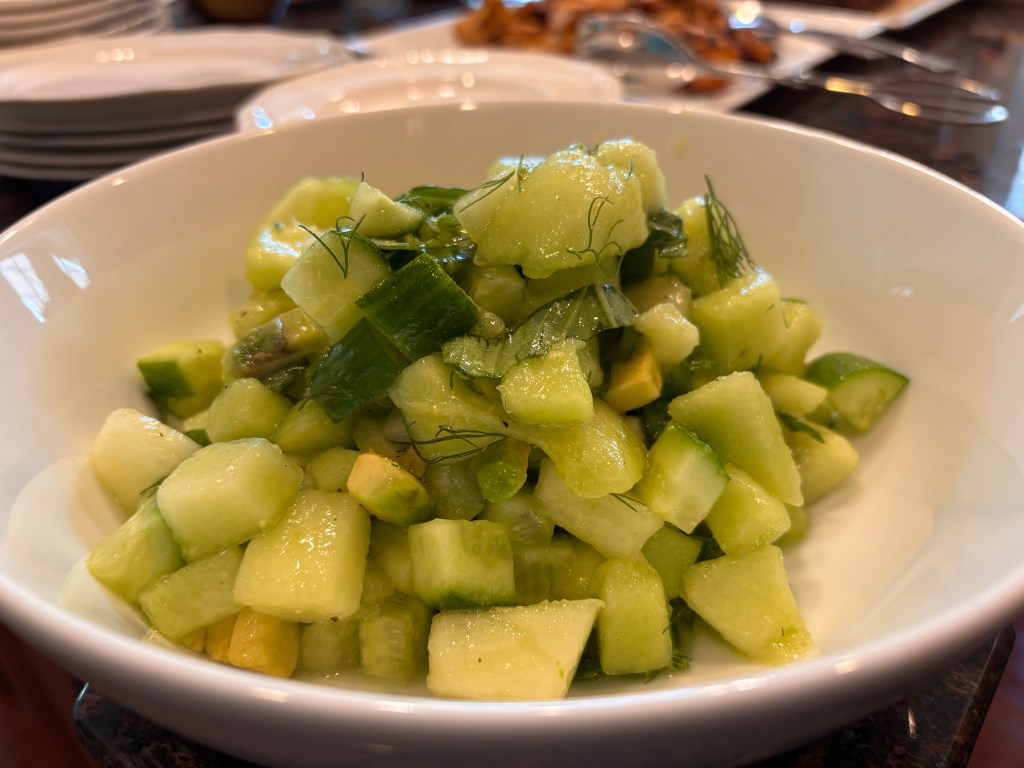
We tried this recipe for our friends’ BBQ. We found this melon salad refreshing and a good complement to grilled meat. We omitted the onion. (Aug. 2026)
-
Subscribe
Subscribed
Have a WordPress.com account? Log in now.

