-
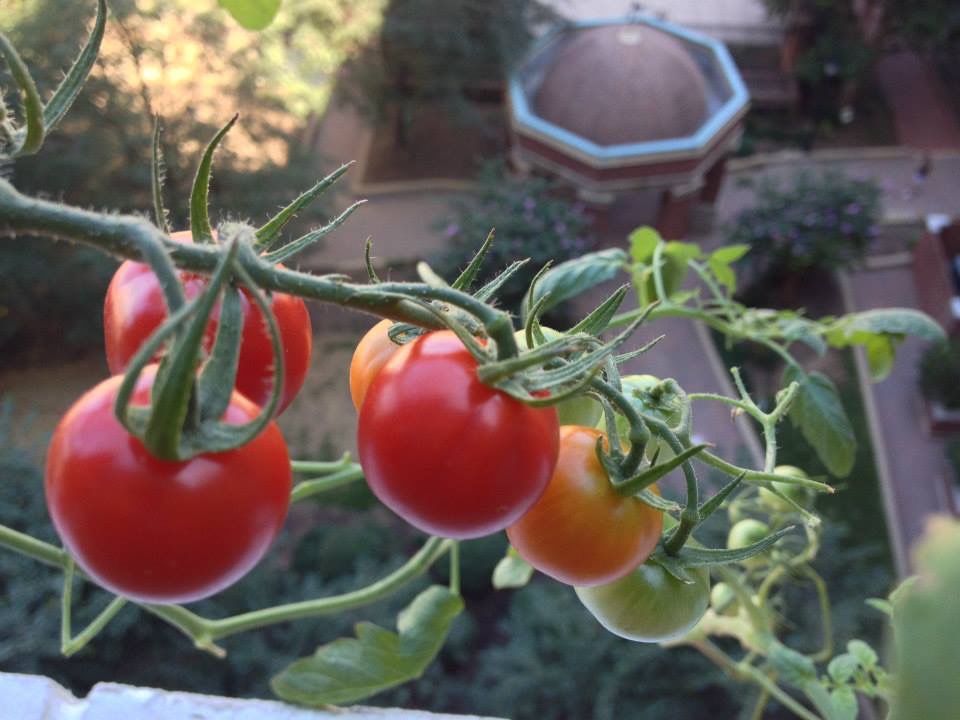
I cook as a hobby, and I maintain this blog primarily to keep track of recipes that my family has enjoyed over the years. I started blogging back in 2015, in response to requests from friends for recipes they had seen me post on Facebook (but that I couldn’t easily catalog). My original blog was on another platform that became less user-friendly over time. I migrated my blog to WordPress earlier this year, and I’ve spent more time than expected reformatting the migrated posts.
This blog is and always will be a work in progress. For example, I currently provide Tags for posts, but I have not coded for Categories. I also generally try to share the recipes themselves in my posts, but in cases where the recipe is not available online, I try to identify the source (e.g., the cookbook title and author) as needed. In some cases, such as where a family has shared their recipe with me but hasn’t authorized me to share it widely, I post a photo of the dish with that proviso.
I recently added a Search widget to this blog. On the desktop version, the Search bar appears prominently on the left hand side. But for some reason, it is hidden on the mobile app. If you’re on your phone, tap on the SHOW tab at the top left of the home page. That will reveal another screen with the Search bar.
I hope you enjoy exploring my blog and find some recipes to try.
-

We had a craving for this recipe: https://www.maangchi.com/recipe/kare-bokkeumbap.
Our modifications: first, we used 2 boneless chicken breasts (1/2” dice) as well as 1/2 yellow and 1/2 red bell pepper instead of the green bell pepper. We also used 2/3 lime instead of lemon. We rinsed the 1/2 cup kimchi as directed before chopping, but we may not rinse the next time.
Second, we used exactly 3 cups cooked white jasmine rice, but I suspect the recipe actually used slightly less than that.
Finally, we initially used 1/4 cup Ottogi Korean curry powder (same as depicted in Maangchi’s post), but we found it underseasoned. We supplemented with 1 tsp S&B Japanese curry powder, additional lime juice (almost the rest of it, except for the core), and 1/8 tsp each of salt and sugar. We found the S&B and additional lime juice transformed the recipe.
The next time, we may try this with S&B curry powder (which was far more robust) instead of Ottogi. (July 2026)
-
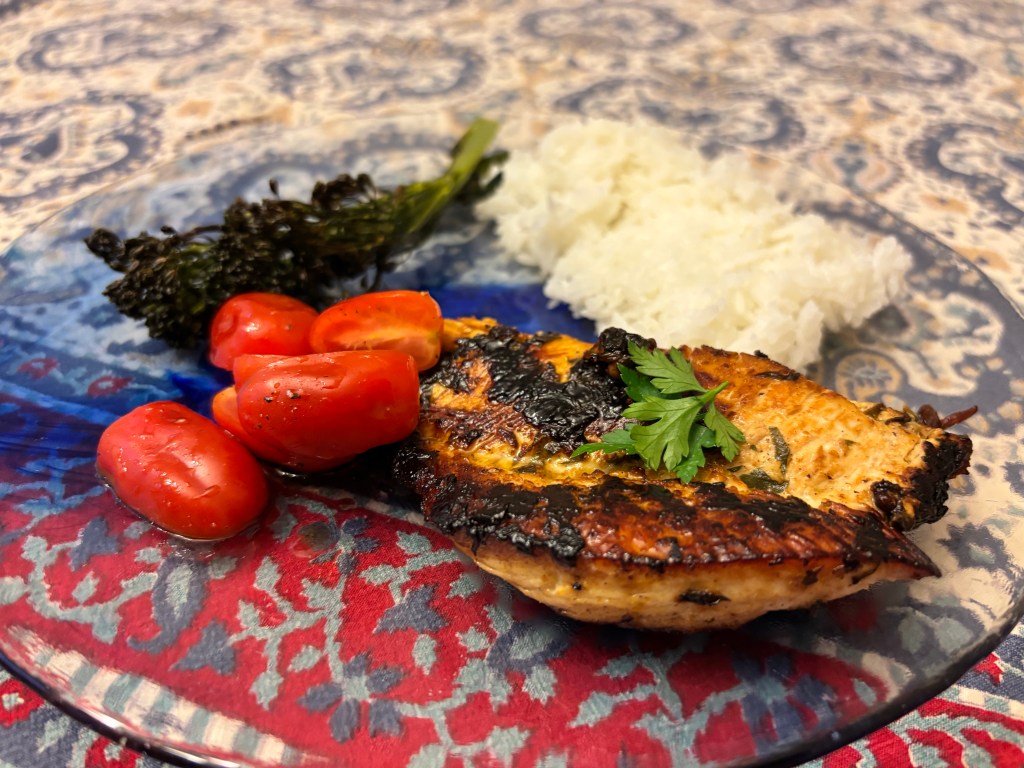
This NYT Cooking recipe was intended for the grill, but we pan-seared it instead: https://cooking.nytimes.com/recipes/783022762-lemon-garlic-grilled-chicken-breasts?unlocked_article_code=1.wFA.v_8B.jedgwudgn_k8&smid=ck-recipe-iOS-share.
We followed the marinade instructions. For the fresh herbs, we used only parsley. We marinated the chicken for 20 mins. We heated two large nonstick pans, added 1 Tbsp olive oil in each and then once it was shimmering, we placed one large breast in each pan. We found pan-searing took longer than expected (at least 18 mins), and we ultimately found that we needed to cut each breast in half and cook for an additional 8 mins.
We served this with freshly cooked jasmine rice, oven-roasted broccolini, and halved grape tomatoes drizzled with pomegranate-quince white balsamic vinegar and olive oil. (July 2026)
-
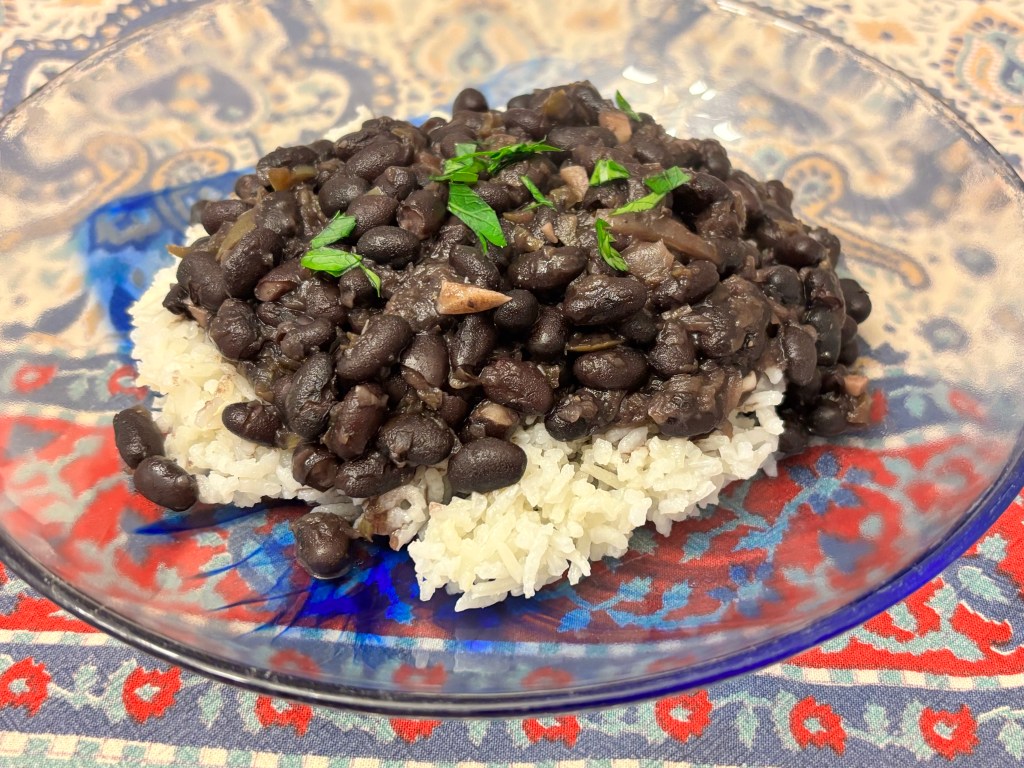
We have been craving Cuban black beans for a few weeks. We initially planned to follow a traditional recipe (overnight soak, then hours on the stovetop) from a 1973 NYT recipe (see Note 1 below). But then we stumbled upon this Instant Pot recipe for vegetarian frijoles negro on Instagram (we recommend watching the video for the full recipe): https://www.instagram.com/reel/DSA-GbSkkfk/?igsh=dGN6M2lhcGhoZjFq. This was delicious, and we definitely would like to make it again. The cooking wine, tomato, white vinegar, and sugar gave the dish an authentic aroma.
Instructions:
First, pick over and wash 14 oz dried black beans, then drain. (See Note 2 below about how to adjust from a 16 oz bag of dried beans.) Then add the drained, uncooked beans to the Instant Pot along with 4 cups water, 2 bay leaves, and 1 tsp kosher salt. Pressure cook on High for 35 mins (be aware that due to preheating and “keep warm,” the time in the pressure cooker more realistically is an hour or so).
Second, prepare your sofrito: finely dice 1 large Spanish onion and 1 large green bell pepper (we used our Braun handheld chopper), then drain. Mince 4 cloves garlic and set aside.
Third, heat a large nonstick pan with a generous amount of olive oil (we started with 3 Tbsp) on medium heat; once shimmering, add the chopped onion and bell pepper mixture, 1 tsp oregano (we used Mexican), and 1 tsp ground cumin. Add more olive oil as needed. Once the mixture is fragrant and onion is translucent, fold in the minced garlic. A few mins later, deglaze with 1/4 cup dry white cooking wine (we used Sherry cooking wine), and then set aside. Season with kosher salt and black pepper (we sprinkled with 1/2 tsp and 1/4 tsp, respectively).
Fourth, once you are able to open the Instant Pot (we canceled the last 12 mins of the “keep warm” setting and then did a quick release), remove the bay leaves. Test a bean to make sure it’s fully cooked.
Finally, fold the sofrito mixture into the black bean mixture. Then add 2 tsp tomato sauce (we used crushed tomato), 1 Tbsp white vinegar, and 2 tsp white sugar. Set the Instant Pot, uncovered, on Saute – Low for 20 mins. Taste the black beans; we added another 1/2 tsp sugar and salt for balance.
Serve with Cuban rice (see stovetop recipe below) and garnish with minced parsley. (July 2026)
Cuban rice instructions (we followed the 1973 NYT recipe but halved it):
First, measure out 1.5 cups uncooked long grain rice (we used Mahatma extra large based on our local supermarkets). Pick over, rinse carefully, and then drain.
Second, In a large, heavy saucepan (we used the Ultimate pan), heat 1 Tbsp olive oil on medium heat. Add the drained rice and saute until the rice grains are translucent.
Third, add 1 tsp salt and 3 cups of boiling hot water. Stir gently to make sure the rice is evenly distributed in the pan, then let rice and water have a gentle boil for a few minutes. Cover tightly with a lid, reduce heat to Low, and let simmer, covered, for 20 mins. Once timer goes off, you can check the rice but it may benefit from steaming (covered and undisturbed) for about 5 mins. Then mold the rice in a small bowl, invert it into a flat bowl, and then pour the black beans overtop.
Note 1: Here’s the 1973 NYT recipe: https://www.nytimes.com/1973/08/23/archives/in-the-bad-old-days-they-had-the-sense-to-treasure-beans.html?smid=nytcore-ios-share
Note 2: To accommodate Chef Alex Rios’s recipe, we had to reduce our 16 oz (1 lb) bag of dried beans by 2 oz to become 14 oz. 2 oz is roughly a scant 1/3 cup, so we set that amount aside.
-
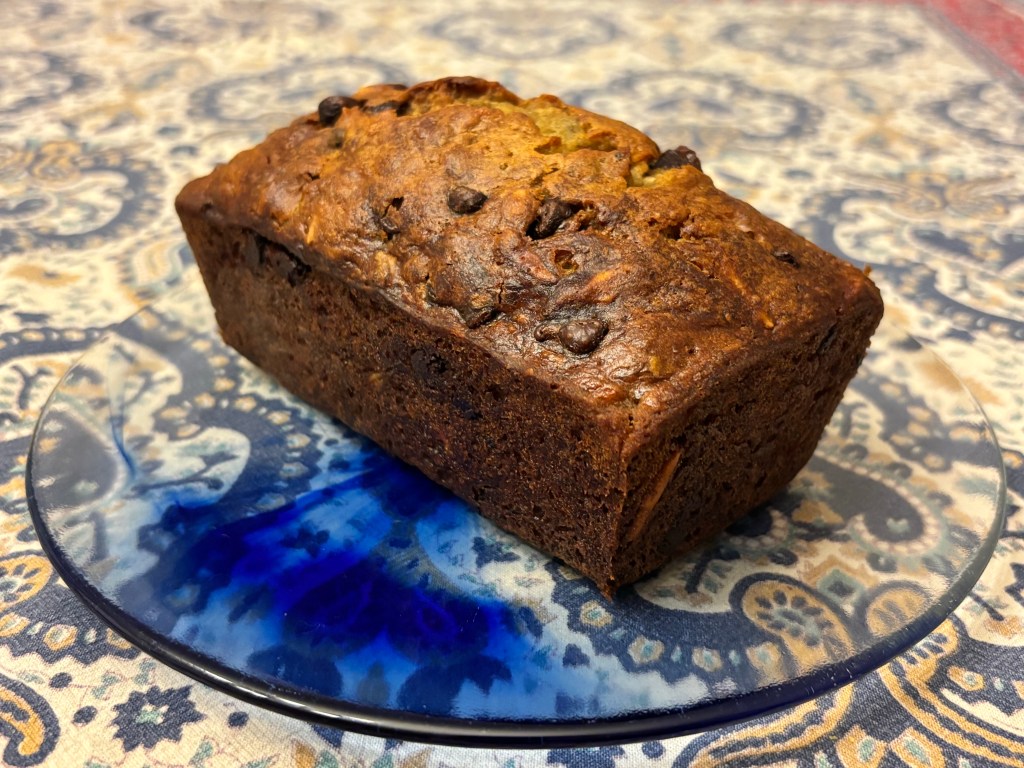
We have a lot of frozen bananas and decided to try this NYT recipe: https://cooking.nytimes.com/recipes/1020899-chocolate-chip-banana-bread?unlocked_article_code=1.tlA._8nF.4xy-IUtCydSN&smid=ck-recipe-iOS-share
Our modifications: first, instead of plain Greek yogurt, we used 1/3 cup Siggi’s nonfat vanilla Icelandic yogurt.
Second, because our bananas were on the larger side, we had extra batter for a mini-loaf (pictured above) in addition to a 9×5” loaf.
Finally, we used both 1 cup chocolate chips (Ghirardelli semi-sweet) and 3/4 cups toasted, roughly chopped nuts (pecans, walnuts, and slivered almonds). This banana bread had a tender crumb and a nice mouthfeel. It was delicious. Definitely a keeper. (June 2026)
-
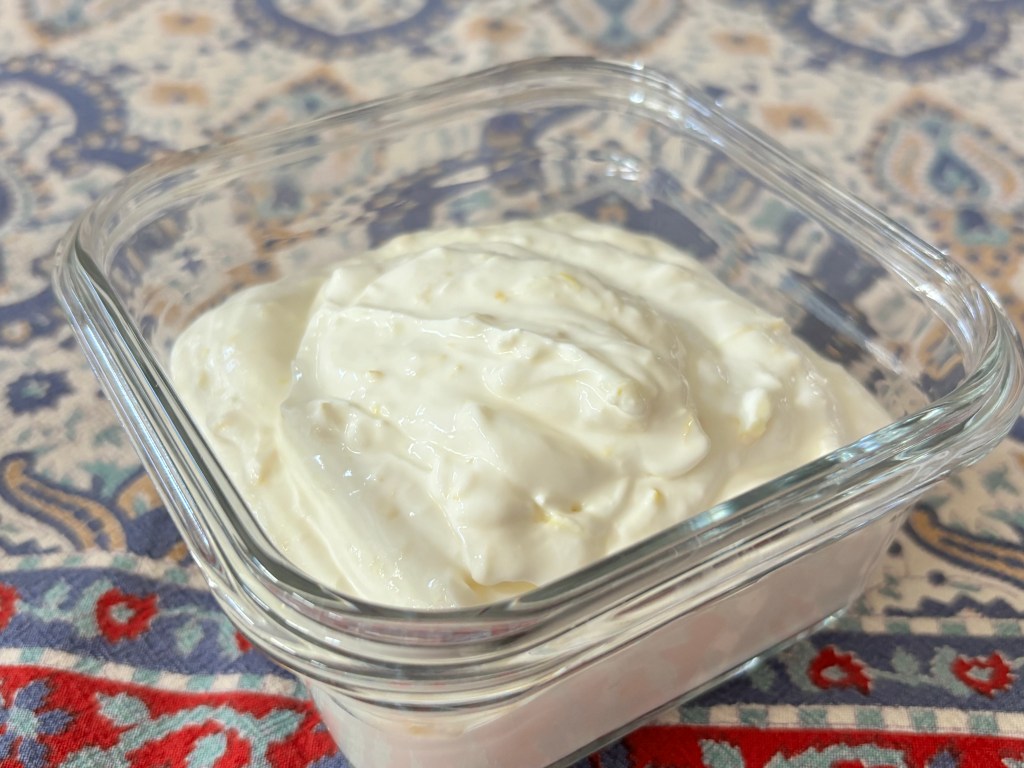
I had a craving for French onion dip, but wanted to try a version using fresh ingredients.
We tried this recipe, which combines full-fat sour cream with fresh lemon juice and zest, salt, and 1 clove microplaned garlic: https://www.allrecipes.com/3-ingredient-sour-cream-dip-11989936. Despite not having dried onion, it does evoke French onion dip and is very tasty. (June 2026)
-
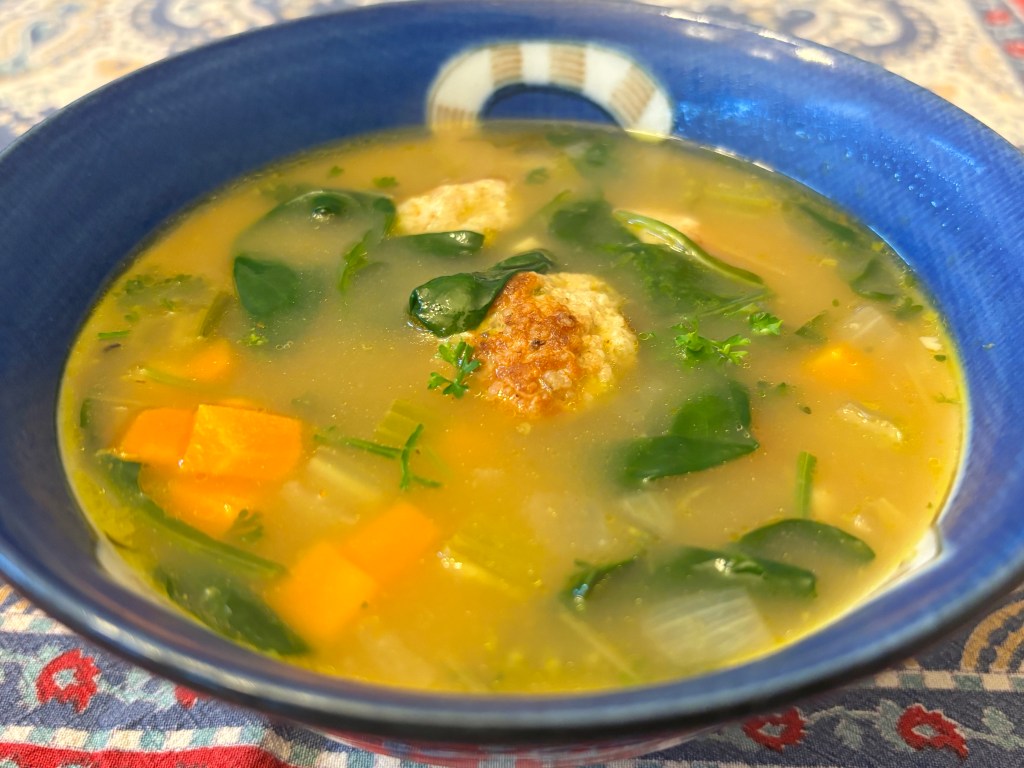
We have made Italian wedding soup in the past, but we tried this version with turkey meatballs: https://www.feastingathome.com/italian-wedding-soup/
We followed the recipe except we used spinach instead of kale. We also used stelline (tiny star) pasta, which may have been too tiny (we may try ditalini the next time). In addition, we found the lemon juice overpowered the soup’s flavor, so we added a handful of shredded Parmesan (about 3-4 Tbsp) for umami and balance. (June 2026)
-
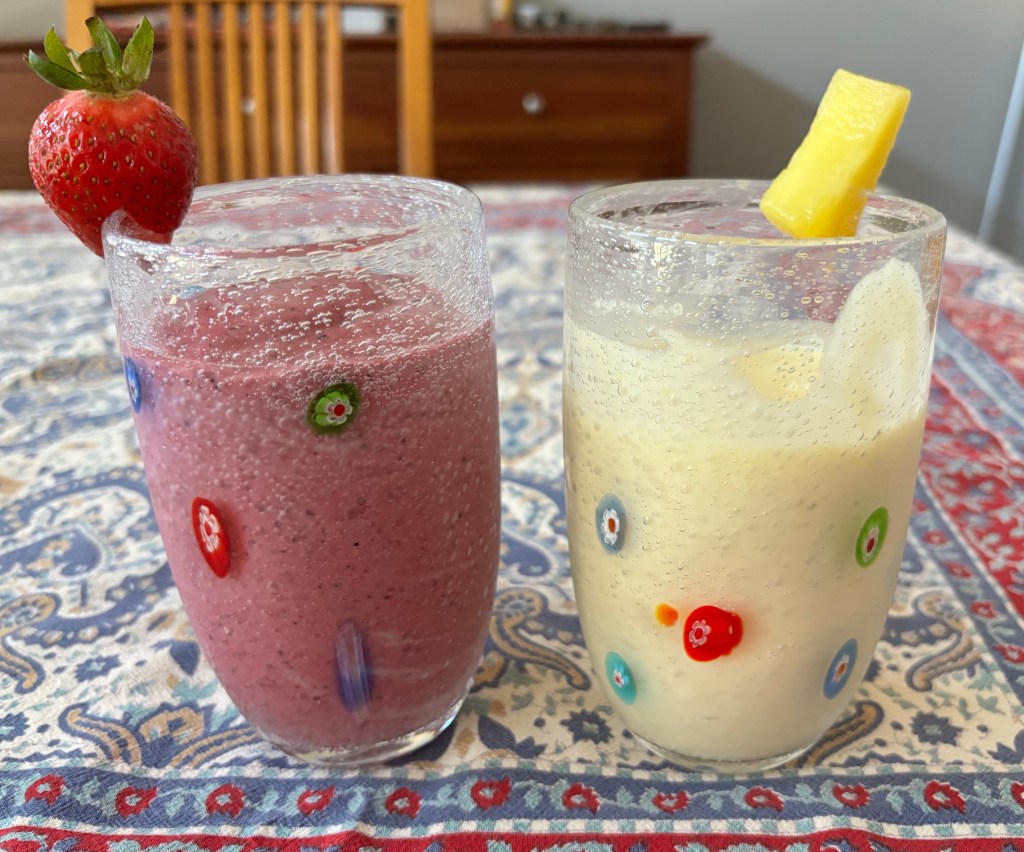
Years ago, my husband loved ordering fruit smoothies from Whole Foods’ kiosks. Those smoothie bars are long gone, but we had a craving this weekend. Taking inspiration from recipes such as this one (https://www.thekitchn.com/pineapple-smoothie-recipe-23761690), we experimented with two flavors:
- Pineapple smoothie: 1/4 cup Greek vanilla yogurt (we used Siggi’s Icelandic-style), 1.5 Tbsp honey, 1.5 cups frozen pineapple chunks, and 1 just ripe banana (yellow with a tinge of green), peeled and broken into thirds.
- Mixed berry–pineapple smoothie: 1/4 cup Greek vanilla yogurt, 1.5 Tbsp honey, 1 cup mixed frozen berries (blueberries, strawberries, raspberries, and blackberries), 1/2 cup frozen pineapple chunks, and 1 just ripe banana, peeled and broken into thirds.
For each flavor, we placed the ingredients in the order above in our Ninja blender. We pulsed the contents until we reached the right viscosity, periodically stopping to scrape the sides to ensure even blending. This took about 2 mins per smoothie.
These smoothies were tasty and healthy. We will make this recipe again. (June 2026)
Note: If the blender contents are too viscous, we recommend adding white grape juice (2/3 to 1 Tbsp per serving) to thin out while blending.
-
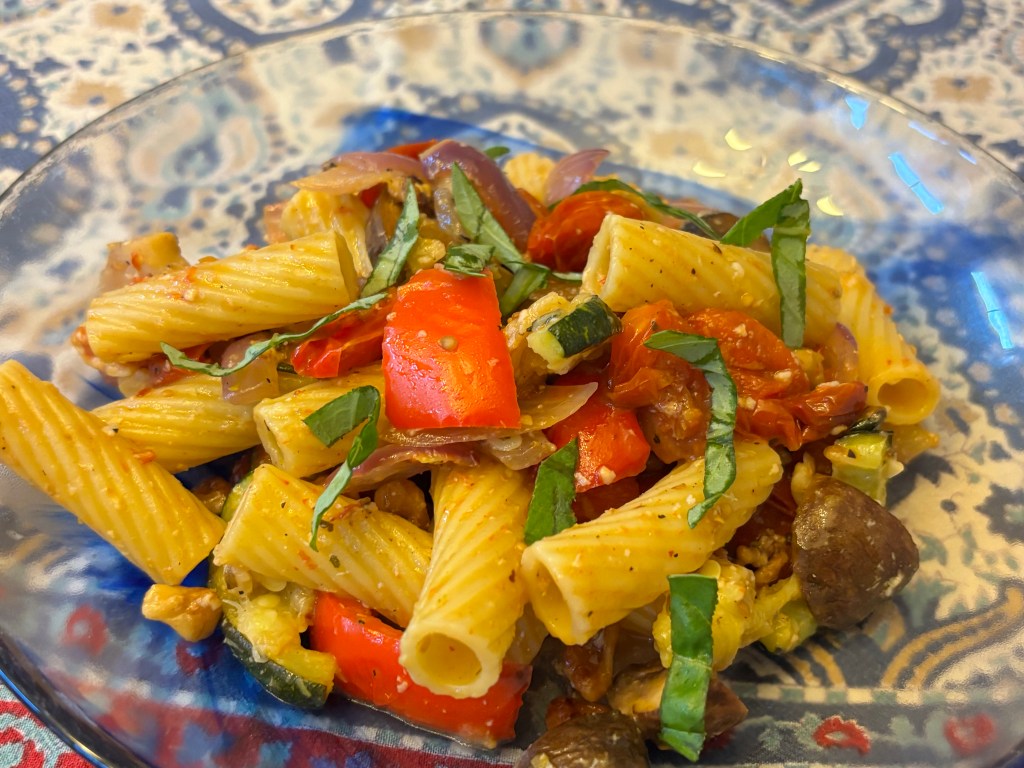
We tried this Feasting at Home recipe, and it was delicious and satisfying: https://www.feastingathome.com/roasted-vegetable-pasta/
For the vegetables, we used 1 large zucchini (1/2” half-moons), 1 large bell pepper, 10 oz grape tomatoes, 8 oz cremini mushrooms (stemmed trimmed and cut into quarters, and for large mushrooms into 1/6), and 1 medium red onion (first halved along the axis, then each half sliced across the axis and then into 1/2” slices).
We followed the recipe closely, including the Italian seasoning; garlic, crushed red pepper, and rosemary; 1/2 cup freshly grated pecorino romano, lemon zest, and juice from 1 lemon; toasted walnut pieces (we used 1/4 cup); and fresh basil as garnish. The walnuts added a nice crunch. This recipe is a keeper. (June 2026)
-
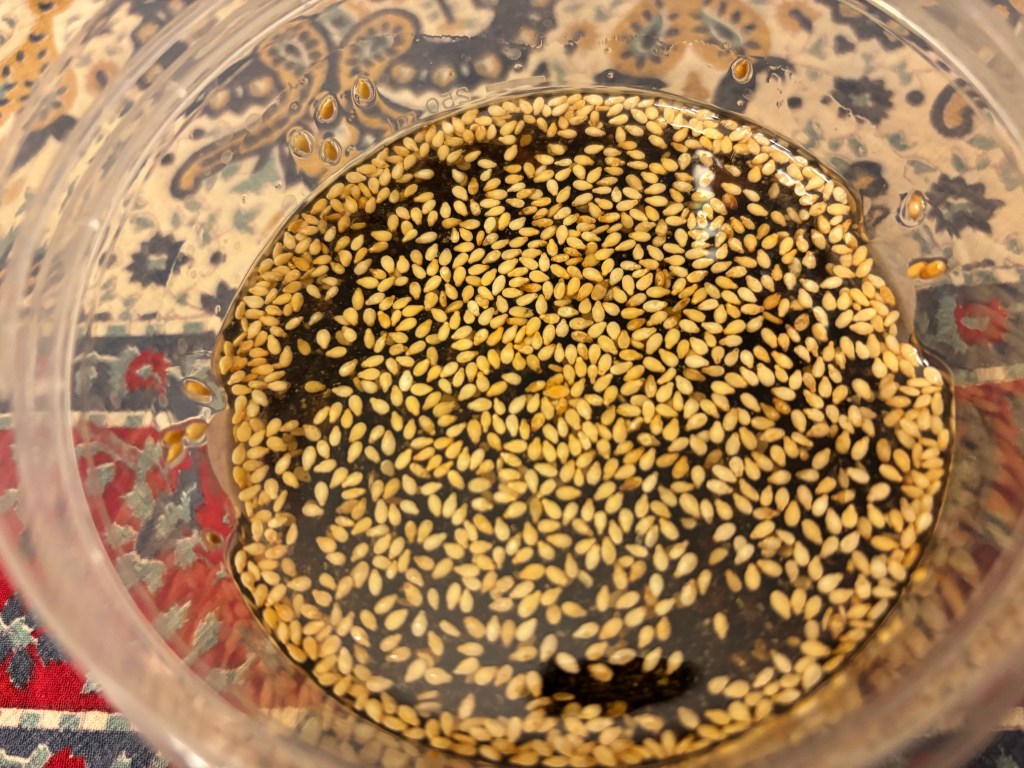
We recently had a deliciously refreshing salad at a Korean-Japanese restaurant called Maru. I found the dressing addictive and tried to recreate it with this recipe: https://www.justonecookbook.com/wafu-dressing-japanese-salad-dressing/
Our modification: for the onion, we used a small shallot grated on a large-hole grater. (May 2026)
-
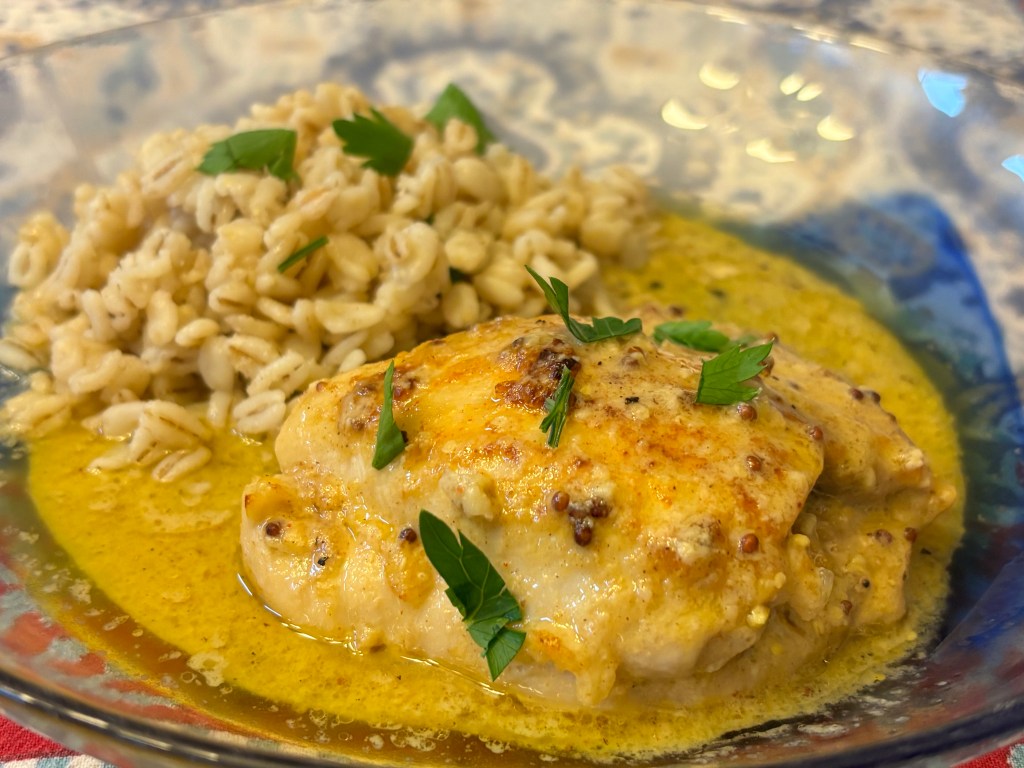
We tried to recreate a sublime mustard chicken dish my MIL made for us. Here are her instructions:
Preheat oven to 350 degrees
Arrange 2.5 lb boneless, skinless chicken thighs (about 10) in a baking dish. Sprinkle tops with paprika (we used 1/8 tsp smoked paprika).
Melt 8 oz. (1 cup) butter (we used 1/2 cup, or 8 Tbsp unsalted butter plus 1/2 cup olive oil). Add 5 or 6 Tbsp mustard (we used 5 Tbsp Dijon mustard plus 1 Tbsp whole grain mustard) and the juice of 1 lemon (we used 2.5 limes) and mix thoroughly.
Pour over thighs.
Sprinkle with herbs, spices of your choice and lightly salt. (We used 1/8 tsp ground cumin, 1/8 tsp ground coriander, 1/16 tsp ground cloves, and a dash of kosher salt).
Bake for 45 minutes or until easily pierced with fork. Serve with barley or rice.
Note: Instead of a baking dish, we used an Ultimate Pan. Perhaps due to both our decision to sub in olive oil and to the depth of the pan, our chicken did not get browned as much as expected. We ended up placing the chicken thighs on a foiled-lined baking sheet and broiling until browned, while concurrently reducing the mustard sauce at high heat on the stovetop. (May 2026)
-
Subscribe
Subscribed
Have a WordPress.com account? Log in now.

