-
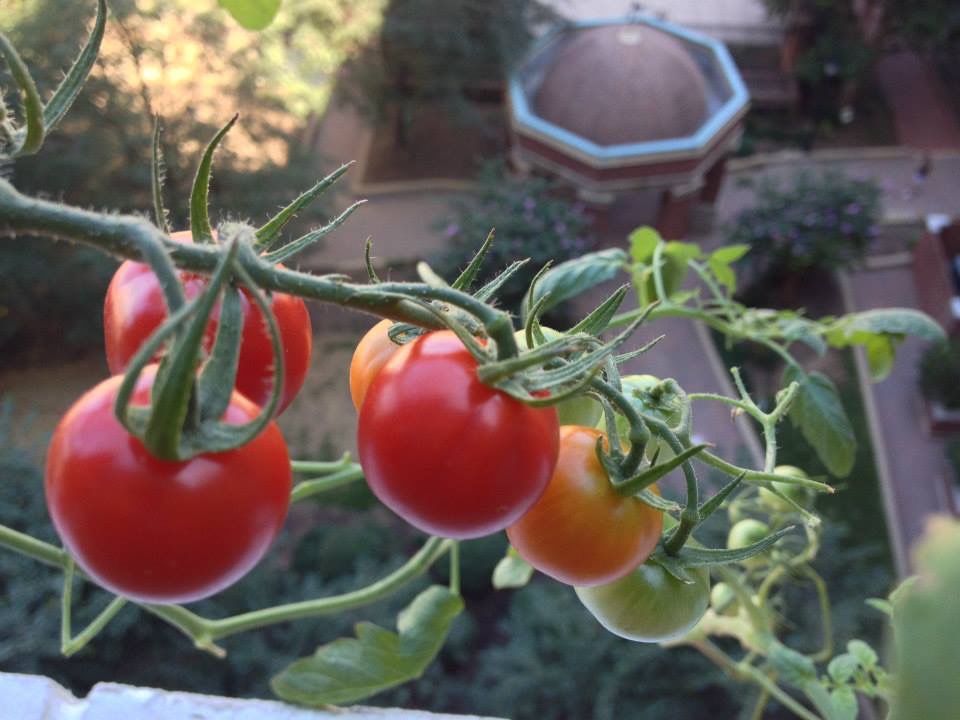
I cook as a hobby, and I maintain this blog primarily to keep track of recipes that my family has enjoyed over the years. I started blogging back in 2015, in response to requests from friends for recipes they had seen me post on Facebook (but that I couldn’t easily catalog). My original blog was on another platform that became less user-friendly over time. I migrated my blog to WordPress earlier this year, and I’ve spent more time than expected reformatting the migrated posts.
This blog is and always will be a work in progress. For example, I currently provide Tags for posts, but I have not coded for Categories. I also generally try to share the recipes themselves in my posts, but in cases where the recipe is not available online, I try to identify the source (e.g., the cookbook title and author) as needed. In some cases, such as where a family has shared their recipe with me but hasn’t authorized me to share it widely, I post a photo of the dish with that proviso.
I recently added a Search widget to this blog. On the desktop version, the Search bar appears prominently on the left hand side. But for some reason, it is hidden on the mobile app. If you’re on your phone, tap on the SHOW tab at the top left of the home page. That will reveal another screen with the Search bar.
I hope you enjoy exploring my blog and find some recipes to try.
-
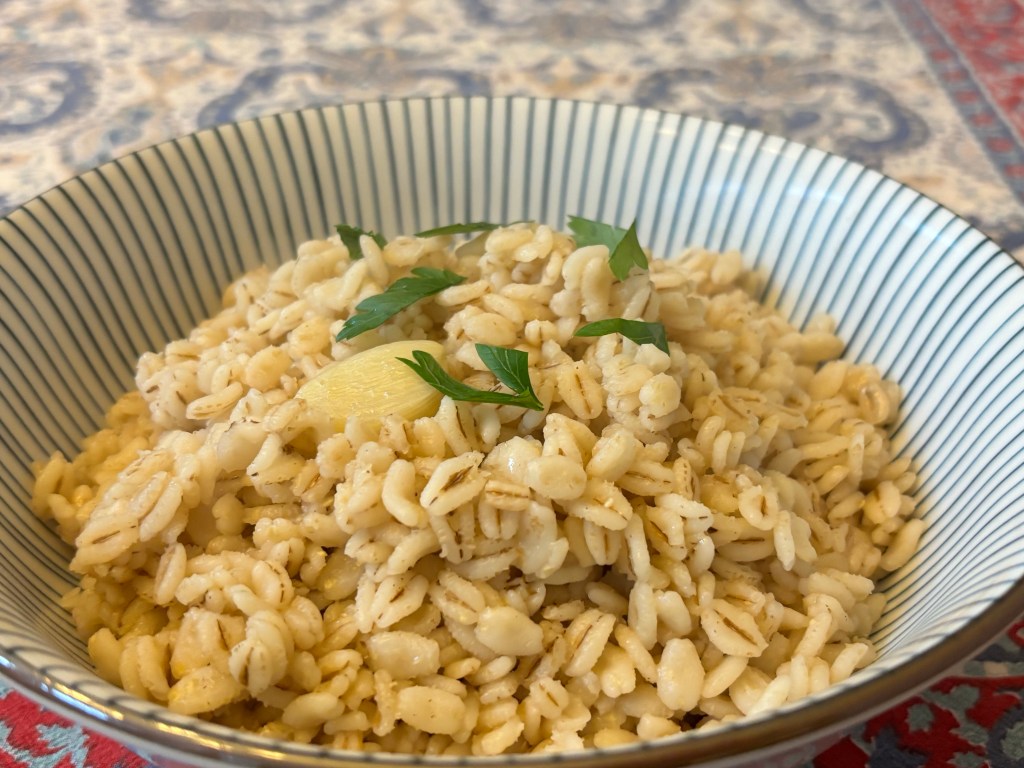
My MIL made the most delicious, delicately spiced barley side dish. We tried to recreate it, except we used quick-cook barley.
First, in a medium pot, melt 2 Tbsp unsalted butter on medium-low heat, then add 1/8 tsp ground coriander, 1/8 tsp ground cumin, and 1/16 tsp ground cloves.
Second, add 2 cups pearled, quick-cook barley and saute in the spiced melted butter for a few mins.
Third, pour in 4 cups (1 quart) no-salt chicken broth and add 2-3 small garlic cloves (peeled and trimmed). Raise heat to medium-high. Once the contents reach a boil, cover and reduce to a simmer (a 2 or 3 on my dial) until barley is tender and most broth is evaporated (approx. 10-12 mins).
We served this barley as a side with my MIL’s chicken thighs in mustard butter sauce.
Note: We took inspiration from this recipe: https://teamnutrition.ca/recipe-nutritionist-dietitian/middle-eastern-spiced-barley
-
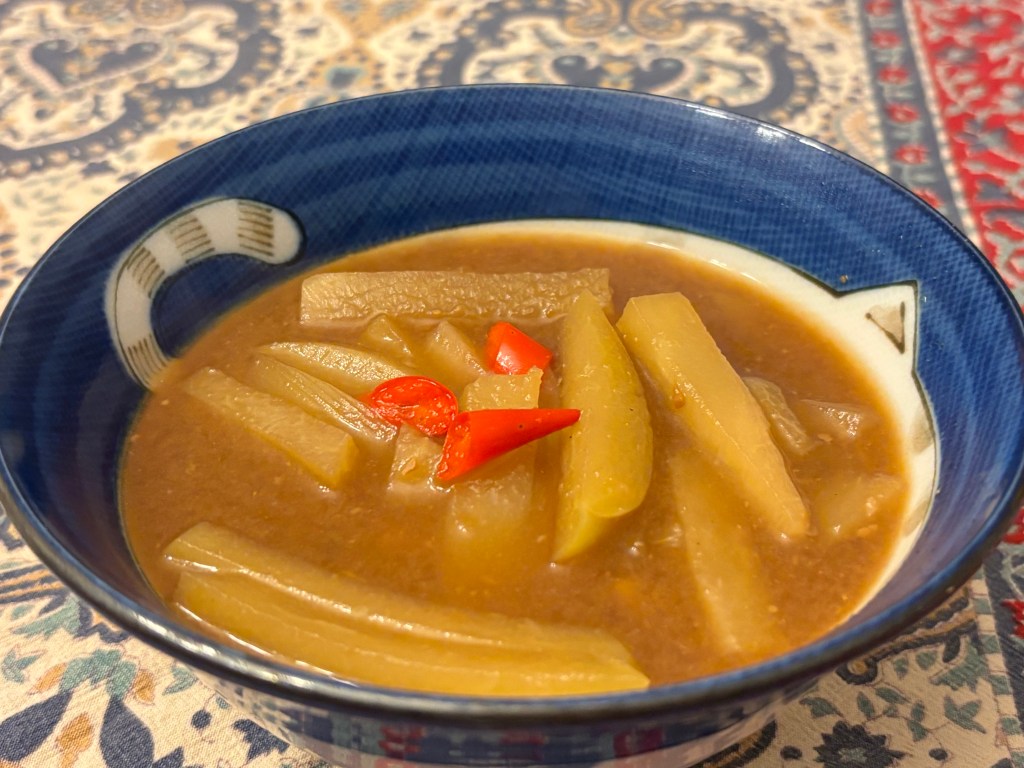
I had a craving for a homestyle, simple Korean soup, so we tried this recipe: https://kimchimari.com/radish-soup-korean-mu-doenjang-guk/
Our modifications: first, we halved the recipe, using 6 large dried anchovies (cleaned), 5” kombu, and 4 cups water. Second, based on our pantry, we used 1/3 of a large daikon radish (about 1.5 cups) and 1 large chayote (about 1.5 cups). We peeled and cut into thick matchsticks, about 2” long.
Third, because we had only standard soy bean paste, we used 2 Tbsp, supplemented by 1 tsp Korean beef soup powder (sogogi dashida).
Fourth, we added the daikon and chayote matchsticks to the soup pot, brought to a boil, and covered, then simmered on medium-low for 15 mins (not 25).
Fifth, we added 1 frozen Korean red pepper (whole), 2 tsp minced garlic, 1/2 tsp garlic powder. For balance, we supplemented with 1/2 tsp soup soy sauce, 1/2 tsp yondu sauce, and about 1/4 tsp each salt, black pepper, and sugar.
We served this soup with freshly cooked jasmine rice. (May 2026)
-
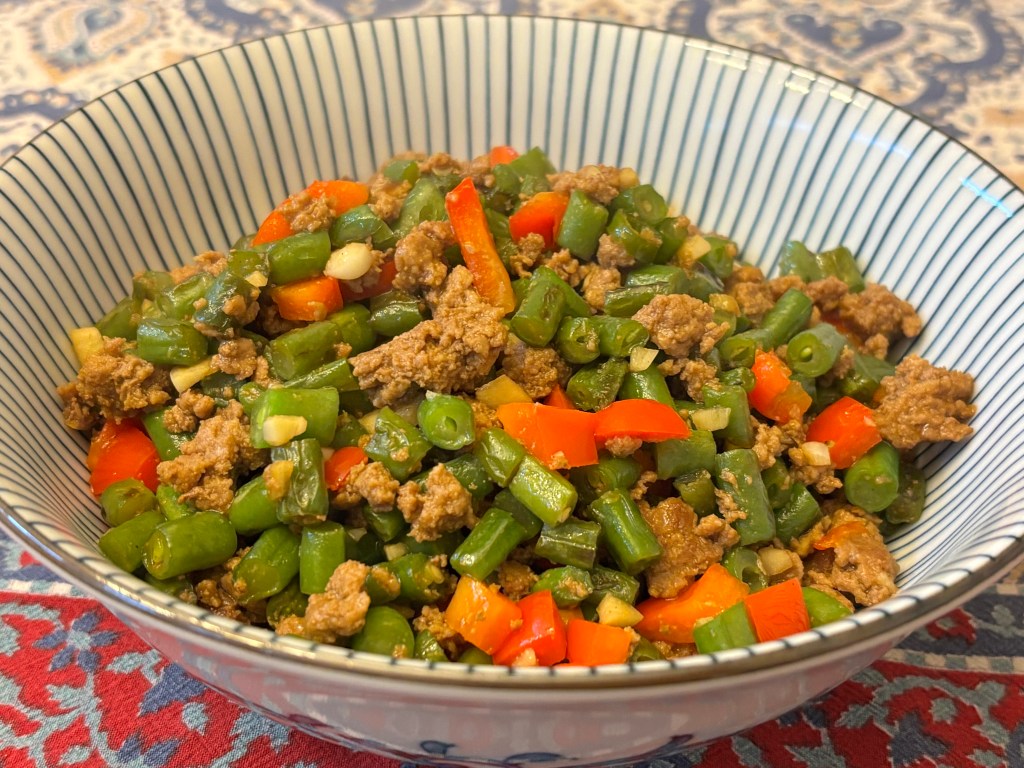
We tried this recipe: https://thewoksoflife.com/chinese-green-beans-pork/
We largely followed the recipe, including 8 oz minced pork (rather than chicken). For the Thai chili, we used 3, down from the 4 recommended in the recipe. At the end of cooking, we added 1/4 tsp Chinese black vinegar for a touch of acid. (May 2026)
-
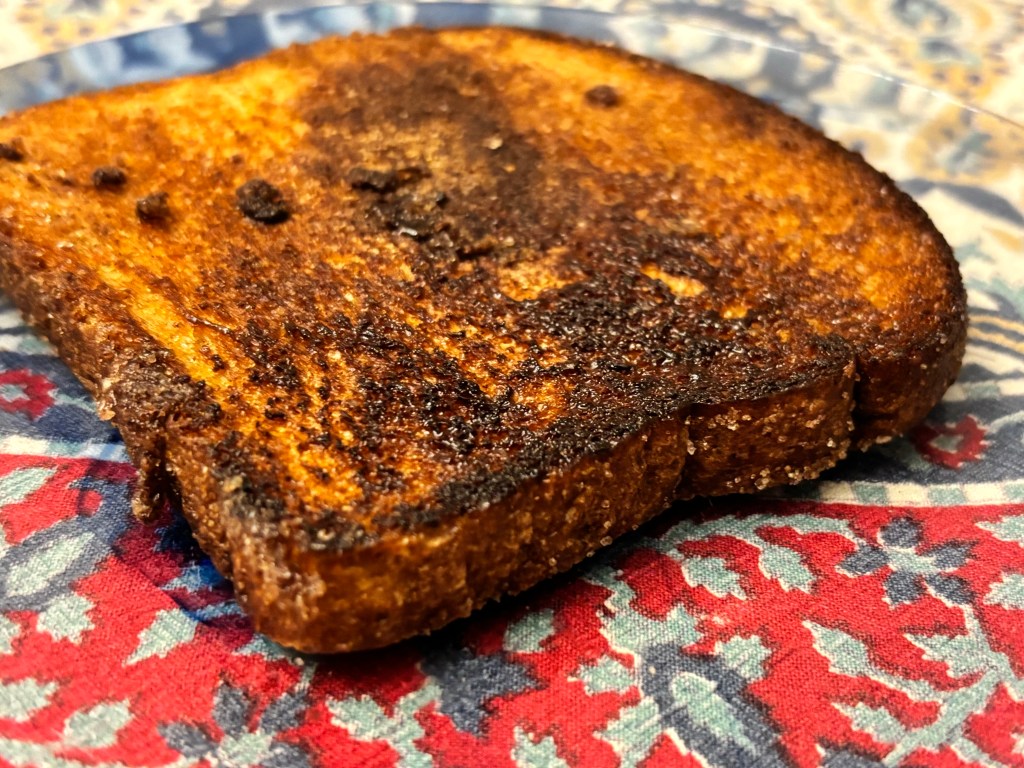
We were intrigued by this NYT recipe for cinnamon toast: https://cooking.nytimes.com/recipes/1022153-cinnamon-toast?unlocked_article_code=1.fVA.0Kl3.SI-lOK3lWUOb&smid=ck-recipe-iOS-share
We halved the recipe, using 1.5 Tbsp white sugar, 1/2 tsp standard cinnamon, 1/2 tsp Vietnamese cinnamon, and a pinch of salt. We used about 3 Tbsp unsalted butter total.
Our one modification was to sprinkle the second side with the cinnamon-sugar and then flip it to sizzle and brown. We enjoyed having both sides of toast caramelized. We enjoyed this cinnamon toast with a glass of milk. (May 2026)
-
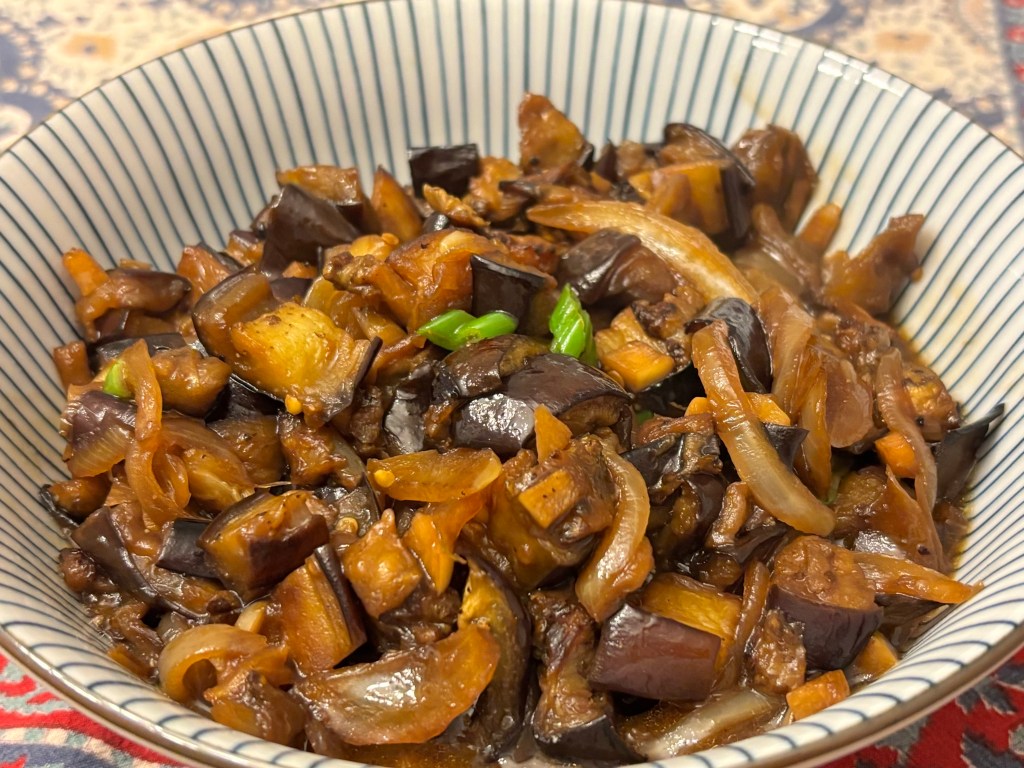
We had two small-medium Italian eggplant and decided to try this recipe: https://cooking.nytimes.com/recipes/1024399-eggplant-adobo?unlocked_article_code=1.e1A.fuJV.bjIhOJxXD2IR&smid=ck-recipe-iOS-share
Our modifications: first, instead of frying the diced eggplant, we preheated the oven to 450. We cut the eggplant into 1×2” pieces, tossed in 2 Tbsp canola oil, lightly salted, and spread out along three foil-lined rimmed baking pans. We oven-roasted for 30 mins, tossing midway.
Second, we then heated a large nonstick pan on medium heat. Then we sautéed the onion and garlic, then continued along with the NYT recipe. We didn’t have fresh basil, so we used one scallion green cut along a diagonal as garnish.
We served this with jasmine rice, and it was delicious. (Apr. 2026)
-
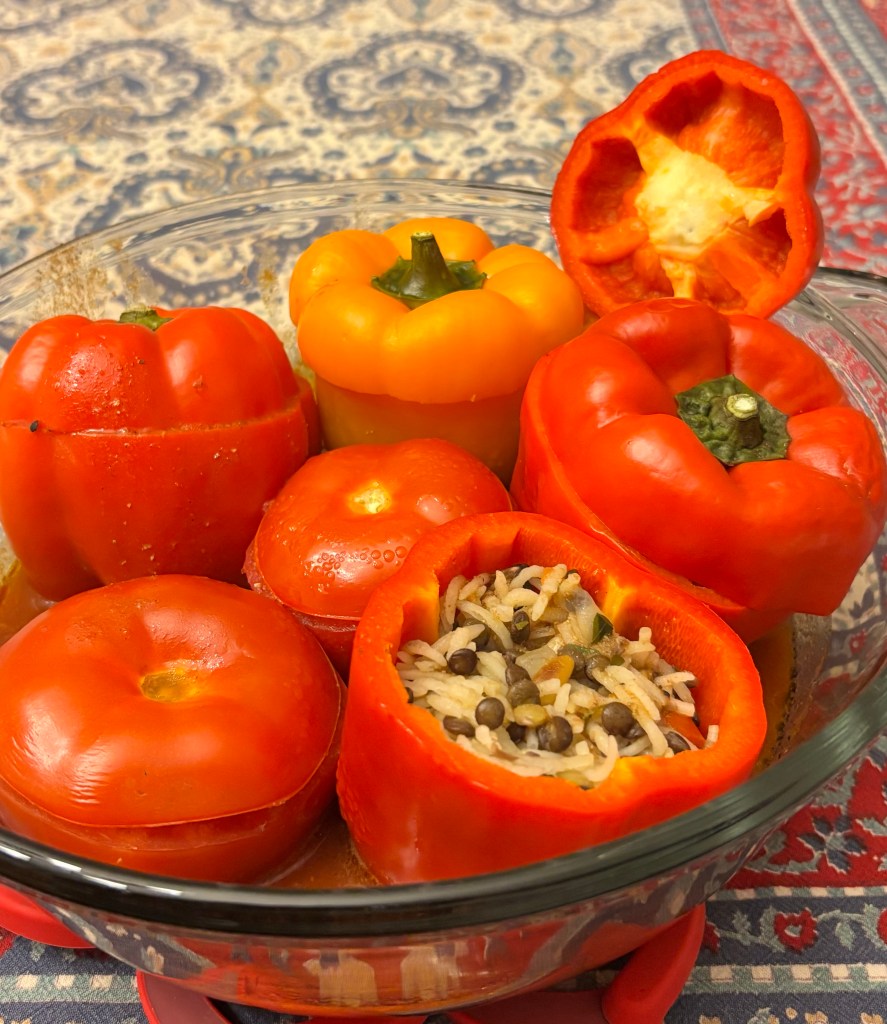
We love stuffed peppers, and we decided to try this vegetarian recipe from Plant-Based Folk: https://plantbasedfolk.com/vegan-stuffed-peppers-lebanese-stuffed-capsicum/
Our modifications: first, we note that this stuffing was intended for 8 bell peppers, with a few hollowed-out tomatoes just in case. Yet we still had so much leftover stuffing that we recommend halving the stuffing (3/4 cup uncooked basmati rice and 1/2 cup uncooked lentils) the next time.
Second, for the lentils we used French puy lentils, which are charcoal gray and hold their shape more effectively than standard greenish-brown lentils. We cooked 1 cup puy lentils in 2.5 cups water and 1/2 tsp kosher salt for 20 mins.
Third, we could not fit all of the stuffed vegetables in one baking dish. Instead, we used two round, deep dish (3 quart each) casserole dishes with lids. We fit 4 bell peppers and 1-2 tomatoes in each casserole dish. We placed each covered casserole dish on its own foil-lined rimmed baking sheet and baked at 360 degrees F (per the blog post) for 45 mins. Then kept them covered to steam for 10 mins.
Fourth, we really appreciate the blogger’s tip about prepping the bell peppers and tomato with a paring knife for precision. It definitely helped when reassembling the stuffed vegetables with their respective lids.
Finally, although we liked the flavors of this dish, we found it took far longer (2 hours) to prepare prior to the 45 mins of baking time. In addition, it involved a lot of different mixing bowls. Draining the parboiled rice mixture was cumbersome. So we do not recommend making this recipe on a busy evening where you need minimal clean-up. (Apr. 2026)
-
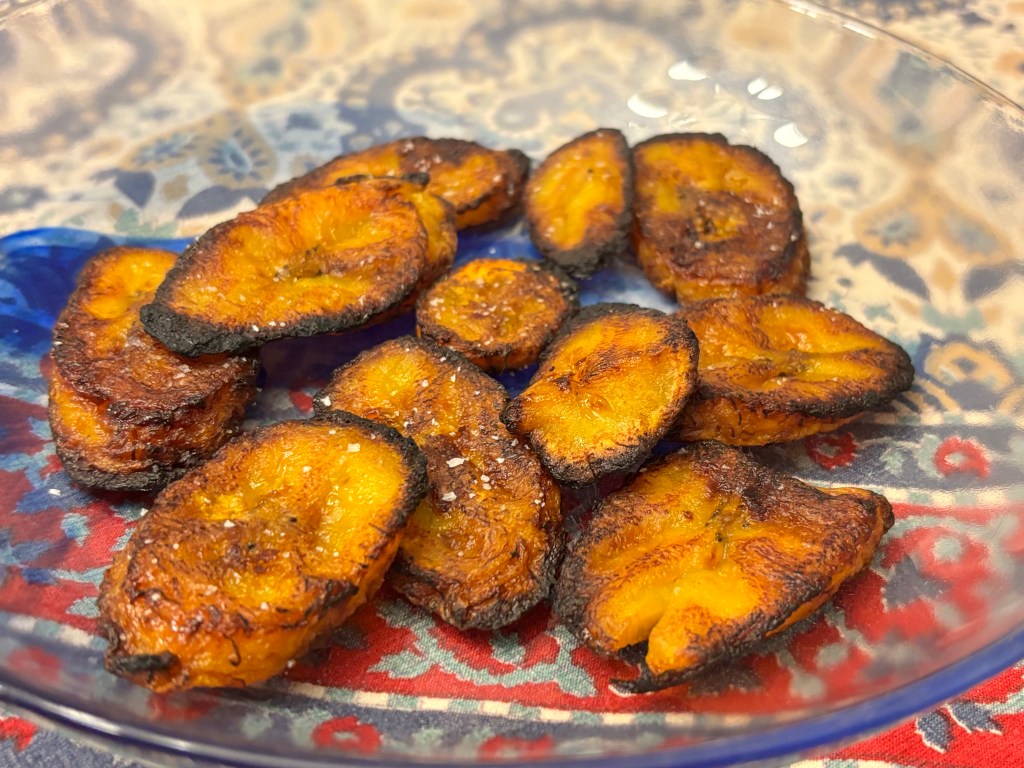
Ten years ago, we first made this recipe with canola oil. But we recently revisited the recipe, using coconut oil instead: http://www.natashalh.com/oven-baked-sweet-plantains-healthier-platanos-maduros/ We also experimented with the convection setting in our oven.
First, preheat the oven to 400 (at the Convection Multi Rack setting). This made a huge difference for us, compared to the traditional oven setting, which led to uneven roasting across the racks.
Second, prepare four ripe plantains by slicing along a 1/4” thick diagonal. Then lightly coat the plantain slices with coconut oil (about 2 Tbsp). Line three baking sheets with non-stick foil, then spread the plantain slices so they’re at least an inch apart (to make sure they brown and don’t steam).
Third, place the baking sheets in the oven, baking on one side for 15 mins. Flip each piece, and let bake at 400 for 10 mins. And then if needed, broil on Low to brown each plantain slice. After removing from the oven, lightly sprinkle with kosher salt. (Apr. 2026)
-
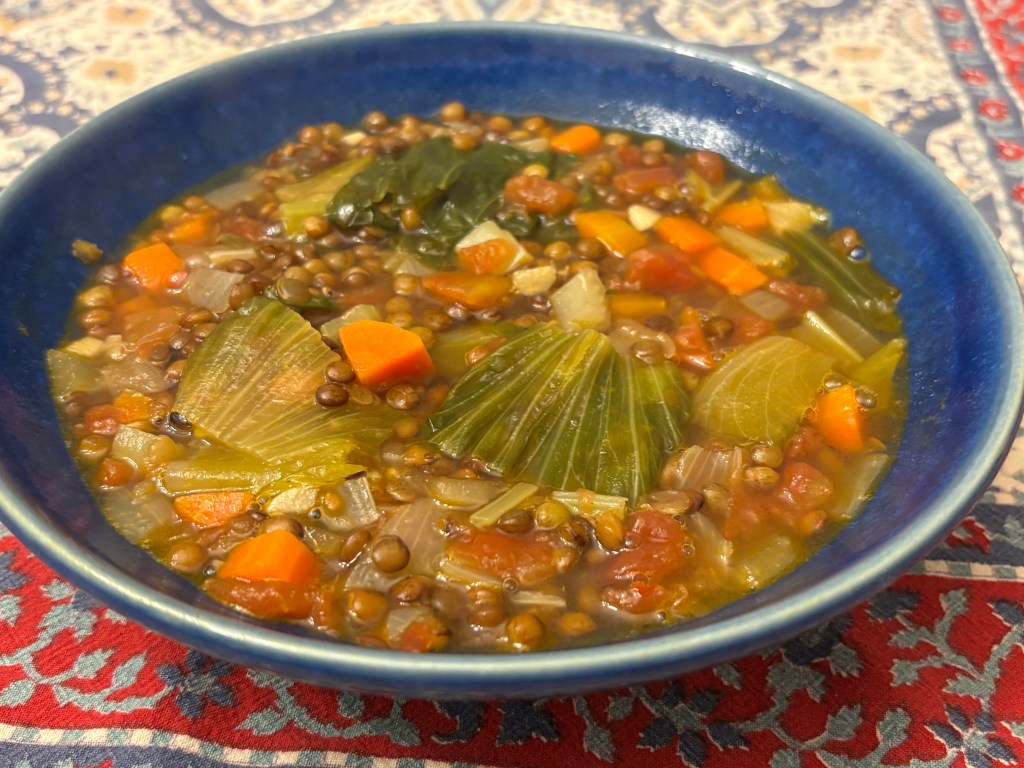
We love lentil soup, and we were curious about escarole. So we tried this recipe: https://cooking.nytimes.com/recipes/1013354-lentil-and-escarole-soup?smid=ck-recipe-iOS-share&cgs=c
Our modifications: first, we added 2 celery stalks (diced) to the carrots and onion. Second, the recipe didn’t specify the type of lentils, so we used 1 cup French de Puy lentils (small, dark gray), which hold their shape better than the common brown lentil. Third, for the liquid we used 1 quart (4 cups) no-salt chicken broth and 2 cups water. Fourth, for the bouquet garni, we tossed in 1 bay leaf, 5 sprigs thyme, and 2 parmesan rinds (we didn’t have parsley on hand).
Finally, when serving we followed the tip to toast a slice of crusty bread, rub the surface with a garlic cloves, and then place in the bottom of the bowl before pouring the soup overtop. It was delicious and satisfying. (Apr. 2026)
Note: When we made this recipe a second time, we used escarole instead of kale and combined minced spearmint, parsley, and dill for the 1 cup fresh herbs. These were not a good flavor combination and the soup felt imbalanced. We think the dill was a particularly bad fit for this soup. (May 2026)
-
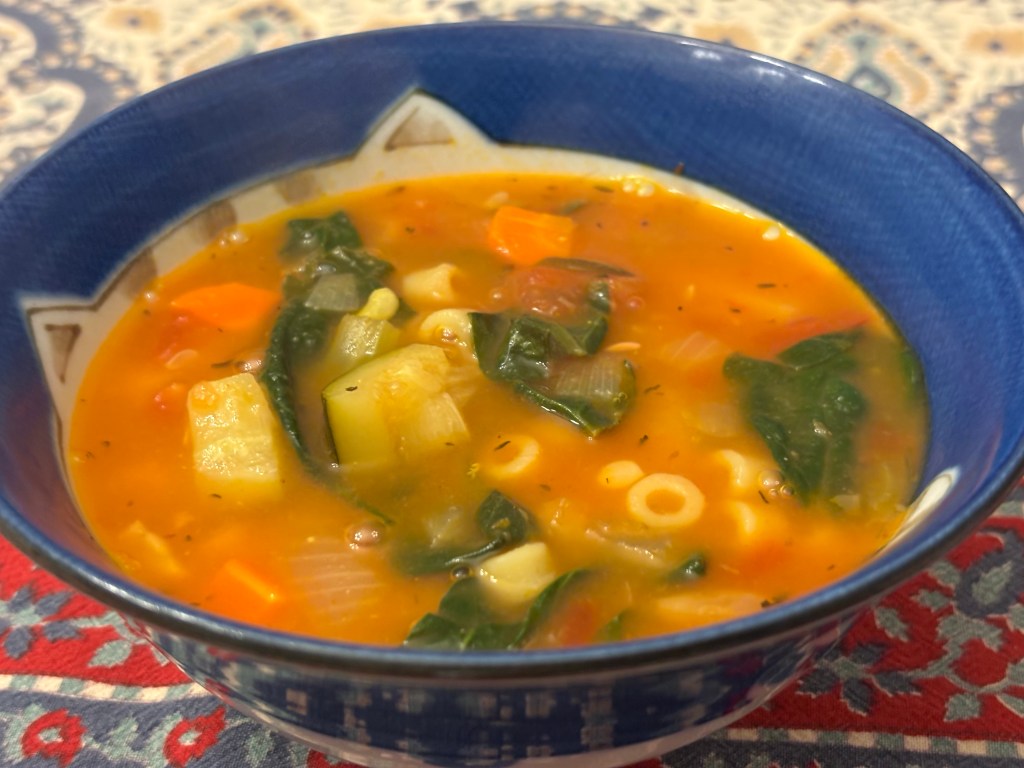
We made this Cookie + Kate recipe: https://cookieandkate.com/classic-minestrone-soup-recipe/. This was healthy and tasty.
Our modifications: first, for the vegetables we used 1 russet potato (diced), 1 zucchini (diced), and 1/2 cup French-cut string beans, which exceeded 2 cups. As a result, we increased the liquid to 7 cups. Second, we used a combination of no-salt chicken broth (5 cups) and water (2 cups). Third, we added 2 parmesan rinds. Fourth, for the pasta we used ditalini. Finally, at the end of cooking, we added a dash of sugar for balance in addition to the fresh lemon juice. (Apr. 2026)
Note: When we made the recipe, we found the 1/4 cup tomato paste made the soup too thick and tomato-ey. We added 1/2 cup chicken broth and 1/2 tsp sugar. We may try to add a pinch of baking soda. (July 2026).
-
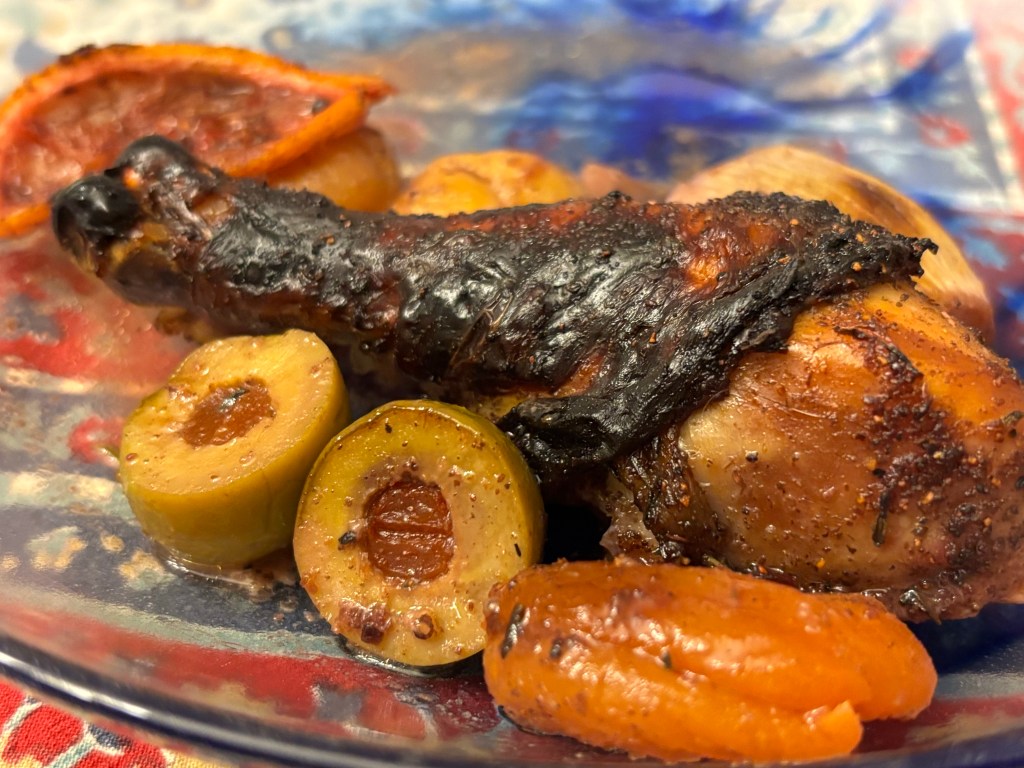
In honor of Passover, we tried this recipe: https://cooking.nytimes.com/recipes/1021962-roast-chicken-with-apricots-and-olives?smid=ck-recipe-iOS-share&cgs=c
Our modifications: first, we combined all ingredients (including the white wine) in the marinade. Instead of Calvestrano olives (which we find bland), we used 1 cup Queen Spanish pimiento-stuffed olives, cut crosswise in half, plus 2 Tbsp olive brine. We marinated the chicken pieces for 8 hours.
Second, based on reader comments, we preheated the oven to 400. We placed the chicken and all of the marinade in a 9×13” baking dish. We placed the breasts in the center and moved the smaller pieces (wing, thigh, and drumstick) along the right and left sides of the dish.
Third, we baked the baking dish, uncovered, on the top shelf and cooked for 1 hour. (Note: Because the chicken browned almost immediately due to the sumac, we didn’t feel the need to increase the temp to 450.) This method turned out well overall, but the shallots did not become crispy (because we didn’t follow the NYT Cooking recipe tip to cook them separately.)
We had planned to serve this with mashed potatoes, but we found it also went well with jasmine rice. (Apr. 2026)
-
Subscribe
Subscribed
Have a WordPress.com account? Log in now.

