-
I cook as a hobby, and I maintain this blog primarily to keep track of recipes that my family has enjoyed over the years. I started blogging back in 2015, in response to requests from friends for recipes they had seen me post on Facebook (but that I couldn’t easily catalog). My original blog was on another platform that became less user-friendly over time. I migrated my blog to WordPress earlier this year, and I’ve spent more time than expected reformatting the migrated posts.
This blog is and always will be a work in progress. For example, I currently provide Tags for posts, but I have not coded for Categories. I also generally try to share the recipes themselves in my posts, but in cases where the recipe is not available online, I try to identify the source (e.g., the cookbook title and author) as needed. In some cases, such as where a family has shared their recipe with me but hasn’t authorized me to share it widely, I post a photo of the dish with that proviso.
I recently added a Search widget to this blog. On the desktop version, the Search bar appears prominently on the left hand side. But for some reason, it is hidden on the mobile app. If you’re on your phone, tap on the SHOW tab at the top left of the home page. That will reveal another screen with the Search bar.
I hope you enjoy exploring my blog and find some recipes to try.
-

First, break up 1 matzoh into 2 inch pieces, soak in hot water for 1 min, then squeeze out excess water. (To avoid disintegrating the matzoh, I place the broken dry pieces in a handled colander that is nestled in a mixing bowl. Then I pour the hot water overtop, covering the matzoh pieces. When the matzoh is softened but still intact, I remove the colander and then use a paper towel to absorb excess liquid from the softened matzoh.) Second, beat an egg, then fold in the matzoh pieces. Heat a frying pan with a little oil, heat, then add the egg mixture, flattening into a pancake. Brown on both sides, then serve. Season with salt and pepper if desired. I like to serve mine with a side of maple syrup. Recipe is here: http://m.allrecipes.com/recipe/16045/matzo-brei/?page=0 (Apr. 2015)
-
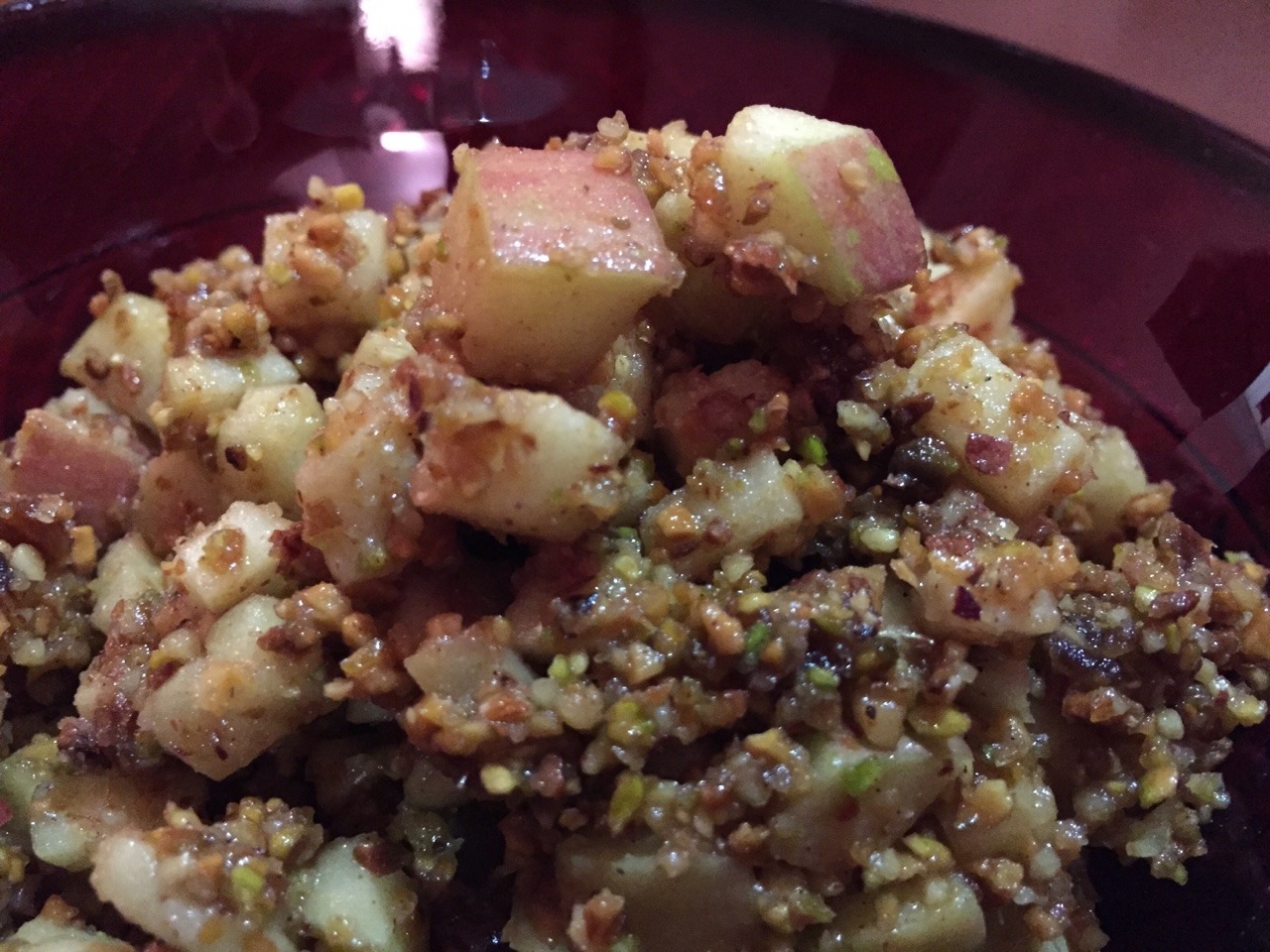
Pit and finely dice 8 large Medjool dates. Combine with: 2 Tbsp each pomegranate molasses and honey; and ¼ tsp each ground cardomom, ground cinnamon, and sea salt. Add 2 Fuji apples, cored and finely diced (skin on). Separately, toast ¾ cup each walnuts and almonds and ¼ cup pistachios. Using a food processor, pulse the toasted nuts until coarsely ground, then fold into the apple mixture. Enjoy alone, or serve with matzoh coated with a thin layer of horseradish. Recipe from The New Persian Kitchen by Louisa Shafia. (Apr. 2015)
-
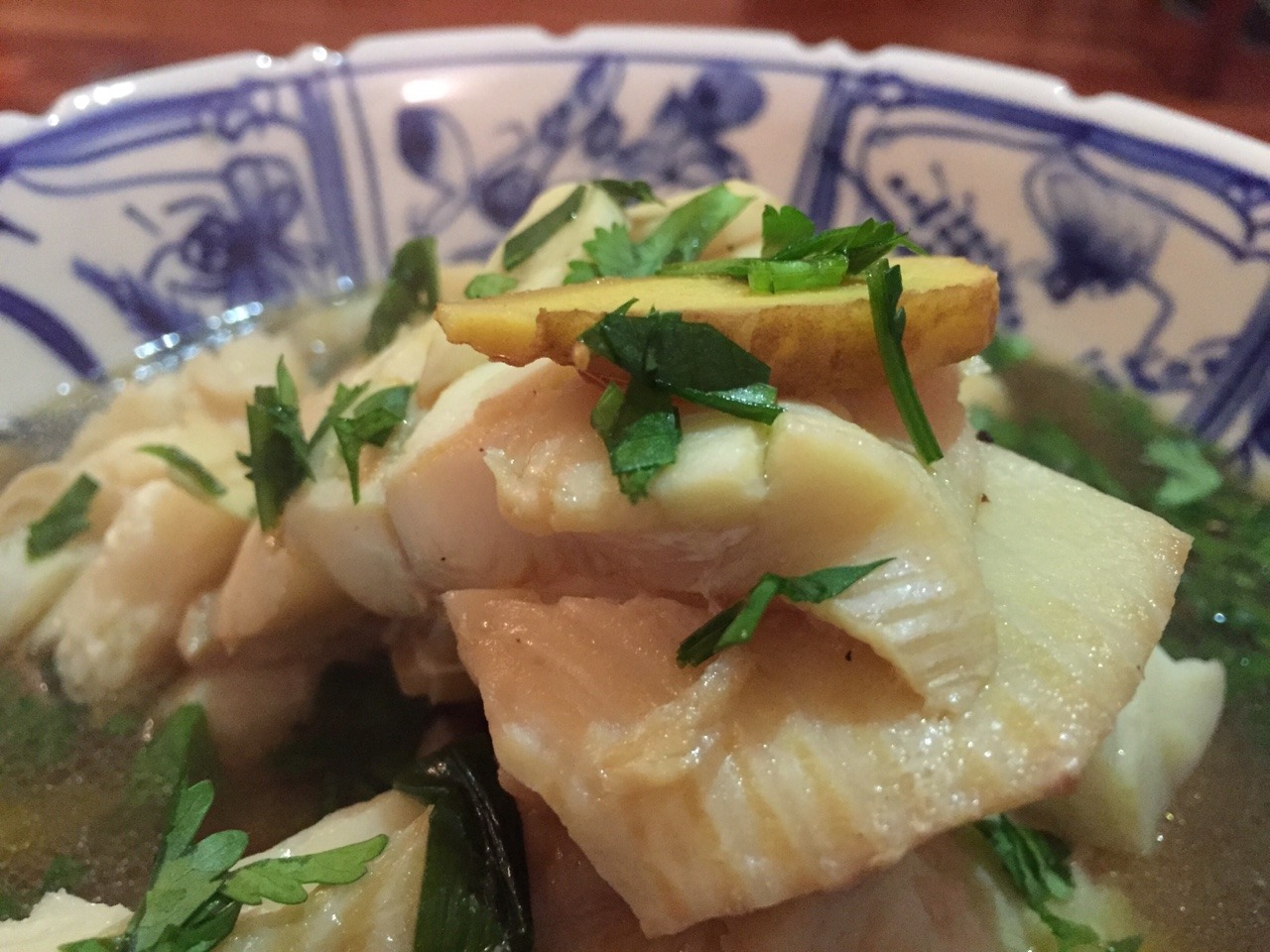
This is based on Hot and Sour Shad Soup in The Key to Chinese Cooking by Irene Kuo. Despite the recipe title, we found the dish neither hot nor sour. We modified by adding more aromatics to the steam pot and to the chicken broth. (Mar. 2015)
-
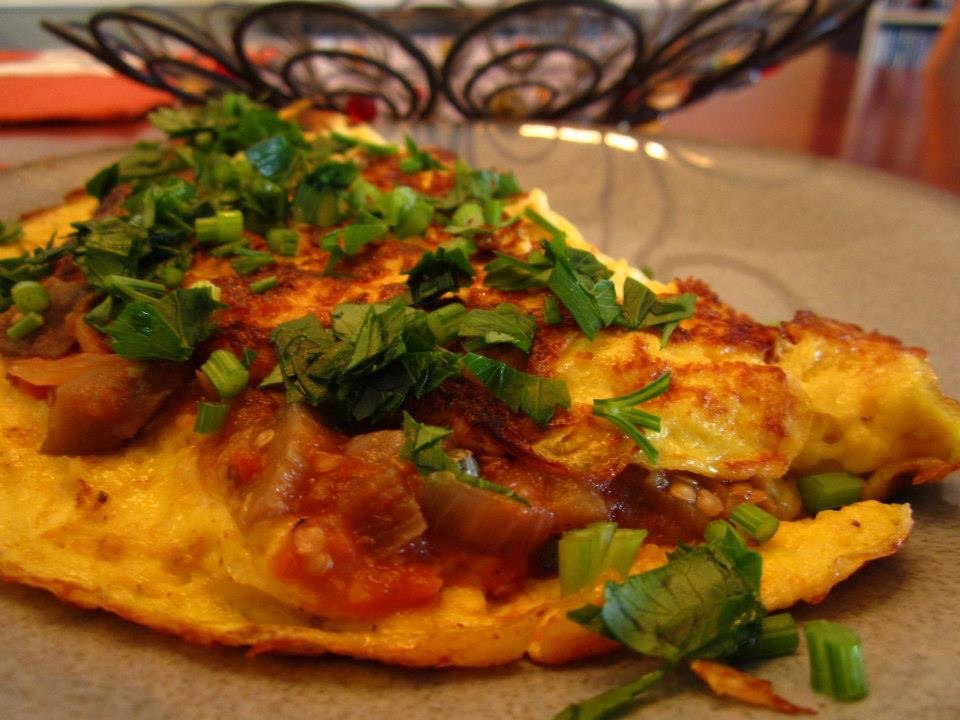
I decided to try something with last night’s Italian caponata (that recipe is here: piglettedc.wordpress.com/2015/03/27/italian-caponata-in-a-wide-high-walled-and/). Heat olive oil and butter in a skillet. Scramble eggs (I use half whole eggs, half egg whites) with some milk, then pour into skillet. Cook on medium-low, pulling in sides and spreading liquidy egg to the edges. When nearly cooked, add a few dollops of caponata to the center-left off the omelette. Carefully fold right side over the left, lower heat, and cover (I did this to make sure the egg mixture was fully cooked). When the omelette is cooked, slide onto a plate and garnish with chopped Italian parsley. (Oct. 2012)
-
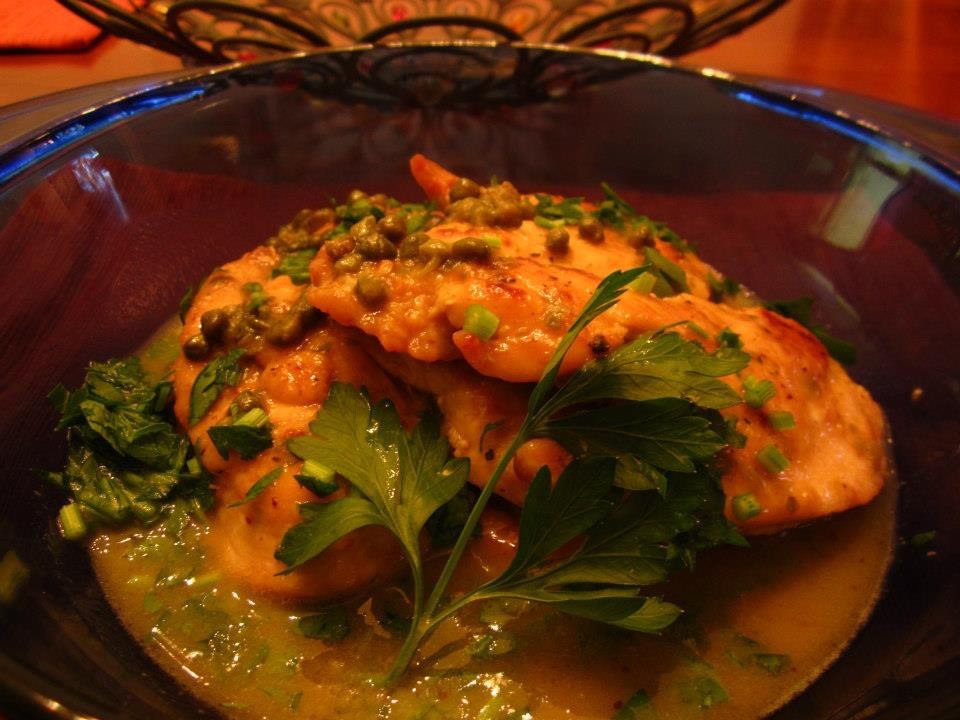
This recipe calls for a total of 4 Tbsp olive oil and 6 Tbsp butter, each divided into 2 Tbsp increments. Using a sharp knife, carefully cut 2 chicken breasts in half crosswise (so that they are thin, like cutlets). Try to keep each breast intact. Sprinkle each side with salt and pepper, then lightly dredge in flour. In a large pan (I used a gigantic wok), heat 2 Tbsp olive oil and 2 Tbsp butter, then place the first breast cutlet, cooking until browned (about 3 minutes per side). Add the same amount of olive oil and butter, and repeat for the second cutlet. (It’s okay if the breasts are not fully cooked at this stage, but they should be mostly cooked.) Place the browned cutlets on a plate and set aside. In the meantime,
add ½ cup chicken broth, 1/3 cup lemon juice, and ¼ brined capers (rinsed and drained) to the wok,
and bring to a boil. Reduce to a simmer, and then return chicken to wok, cooking until chicken is fully cooked (about 5-8 mins). Place chicken on serving plate, then add the remaining 2 Tbsp butter to the sauce in the wok, whisking until butter has melted. Pour sauce over chicken, then garnish
with Italian parsley. This recipe is from Giada DeLaurentiis: https://www.google.com/amp/www.foodnetwork.com/recipes/giada-de-laurentiis/chicken-piccata-recipe2.amp (Oct. 2012) -
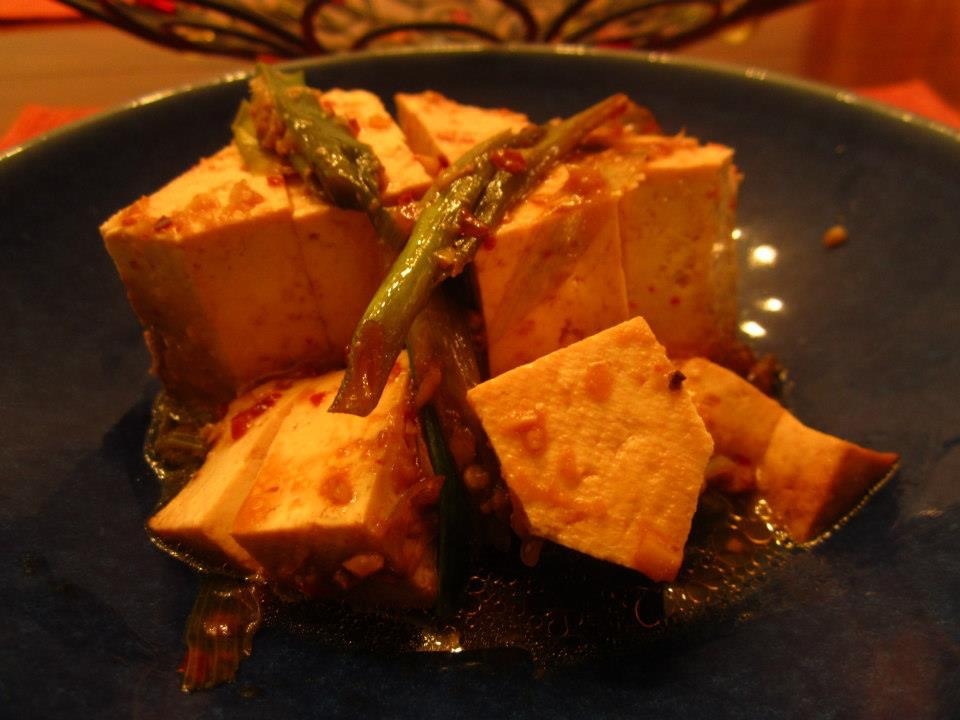
Score tofu with diagonal cuts and set aside. Using a wok, sauté green onions, minced garlic, and microplaned ginger in a little oil. When fragrant, add tofu blocks and pour water, soy sauce, sugar, and a dash of crushed red pepper flakes. Simmer, uncovered, until sauce has nearly evaporated. Serve with rice. This recipe is from Simply Vegetarian by Wei-Chuan Cultural Education Foundation, with modifications (addition of garlic, ginger, and crushed red pepper). (Oct. 2012)
-
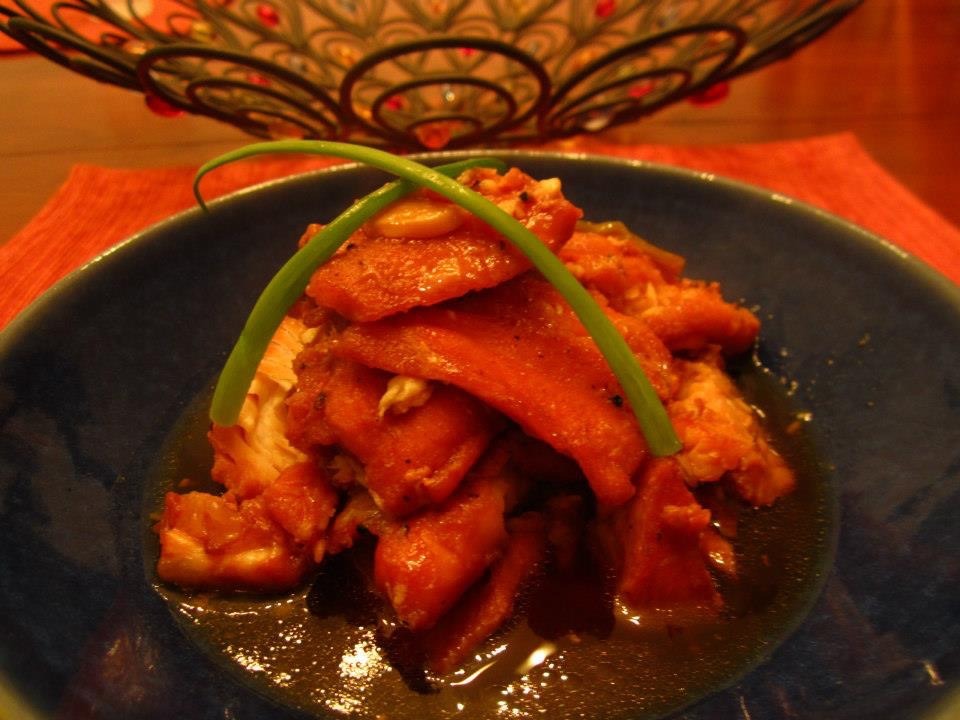
Daniel and I recently enjoyed this dish at a restaurant, so I wanted to recreate it at home. Marinate catfish in brown sugar, freshly ground black pepper, homemade Vietnamese bittersweet caramel sauce, fish sauce, and a dash of salt for 15 minutes. In the mean time, sauté scallions (whites only, cut into 1 1/2
inch straws) and freshly sliced garlic in a little oil in a wide, high-rimmed pot. on medium heat When the scallion and garlic are fragrant, add marinated catfish (incl. any leftover marinade in bowl). When it starts boiling, reduce to simmer and then cover. Cook for 10 minutes, checking midway to make sure there is enough liquid in the pan (if there isn’t, add a dash of water). Uncover, then add water to almost cover the fish. Raise heat until you get a gentle simmer, then reduce heat, cover, and cook for 20 minutes (the recipe says 30 minutes, but that’s for thick-cut catfish steaks). Uncover and cook until sauce has reduced by half (about 15-18 mins). Serve with jasmine rice. I also like to serve the Javanese pickle on the side, which provides a nice acidity to this richly flavored (yet fairly light) dish. (Oct. 2012)This recipe is from Into the Vietnamese Kitchen: Treasured Foodways, Modern Flavors (Ten Speed Press, 2006) by Andrea Nguyen, with modifications (catfish fillets instead of steaks).
-
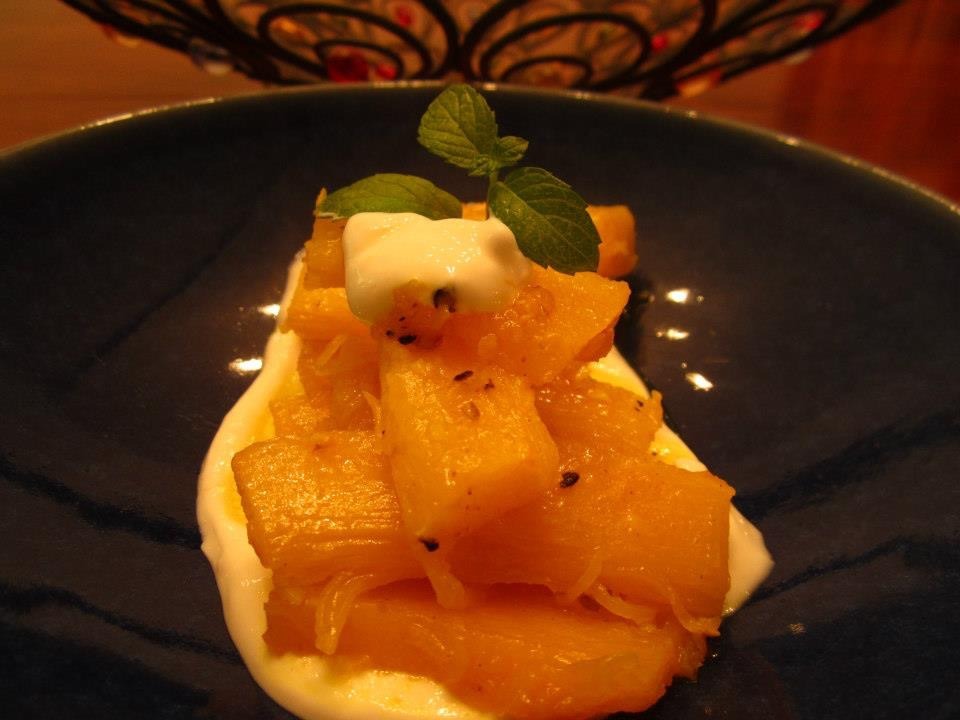
This is one of my favorite Afghan appetizers when I eat out, and I finally made it at home. I used the remaining half of my pumpkin (from the Aruban soup) for this. Remove rind from pumpkin and cut into slices (as my friend Mary J advised, I microwaved the pumpkin for a few minutes before doing this, and it was much easier to cut). Using a deep frying pan, heat about 2 cups of neutral vegetable oil on high, then lower to medium. Fry the pumpkin slices (you’ll have to do this in batches) until lightly browned; place cooked pieces in a paper towel-lined strainer. Once pumpkin slices are done, pour oil out of
pan, then add pumpkin back in. Fold in freshly crushed coriander seeds, turmeric, minced garlic, micro planed ginger, sugar, salt, and freshly ground black pepper. Add about 1 ½ cups water, cover, bring to a
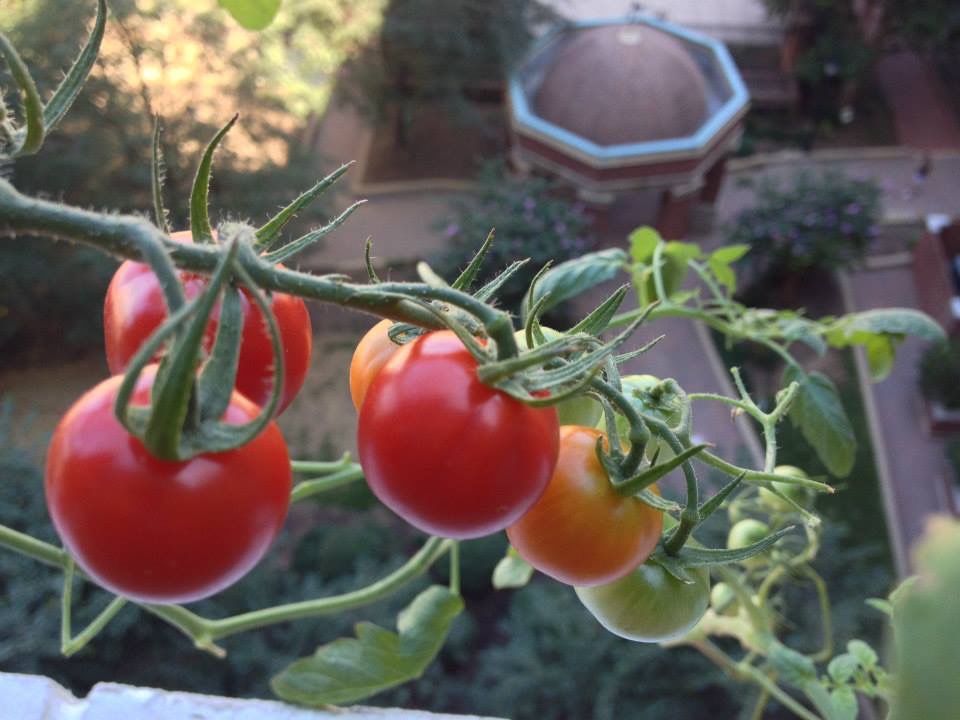
boil, and then reduce to a simmer. Cook on low until pumpkin is tender and flavors have melded (about 20 mins). In the meantime, mix plain yogurt (I used Greek) with some minced garlic and salt. When ready to serve, smear some of the yogurt mixture on the bottom of a flat bowl. Place pumpkin slices (with some sauce) on top of the yogurt, then top with a dollop of yogurt and garnish with mint (here, fresh from my balcony garden). Serve with warm naan and enjoy. This recipe is from Afghan Cuisine by Nafisa Sekandari, with minor modifications (addition of ginger, using fresh instead of dried mint). (Oct. 2012) -
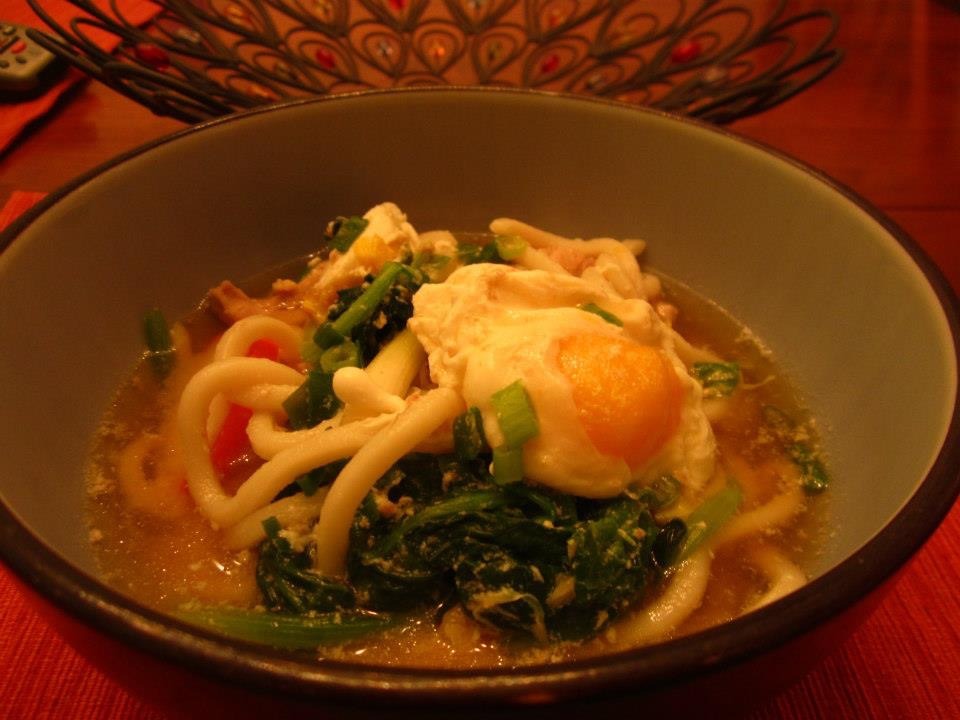
Despite a relatively short list of ingredients, this dish is very challenging to execute. First, make the bonito stock: combine 2 quarts water with kombu (kelp) in a stockpot and heat on medium. Just before it boils, remove the kombu. Add 1 cup packed bonito shavings, bring to a boil, then immediately turn off heat. Let sit for 2 minutes, then skim out the bonito flakes. Second, make the broth for hot noodles (kakejiro): Starting with the bonito broth, add sugar, salt, soy sauce, and light-colored soy sauce (usukuchi shoyu). Bring to a slow boil on medium heat. Then add boneless, skinless chicken thighs (cut into bite-sized pieces), slices of steamed fish cake (kamaboko), the white parts of scallions, and cook for 4 minutes (skimming foam as necessary). Then add already-cooked udon, blanched spinach, and scallion greens (cut into thin rings). Then carefully break 4 eggs, adding them to the simmering pot. Cook until eggs and barely done, then serve the pot at the table. I bought a Japanese clay pot (donabe) to make this dish, but unfortunately it was too small for both of us so I used a small All-Clad pot instead. This recipe is from The Japanese Kitchen by Hiroko Shimbo. (Nov. 2012)
-
Subscribe
Subscribed
Have a WordPress.com account? Log in now.

