-

I cook as a hobby, and I maintain this blog primarily to keep track of recipes that my family has enjoyed over the years. I started blogging back in 2015, in response to requests from friends for recipes they had seen me post on Facebook (but that I couldn’t easily catalog). My original blog was on another platform that became less user-friendly over time. I migrated my blog to WordPress earlier this year, and I’ve spent more time than expected reformatting the migrated posts.
This blog is and always will be a work in progress. For example, I currently provide Tags for posts, but I have not coded for Categories. I also generally try to share the recipes themselves in my posts, but in cases where the recipe is not available online, I try to identify the source (e.g., the cookbook title and author) as needed. In some cases, such as where a family has shared their recipe with me but hasn’t authorized me to share it widely, I post a photo of the dish with that proviso.
I recently added a Search widget to this blog. On the desktop version, the Search bar appears prominently on the left hand side. But for some reason, it is hidden on the mobile app. If you’re on your phone, tap on the SHOW tab at the top left of the home page. That will reveal another screen with the Search bar.
I hope you enjoy exploring my blog and find some recipes to try.
-
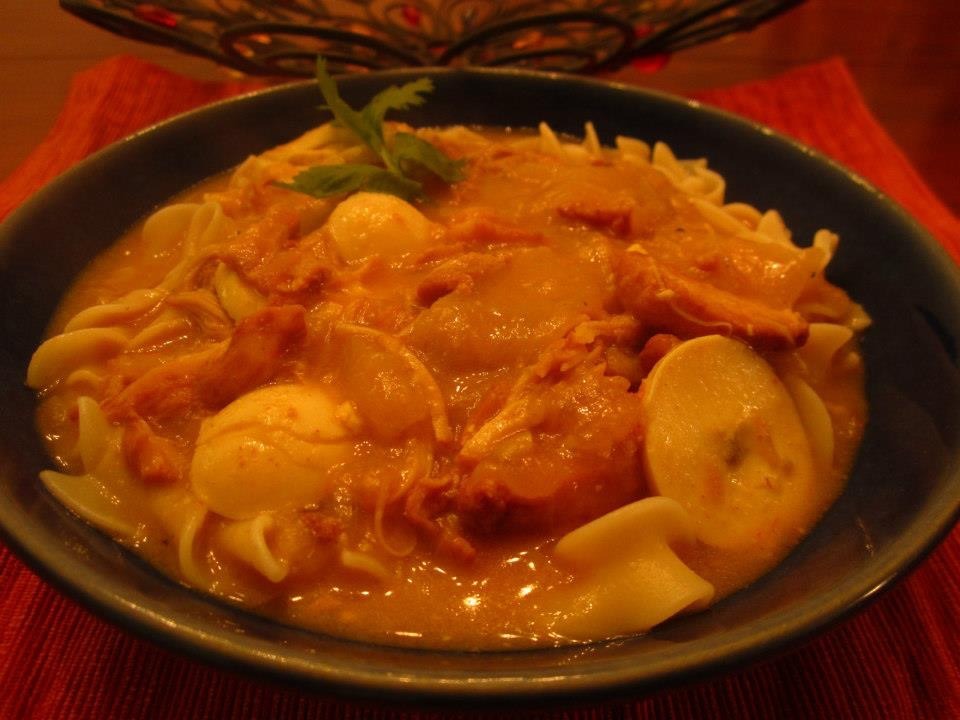
Marinate 4 lbs boneless chicken thighs, cut into bite-sized pieces, in 2 Tbsp paprika, 2 tsp turmeric, 2 tsp garlic powder (or 6 minced garlic cloves), and 2 ½ Tbsp fish sauce. Separately, mix 1 cup chick pea flour (besan) with 2 cups water and mix into a slurry. Bring 16 cups of water to a boil in a stockpot, then fold in the chick pea slurry. Let simmer for 15 mins. In the meantime, saute the marinated chicken in a little oil (about 1-2 tsp), then ad an additional 1 Tbsp paprika and 1 tsp turmeric for coloring. Add the cooked chicken to the stockpot, along with 8 large onions (cut in half). Let it simmer for 1 hour, then add 2 cans (around 30 oz) coconut milk and and 2 Tbsp fried, dried shallots (you can purchase these pre made from a Thai market). Simmer for another 45 minutes, then add 6 sliced hard boiled eggs. Fifteen minutes later, season to taste with salt and/or fish sauce. Serve over cooked flat egg noodles, garnished with lime wedges and fresh cilantro. This recipe is based on Waimar’s family recipe (for the marinated chicken) and Flavors of Burma by Susan Chan (for the stock). This recipe feeds a large group. (Dec. 2012)
-
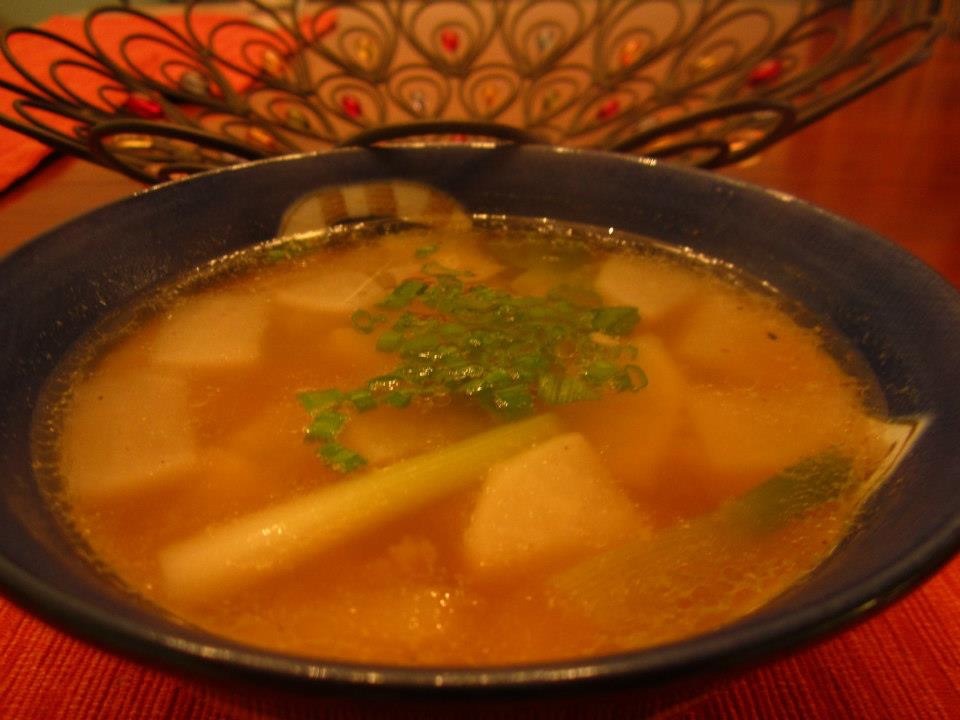
I had lots of beef stock leftover from the oxtail soup, so I decided to improvise. Bring beef stock to a boil, then add daikon radish (cut into thin squares). Cover and let simmer for about 20 minutes, then add scallions, cut into straws. Continue to simmer for about 5 minutes, then season to taste. Here, I added some Korean beef boullion powder (sogogi dashida), a Tbsp of Korean soybean paste (doen jang), and some freshly ground black pepper. Garnish with minced scallion greens (which adds a fragrant contrast) and serve with short-grain rice. (Jan. 2013)
-

Thanks to my friend Laura, I was able to try out Marcus Samuelsson’s recipe. Saute minced beef and chopped red onion. Once beef is well-cooked, add ground cumin, coriander seeds, and curry (here, Jamaican curry powder). Let simmer for 10 minutes, then add bread crumbs, unsweetened peanut butter, a dash of salt, and some water. Let simmer for another 15 minutes, then drain meat mixture on paper towels and refrigerate for 25 minutes. Separately, mix eggs, egg yolks, milk, and a dash each of salt and nutmeg. Spread meat mixture into a greased pan, then pour egg mixture overtop. Place pan in a larger pan half-filled with water, then bake at 350 until custard is fully cooked (this should take 45 minutes, but it took an hour because the water evaporated too quickly). This recipe is from Marcus Samuelsson, The Soul of a New Cuisine. I served this with julienned cabbage mixed with lime and a dash of salt. (Jan. 2013)
-
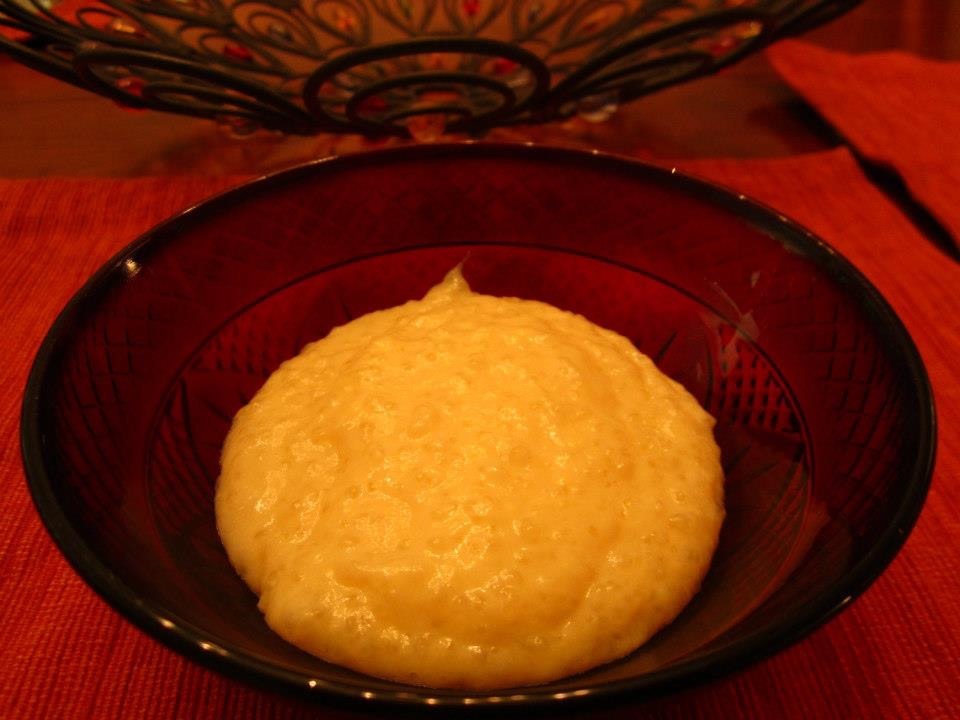
Place ½ cup quick-cook tapioca (I like Kraft Minute Tapioca), 3 cups of milk, and ¼ tsp salt in a small pot. Turn heat on high, and stir constantly until boiling (about 10 minutes). Reduce heat to the lowest simmer possible, then slowly stir in ½ cup sugar. In a separate bowl, mix 2 eggs, then slowly add a little of the tapioca mixture to the eggs (to avoid curdling). Pour egg mixture into the hot tapioca mixture, stirring for a few minutes until thickened. Remove from heat, then cool for 15 mins and add 1 tsp vanilla extract. This recipe is from Simply Recipes, www.simplyrecipes.com. (Jan. 2013)
-
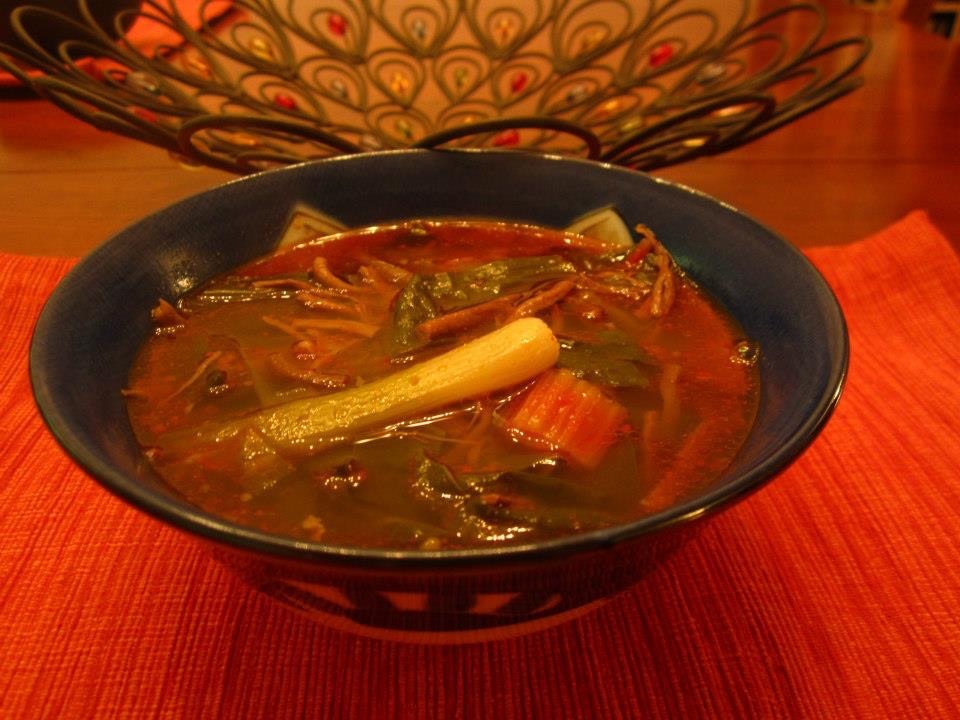
This is one of my favorite winter soups, recipe courtesy of my aunt Haeran. Soak (1) 3 lb bone-in beef shank or short rib bones and (2) 2 to 2 ½ lb beef brisket or chuck (see Note 3 below) in water for 10 minutes, then drain and place beef in a stock pot with lots of water (about 4 quart, i.e. 16 cups) and a four large onions, peeled and halved lengthwise. Bring to a boil, then reduce to medium. Skim off any protein scum as needed (this is most likely to occur with short rib bones than bone shanks). Cover and let cook until meat is fork tender and the shank meat falls off the bone (about 2 hours). Remove meat from bones, discard bones and any fat and shred beef into bite-sized pieces. Mix meat with homemade yangnum sauce (see Note 1 below), then return to pot. If the broth has reduced substantially by this point, add about 4-6 cups water and bring back to a low boil. Add 1 bunch of Swiss chard (cut into 1 inch pieces) and about 12 oz drained fernbrake (gosari), each, cut into bite-sized pieces (see Note 2 below). Bring pot to a boil, then let simmer for 20 minutes. Add 3 bunches of scallions, cut into straws (3-4 straws per stalk), and let cook for another 15 minutes. Separately, in a small sauce pan, heat 1 Tbsp toasted sesame oil and add 1-2 tsp red pepper powder. Stir on low heat until the mixture is fragrant (make sure not to burn it). Add pepper paste directly to the soup pot, and then stir. Season with salt to taste, then serve with short-grain rice. (Feb. 2013)
Note 1: “Yangnyum” refers to a simple mixture of soy sauce, sesame oil, and some seasonings. For 5 lb cooked beef, the yangnyum mixture will be about 3-4 Tbsp soy sauce, 2-3 Tbsp toasted sesame oil, 1-2 Tbsp Korean red pepper flakes (no seeds), and 2 tsp garlic powder. The sauce is according to taste, so that’s why the measurements are approximate. When determining the heat level of the yangnyum, remember that this is not the only time you will add heat to the soup – at the last step, you will add red pepper-infused sesame oil.
Note 2: If you cannot find fernbrake, you can substitute with reconstituted dried shiitake mushrooms. I have used 10-12 small to medium dried shiitakes, soaked in hot water and covered with a lid until the mushrooms are tender. Drain, then cut off the stem and cut the mushroom caps into ½ inch slices. (There is no need to keep the mushroom liquid.) I have found that reconstituted dried shiitakes add more umami than fresh shiitakes. Note 3: We find brisket works best because it does not fall apart or dry out. We cut the slab into 3 chunks (about 3”x2”) before placing in the pot. We leave the fat cap on for making the broth, but once the meat is cooked, we discard the fat cap before shredding the cooked meat. We also have used 4 lb boneless chuck roast (which is less expensive than brisket) and skipped bones entirely, and it has turned out well. We would not recommend beef flank or bottom round; they are too lean to add sufficient flavor to the soup, and the marinated meat is not succulent.
-
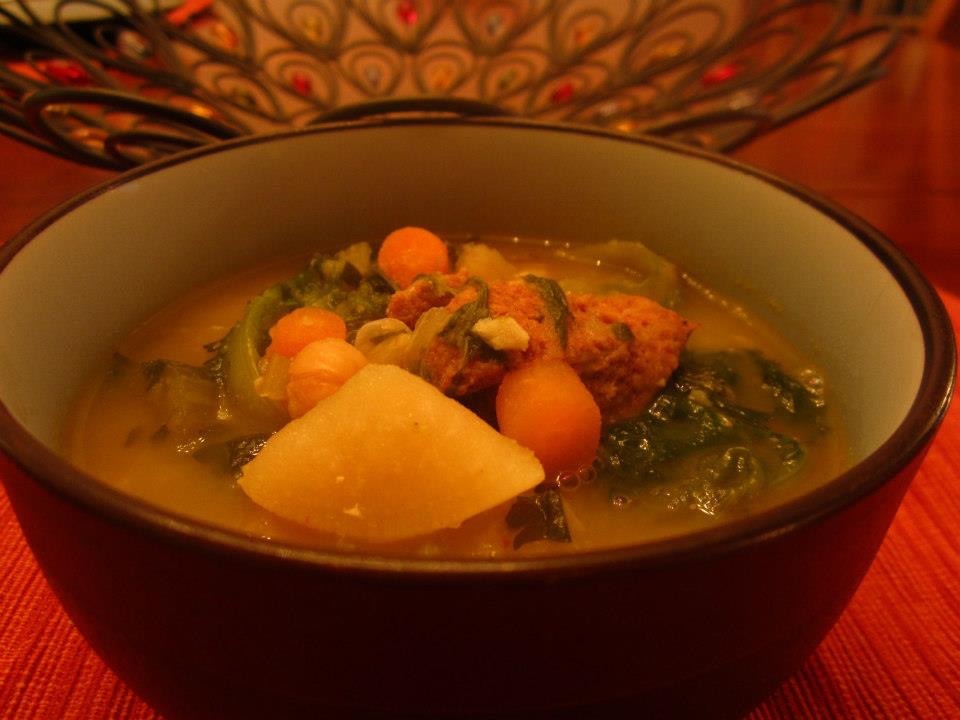
In a large stock pot, brown slices of uncooked chorizo in a little olive oil, then set aside. Add sliced onions to the pot, then when translucent, add minced garlic. Pour in 6 cups chicken stock and 4 cups water, bring to a boil, then add chickpeas (canned, drained), 2 bay leaves, and chopped parsley, potatoes, turnips, carrots, and celery. Cover and cook on medium heat until vegetables are tender (about 45 mins). Add chopped spinach (here, endive cut into straws), and season to taste (I added cumin seeds, crushed red pepper, and 6-7 sprigs thyme). Just before serving, add 3 Tbsp apple cider vinegar for brightness. Serve with crusty bread. This recipe is from Brother d’Avila-Latourette’s
Twelve Months of Monastery Soups, with substantial modifications (uncooked spicy chorizo instead of cooked sweet chorizo, canned chickpeas instead of dried, reconstituted, endive instead of spinach,
and the addition of 2 more cups chicken stock, cumin seed, crushed red pepper, and thyme). (Feb. 2013) -
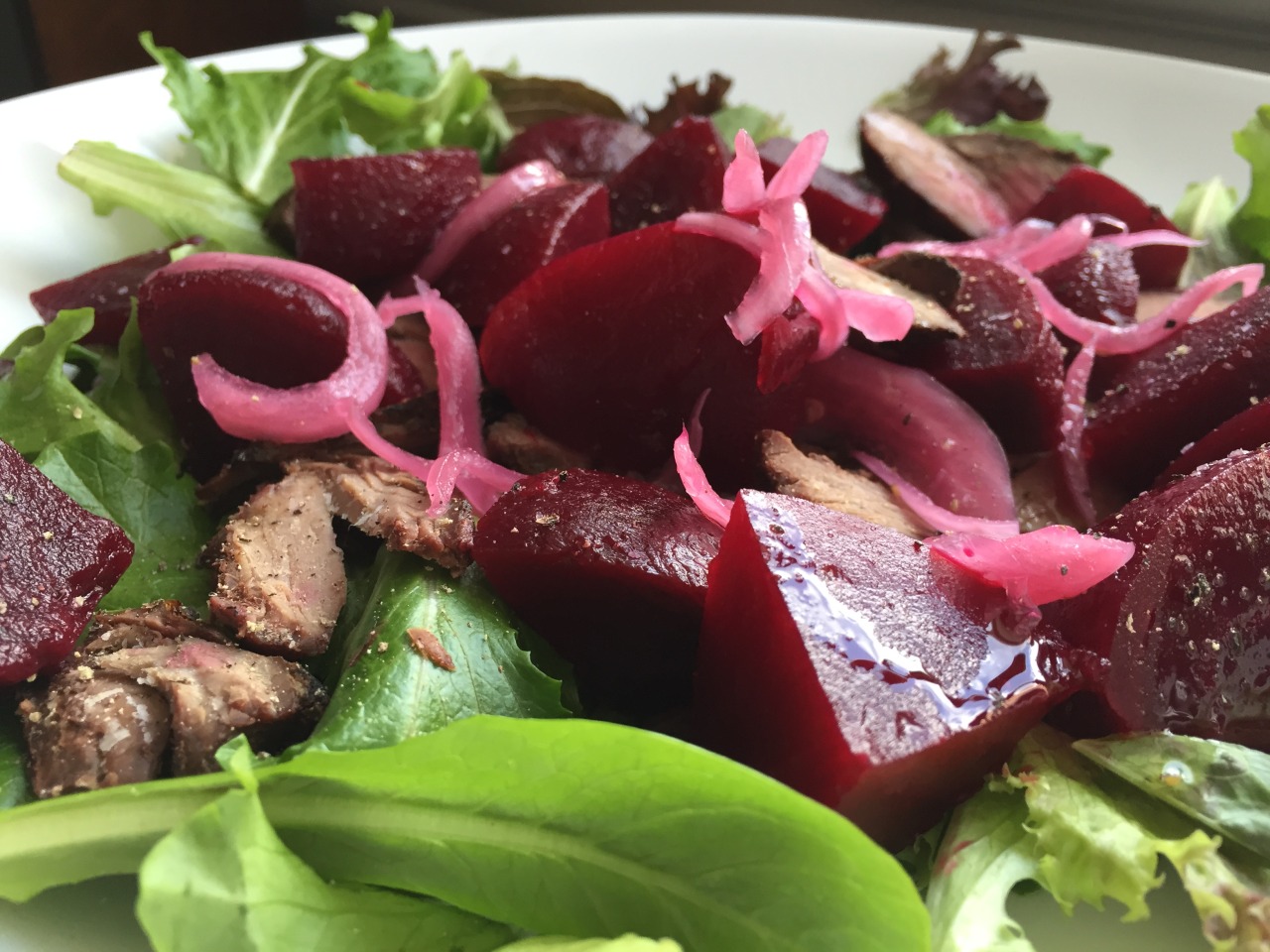
Roast beef and beet salad. We had some leftover steak from Ray’s the Steaks, and we decided to make a salad inspired by our friend Laura’s Waitrose recipe. Line a large serving plate with mixed baby greens, then layer 8 oz pickled beets (cut into quarters), thinly sliced roast beef (here, we used our leftover steak and supplemented with some prepared roast beef from Whole Foods), and pickled red onions (which we got homemade from our friend Leah!). Drizzle salad with olive oil, then sprinkle with a little salt and freshly ground black pepper. If desired, serve with horseradish dressing on the side (recipe below).
Horseradish dressing: Whisk together 1 Tbsp olive oil with 3 Tbsp sour cream, then stir in 1 1/2 Tbsp horseradish (we used the grated kind from a jar).
-
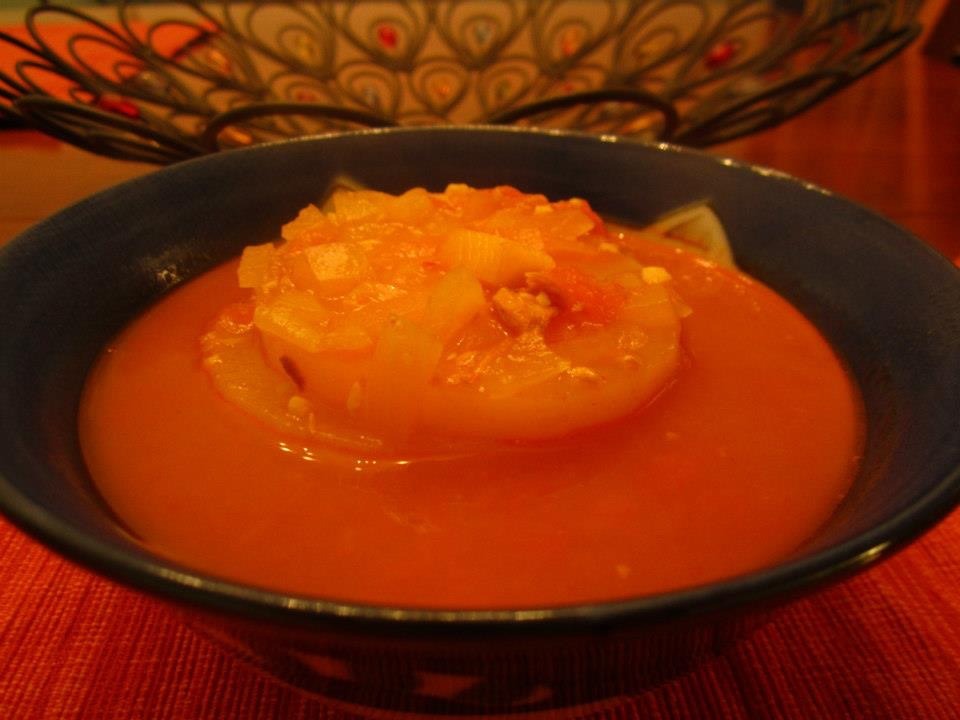
I learned this homestyle Burmese recipe from Waimar’s family. Saute 1 chopped medium onion, 4 minced garlic cloves, ¾ tsp microplaned ginger, 1 chopped tomato, 5 oz white albacore tuna (drained from a can), ½ tsp turmeric, and 2 tsp paprika in a pot with a little oil. When wilted, add about 6 cups water, bring to a boil, and then add some tamarind powder (about ¾ oz, or slightly less than half a packet of 1.76 oz Mama Sita tamarind powder), 2 tsp tamarind paste, and shrimp paste (¼ to ½ tsp) to taste (see Note below). Fold in a chunky vegetable (here, 1 lb daikon radish peeled and cut into ¾ inch rounds) and bring to a boil. Cover and simmer until daikon is tender (about 30 minutes). Season to taste with a little (1-2 tsp) fish sauce as needed. Serve with jasmine rice. (Jan. 2013)
Note: The original family recipe uses greater amounts of seasoned tamarind powder and shrimp paste. However, to reduce sodium overall, I lowered the proportions of each and supplemented with tamarind paste to add depth and the quintessential tangy aspect of this soup. (Sept. 2018)
-
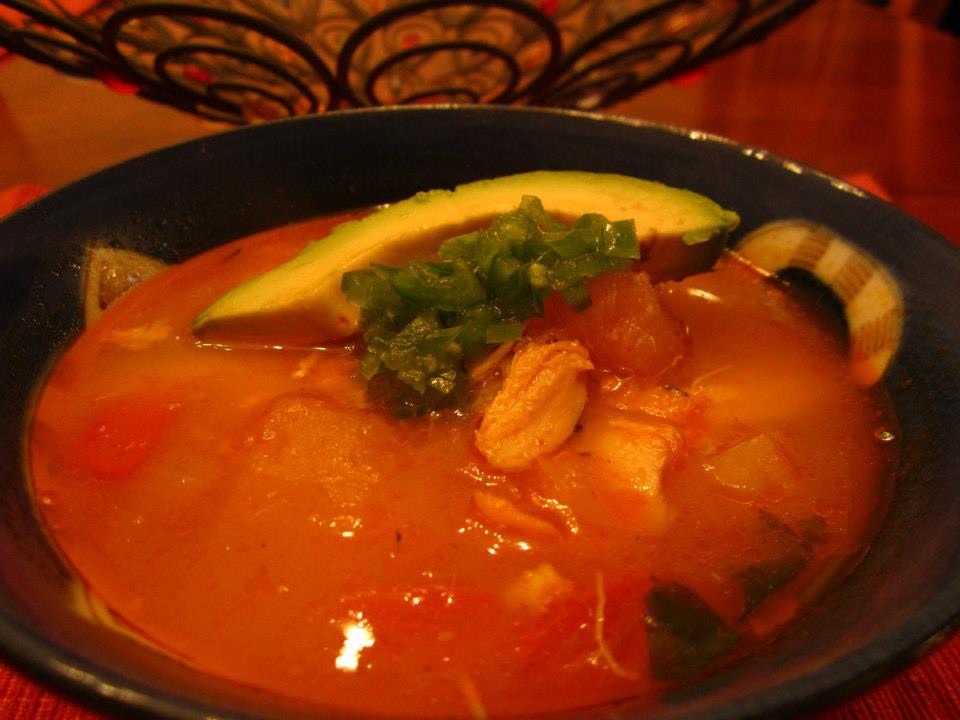
This is a multi-step recipe that took over 4 hours to make. First, make the chicken stock: place a whole chicken in a stock pot, cover with 12-14 cups water, and bring to a boil. Reduce to a simmer, then skim scum off the top. Add carrot chunks, celery chunks, 2 bay leaves, an onion (halved), parsley sprigs, black peppercorns, thyme, and a few whole garlic cloves (bruised). Cook for about 11/2 hours, uncovered, on low heat so that the stock is lightly burbling. Remove chicken and all vegetables/aromatics from the pot. Remove chicken meat from bones, tease into bite-sized pieces, and set meat aside. Toss the aromatics, including cooked vegetables. Second, start the ajaico: saute chopped onion, chopped celery, and pulverized annatto seeds in a little olive oil in a saute pan until wilted, then add mixture to the chicken stock. Add peeled and diced cassava, sweet potato, and calabaza squash. Let simmer, covered, for about 20 minutes. Then add diced (unpeeled) red boiling potatoes, cover and simmer for another 20 minutes. Then add corn (I used frozen) and the cooked chicken to the pot and cook for another 10 minutes. Then, cut off heat and add peeled, seeded, diced tomato and chopped fresh cilantro. Serve with fresh avocado, jalapeno sauce (minced fresh jalapeno, lime juice, olive oil, and a dash of salt), and white rice (not shown).
This recipe is from The Whole World Loves Chicken Soup by Mimi Sheraton. (Feb. 2013)
-
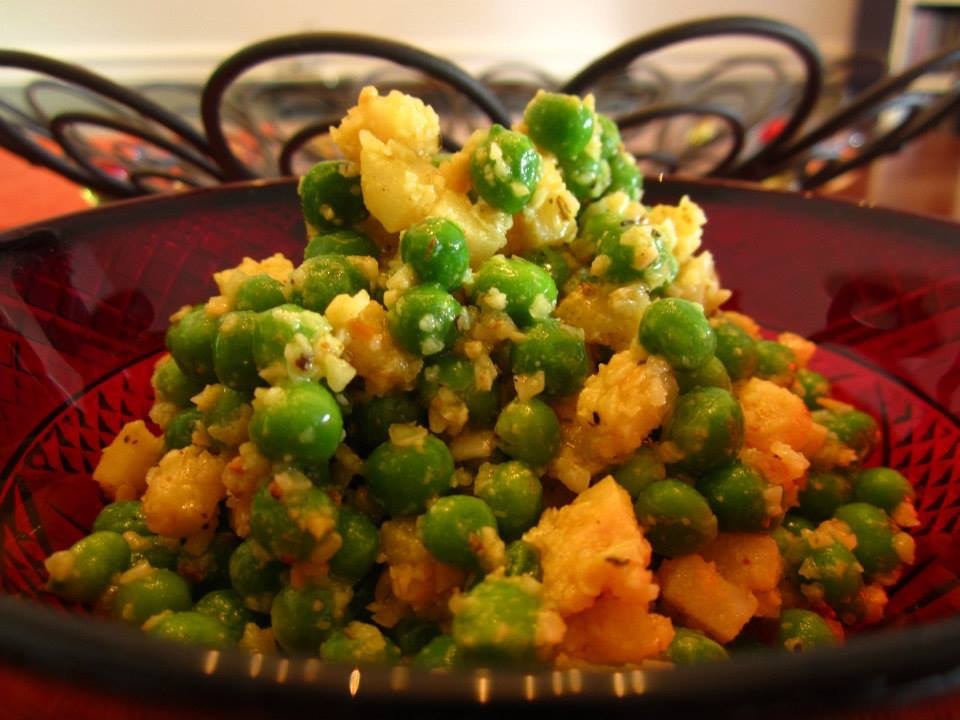
This is a recipe from a colleague named Jeffrey. Mix 16 oz frozen baby peas, 8 oz of water chestnuts (drained, rinsed, and chopped), 3 oz of chopped almonds (here, I toasted slivered almonds and then food-processed them), and 1 ½ tsp curry powder (I used Jamaican curry) in a large bowl. Separately, mix 1 ½ tsp each lemon pepper (use sparingly, as this can be overpowering), lemon juice, and rice vinegar with 1-2 tsp sugar. When blended, add ½ cup neutral vegetable oil, stir, and then pour into the green pea mixture. Season to taste (I added a tsp of salad rice vinegar), then mix thoroughly and let marinate in fridge for a few hours before serving. The chopped almonds and
lemon pepper add surprising depth to this simple preparation. (Sept. 2013)
-
Subscribe
Subscribed
Have a WordPress.com account? Log in now.

