-

I cook as a hobby, and I maintain this blog primarily to keep track of recipes that my family has enjoyed over the years. I started blogging back in 2015, in response to requests from friends for recipes they had seen me post on Facebook (but that I couldn’t easily catalog). My original blog was on another platform that became less user-friendly over time. I migrated my blog to WordPress earlier this year, and I’ve spent more time than expected reformatting the migrated posts.
This blog is and always will be a work in progress. For example, I currently provide Tags for posts, but I have not coded for Categories. I also generally try to share the recipes themselves in my posts, but in cases where the recipe is not available online, I try to identify the source (e.g., the cookbook title and author) as needed. In some cases, such as where a family has shared their recipe with me but hasn’t authorized me to share it widely, I post a photo of the dish with that proviso.
I recently added a Search widget to this blog. On the desktop version, the Search bar appears prominently on the left hand side. But for some reason, it is hidden on the mobile app. If you’re on your phone, tap on the SHOW tab at the top left of the home page. That will reveal another screen with the Search bar.
I hope you enjoy exploring my blog and find some recipes to try.
-
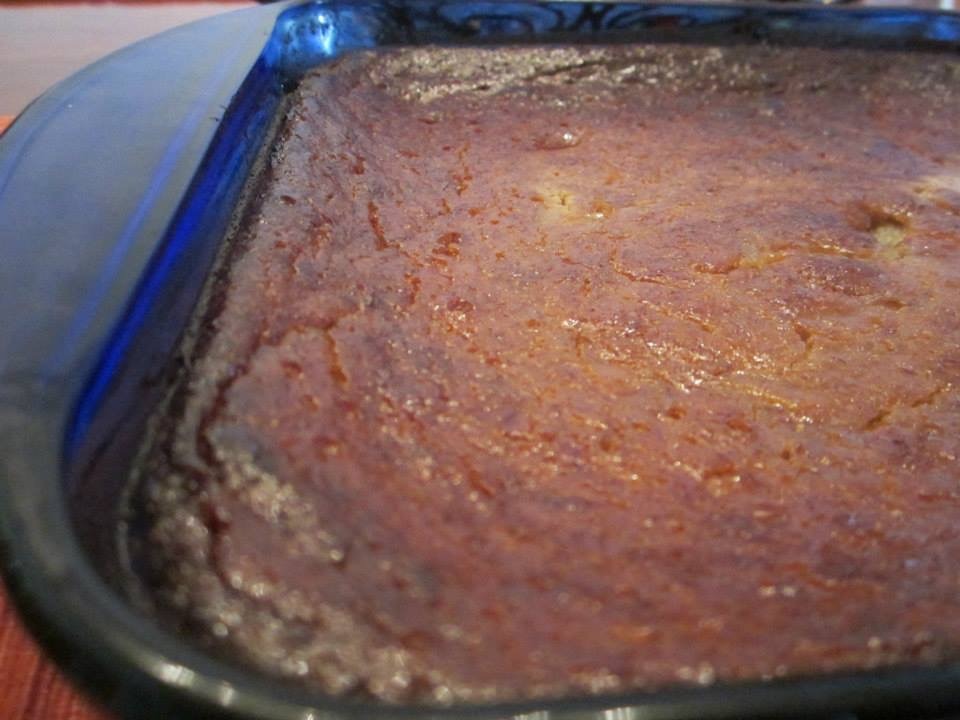
Preheat oven to 350. Blend 4 Tbsp unsalted butter (room temp) and ¾ cup sugar until creamy, then mix in 2 eggs. Fold in 6-7 mashed ripe bananas (here, a combo of Cavendish and apple bananas) and 1 can coconut milk (13.5 oz). Mix in ½ cup flour to bind. Pour mixture into a buttered baking dish until knife comes out clean (approx. 1 hour for 9×12 baking dish or 1 ½ hours for 8×8 baking dish). This simple dessert has surprisingly complex flavors, despite the lack of spices. Recipe from my friend Waimar’s mother. (Sept. 2013)
Note: As with banana bread, it is best to use very ripe bananas for optimal flavor and texture. If you use standard bananas (Cavendish), then use 6 large or 7 medium. If you use apple bananas (Latundan, which are mini size), I approximate that 3 apple bananas equals 1 large Cavendish.
-
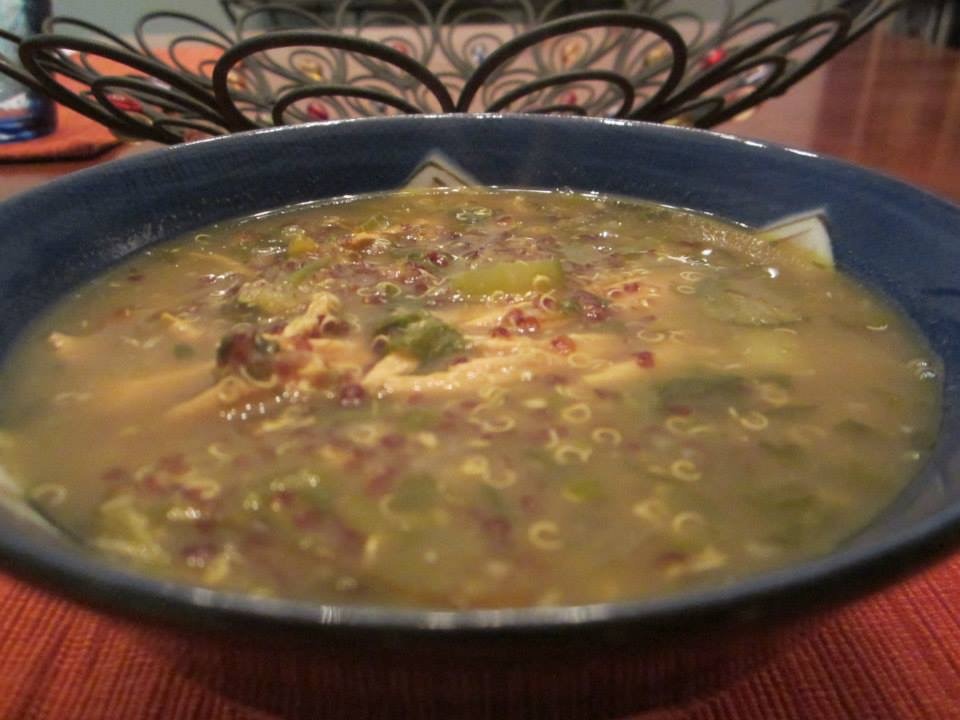
In an attempt to recover from our week of indulgence, I decided to try out this soup, which is full of veggies, grain, and lean chicken. This recipe is from Latin Ladles by Douglas Rodriguez (Sept. 2013)
-

I thought of my Colombian friend Laura while making this. Place a whole chicken in a stock pot with 12 cups water, 2/3 of a bunch of cilantro (tied with kitchen string), and 1 piece celery tied to 2 whole scallions (tops cleaned off) with kitchen string. Bring to a boil, then reduce to medium-low and let cook until chicken is tender (about 2 hours). Remove chicken from pot, separating the meat into bite-sized chunks and tossing the bones and skin. Remove and dispose of cilantro, celery, and scallions (the onion should have melted into the soup). In the meantime, pressure-cook 1 lb beef bone with 6 whole ears of corn (husks and silk strands removed) and a little salt and black pepper for 20 minutes (chug-time only). Remove beef and aside for later use (it won’t be part of the dish) and remove corn and set aside. Pour beef stock into the chicken broth, and bring the mixture to a boil. Add 1.5 lb peeled, sliced baby white potatoes to the pot and let cook on medium heat. In 20 minutes, add 1.5 lb sliced baby red potatoes and 2 lb papas criollas (I bought these frozen from a Colombian grocery store), which also have been peeled and lightly broken up. Return cooked chicken and corn (cut into thirds), along with 2 Tbsp guasgas (a dried Colombian herb similar to parsley and bay leaves) into the pot, then let simmer until flavors meld. This was an extremely time-intensive recipe, and it took several hours to make last night. We ate it for dinner tonight.
This recipe is based on Ajiaco Bogotano in the March 1, 2006 issue of the Washington Post (chicken stock) and Secrets of Colombian Cooking by Patricia McCausland-Gallo (beef stock/corn prep and potato ratios). Also, the proprietor of the El Encanto Grocery in Arlington, who is Colombian, advised me to use the guasgas judiciously, only 2 Tbsp for this entire pot. (June 2013)
-
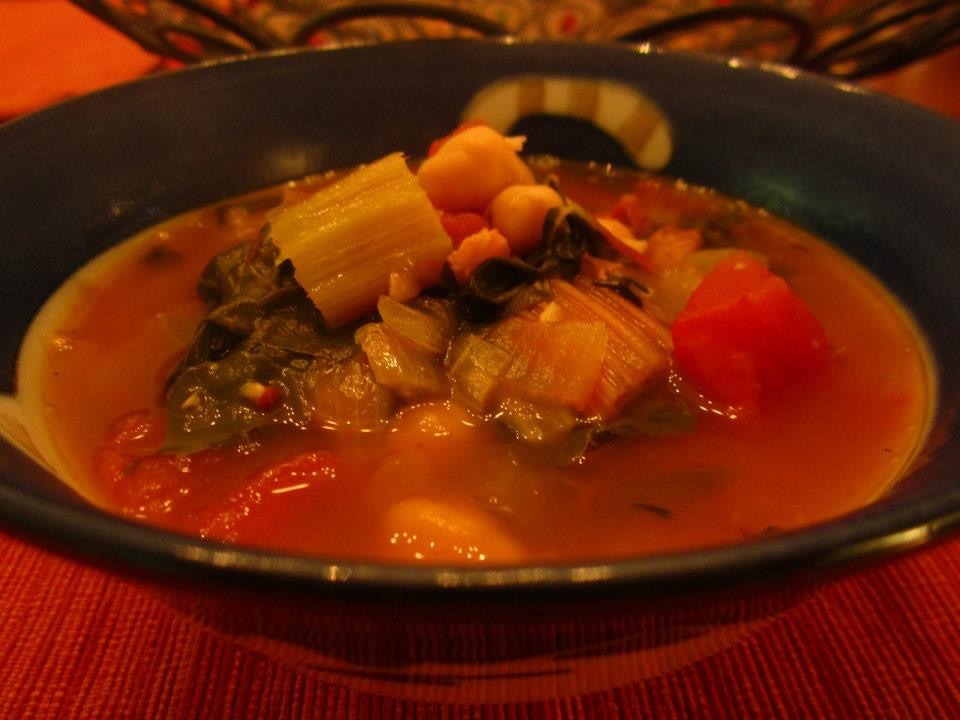
Using a stockpot, saute 2 oz thick-cut bacon (cut into matchsticks) in a little olive oil until browned, then remove and set aside. Add 1 chopped onion, 4 cloves minced garlic, 5 sprigs thyme (leaves only), 2-3 minced sage leaves, and ¼ tsp crushed red pepper and sauté for a few minutes. Add 1 bunch chopped swiss chard (here, I used rainbow chard) and saute until slightly wilted. Then add 5 cups chicken stock (we use 1 quart no-salt, 1 cup hot water with 1 tsp Better Than Bouillon), 30 oz canned chick peas (canned and drained), and 15 oz chopped tomatoes (canned with juice). Bring to a boil, then cover and let simmer on medium-low heat for about 30 minutes. Check seasoning, adding a dash each of salt, sugar, and black pepper as needed (see Note below). Return browned bacon to the pot, stir, and let cook for another 5 minutes. Serve with crusty ciabatta bread. This recipe is based on White Bean and Escarole soup by Food Network Kitchens (https://www.foodnetwork.com/recipes/giada-de-laurentiis/white-bean-and-escarole-soup-12178386) with modifications (chick peas instead of white beans, swiss chard instead of escarole, and bacon instead of prosciutto or pancetta). (Apr. 2013)
Note: For about a year, when we found the soup a little flat, we tried adding 1 Tbsp black olive tapenade. But recently we have found salt, sugar, and black pepper keeps the flavors clean and balanced. (Dec. 2024)
-
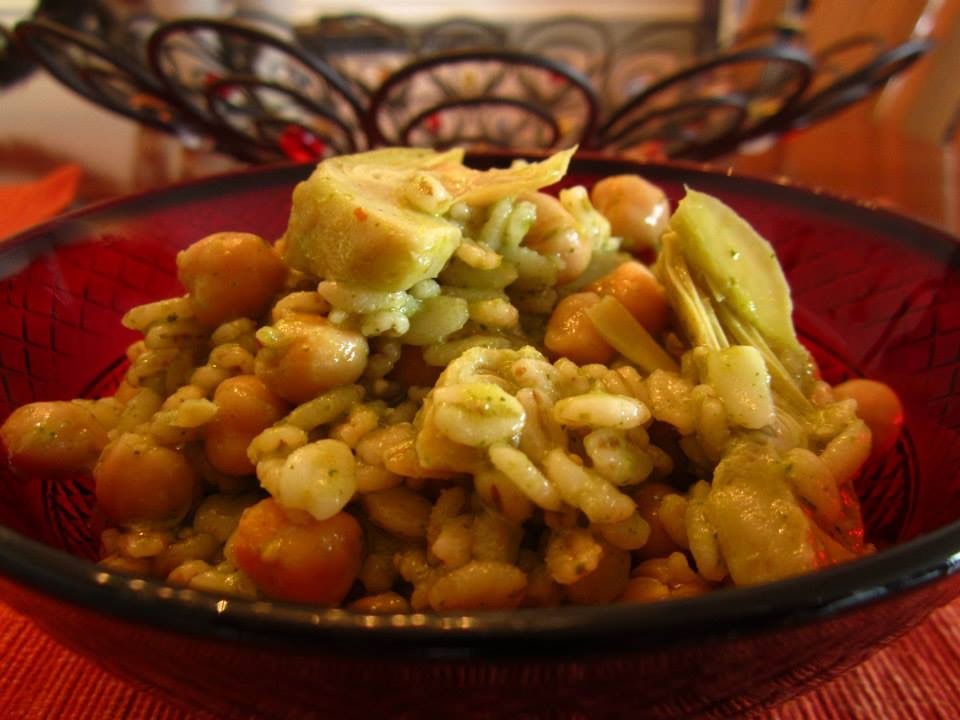
We first tried this recipe in 2007 when our friend Sandhya served it at a party. The recipe is here: https://www.food.com/recipe/barley-pilaf-with-chickpeas-and-artichoke-hearts-301799
Our modifications: first, we halve the amount of marinated artichoke hearts (to a 6 oz jar), drain, and slice them vertically in half. Second, for the pesto, we prefer Safeway private label brand or Severino brand (available at Whole Foods, see Note 2 below). Finally, we often add the juice of an entire lemon and skip the parmesan. (Sept. 2013)
Note: If you use 1 cup pearl barley instead of quick-cook barley, here are cooking instructions: https://www.thekitchn.com/how-to-cook-barley-cooking-lessons-from-the-kitchn-198693 (June 2020)
Note 2: We find that we need to double the amount of Severino pesto for this recipe (from 2 Tbsp to 4 Tbsp, i.e., 1/4 cup). (July 2025)
-
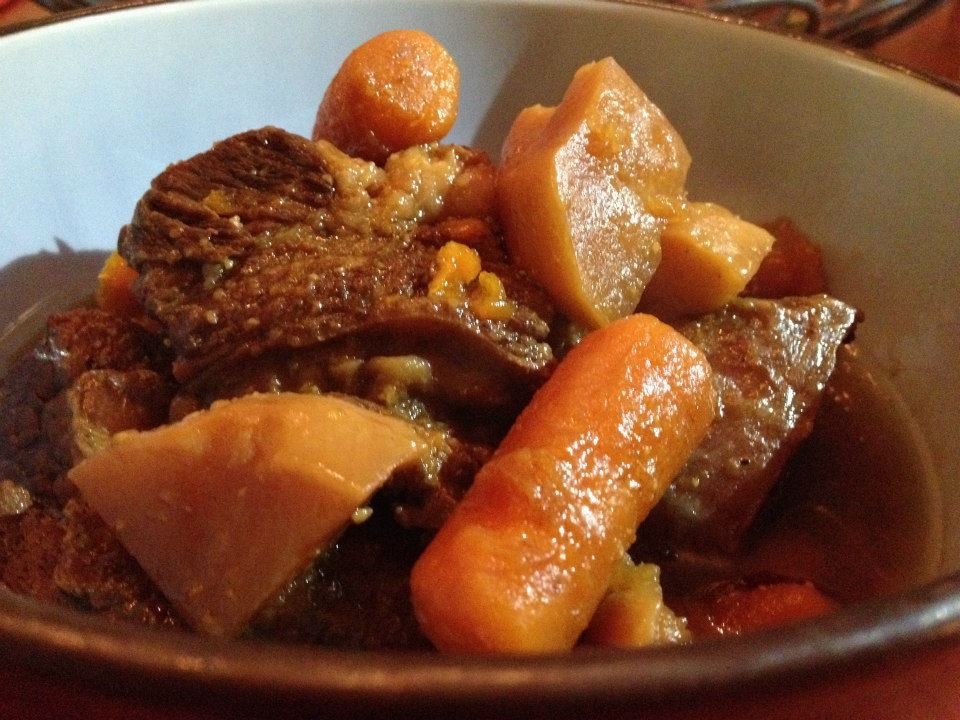
This marked my first time making this dish and using a new kitchen appliance (food processor). First, soak 2-3 lb beef short ribs (about 6 ribs) in water for a few minutes, then pat dry. Score the fleshy part of each rib, then set aside. Second, make the marinade: using a food processor, blend 1 cup garlic cloves (I used nearly 2 bulbs), ½ an onion (or 1 small onion), and ½ an Asian pear (I used a 1 whole small) in a food processor, slowly adding ½ cup water. When pureed, add 1 cup soy sauce, ¼ cup sesame oil, 2 Tbsp brown sugar, and an additional ½ cup water. Set aside. Heat the bottom of a pressure cooker, add a neutral oil, then brown the ribs (scored side first, then rib side), seasoning lightly with salt and black pepper. Add baby carrots (½ lb) and Daikon radish (here, purple-topped turnip), peeled and cut into wedges. Then pour the marinade over top and mix. Cover and lock the pressure cooker lid, then cook on high until the cooker starts to chug. Reduce to medium heat, then cook until beef is tender (about 25 minutes at chugging pressure). Immediately release pressure and then serve with short-grain rice. This recipe is based on Marja Vongerichten’s Galbi Jjim recipe, available on her Facebook page, with modifications (pressure-cooked for 25 minutes instead of braising on stovetop for 1 ½ hours).
Note: This seemed like a lot of garlic, and now our home smells like a garlic factory. However, much of the sharpness got cooked off, and the dish did not taste garlicky. In addition, I had feared this dish would be salty, but it wasn’t. It was well-balanced. Finally, the pressure cooker saved a lot of time, but the veggies barely kept their shape. (Oct. 2013)
-
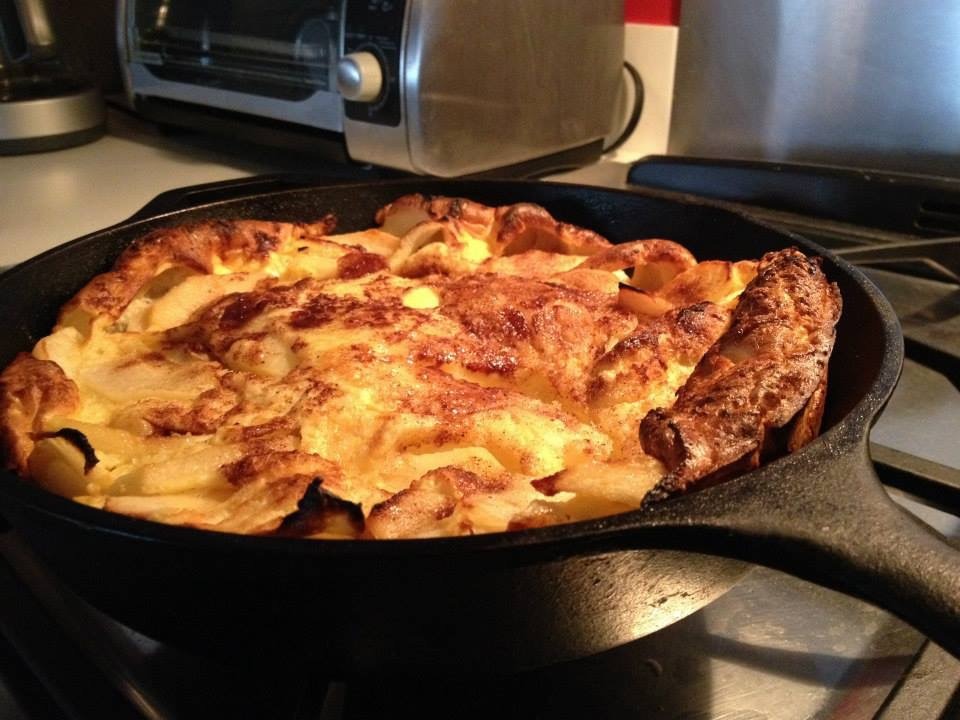
Preheat oven to 500. Peel, core, and thinly slice 2 large (or 3 small) apples (here, Gala). Heat 4 Tbsp unsalted butter in a large (10″) cast iron skillet, then saute the apple slices in it until soft. Separately, mix together ½ cup flour, ½ cup milk, and 3 eggs. Pour the batter over the cooked apple slices, then bake in oven until the pancake puffs up and turns light brown along the edges. Carefully pour 2 Tbsp unsalted butter over the pancake, then sprinkle with cinnamon sugar (1/6 cup sugar + ½ tsp cinnamon). Continue to bake until sugar melts and pancake browns (about 5 mins). Serve immediately with maple syrup. This recipe is courtesy of Treasured Recipes by Donna Green, who kindly shared her family recipe book with me several years ago. I think this is similar to a Dutch baby (my favorite dish at pancake houses), and it’s nice to recreate a bit of that at home. (Oct. 2013)
-
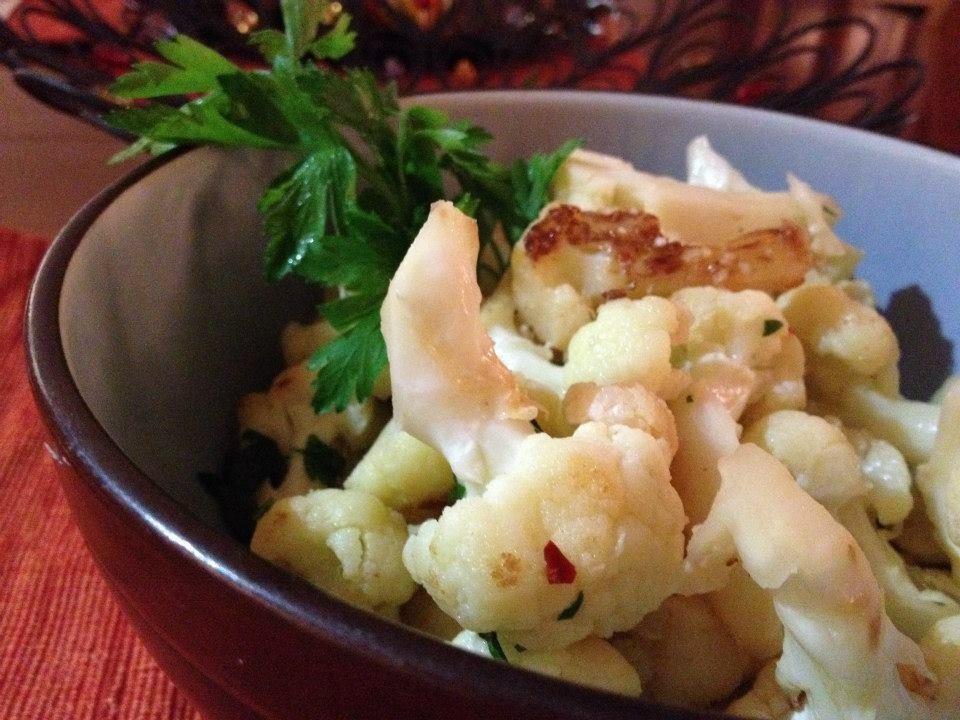
I love cauliflower, and I was eager to try out a new recipe. This one is from Best
American Side Dishes by Cook’s Illustrated. (Oct. 2013) -
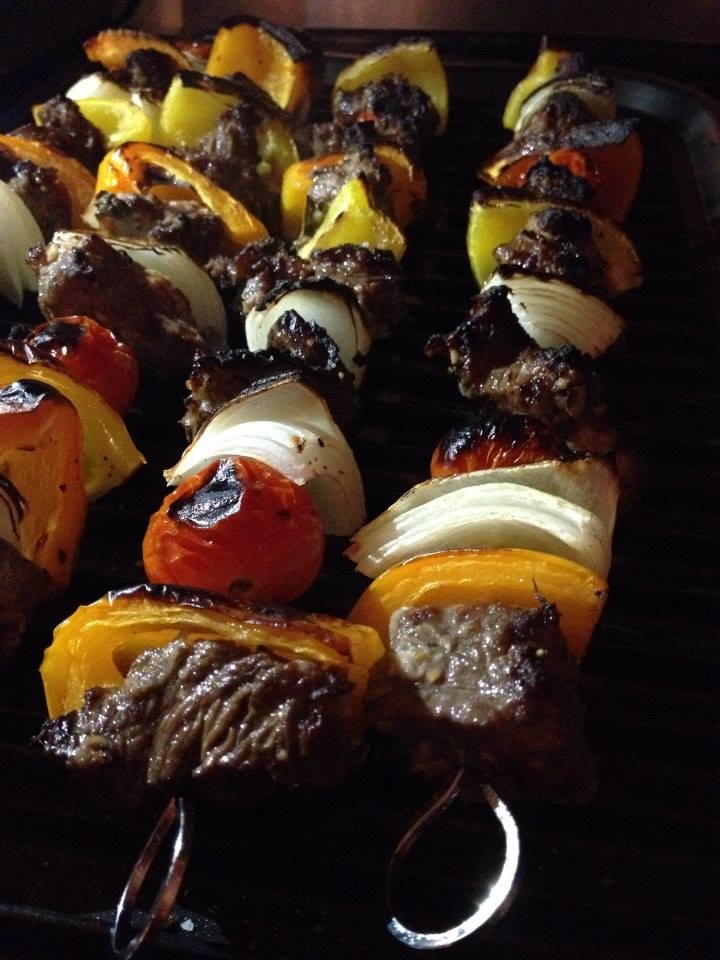
This recipe is from Feast from the Mideast by Faye Levy. (Oct. 2013
-
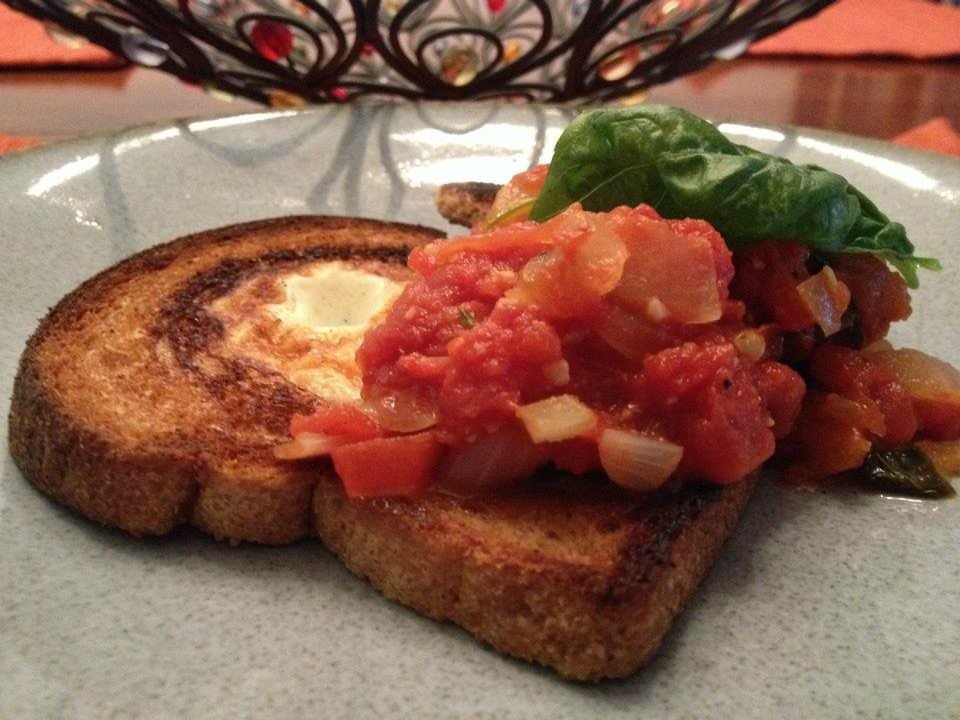
I woke up with a sudden craving for this breakfast dish from a scene in the film, Moonstruck. It involves two components: marinara sauce and an egg fried in a slice of bread. First, the marinara sauce: I had to improvise here with whatever we had in our pantry and balcony garden. Heat olive oil in a wok, then add chopped onion and minced garlic. When fragrant, add chopped fresh tomatoes (here, I added half of a tomato, thinly sliced, and a 14.5 oz can of Muir Glenn diced petite tomatoes), oregano (here, fresh marjoram), julienned Italian basil, and a dash each crushed red pepper, salt, and black pepper. Let cook, uncovered, at a slow boil until sauce reduces (about 15 mins). Separately, cut a hole in two slices of wheat bread (I used a small drinking glass). Save the slice and the circle. Heat a large cast-iron pan with a mixture of olive oil and unsalted butter, then gently place the two slices and two circles so that they have full contact with the hot pan. Carefully break an egg into each of the holes. Let cook until browned on one side, then gently flip over. If you like your egg yolks runny (as I do), remove your egg in a nest immediately and then garnish with a generous serving of marinara sauce. If you like the egg yolk more cooked, keep it in the pan, and shut off the heat (it will continue to cook) to avoid smoking up your kitchen. Serve immediately. The marinara sauce is loosely based on Sauces for Pasta by Kristie Trabant et al. The eggs in a nest is something I learned along the way. (Oct. 2013)
-
Subscribe
Subscribed
Have a WordPress.com account? Log in now.

