-
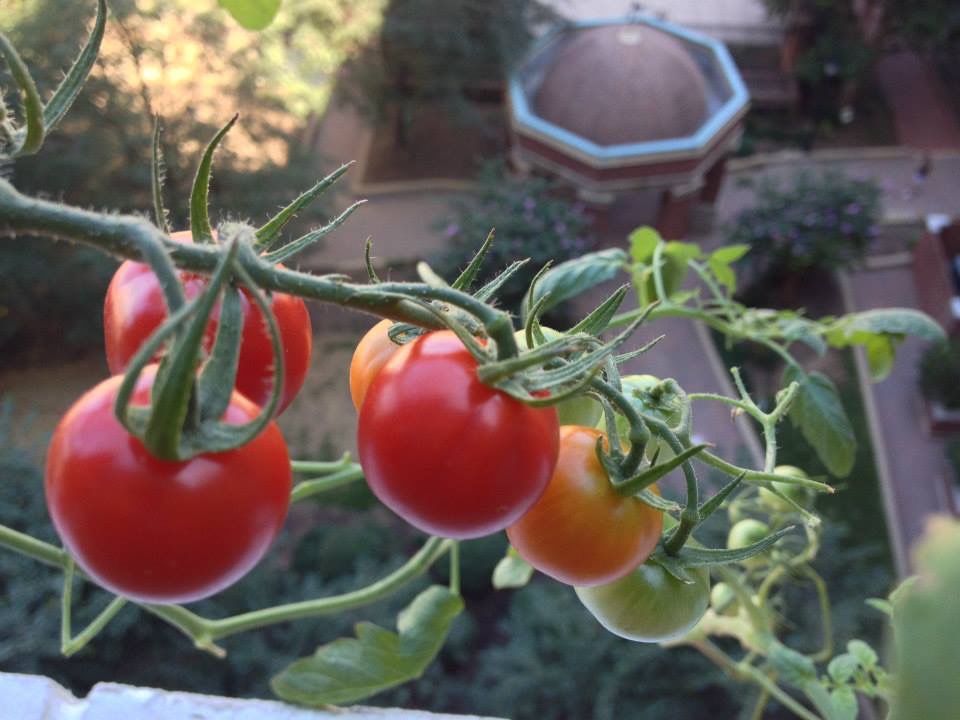
I cook as a hobby, and I maintain this blog primarily to keep track of recipes that my family has enjoyed over the years. I started blogging back in 2015, in response to requests from friends for recipes they had seen me post on Facebook (but that I couldn’t easily catalog). My original blog was on another platform that became less user-friendly over time. I migrated my blog to WordPress earlier this year, and I’ve spent more time than expected reformatting the migrated posts.
This blog is and always will be a work in progress. For example, I currently provide Tags for posts, but I have not coded for Categories. I also generally try to share the recipes themselves in my posts, but in cases where the recipe is not available online, I try to identify the source (e.g., the cookbook title and author) as needed. In some cases, such as where a family has shared their recipe with me but hasn’t authorized me to share it widely, I post a photo of the dish with that proviso.
I recently added a Search widget to this blog. On the desktop version, the Search bar appears prominently on the left hand side. But for some reason, it is hidden on the mobile app. If you’re on your phone, tap on the SHOW tab at the top left of the home page. That will reveal another screen with the Search bar.
I hope you enjoy exploring my blog and find some recipes to try.
-
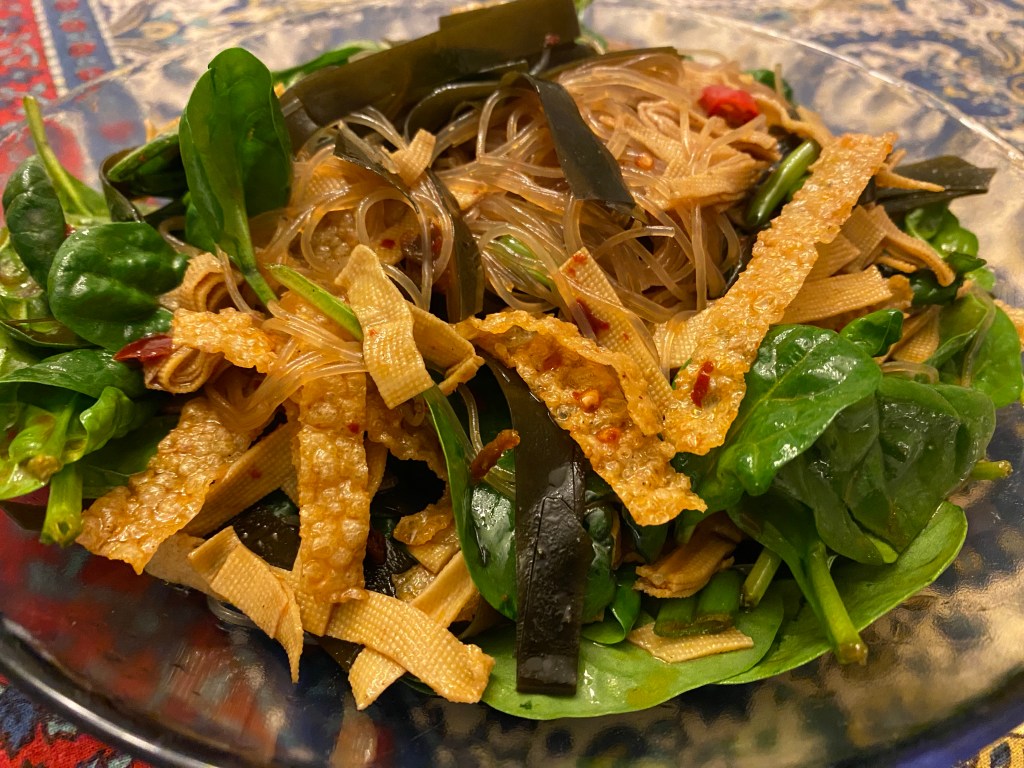
We had simmered a 9×5″ piece of kombu for broth, and we wanted to repurpose the cooked kombu. Many years ago, we visited Din Tai Fung in Seattle, and I was blown away by their seaweed and bean curd appetizer. So this evening, we tried this recipe based on our pantry: https://whattocooktoday.com/din-tai-fung-seaweed-and-beancurd-salad.html
Our modifications: first, instead of pressed tofu we used a mix of Ha Vista soy bean shreds (about 1 oz) and Nature’s Soy brand fried bean curd sheets (2 sheets). Second, in lieu of bean sprouts, we used a handful of fresh baby spinach. This was tasty, but a bit salty. (Jan. 2023)
-
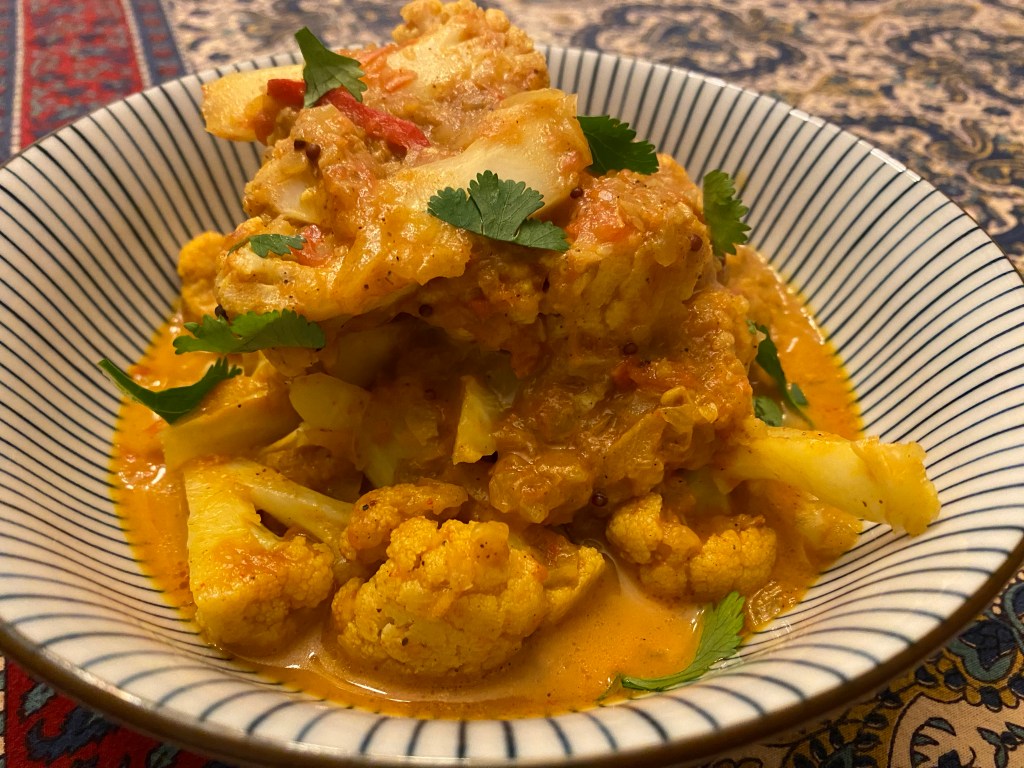
We had a craving for a cauliflower curry (as opposed to aloo gobi), so we tried this: https://www.indianhealthyrecipes.com/cauliflower-curry-recipe/ This was pretty tasty.
We made minor modifications: first, we ran out of curry leaves, so we used about 5 bay leaves instead. For the chili powder, we used 1/2 tsp sweet paprika and 1/4 tsp cayenne. Second, we pureed the onions and then separately the tomatoes + salt in a handheld mixer. Third, midway through cooking, we added 1 Tbsp ghee for richness. Finally, per the instructions we added about 1/2 cup full fat coconut milk and 1/4 cup water before covering and simmering the curry. At the end of cooking, we added 1/4 tsp sugar for balance. We served this curry alongside cashew bhaji and basmati rice. (Jan. 2023)
-
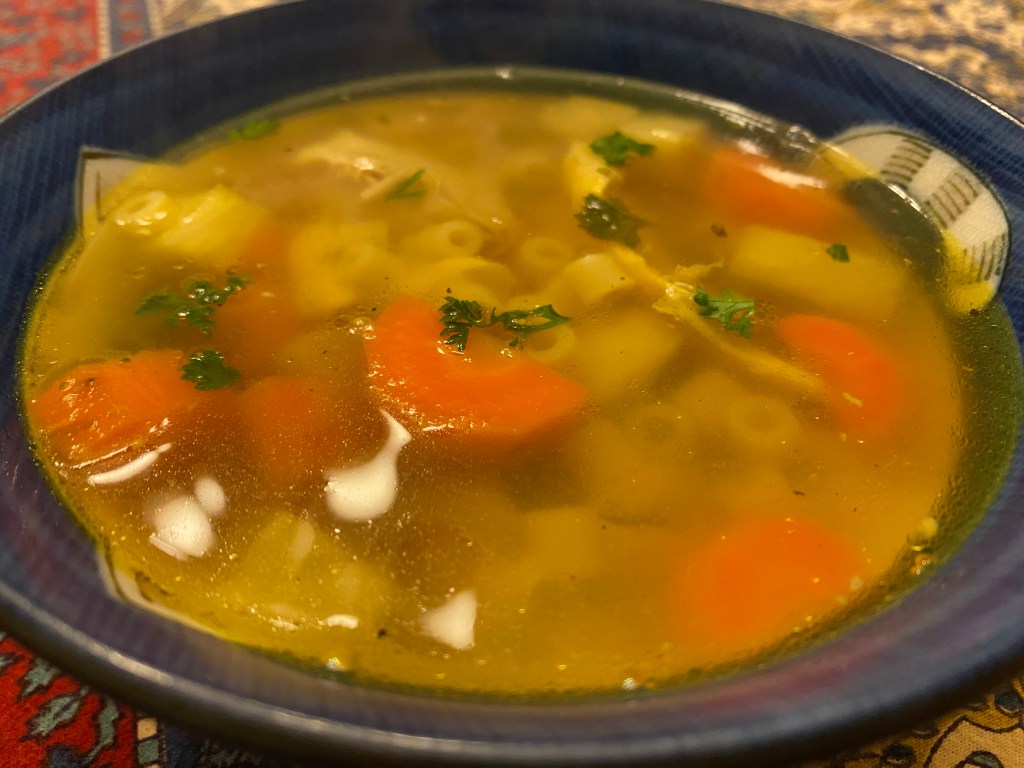
My husband loves chicken soup, and I enjoy exploring new ingredients and recipes. We tried this recipe by a Polish-British blogger: https://www.everydayhealthyrecipes.com/chicken-vegetable-soup-vermicelli-rosol/ This soup gave me the opportunity to learn more about Polish cuisine and staples, including celeriac. It also taught me some tips to yield a clear chicken broth and intact cooked vegetables.
Our modifications: first, we doubled the recipe. For the chicken, we used 2 skinless drumsticks and 3 skinless bone-in chicken thighs, which we heated in 5.5 cups water. We covered and brought to a boil, then skimmed off the scum and reduced to a low simmer. Over time, we learned that this recipe is best made in a high-walled stainless steel Dutch oven or a tall stockpot (our low-walled 6 qt Dutch oven was insufficient).
Second, for the vegetables, we peeled two medium carrots and cut them in half (crosswise). For the celeriac, we used about 1/3 of a 2 lb root, which we peeled and left in 4 large chunks (similar to 1″ thick tiles). We peeled and halved 2 medium onions along the axis. We included one large leek (white part only), trimmed and halved along the axis, and 1/2 bunch parsley. We added the vegetables along with 4 allspice berries, 2 bay leaves, 1 Tbsp salt, and 2/3 tsp turmeric, and another 5.5 cups water. We also added 1/2 tsp celery seeds (in lieu of lovage); however, the next time we may try adding a handful of fresh celery leaves (the fronds and tender twigs) instead.
Third, we were mindful of the warning not to use too high heat, which could result in cloudy broth. We kept the soup to a simmer for 55 mins.
Fourth, we removed all of the solids from the soup. We shredded the chicken and cut the carrots and celeriac into bite sized pieces, and added them back to the broth. We discarded the other solids – onion, leek, bay leaves, allspice berries, and parsley.
Fifth, instead of angel hair pasta, we cooked 2 oz ditalini until al dente, and then set aside. (This yielded 4 oz cooked ditalini, which was more than enough for 2 people at dinner. We will make more pasta for the rest of the broth another day.) We seasoned the soup to taste with salt, black pepper, and a dash (1/2 tsp) of sugar.
Finally, we served by placing 1/2 cup cooked ditalini in our soup bowl, then poured the broth overtop. This was very tasty and satisfying. (Jan. 2023)
-
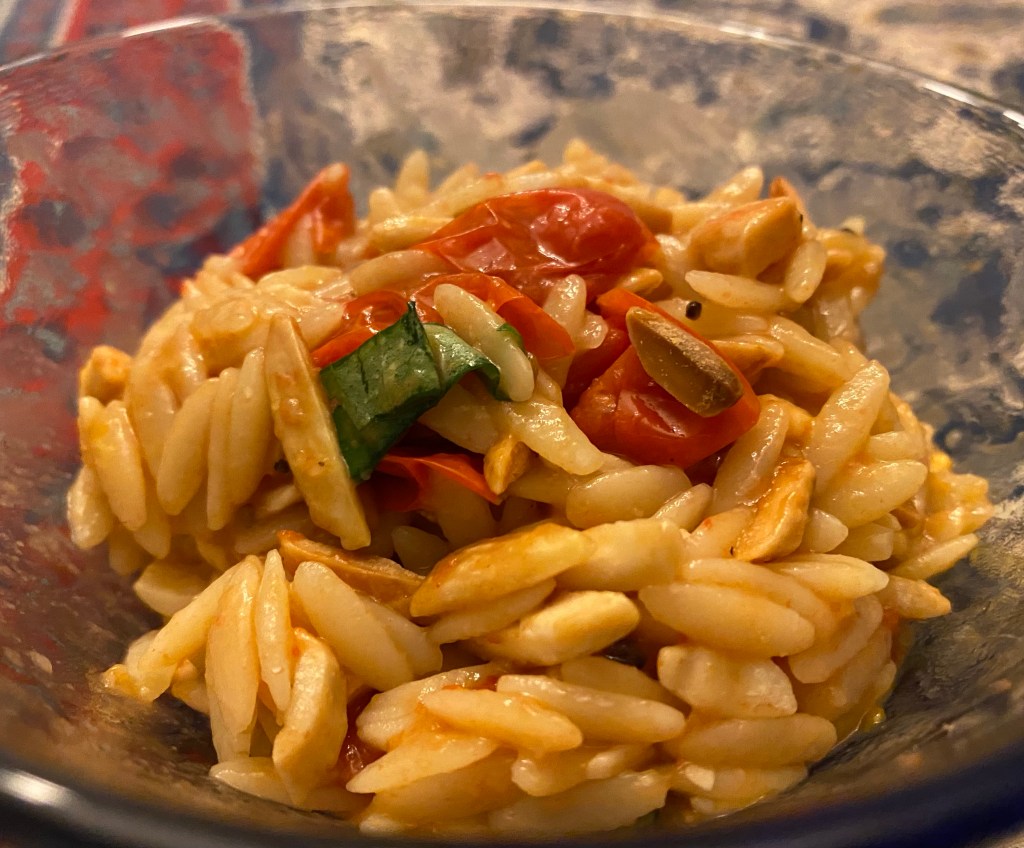
We loosely followed this recipe: https://www.seriouseats.com/orzo-with-cherry-tomatoes-capers-lemon-recipe
Our modifications: first, we started cooking the orzo in unsalted chicken broth (which we lightly salted). Second, for aromatics we sauteed 3 garlic cloves (sliced), 4 anchovies, and 1/4 tsp crushed red pepper in 2 Tbsp olive oil. (We did this instead of the capers, thyme, and single garlic clove.) Third, we combined the cooked orzo and aromatics, then added zest from 1 lemon, about 1 Tbsp lemon juice, 2 Tbsp shredded parmesan, and 1/2 tsp freshly ground black pepper. Just before serving, we folded in 2 Tbsp julienned fresh basil and 3 Tbsp toasted slivered almonds. (Jan. 2023)
Note: The cooked orzo seemed brothy, so we strained it (yielding 1 Tbsp viscous broth) before mixing with the tomato mixture. Later as the dish cooled, the dish seemed a little dry. The next time we probably will add the cooked orzo (no straining).
-
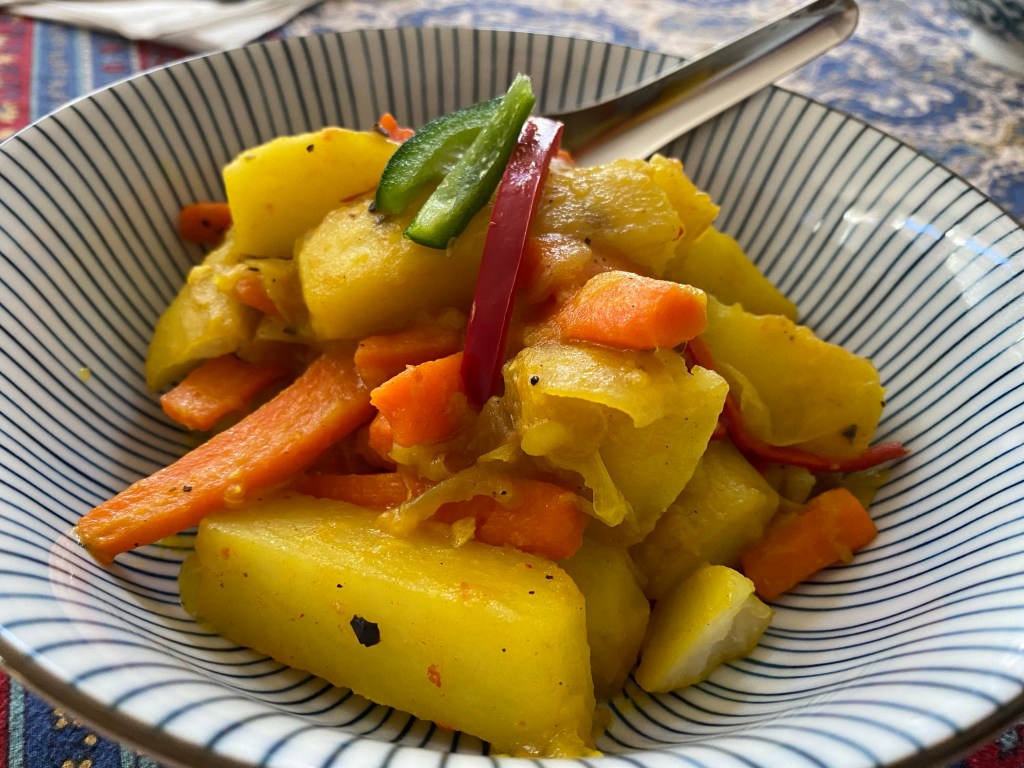
Back in 2016, we first tried this wonderful, easy recipe: http://howtocookgreatethiopian.com/ethiopian-potato-and-carrot-alicha/. The video was more helpful than the written recipe. Now it’s January 2023, and we just discovered that the link no longer works (the website may have been taken down). Fortunately, we happened to print out that recipe 7 years ago, so we were able to recreate it. Here is the recipe, with some modifications:
Ingredients: 1/4 cup canola oil (we reduced to 3 Tbsp), 3 medium potatoes (we like Russets), 3 carrots, 2 medium onions (we used one red, one yellow), 1 tsp turmeric, 1 tsp garlic (about 1 large clove), 2 jalapeno peppers, salt to taste, and about 1/2 to 3/4 cup of water (you may not need all of the water).
First, prepare the ingredients. Peel and slice the onions into thin slices along the grain. Peel the carrots, and cut into thick matchsticks (about 3 x 3/4″) and place a separate bowl. Peel and mince the garlic, then place in the same bowl as the carrots. Third, peel the potatoes and cut into matchsticks that are about the same size as the thick-cut carrot sticks, and place in its own bowl. Seed and slice the jalapeños into julienned slices, then place in their own small bowl. Measure out 1 tsp turmeric into a small thumb bowl.
Second, heat a medium sized pot (we use a black nonstick All-Clad Dutch oven) with the canola oil on medium heat, then add the onions. Cover and let cook on medium heat until browned (about 4 mins). Add the carrot and garlic, along with 2 Tbsp of water. Cover and cook for another 4 mins. Add the turmeric, then stir and cook for 2 mins. Add the potatoes, salt to taste (maybe 1/2 tsp), and about 1/3 cup of water – or more, if the stew seems too dry (this will vary depending on the specific density of potatoes used that day). Cover and cook on low-medium heat until potato is tender. We estimate that to be less about 20 mins, but it really will depend on the potato (when fork-tender, it’s done). We served this with injera, but it also can be served with rice (if you don’t mind carbo-loading). (Jan. 2023)
-
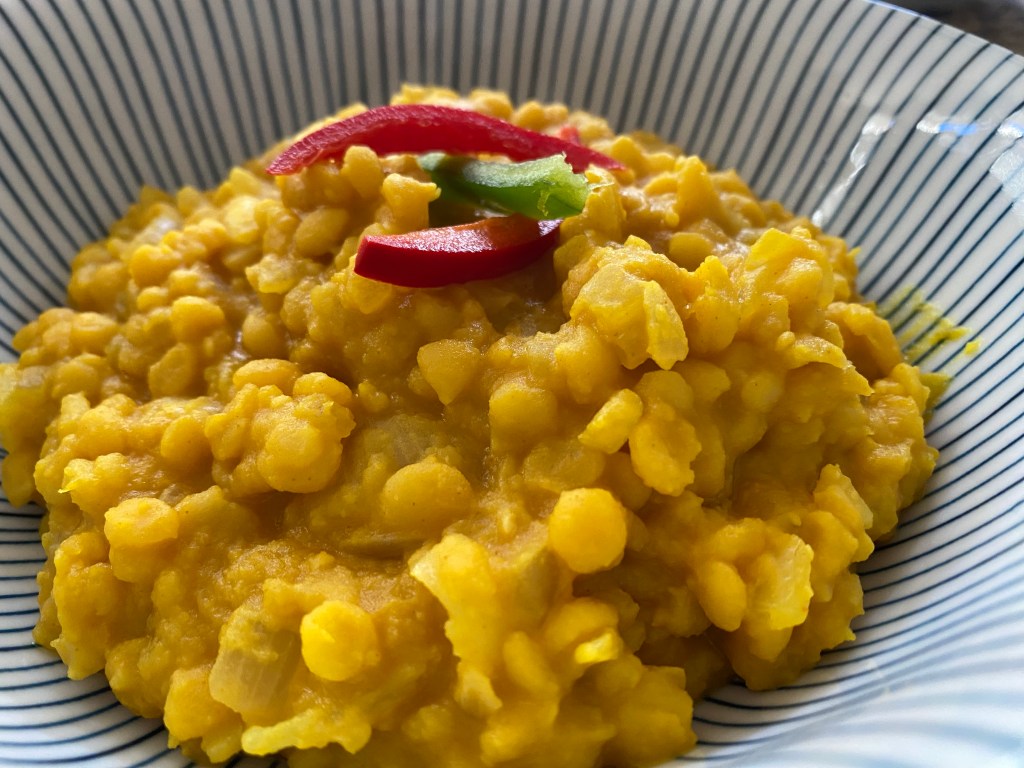
I had a sudden craving for this dish, so we decided to try this recipe: https://www.ncregister.com/blog/veronica-musie-kik-wot
Perhaps because the author of the recipe is a restaurant owner who probably cooks by instinct, we found her instructions vague and incomplete. Here is how we made it: first, to cook the 1 cup of split peas, we washed, drained, and then placed in a medium sauce pot with about 2 cups of water, 1/2 tsp baking soda (to improve digestion), and 1/2 tsp salt. We brought to a boil uncovered, then reduced to a low-medium simmer until the peas were tender (about 25 mins). Once completed, we drained in a sieve but also set aside some of the pea cooking liquid for later (we did not discard it). Second, in our large Ultimate Pan, we heated 3 Tbsp canola oil (not olive) on medium heat, then added 1 finely diced yellow onion. Once it browned, we added the drained cooked peas, 1 Tbsp garlic (microplaned), and 1 tsp ground turmeric. I prefer a non-soupy stew, so we carefully added back only enough pea liquid (2 Tbsp) to achieve the desired consistency (which may be chunkier than what others prefer). Then we folded in 1 Tbsp microplaned ginger. Because we wanted a mild dish, we did not stir in the fresh jalapeño. Instead, we used a few julienned pieces for garnish only. We served this with leftover injera that we picked up at an Ethiopian cafe the day before. If you don’t have injera, this dish probably would go well with basmati or brown jasmine rice. (Jan. 2023)
Note: Although we did not make this recipe, it offered useful tips on cooking split peas generally: https://www.thespruceeats.com/indian-yellow-split-pea-dal-recipe-3378495
-

We had planned to make this recipe as written: https://www.recipetineats.com/lentil-roasted-eggplant-salad/ But when we discovered our eggplant had gone bad and was unusable, we quickly substituted with Korean sweet potatoes and string beans. We recommend not skipping the dressing; it ties together the components really well, creating a balanced dish. This turned out to be particularly delicious, and we definitely will make it again.
Our modifications: first, we preheated the oven to 425 (not 450). At the same time, we started the lentils in a medium pot on the stovetop, then after cooking completed, we left it covered on a cool burner while preparing the other components. (When the roasted vegetables were almost ready, we briefly reheated the lentil mixture, removed the aromatics, and then lightly rinsed and drained the cooked lentils.)
Second, we washed and towel-dried 3 small-medium Korean sweet potatoes, which we cut into 1.5″ dice (skin on). We tossed in 1 Tbsp canola oil and lightly sprinkled with salt and pepper. We spread it out on a single layer on two foil-lined rimmed baking sheets. We placed on the first and third rack of our oven (the hottest regions) and roasted until browned — about 30 mins, turning once. About 10 mins into roasting, we began roasting 8 oz string beans, trimmed and cut into 2″ pieces. We tossed in 1 tsp canola oil and lightly sprinkled with salt and pepper, placed in a single layer on a foil-lined rimmed half-sheet, and then placed on the middle rack.
Third, we made the dressing exactly as written in the recipe, including the use of Dijon mustard.
Finally, we skipped the arugula and feta. We added one diced medium vine-ripened tomato (in lieu of cherry tomatoes) and 2 Tbsp julienned fresh basil (for herbal freshness) to the cooked lentils. We folded in 2/3 of the dressing. Then we tossed the remaining 1/3 of the dressing into the roasted sweet potatoes and string beans. To serve, we placed the dressed lentils in a flat bowl, then topped with the dressed roasted vegetables. This was a delicious meal with contrasting mouthfeel. (Jan. 2023)
Note: We used Camellia brand brown lentils for this recipe.
Note 2: For the lentil simmering liquid, we used 1 cup chicken broth plus 1.5 cup water. But with vegetable broth, this recipe easily could be vegetarian.
Note 3: We tried this a second time with 1 medium eggplant and 2 small Korean sweet potatoes as the roasted veg topping. We prefer the texture and flavor of the Korean sweet potato and string bean topping. (Jan. 2023)
-
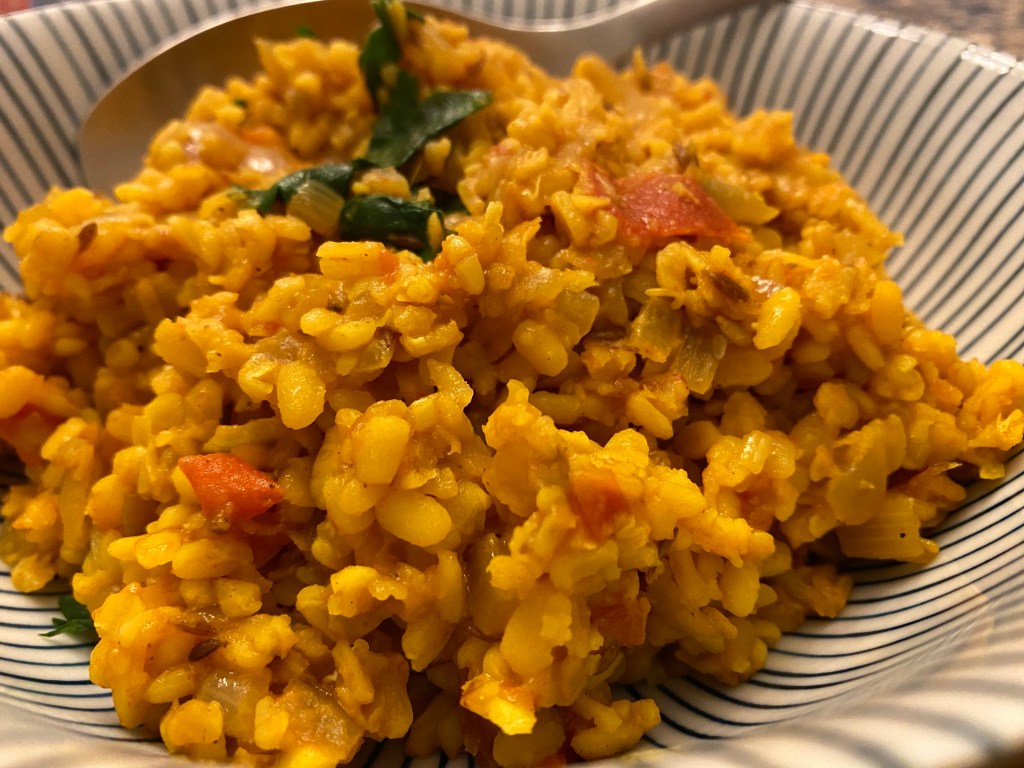
We recently stocked up on dried split mung beans (moong dal) and were intrigued by this recipe: https://indianambrosia.com/dry-moong-dal-recipe/ This was an easy, healthy, and satisfying meal.
Our modifications: first, for the oil we used a combination of ghee (for flavor) and canola. Second, we used 1 medium red onion plus 1 regular shallot for 1.5 cups onion; we also added 1 Thai chili (minced) at the same stage instead of later. Third, in terms of spices, we used 1/4 tsp cayenne pepper and 3/4 tsp sweet paprika instead of 1 tsp chili powder. However, even 1/4 tsp cayenne was still quite spicy, so we may reduce to 1/8 tsp. Finally, at the end of cooking we lightly seasoned with a dash of sugar and additional salt for balance. We served this with basmati rice. (Jan. 2023)
-
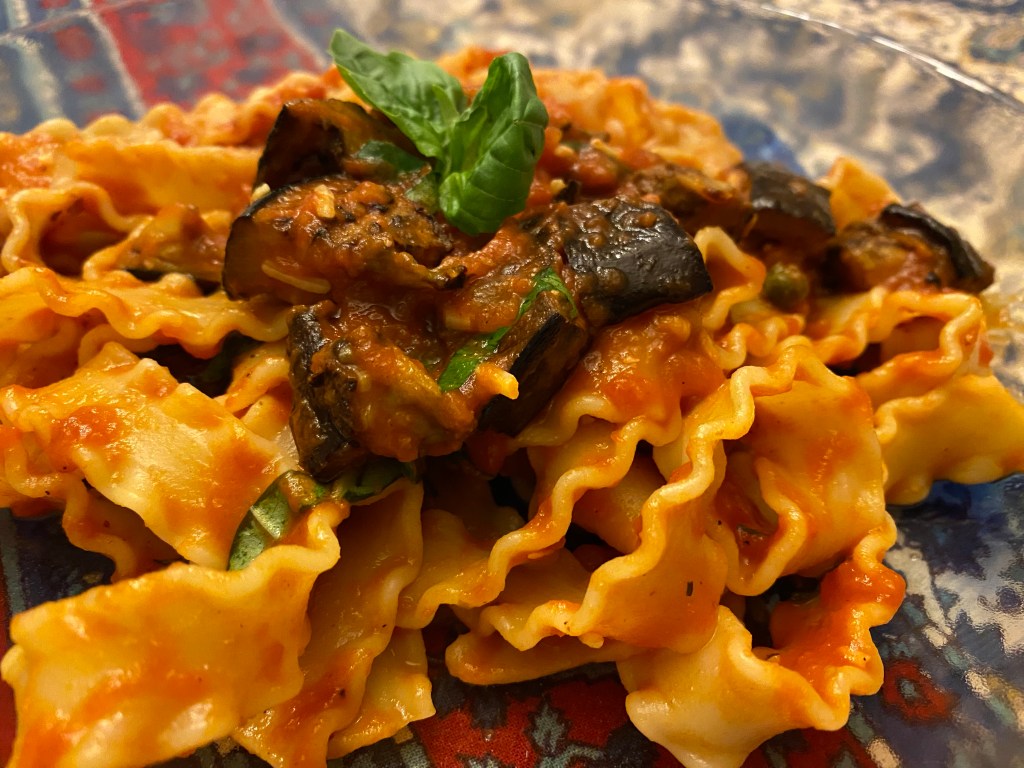
I love the curly edges of lasagna sheets, so mafaldine pasta piqued my curiosity. We decided to try this recipe: https://www.acouplecooks.com/mafaldine-pasta-with-eggplant/
Our modifications: first, we halved the recipe, using 1/2 lb of mafaldine pasta. We used a low-walled Dutch oven to cook the pasta. Second, as a shortcut we used 15.5 oz Rao’s marinara sauce plus 4 oz no-salt tomato sauce. We reduced the capers to 2 tsp capers (from 1.5 Tbsp), rinsed and drained. Third, we used only 1 medium eggplant, which we tossed in canola (not olive oil) and lightly seasoned with salt and pepper. After roasting, we tossed the roasted eggplant chunks in 1 small garlic clove (microplaned) and 1 Tbsp julienned fresh basil. Finally, we folded the eggplant into the pasta and sauce, and we added 3 Tbsp shredded parmesan and 1/2 tsp crushed red pepper. This was delicious but probably high sodium, based on how we felt for a few hours after dinner. We definitely recommend using fresh basil, which added a fresh herbal note. (Jan. 2023)
-
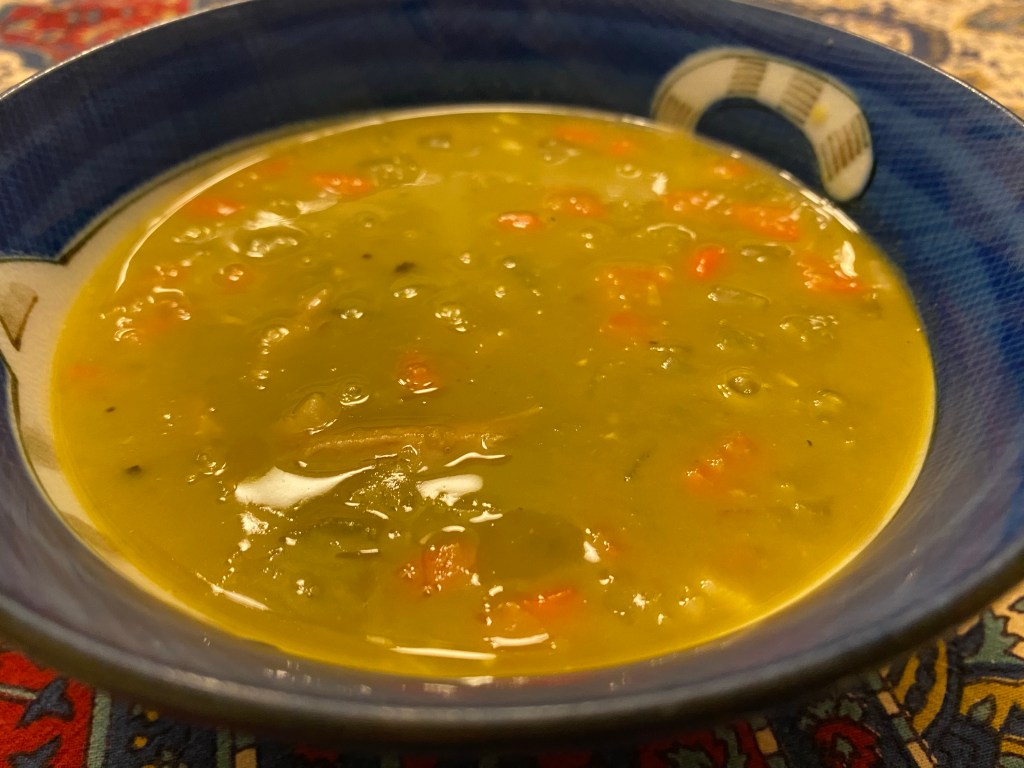
On this chilly day, we craved split pea soup but did not want an 8-hour slow cooker project. We tried this SkinnyTaste recipe, which took about 2 hours: https://www.skinnytaste.com/split-peas-soup-with-ham-2-points/ Although we normally prefer yellow pea’s mellower flavor, we used split green peas for this recipe.
Our modifications: first, we used 2 smoked turkey tails in lieu of ham hock. Second, based on other split pea recipes, we enhanced the oil, vegetables, and aromatics. We added 1 Tbsp unsalted butter to the olive oil. In addition to diced carrot, we added 2 celery stalks (diced). For the aromatics, we added a few sprigs thyme (leaves only) and 1 large bay leaf. Third, we used 8 cups unsalted chicken broth and later added an additional 1/2 cup of broth (Better Than Bouillon chicken, which contains salt) mainly to ensure the turkey tails would cook evenly. At the end of cooking, we removed the turkey tails from the soup, removed meat (there wasn’t much), discarded bone, and returned meat to the pot. We also seasoned with salt and black pepper.
This was tasty, but the end result was a thinner soup than expected. The next time, we may start with 6 or 7 cups of broth. (Jan. 2023)
-
Subscribe
Subscribed
Have a WordPress.com account? Log in now.

