-
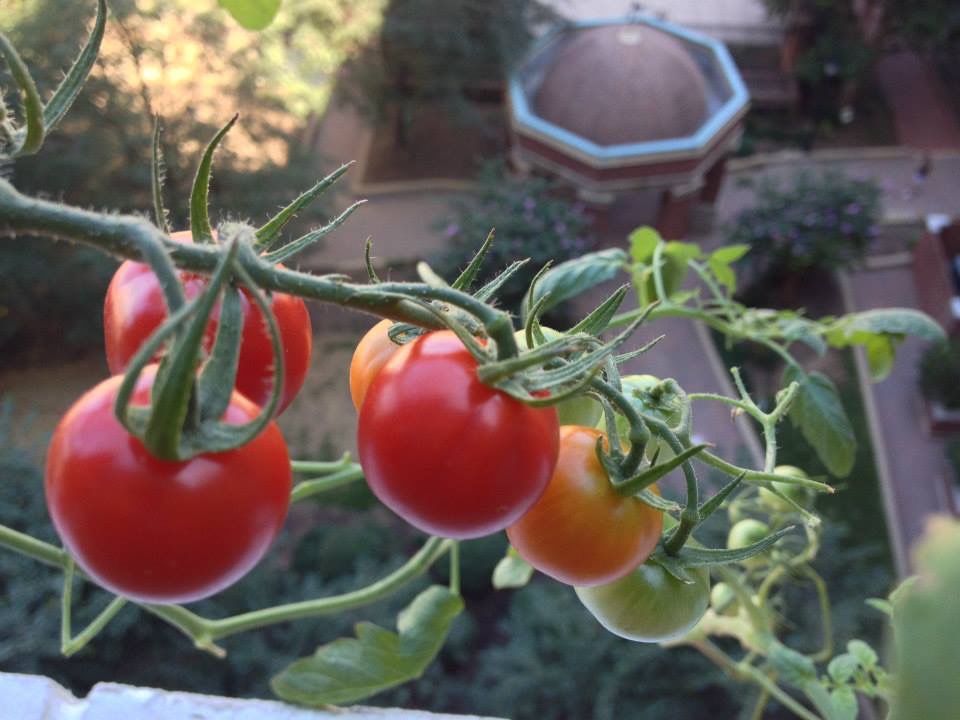
I cook as a hobby, and I maintain this blog primarily to keep track of recipes that my family has enjoyed over the years. I started blogging back in 2015, in response to requests from friends for recipes they had seen me post on Facebook (but that I couldn’t easily catalog). My original blog was on another platform that became less user-friendly over time. I migrated my blog to WordPress earlier this year, and I’ve spent more time than expected reformatting the migrated posts.
This blog is and always will be a work in progress. For example, I currently provide Tags for posts, but I have not coded for Categories. I also generally try to share the recipes themselves in my posts, but in cases where the recipe is not available online, I try to identify the source (e.g., the cookbook title and author) as needed. In some cases, such as where a family has shared their recipe with me but hasn’t authorized me to share it widely, I post a photo of the dish with that proviso.
I recently added a Search widget to this blog. On the desktop version, the Search bar appears prominently on the left hand side. But for some reason, it is hidden on the mobile app. If you’re on your phone, tap on the SHOW tab at the top left of the home page. That will reveal another screen with the Search bar.
I hope you enjoy exploring my blog and find some recipes to try.
-
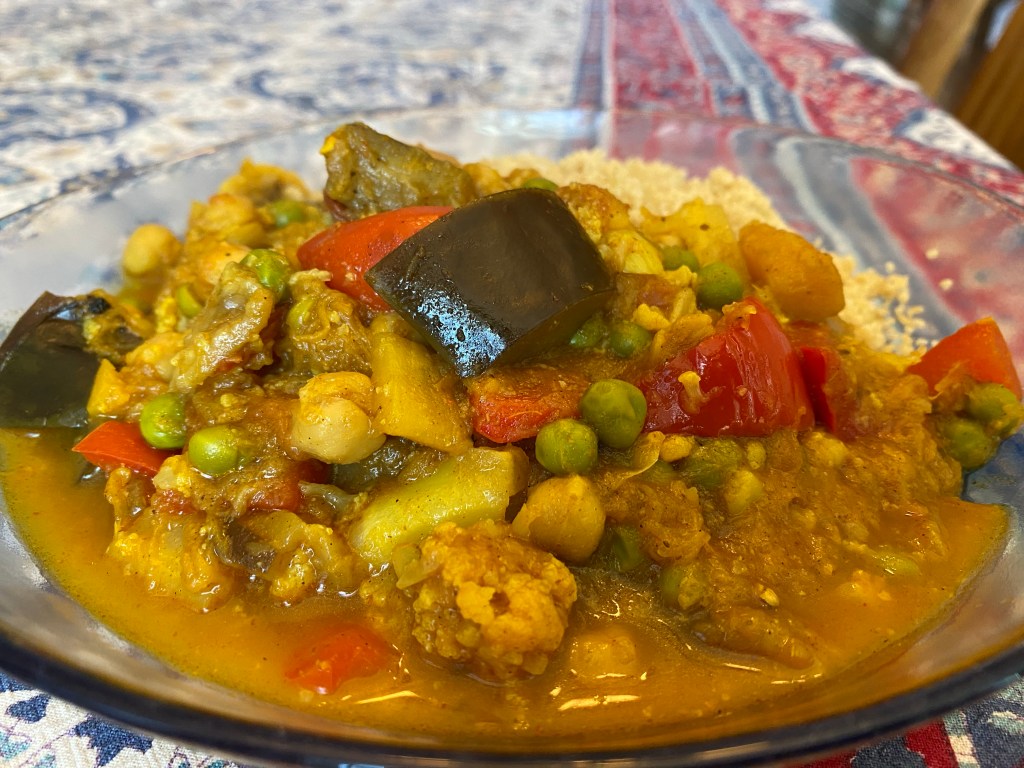
This is a straightforward recipe from RecipeTinEats that we doctored up a bit: https://www.recipetineats.com/vegetable-tagine/ It’s also a great use of vegetables in your pantry. This recipe is vegetarian as written (although we used chicken broth).
We made the following modifications: first, for the spice mix, we sometimes find ground cardamom overpowering, so we reduced it to 2 tsp (from the recipe’s 1 Tbsp, or 3 tsp). We also used ground Kashmiri chilli pepper (a low heat pepper) instead of cayenne.
Second, we used 1 lb frozen pre-cut butternut squash instead of 1.5 lb fresh. (See Note 1.) We also added an additional 1/2 red bell pepper (for a total of 1.5 bell peppers). Instead of water, we used lightly seasoned chicken broth (we found about 2 3/4 cups sufficient to just cover the vegetables, less than the 3 1/2 cups called for in the recipe).
Third, instead of 2 cups fresh green beans, we used 1 cup frozen green peas. We used a 13.5 oz can of no-salt chick peas, which we rinsed and drained.
Finally, after cooking ended, we found the flavors a bit muddled. Ultimately, we used juice from 1.5 lemon (although we kept the zest to 1 lemon). For brightness and umami, we supplemented the stew with 1 tsp pomegranate quince white balsamic vinegar, 7 roughly chopped green olives stuffed with pimento (a mounded 1/4 cup), 2 Tbsp dried sour cherries, and 1 tsp white sugar. This stew ended up being quite tasty. (Mar. 2023)
Note 1: The frozen butternut squash released water into the pot, so we had to sop up the liquid (water-laden olive oil) to avoid steaming the food instead of browning it. Once we removed enough water from the pot, we added another Tbsp of olive oil.
Note 2: We served this with whole wheat couscous, using this recipe: https://www.onceuponachef.com/recipes/couscous.html
-
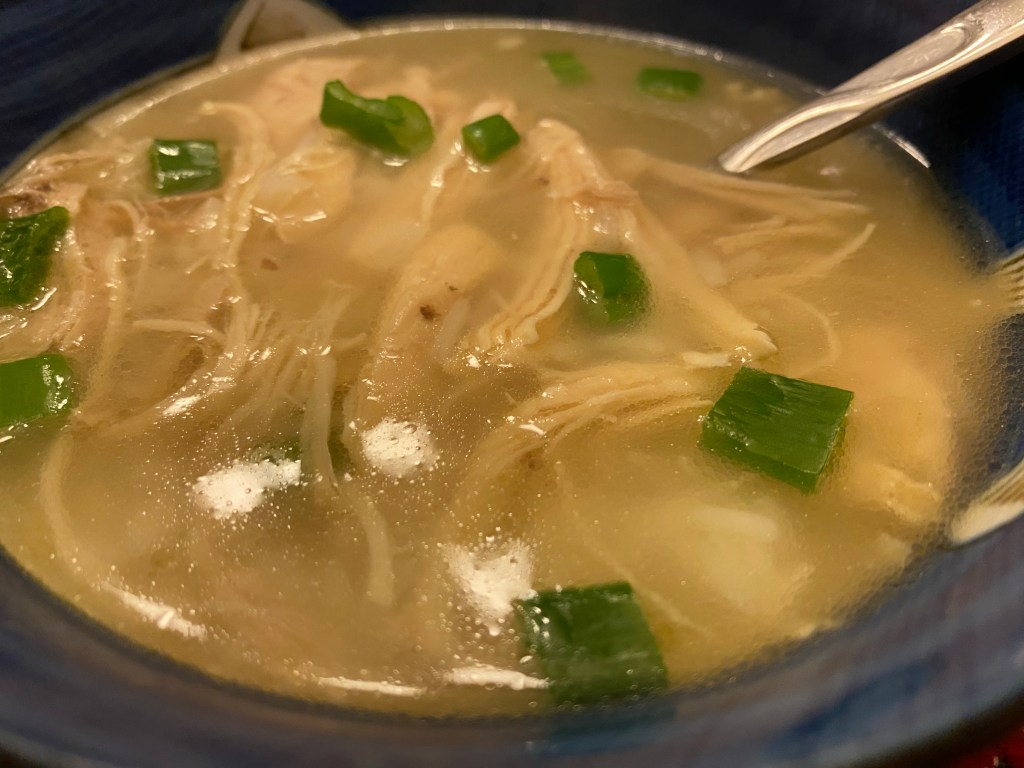
This simple pressure cooker recipe yields a fragrant broth in about an hour. It’s loosely based on the stovetop broth component of this chicken and celery rice recipe by Andrea Nguyen: https://www.vietworldkitchen.com/blog/2015/04/chicken-back-and-celery-rice-recipe-com-ga.html.
First, place 3 large (or 4 small) skin-on, bone-in chicken thighs and 1 skinless boneless chicken breast (see Note 2 below) in the bottom of a large pressure cooker. Add 1 medium onion (peeled and quartered), 3 inches of ginger (peeled, sliced into 1-inch thick penny slices, and gently smashed – see Note 1 below), 2 tsp kosher salt, and 12 cups water.
Second, cover and lock lid, then bring to high pressure (this will take about 20 mins). Maintain at high pressure (the heat can be lowered to medium as long as pressure is maintained) for 30 mins, then move the pressure cooker off the burner for natural release (10 mins).
Third, remove the solids from the broth. Discard the ginger pieces, chicken bone/cartilage, and chicken skin. Shred the chicken and return to the pot. Season the broth with 2 Tbsp fish sauce, 1 tsp freshly ground black pepper, 1/2 tsp salt, and a dash of sugar as needed for balance. You can serve the soup at this stage or you can make congee.
How to make congee: in a separate, smaller pot, bring about 4 cups broth (add an extra 1/2 cup if you prefer a brothier congee) to a boil. Add 1/3 cup uncooked white jasmine rice, cover and lower heat to a medium boil, then cook until rice is tender, about 13 mins. Garnish with chopped scallion (if desired) and serve with fresh lime wedges. (Mar. 2023)
Note 1: Andrea Nguyen recommends gently smashing each ginger piece with the bottom of a chef’s knife.
Note 2: We often reserve chicken skin and fat from other meal preps and freeze them in a small ziploc bag. We toss these fatty bits in with the meat before starting the pressure cooker. Doing so yields a richer, more flavorful broth.
Note 3: We also have made this with frozen chicken parts (skin on, bone-in) in a pressure cooker. Once it hits high pressure (which will take at least 30 mins), reduce heat to medium (while maintaining high pressure) for 30 mins, then do natural release to 20 mins.
-
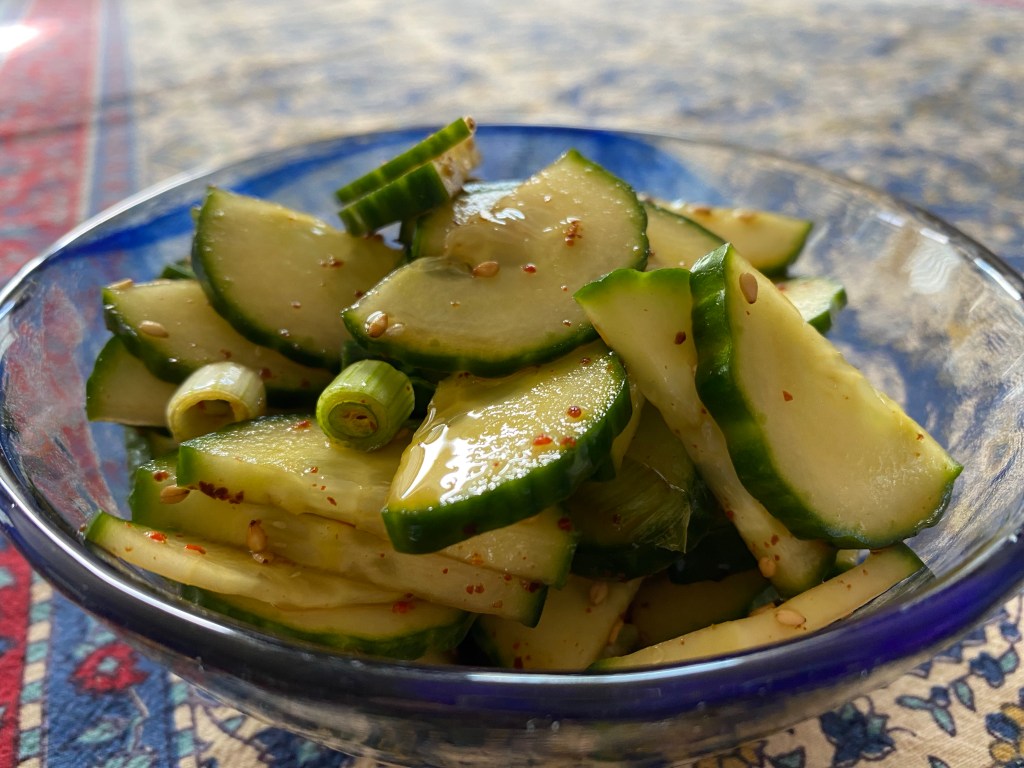
As a kid, I remember watching my mom toss together this refreshing cucumber salad as an easy side dish for meals.
I hosted a Korean lunch for friends today and decided to make this recipe: https://kimchimari.com/korean-cucumber-salad/ It’s surprisingly quick and easy to make. This cucumber salad offers a bright complement to well-seasoned fatty proteins. For today’s lunch, we served this salad with Korean kalbi-style chicken thighs and leafy lettuce (for lettuce wraps). (Mar. 2023)
-
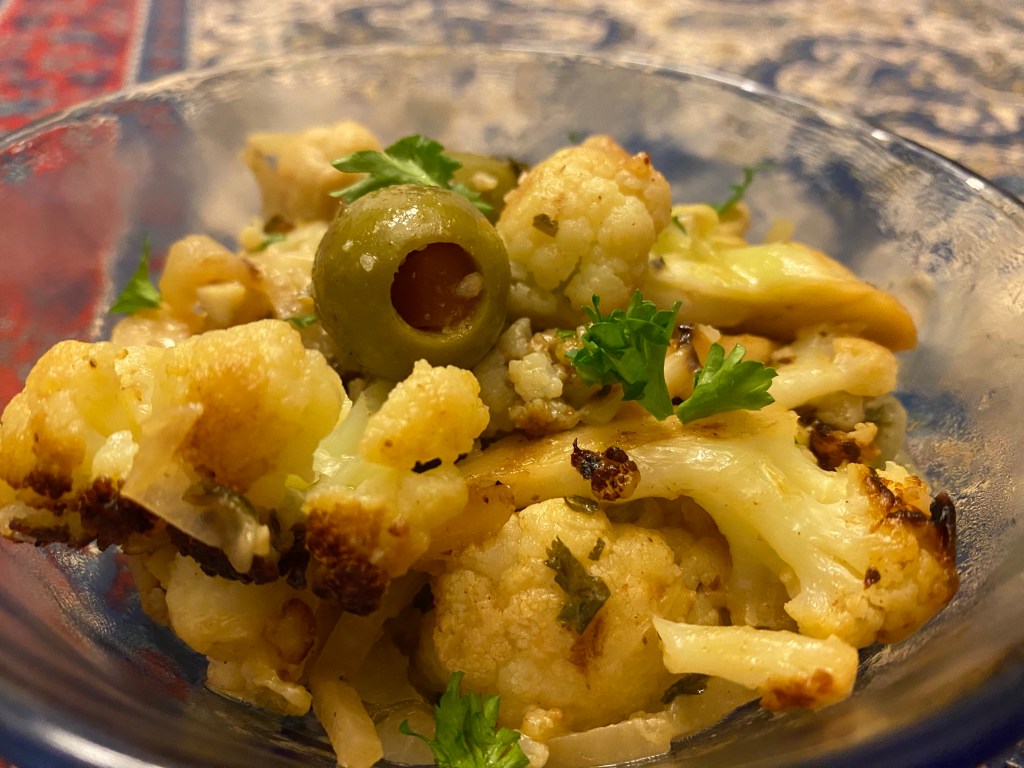
We tried this mustard-infused cauliflower dish from Marie Cacouchia’s Vegan Africa. The recipe is available online: https://www.theguardian.com/global-development/2023/feb/27/africa-taste-for-vegan-food-plant-based. Our modifications:
First, for the marinade, we found the reference to mustard ambiguous (e.g., liquid vs. dry, whole grain vs. Dijon). Based on online recipes for chicken yassa, we used 2 Tbsp Dijon mustard. The marinade amount may appear scant for the volume of cauliflower and onion, but it’s sufficient. We recommend using a 2 gallon food storage bag.
Second, rather than literally chopping one large head of cauliflower, we cut it into small florets. This lengthened the cooking time by 15 mins, and we used more than 1 Tbsp olive oil to properly sear the florets.
Third, we found 5 medium onions (thinly sliced) to be more than ample. In the future, we may reduce to 4 onions.
Finally, we served this cauliflower yassa with Beninese black-eyed peas and rice. This was delicious. (Mar. 2023)
-
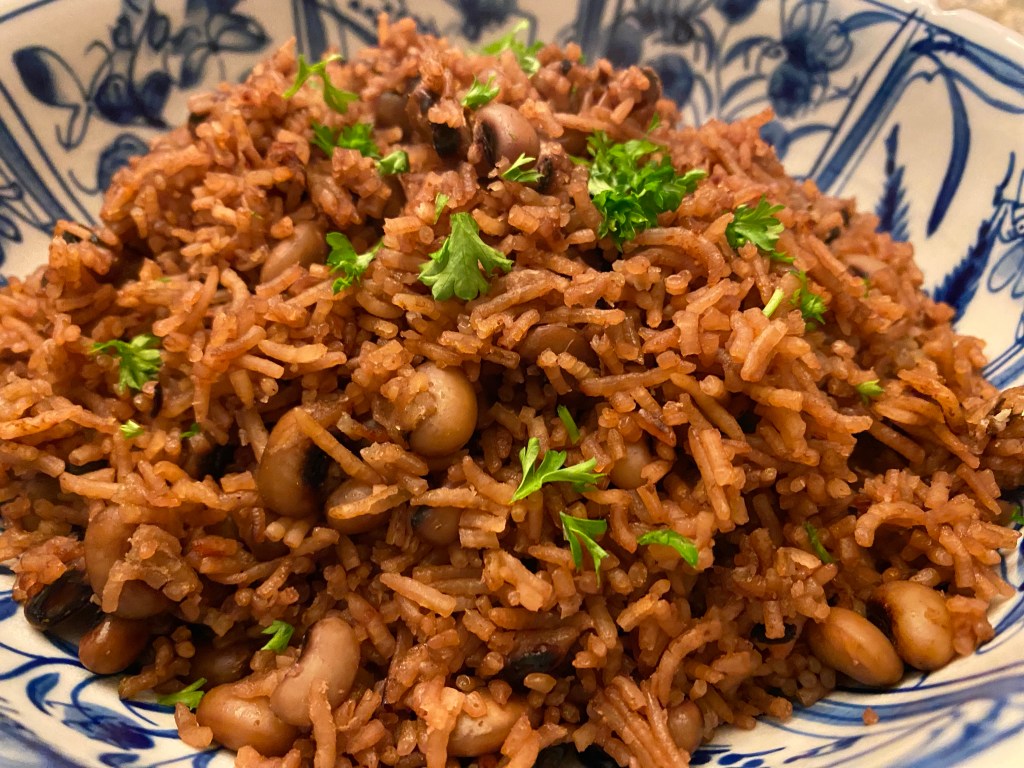
This is another great recipe from Marie Kacouchia’s Vegan Africa. We have had the Ghanaian version of this recipe (i.e., waakye). We followed the printed recipe (it’s not online), and we made the following modifications (mainly correcting conversions from the French / metric system to the American English / imperial system):
First, we soaked 2.5 cups (about 9 oz) of dried black eyed peas in 3 cups water overnight in the fridge.
Second, after rinsing and draining the peas, we placed the peas and 1200 ml water (note: 4 cups = 1000 ml) in a large Dutch oven.
Third, the appropriate spices were 1 tsp ground cumin, 1/2 tsp ground coriander, and 1.5 Tbsp baking soda. We added 1/2 tsp kosher salt. For white rice, we used 2.5 cups of basmati rice, which we rinsed and drained. (Note: 600 g = 2.5 dry cups, not 3 cups.)
Finally, we followed the author’s tip to place parchment b/w the lid and the rice (it was helpful). Stirring the rice and beans was helpful, and we added a splash (maybe 1 Tbsp) of water. (Mar. 2023)
-
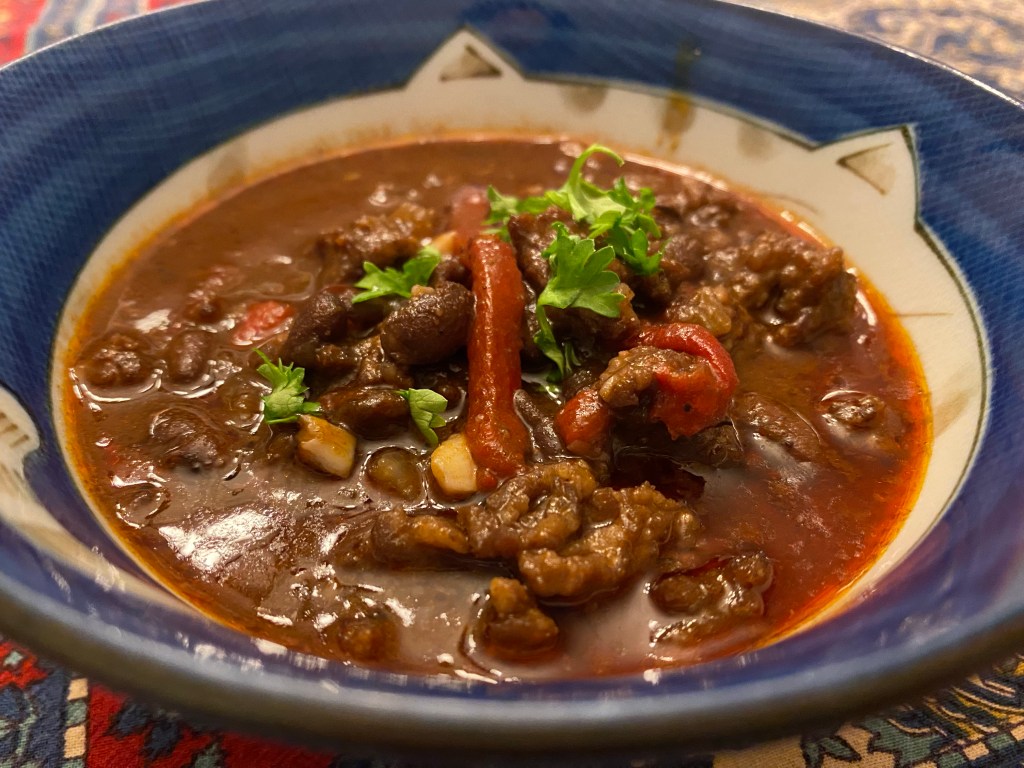
My stepMIL is an incredible cook, and she generously shared one of her signature recipes. First, grind 1 tsp cumin seeds, 1 tsp black peppercorns, and 2 whole cloves. (Shortcut option: using a mortar and pestle, manually crush 1 tsp cumin seeds along with 1 tsp ground black pepper and 1/4 tsp ground cloves). Set aside.
Second, heat a wide, low-walled Dutch oven (we use the Ultimate Pan) on medium with 3 Tbsp olive oil, then add 1 lb pork sausage (we use Johnsonville spicy Italian, without casings). Saute the sausage until browned, then add 1 chopped medium onion until translucent. Add 8 garlic cloves, peeled and sliced, and saute until soft.
Third, add 3/4 cup roasted red peppers (we used Cento brand, drained) and a 15 oz can no-salt black bean (including liquid). Mix, then add the cumin seed, black pepper, and clove mixture, 2 heaping tsp smoked paprika, 1/2 tsp cayenne pepper (reduced from 3/4 tsp), 1 Tbsp black olive tapenade, 1 cup red wine (we used JUSTIN Cabernet Sauvignon), and 3/4 cup no-salt tomato sauce. Bring to a boil, then cover and reduce to low heat. Simmer, covered, for 40 mins.
At the end of cooking, season to taste (we added a little kosher salt and sugar for balance). Serve with crusty bread. (Feb. 2023)
-

At Beacon Hill Bookshop, we found an intriguing cookbook, Vegan Africa, by Marie Kacouchia. This evening we tried her recipe for a West African dish of Lebanese origin. Here’s how we made it, with modifications:
First, heat a large saute pan (we used The Ultimate Pan) with 1/4 cup olive oil on medium-high heat. Add 3 chopped scallions and 2 large minced garlic cloves, lower heat to medium-low, and saute until softened (a few mins).
Second, fold in 1 1/4 cup basmati rice (rinsed and drained), 4 oz vermicelli broken into shards (see Note below), 2 tsp curry powder (we used McCormick), 1 tsp coconut palm sugar, and 1 tsp grated ginger. Then add 600 ml (slightly over 2.5 cup) hot water mixed with 1 cube vegetable or chicken stock (we used 2 tsp Better Than Bouillon concentrate), and bring to a boil. Cover and lower heat to medium-high for 3 mins, then keep covered and lower heat to Low for 7 mins.
Third, while the vermicelli rice is cooking, toast 1/2 cup cashews in the toaster oven at 325/350 until browned (maybe 5 mins), then set aside.
Fourth, fold in 8 oz baby spinach (if too large or thick, coarsely chop) and 1 Tbsp minced parsley to the vermicelli rice mixture; you may need to add the spinach in steps so that it can properly wilt. Then just before serving, fold in the toasted cashews.
We served this vermicelli rice with oven-roasted cauliflower florets (we had tossed in a canola oil, salt, and pepper before roasting at 425 for about 25 mins). This vermicelli rice was delicious and was reminiscent of both Rice-a-Roni and Singapore noodles (with lighter seasoning). We’ll definitely make this again. (Feb. 2023)
Note: For the vermicelli, we used Colavita angel hair nests. A 16 oz bag contains 9 nests, so we estimated that 2.5 nests = 1/2 cup = 4 oz. We broke up the nests by hand into roughly 2″ long pieces.
Note 2: Vegan Africa is available at https://www.workman.com/products/vegan-africa/hardback. The Washington Post also published a version of this specific recipe here: https://www.washingtonpost.com/food/2023/02/05/spinach-rice-recipe/ However we noticed significant discrepancies in the amount and type of ingredients (e.g., too little olive oil, swapping out the sugar type) between the Washington Post and the cookbook.
-
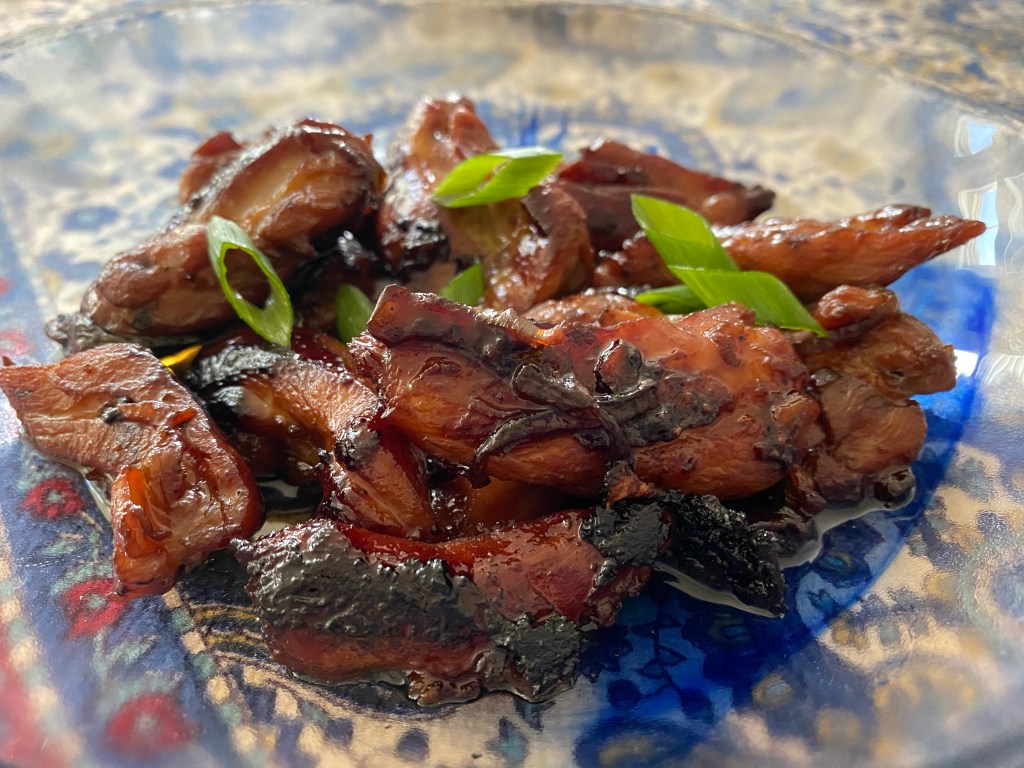
We have been trying to cut down on our red meat consumption. We decided to try out my grandmother’s kalbi marinade (intended for beef short ribs) on chicken thighs, and the result was delicious.
First, you will need about 1.5 lb boneless, skinless chicken thighs. We recommend leaving excess fat (which will help with caramelization) on the chicken, rather than trimming it. Cut each thigh into 2″ wide slices (about 3-5 pieces per thigh, cut vertically).
Second, prepare the following marinade: ½ cup soy sauce, ¼ cup water, 1/3 cup plus 1 Tbsp sugar, 4 minced garlic cloves, 1 small, thinly sliced onion (we used 1 large shallot cut into ¼” crosswise slices), 1 chopped scallion, 2 Tbsp toasted sesame oil, and 1 ½ tsp black pepper.
Third, place the chicken in the marinade. Let marinate in a covered container in the refrigerator overnight (or at least 12 hours).
Final step: Heat a large nonstick frying pan on medium-high heat. Add about 1-2 tsp neutral vegetable oil, then place chicken pieces (shaking off marinade) and some of the onion/scallions in the pan, spreading each piece out so that the chicken can sear and not steam. Reduce heat to medium, if needed, but continue cooking on each side until browned. Garnish with some chopped scallions (optional). Serve immediately with rice and kimchi. (Feb. 2023)
-
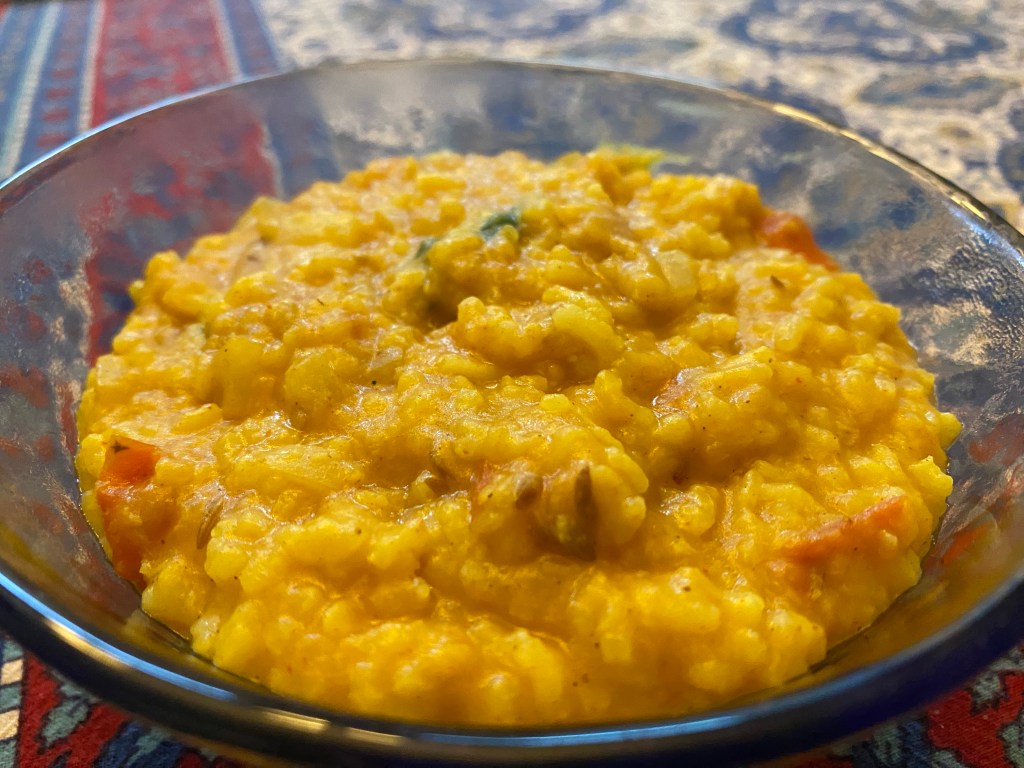
There are endless varieties of kichidi. We tried this recipe from Hebbars’ Kitchen: https://hebbarskitchen.com/moong-dal-khichdi-recipe/ It was well-balanced and delicious, but we found that the diced onion was still crunchy (probably due to cooking on low heat, per the instructions). So the next time we will saute the onions on medium heat until translucent.
Note: In terms of ingredients, the author refers to “cumin” (which could be interpreted as ground cumin). It’s clear from visuals that she means cumin seeds, and that’s what we used. (Jan. 2023)
-

For the past few days we have searched for a pureed roasted vegetable soup, and we loosely followed this one: https://www.yakimaherald.com/explore_yakima/food_and_drink/salt-and-stone-roasted-vegetable-soup-hits-the-spot/article_13ce7e34-48fc-11ed-a0ff-0b1b8e6bbf79.html We took inspiration from the author’s observation that this recipe is versatile and useful for any raw vegetables in one’s fridge.
First, prepare the following for roasting: 1 extremely large (or two medium) carrot, 2 medium parsnips, 1/3 large rutabaga, 1/3 large celeriac, 1/4 large cauliflower, 1/4 red bell pepper, 3 medium shallots, and 1 medium onion. Preheat oven to 425. Peel the carrot, parsnips, rutabaga, and celeriac. Remove the seeds and membrane from the bell pepper. Cut all of the vegetables into uniform chunks (approx. 2″ chunks). Toss with 2 Tbsp canola oil, sprinkle with salt and black pepper, and spread on two foil-lined rimmed baking sheets (foil sprayed with canola). Roast until the vegetables are tender (about 30 mins, tossed halfway). Remove roasted vegetables from oven and place them in a low-walled stainless steel Dutch oven. Keep the oven on, but reduce to 400.
Second, prepare 4 cups chicken or vegetable broth (we used Better Than Bouillon chicken flavor), separating into 3 cups (for immediate use) and 1 cup (hold on the side). Mince 3 large garlic cloves. Add the minced garlic plus 3 cups broth to the roasted vegetable mixture. Season with 1/2 tsp McCormick curry powder and 1/4 tsp Aleppo pepper (coarsely ground). Heat on medium until boiling, then reduce to a simmer. Cover and simmer for 20 mins. While this is simmering, start preparing the croutons (recipe below).
Third, puree the vegetables in broth with an immersion blender. Add the additional broth as needed to reach the right consistency; for us, we wanted the consistency of butternut squash soup, so we used the full additional cup of broth, for a total of 4 cups broth. Season to taste; we added 1 tsp apple cider vinegar and a sprinkle of salt (1/2 tsp) and sugar (1/4 tsp).
Crouton recipe: We removed 5 slices of sourdough bread from the freezer. We cut the sourdough slices into bite-sized pieces (about 6 per slice). Toss into 2 tsp canola oil and 1 tsp minced rosemary leaves. Place on a foil-lined rimmed baking sheet, lightly sprayed with canola oil. Place in the oven at 400 for about 10-12 mins until toasted. (Jan. 2023)
-
Subscribe
Subscribed
Have a WordPress.com account? Log in now.

