-
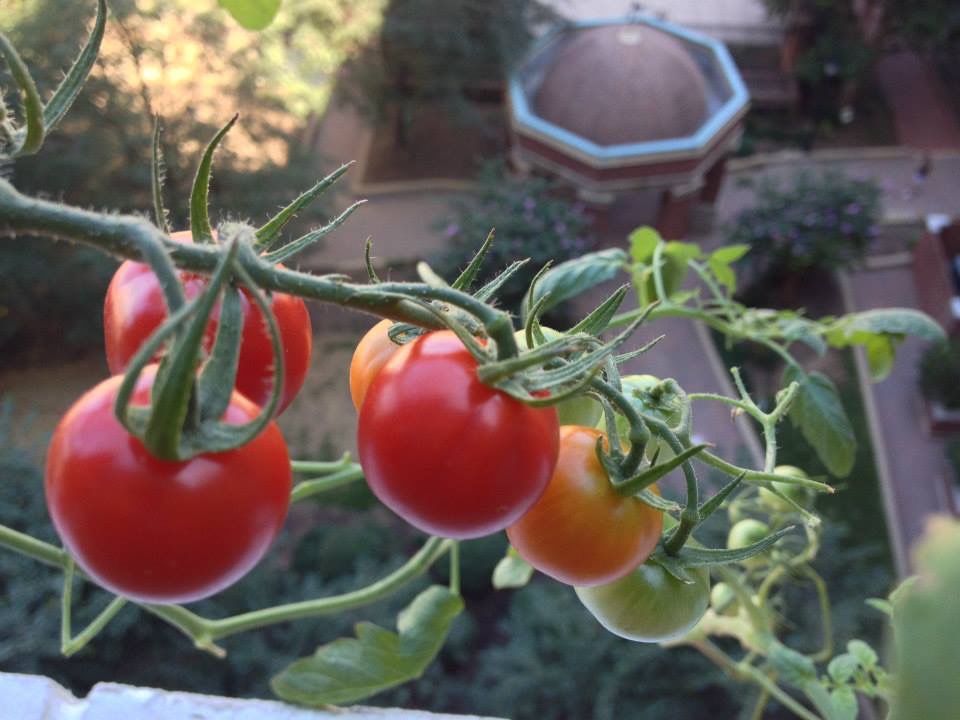
I cook as a hobby, and I maintain this blog primarily to keep track of recipes that my family has enjoyed over the years. I started blogging back in 2015, in response to requests from friends for recipes they had seen me post on Facebook (but that I couldn’t easily catalog). My original blog was on another platform that became less user-friendly over time. I migrated my blog to WordPress earlier this year, and I’ve spent more time than expected reformatting the migrated posts.
This blog is and always will be a work in progress. For example, I currently provide Tags for posts, but I have not coded for Categories. I also generally try to share the recipes themselves in my posts, but in cases where the recipe is not available online, I try to identify the source (e.g., the cookbook title and author) as needed. In some cases, such as where a family has shared their recipe with me but hasn’t authorized me to share it widely, I post a photo of the dish with that proviso.
I recently added a Search widget to this blog. On the desktop version, the Search bar appears prominently on the left hand side. But for some reason, it is hidden on the mobile app. If you’re on your phone, tap on the SHOW tab at the top left of the home page. That will reveal another screen with the Search bar.
I hope you enjoy exploring my blog and find some recipes to try.
-
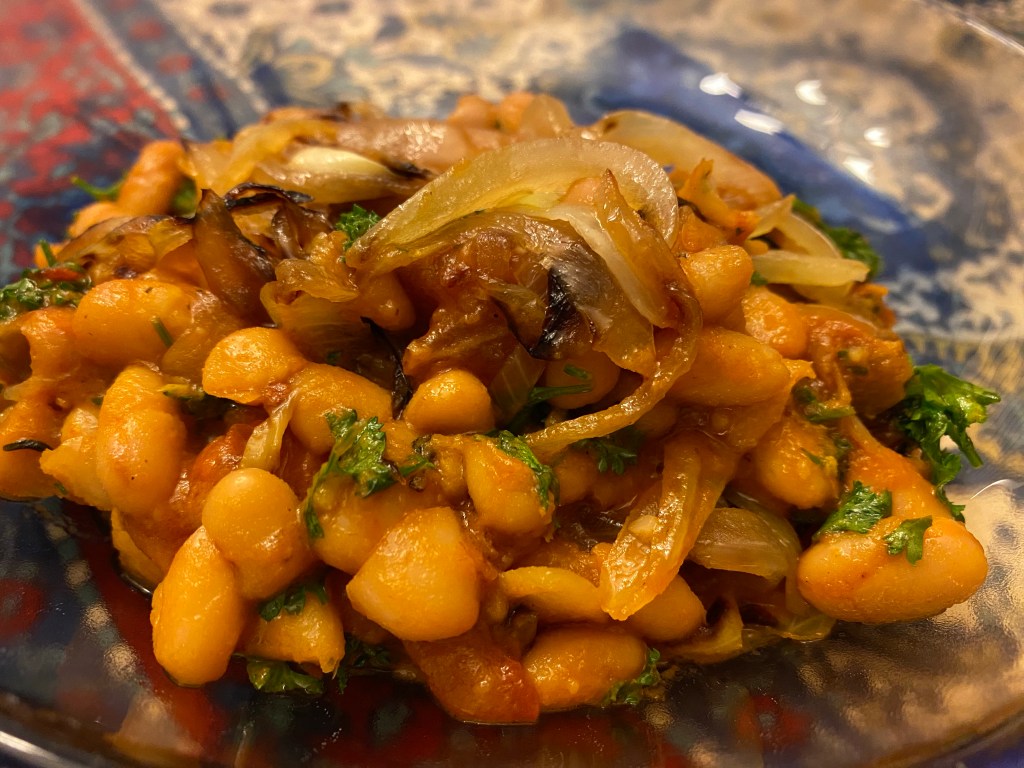
This is a delicious and easy dish with Mediterranean flavors: https://cooking.nytimes.com/recipes/1023775-rosemary-white-beans-with-frizzled-onions-and-tomato?smid=ck-recipe-iOS-share
Our modifications: first, we increased the onion to one medium and one small, which we sliced along the grain. We cooked the onions in 2 Tbsp olive oil until caramelized, and we set aside 1/3 of them for garnish. Second, we used no-salt canned cannelini beans (rinsed and drained). Third, in addition to one chopped medium-large fresh vine-ripened tomato, we added 2 Tbsp tomato paste to the oil prior to adding liquid. Third, although this recipe is vegetarian, we used 1/2 cup Better than Bouillon chicken broth instead of water. Fourth, in addition to lemon zest, we added juice from one medium lemon. Finally, we drizzled olive oil over the finished dish and served with toasted slices of pain de campagne. This was very tasty and satisfying. (Jan. 2023)
-
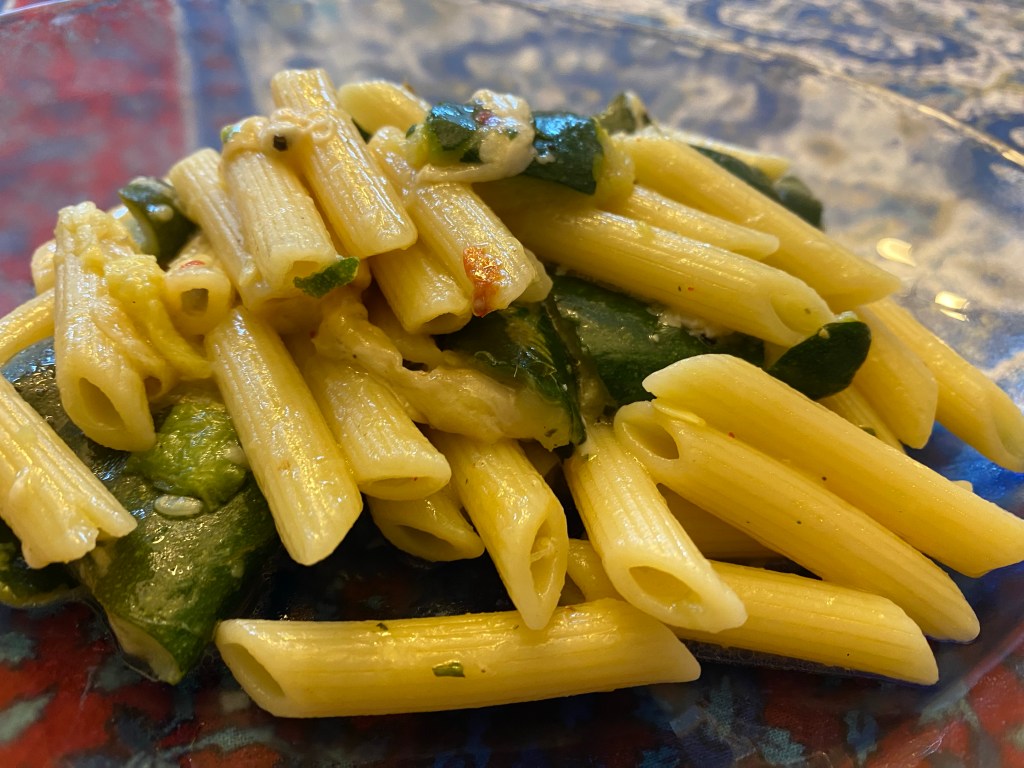
We unexpectedly had an abundance of zucchini, including 4 smaller ones. We tried this recipe: https://www.bostonglobe.com/2022/08/23/lifestyle/recipe-this-unusual-method-cooking-zucchini-with-anchovies-becomes-sauce-pasta/ At the end of cooking, we added lemon juice (about 1/3 lemon) for brightness. This dish was decent, but we prefer a pasta with cauliflower that has a similar flavor base (garlic, anchovy, olive oil). (Jan. 2023)
-
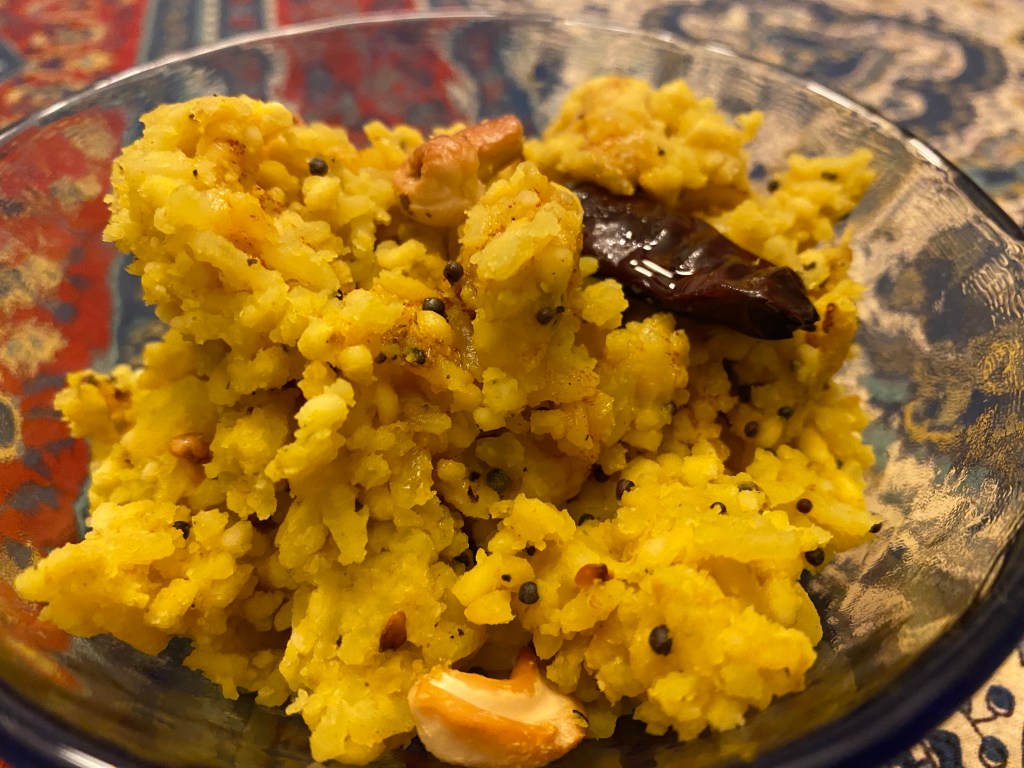
We wanted to try a new porridge. We tried this recipe, but it turned out not to be soupy at all: https://www.onegreenplanet.org/vegan-recipe/pongal-south-indian-rice-lentil-porridge-vegan/ Its texture is more like the mung bean filling of Korean sweet rice cake (dduk). The flavors are nice, and it is tasty as a drier rice and mung bean dish. This recipe is vegetarian, although we ended up adding chicken broth.
Our modifications: first, in lieu of curry leaves in the hot oil, we added 2 bay leaves to the moong dal and rice in the pressure cooker. Second, we probably had the pressure cooker on too high heat or else needed more liquid than 2 cups of water. At the end of cooking, we did a quick release but found the bottom slightly burnt and the contents dry (although the rice and moong dal were fully cooked and tender). To add back in some moisture, we added 1/2 cup hot chicken stock (we used Better Than Bouillon chicken flavor). Third, we used real ghee (not vegan) and tried to make sure the cashews were fully cooked (undercooked cashews may be difficult to digest). After stirring stirring hot oil (with black mustard seed, cashews, and dried hot peppers) into the moong dal-rice mixture, we still found the mixture dry. We then heated 2 tsp ghee, then added 1/4 tsp sweet paprika. We stirred that into the mixture. (Dec. 2022)
-
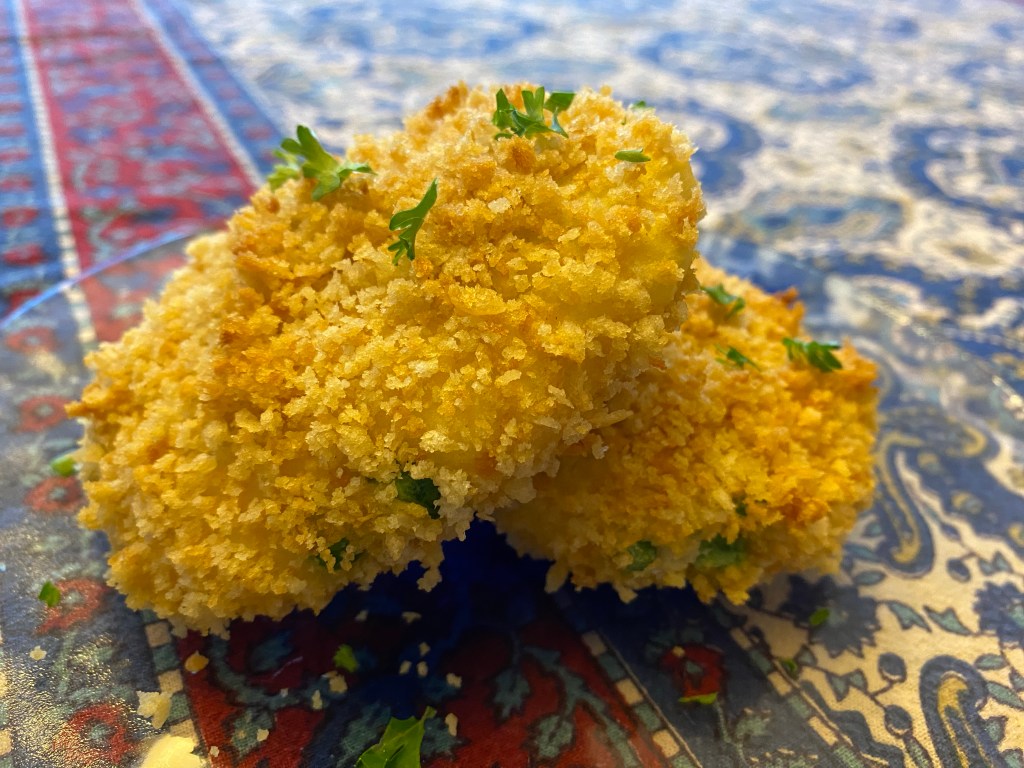
We had about 24 oz leftover mashed potato and seasoned minced chicken from the torijaga (Japanese chicken and potato stew). We felt inspired to try this recipe: https://www.justonecookbook.com/baked-croquette/
Our modifications: first, we folded in about 1/2 cup frozen peas to the mashed potatoes. Second, instead of mixing the minced meat into the mashed potato, we used it as stuffing (about 1/2 to 3/4 tsp). Third, instead of circles, we made our croquettes into ovals (1/4 cup mashed potato), about 1 inch thick. We also added about 1/4 tsp seasoned beef stock powder to the dredging flour. Finally, we lightly oiled the rack and increased baking time to 14 mins at 400.
We found that we overcoated each croquette with with panko, which threw off the ratio of soft potato to coating. We found the croquettes a little bland as a result. (Dec. 2022)
-
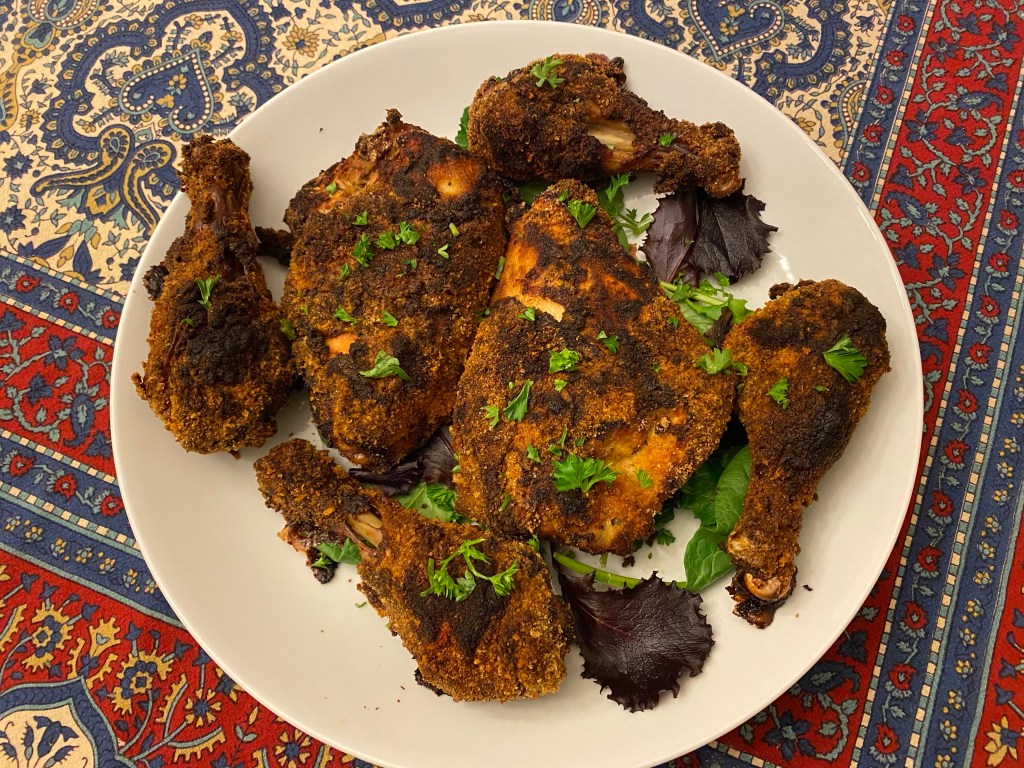
On our day off, we decided to try a recipe that takes too long for a weeknight meal: https://cooking.nytimes.com/recipes/1016200-laurie-colwins-baked-mustard-chicken?smid=ck-recipe-iOS-share
Our modifications: first, we halved the recipe, using 4 skin-on drumsticks and 2 bone-in, skin-on chicken breasts. Second, instead of mincing the garlic, we microplaned it to ensure it would be evenly incorporated into the dijon mustard mixture. Third, we did bake for nearly 2 hours at 350, but that duration may have been too long for the breading, which burned slightly. This was a delicious, albeit rich and heavy, meal for us. We served it with mashed potatoes and roasted asparagus. (Dec. 2022)
-
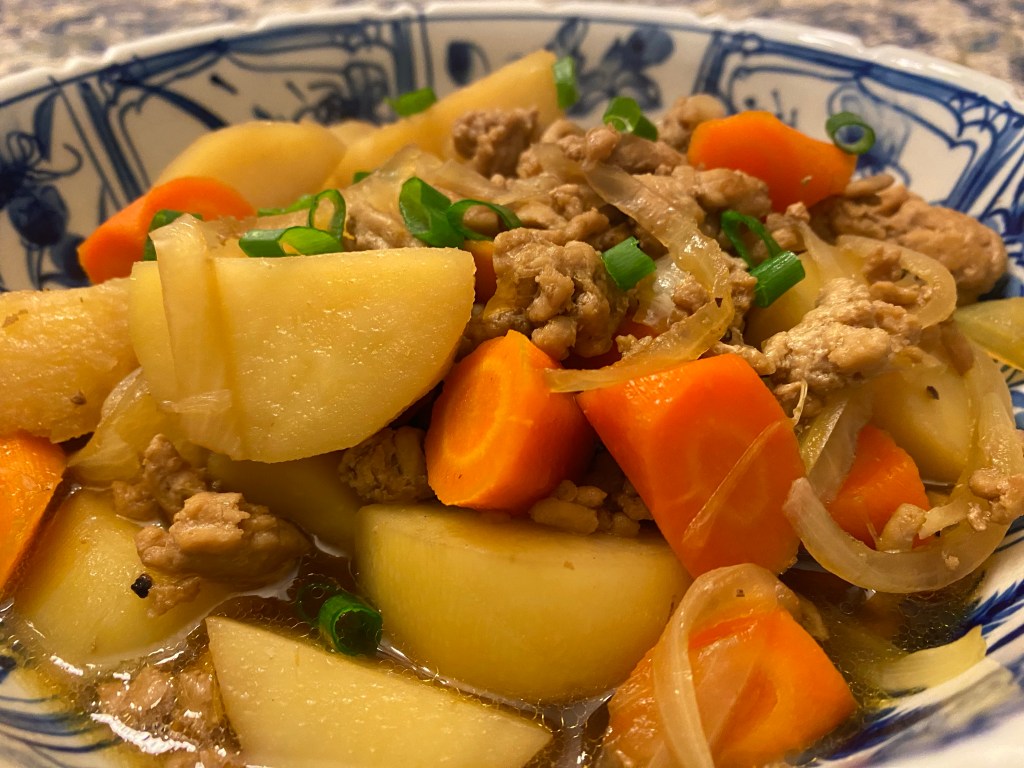
We have started cutting down on red meat, but we still crave old recipes such as nikujaga (a Japanese meat and potato stew featuring thinly sliced or minced beef or pork). We found this recipe for torijaga (chicken and potato stew), which uses chicken thighs cut into bite-sized pieces: https://youtu.be/jA-qNOIJ-LE
Our modifications: first, we used 1 lb minced chicken instead of 2 chicken thighs. Otherwise, we followed the instructions for 1 large carrot cut into bite-sized, gem-cut pieces (we used 2 thin carrots); 3 small/medium potatoes peeled and cut into large bite-sized pieces, about 2×1″ (we prefer Yukon, but we used Russet this time); and 1 large onion cut into 1/2″ slices, along the grain. To saute the chicken and vegetables, we used about 1 Tbsp canola oil, we also sopped up about 2 Tbsp liquid from the chicken while it was cooking.
Second, for the sauce, here were our proportions: 5 Tbsp Kikkoman low-sodium soy sauce, 2 Tbsp white sugar (down from 3 Tbsp), 3 Tbsp sake, 3 Tbsp mirin, and 200 ml (7/8 cup) water. Finally, after bringing to a boil, we covered and reduced to a simmer (setting 2 or 3 our cooktop) for about 25-28 mins. At the end of cooking, we seasoned to taste with a few sprinkles of salt and black pepper (Dec. 2022)
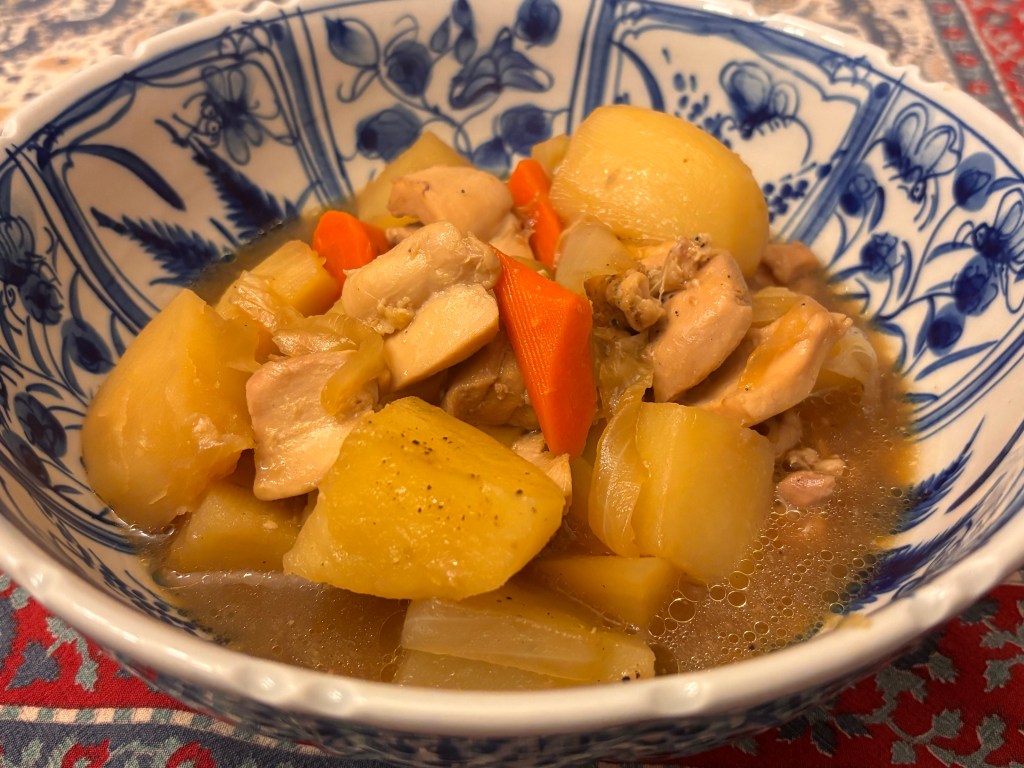
Note: Another time, we tried this recipe using chicken thighs, and it was delicious. Our chicken thighs were much smaller than those in the blogger’s video, so we used 1.5 lb boneless chicken thighs (5 small thighs), 2 medium and 1 small Yukon potatoes, 2 small-medium carrots, and 1 large onion. We adjusted the seasonings accordingly, but rather than doubling, we tried to be judicious (e.g., increased the 3 Tbsp mirin by 1 Tbsp to make it 4 Tbsp, or 1/4 cup, total mirin). It turned out very well, with a good ratio of protein to vegetable. (Sept. 2026)
-
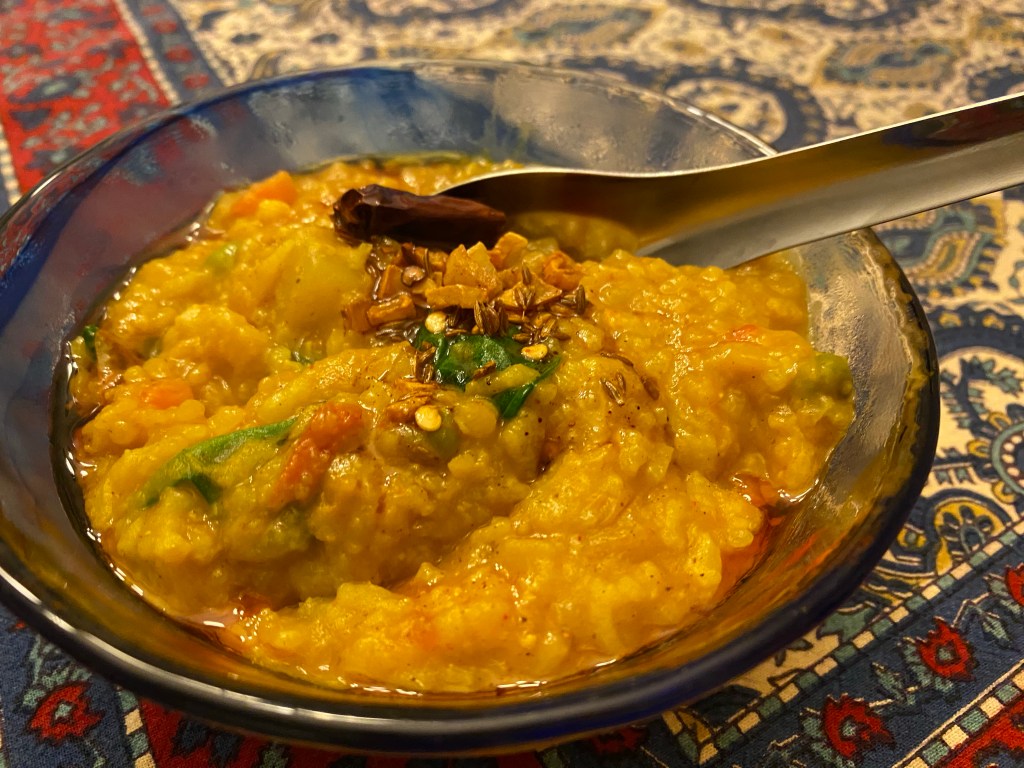
After a few days of heavy, rich meals, we made this masala kichidi recipe to cleanse a bit: https://www.funfoodfrolic.com/masala-khichdi-recipe/ This is our favorite kichidi recipe to date.
Our modifications: first, we used 1/2 cup white jasmine rice and 1/4 cup pink masoor dal (i.e., red lentil), soaked in water for 15 mins; and 1/4 cup toor dal (i.e., pigeon pea instead of moong dal, i.e., mung bean), soaked in water for 30 mins.
Second, to avoid making this dish too spicy, we substituted the red chili powder (in both the tomato spice mixture and the tadka) to a 3:1 ratio of sweet paprika and cayenne pepper. But it still was too hot for us, so the next time we may try a 4:1 ratio. (We also sometimes balance at the end of cooking with a few sprinkles of white sugar.)
Third, we heated 2 Tbsp canola oil to saute the onion/hing powder, tomato spice mixture. Fourth, based on our available vegetables, we used 1/4 cup diced cauliflower instead of 1/4 cup French beans.
Finally, after we made the tadka (with 2 Tbsp ghee and reduced hot pepper), we poured it into the pressure cooker and stirred it in. But the next time, we will set some of the reddish oil (about 2 tsp) for garnish when we serve the kichidi. (Dec. 2022)
Variation (shown in photo): first, we had moong dal (split mung beans) this time. Second, we used ground Kashmiri pepper, a type of low heat pepper, for both the kichidi and the tadka. Finally, we tossed a handful of fresh baby spinach into the kichidi right after we opened the pressure cooker from natural release. (Mar. 2023)
-
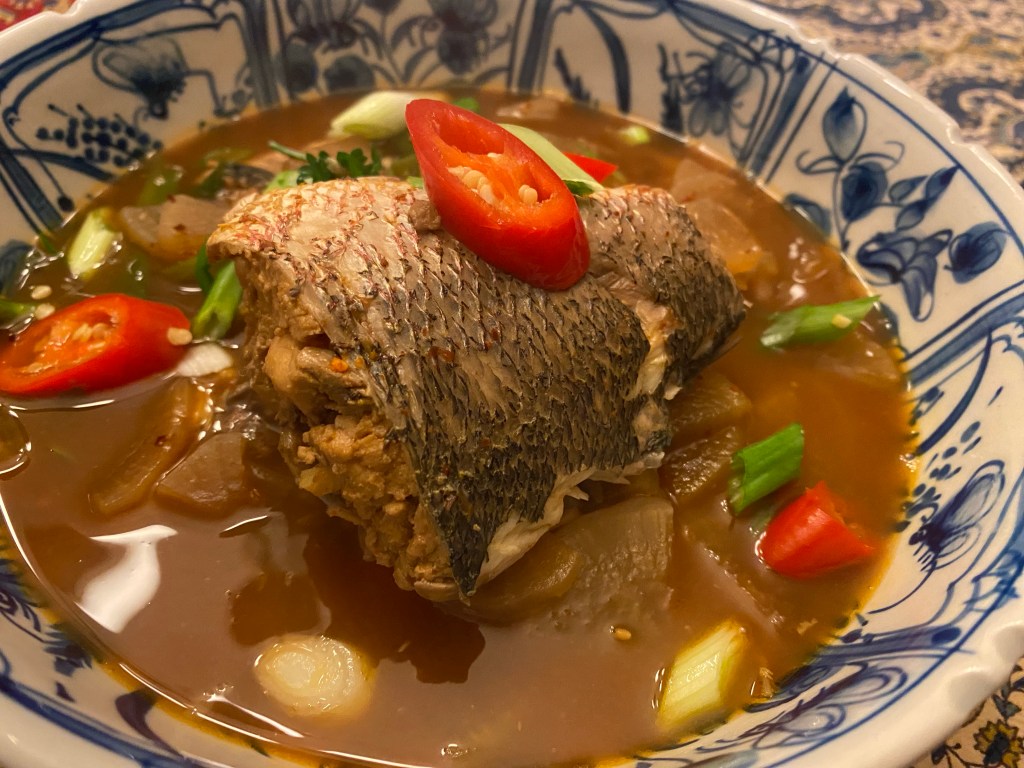
We had a lot of daikon, and I suddenly had a craving for this dish. We tried Maangchi’s recipe: https://www.maangchi.com/recipe/maeuntang
We followed Maangchi’s guidance to use fresh whole fish. We found two beautiful red snapper, which the fish monger graciously cut into 2-inch pieces (and we kept the head and tail).
Our modifications: first, for the seasoning paste, we halved the red pepper flakes to 1/4 cup (from 1/2 cup) but kept all other ingredients in their original proportions. We ended up using about 3/4 of that paste for the stew. Second, we probably cut the daikon too small (literally following Maangchi’s instructions for bite-sized pieces, instead of 2×1″ slices at 1/8″ thickness). (Dec. 2022)
-

We had about 3/4 lb tilapia filet, so we made this classic Korean recipe for white fish: https://www.thespruceeats.com/korean-fried-fish-2118571
Our modifications: first, we seasoned the flour with 1/2 tsp Korean beef soup stock powder (sogogi dashida). Second, we added 1 Tbsp minced scallion to the egg mixture for flavor and color. (Dec. 2022)
-
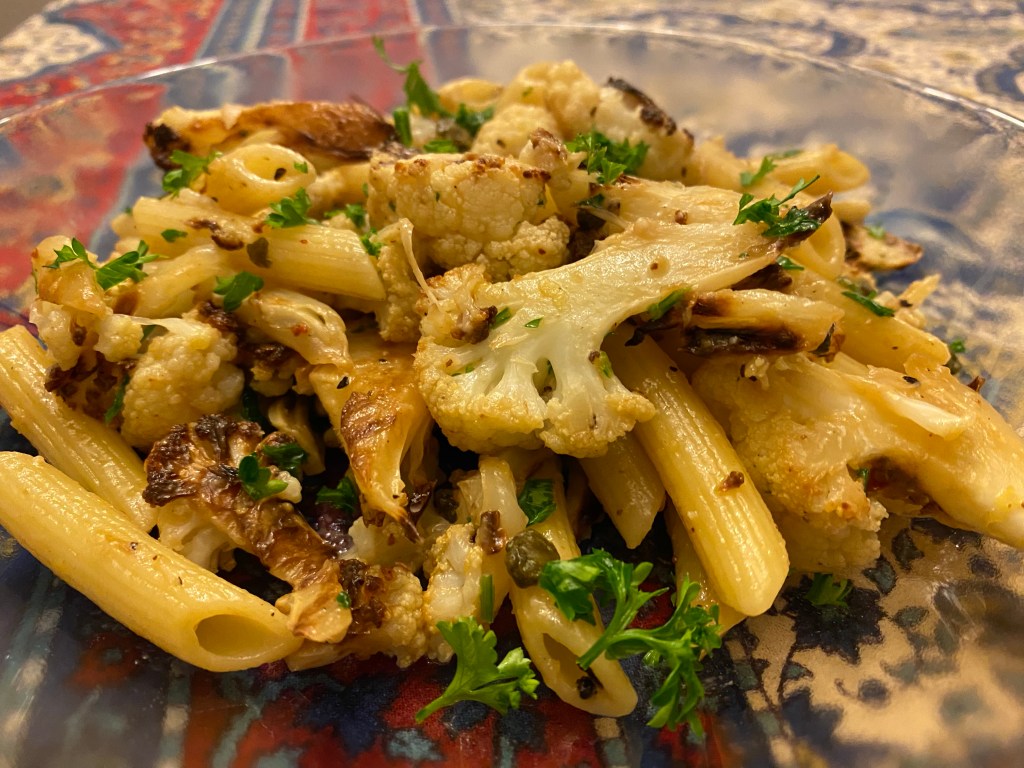
We tried this recipe with Sicilian flavors, and it was delicious. https://www.foodandwine.com/recipes/pasta-roasted-cauliflower-and-crispy-capers Because its flavor base includes anchovy filets in addition to lemon zest, capers, and pecorino, this recipe is not vegetarian. (Dec. 2022)
Note: Instead of 4 anchovy filets, you can use 2 tsp anchovy paste (1/2 tsp paste = 1 filet).
-
Subscribe
Subscribed
Have a WordPress.com account? Log in now.

