-

I cook as a hobby, and I maintain this blog primarily to keep track of recipes that my family has enjoyed over the years. I started blogging back in 2015, in response to requests from friends for recipes they had seen me post on Facebook (but that I couldn’t easily catalog). My original blog was on another platform that became less user-friendly over time. I migrated my blog to WordPress earlier this year, and I’ve spent more time than expected reformatting the migrated posts.
This blog is and always will be a work in progress. For example, I currently provide Tags for posts, but I have not coded for Categories. I also generally try to share the recipes themselves in my posts, but in cases where the recipe is not available online, I try to identify the source (e.g., the cookbook title and author) as needed. In some cases, such as where a family has shared their recipe with me but hasn’t authorized me to share it widely, I post a photo of the dish with that proviso.
I recently added a Search widget to this blog. On the desktop version, the Search bar appears prominently on the left hand side. But for some reason, it is hidden on the mobile app. If you’re on your phone, tap on the SHOW tab at the top left of the home page. That will reveal another screen with the Search bar.
I hope you enjoy exploring my blog and find some recipes to try.
-

I love traditional yuk gae jang, which relies heavily on beef, and searched for a plant-based version that would still taste authentic. We tried this recipe by Chef Seonkyoung Longest: https://seonkyounglongest.com/vegan-yukgaejang/ This soup tasted remarkably similar in flavor to genuine yuk gae jang. We followed the broth recipe instructions exactly, but we tweaked other parts of the recipe.
Our modifications: first, for the 1.5 lb vegetables, we used 8 oz fresh mixed mushrooms (shiitake and cremini), stems removed, halved and then sliced into 1/4″ width; Ha Vista brand soy tofu slices (textured yuba shreds, which we did not need to cut further), about 1/3 of a 10.6 oz package; Nature’s Soy brand fried bean curd sheet (thin dry sheets, cut in half and then shredded into 1/2″ width); 8 sheets, which was almost 1/2 of a 3.5 oz package; and Nature’s Soy marinated pressed tofu (dense, brown, moist-pack tofu blocks, cut in half and then sliced into 1/4″ width), using 4 oz of an 8 oz package (2 blocks). (See Note below.)
Second, for the scallions in this mixture, we reduced to 10 stalks (from 25). Third, for the reconstituted dried shiitakes, we drained from the soup pot, removed the stems, and then cut in half before slicing into 1/4″ width. We also discarded mushrooms that had not fully reconstituted (e.g., still hard in the center), as they would have been unpleasant to chew.
Fourth, to manage sodium in the marinade, we reduced the soy sauce and the yondu to 4 Tbsp each (from 5 Tbsp each). We also reduced the Korean red pepper flakes to 3 Tbsp (from 5 Tbsp). However, we still found the final soup too spicy and had to balance out at the end with 1.5 Tbsp white sugar. (The next time, we’ll start the marinade with 2 Tbsp Korean red pepper flakes, then when tasting the final soup, we may add more red pepper flakes to taste.) After mixing the vegetables, three types of tofu, and reconstituted mushrooms with the marinade, we let sit for 10 mins to let the flavors meld.
Finally, we separately cooked sweet potato noodles (1 bundle for 3-4 servings), drained, and then placed in a large soup bowl before pouring the soup overtop. We also served with rice. (Dec. 2022)
Note: We weren’t familiar with different types of dried and fried tofu, so we experimented with three types. The second type of tofu (Nature’s Soy fried bean curd sheet) resulted in soggy shreds, so the next time we will use only a mix of the first and third types of tofu – 1/3 of a package Ha Vista soy tofu shreds (yuba shreds) and 3-4 blocks of Nature’s Soy marinated pressed tofu.
-
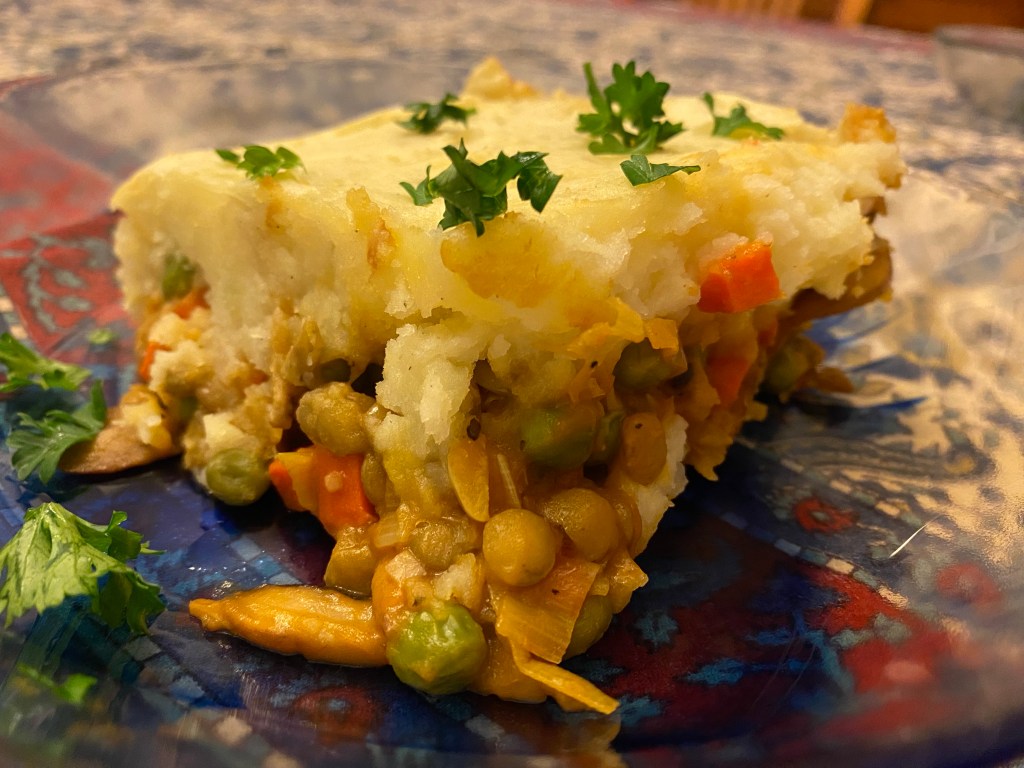
We love this recipe: https://cooking.nytimes.com/recipes/1019221-vegetarian-shepherds-pie?smid=ck-recipe-iOS-share Of the many plant-forward / vegetarian shepherdess pie recipes we have made, this version is our favorite. It is well-balanced and satisfying.
Our modifications: first, for the lentils we used 2 cups Better Than Bouillon chicken broth (omitting additional salt) and later for the filling 1.5 cups chicken broth instead of vegetable broth. So although this recipe could be vegetarian, our version was plant-forward. We also used standard green lentils, which were delicious and kept their shape (French Puy lentils weren’t available). We prepared the lentils and then the mushroom / leek mixture in our Williams Sonoma ultimate pan (see Note).
Second, for the mushrooms we used a combination of cremini and shiitake mushrooms (trimmed and cut into 1/4″ slices). Third, instead of the parmesan mashed potato topping in this NYT recipe, we made our tried and true classic mashed potato recipe: https://piglettedc.wordpress.com/2022/08/15/chef-johns-classic-mashed-potatoes/ This time, we used one large russet (peeled and cut into 4) and four medium-small Yukons (peeled and halved), for total potato equivalent to about 3 russets, or 2.5 lb. We kept our unsalted butter to 3 Tbsp and 1/3 cup low-fat milk (heated).
Finally, we prefer our cottage pie in a rectangle, so we used a 3-quart glass baking dish, which we lightly oiled before folding in the lentil mushroom filling and then icing with the mashed potato topping. (Dec. 2022)
Note: We found the lentils were able to cook evenly and maintain their shape in the Williams -Sonoma Ultimate pan. We also found the pan useful for preparing the rest of the filling.
-

We had daikon, firm tofu, and chayote squash on hand, so we tried this plant-forward recipe: https://web.archive.org/web/20240521065002/https://viceatsworld.com/vietnamese-canh-bau-opo-squash-soup/. Its flavors are surprisingly complex and delicious, and the soup comes together very quickly. It makes a great weeknight meal.
Our modifications: first, we often use chayote squash in lieu of opo squash (aka bottle gourd). They are both thin-skinned squash with mildly sweet flesh, but chayote is more consistently juicy (whereas opo squash can get spongy as it ages).
Second, we generally prefer brothier soups. So instead of 5 cups water, we used 6 cups chicken broth (4 cups unsalted chicken broth plus 2 cups Better Than Bouillon chicken broth). However, because the 2 cups of seasoned chicken broth had some salt, we kept the fish sauce and its original amount (3 Tbsp). (See Note below.)
Third, for the vegetables we used 1 small-medium, slender daikon, 2 large chayote, peeled and then sliced into 1/2″ thick, 1×2″ rectangles. We used 8 oz firm tofu, rinsed, dried, and cut into 1″ dice. After bringing to a boil, we reduced to medium-high heat (6.5 on our range) for 12 mins uncovered, then reduced to a simmer (3 on our range), covered for 5 mins.
Finally, instead of garnishing with white pepper, we added 1/8 tsp of white pepper to the soup before we brought it to a boil. (We wanted to incorporate its flavors while cooking). We concurrently seasoned with 1/2 tsp freshly ground black pepper. We served this with freshly cooked jasmine rice. (Dec. 2022)
Note: Even after increasing the liquid from 5 cups to 6 cups, we still found the soup almost too chunky. We may increase to 7 cups broth, in which case we likely would slightly increase the fish sauce from 3 Tbsp to 3 Tbsp plus 1 tsp.
-
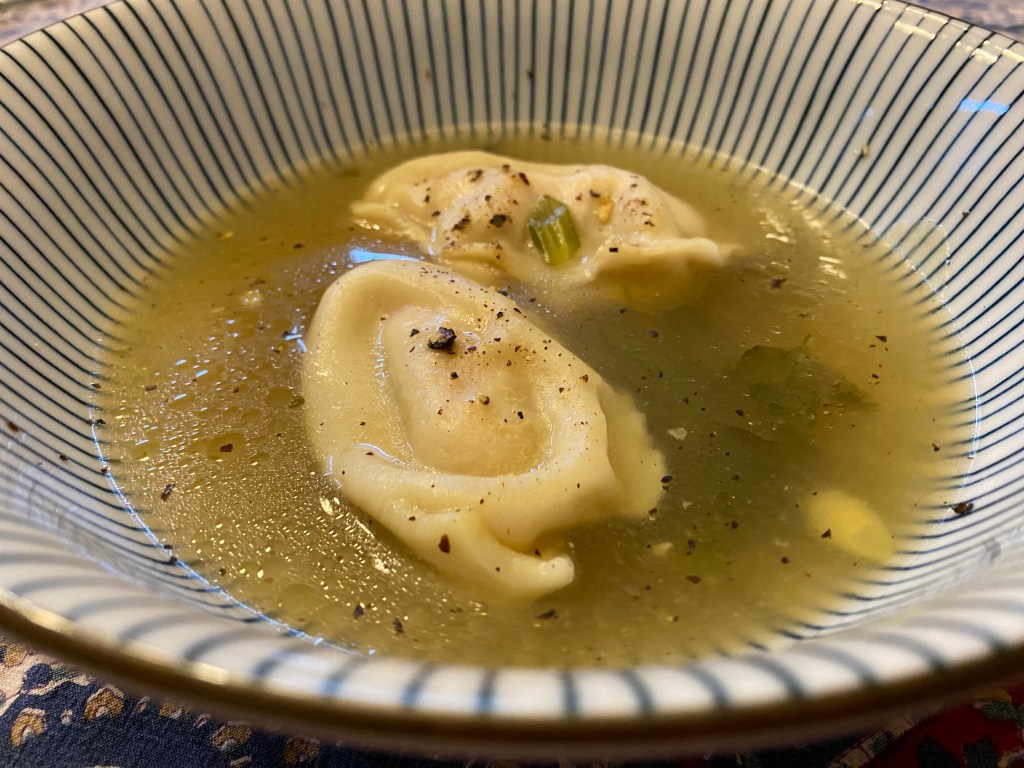
This post is more of a shortcut method than an actual recipe.
We made a simple lunch from frozen dumplings (purchased from a local dumpling shop). For the broth, we combined 6 cups water, about 1 Tbsp Better Than Bouillon chicken flavor, 1 Tbsp yondu seasoning (Korean vegetarian liquid seasoning), and 1 Tbsp Korean soup soy sauce. Once it came to a boil, we added 1 chopped scallion, 2 Tbsp coriander leaves (frozen from fresh), and 1/4 tsp ground black pepper. Then we added 8 frozen dumplings (we used standard sized pork and napa), brought again to a rolling boil, and then covered, lowered to medium heat, and simmered at that temperature for 12 mins. This was a quick and tasty meal. (Dec. 2022)
-
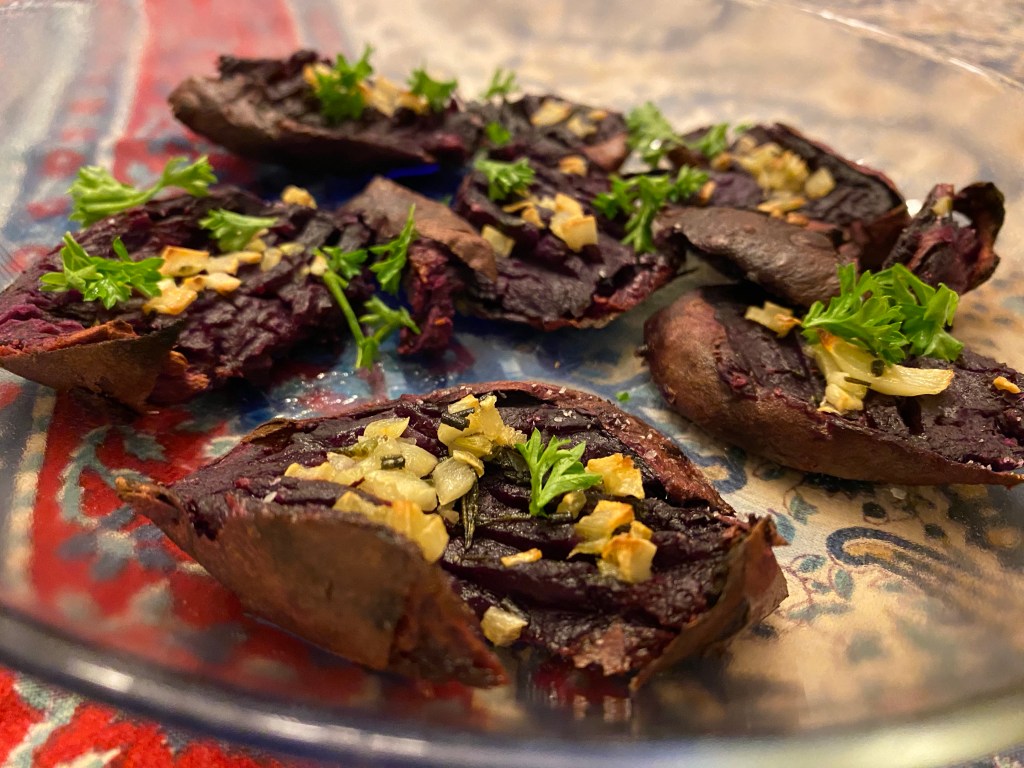
We had roasted some purple sweet potatoes (recipe here: ) yesterday, and we cut them into 1.5″ penny slices. We had slices from 1 tuber leftover, so we tried this recipe: https://www.runningtothekitchen.com/roasted-purple-sweet-potatoes/
Our modifications: first, we used the roasted sweet potatoes instead of boiling them. Second, we halved the seasoning (melted ghee, rosemary, garlic), which we evenly distributed on the slices. We seasoned lightly with salt. Third, we preheated the oven to 450 and then roasted for about 5 mins (by this point, the top was crispy). Fourth, we turned the broiler onto low, placed on the top row, and let brown for about 2-3 mins. This was very tasty. (Dec. 2022)
-
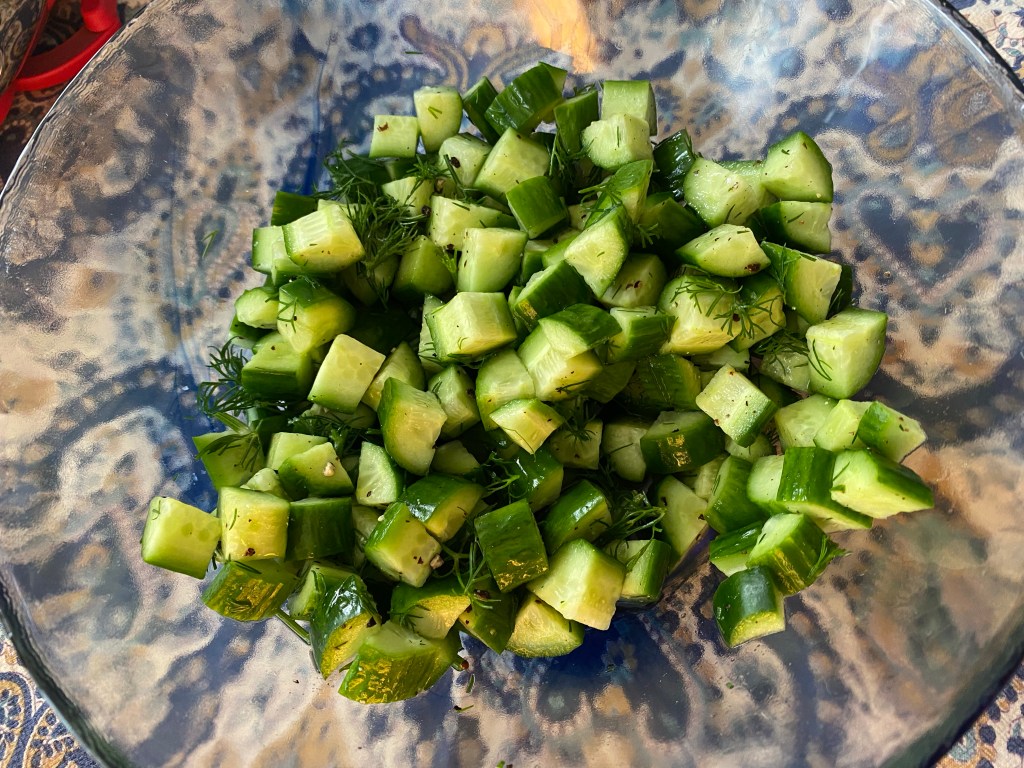
We recently hosted a brunch featuring heavily seasoned dishes (kedgeree and Jamaican jerk chicken). We wanted a refreshing, minimally seasoned healthy side dish to complement these flavors, so we made this: https://www.simplyrecipes.com/recipes/cucumber_salad/. We used 6 Persian cucumbers (diced, skin on), 2 Tbsp chopped fresh dill, 3 Tbsp Marukan rice vinegar (green label), and a dash each salt, sugar, and black pepper. We enjoyed this dish a great deal. (Dec. 2022)
-
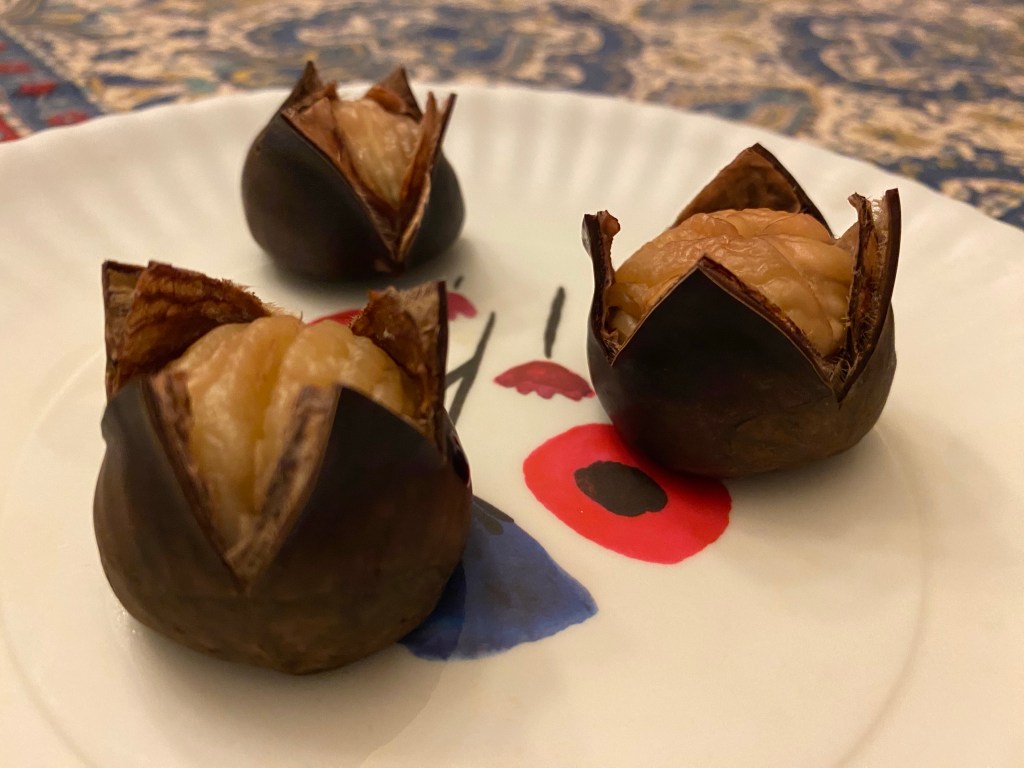
I grew up eating chestnuts, but it’s been years since I have made them at home. We tried this recipe: https://foolproofliving.com/boiled-chestnuts/ (Dec. 2022)
-
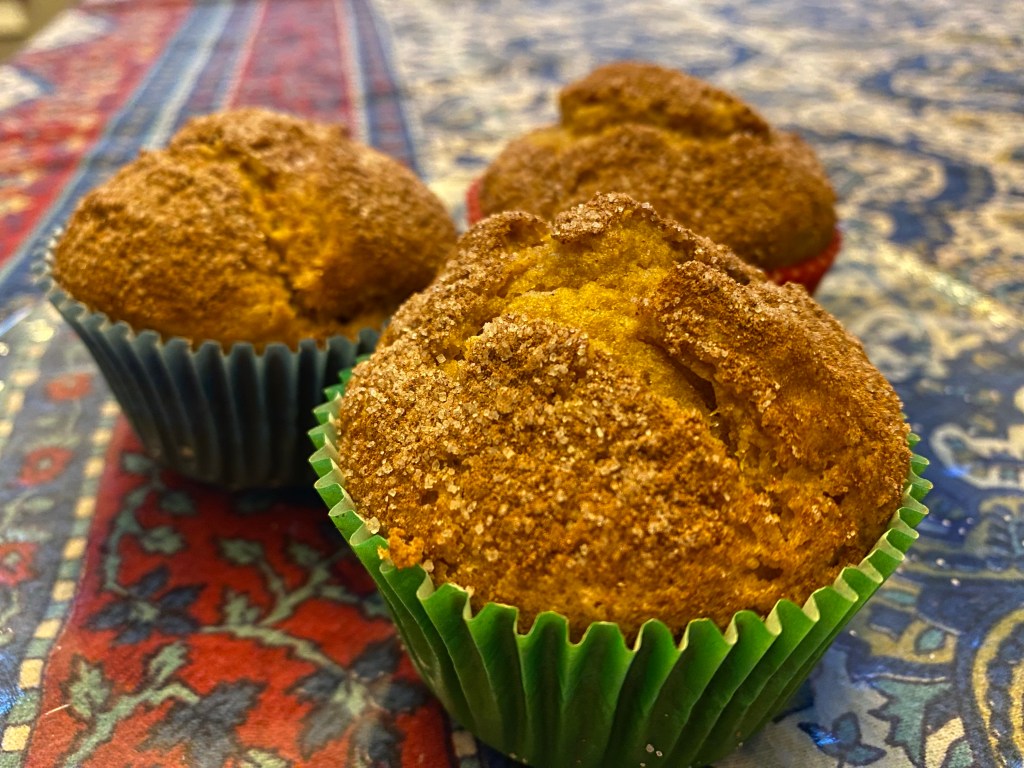
We were in search of a pumpkin bread recipe that utilizes a full can (15 oz) of pumpkin puree. We tried this recipe, but made it into 20 muffins: https://smittenkitchen.com/2016/10/pumpkin-bread/
Our modifications: first, we reduced the sugar in the batter to 1 and 1/3 cup (from 1 and 2/3 cup). Second, we doubled the cinnamon sugar topping to 2 Tbsp sugar and 2 tsp cinnamon. This was very tasty. The next time, we may add 1/2 cup chopped walnuts to the batter for texture. (Nov. 2022)
-
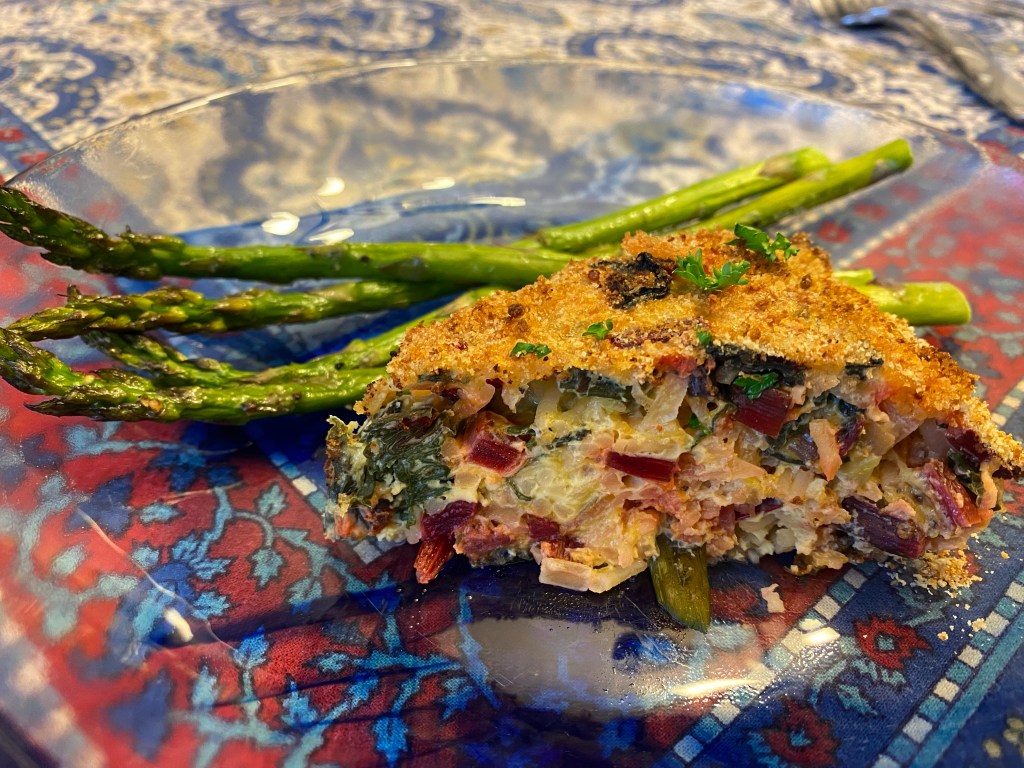
To make use of a bounty of fresh beet greens, we made this NYT recipe: https://cooking.nytimes.com/recipes/1014672-beet-greens-and-rice-gratin?smid=ck-recipe-iOS-share
We used about 4 cups of beet stems (diced) and leaves (julienned), which we had thoroughly cleaned (several rinses of water) and dried. Our modifications: first, we did not blanch the beet greens separately. Second, we substituted 2 small diced shallots + 2 chopped scallions for the 1 medium onion called for in the recipe. Third, we added about 1 oz cured bacon (cut into matchsticks), which we sauteed on medium-high heat in 1 Tbsp unsalted butter in a large nonstick pan. We lowered the heat to medium, then added the shallots/scallions, one minute later the minced garlic, and finally 30 seconds later the beet greens and thyme (leaves only), sauteeing for about 2-3 mins before removing from the burner to cool slightly. Fourth, we found 1 cup cooked basmati rice sufficient for the egg mixture (3 eggs + 1/2 cup milk). Fifth, for the cheeses, we followed the instructions for 1/2 cup gruyere (which we finely shredded) and 2 Tbsp shredded parmesan. Finally, we topped with slightly more than 1/4 cup unseasoned breadcrumbs. After baking at 375 for about 38 mins, we let cool slightly while we roasted some asparagus as a side dish (https://piglettedc.wordpress.com/2015/03/24/oven-roasted-asparagus-preheat-oven-to-400/). Just before serving, we broiled the top of the casserole on high for about 2 mins. (Nov. 2022)
Note: Although we added bacon to our version, this NYT recipe is vegetarian.
-
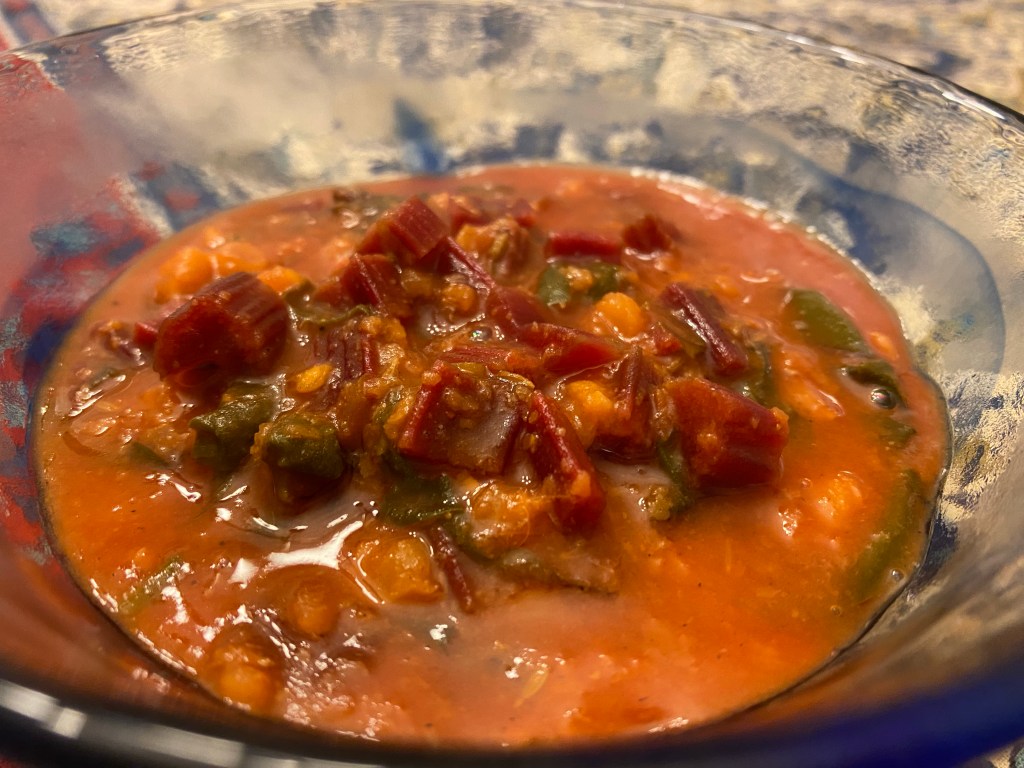
We had a few bunches of fresh beet greens leftover from making a beet (root) recipe for Thanksgiving. We decided to try this recipe: https://www.spiceupthecurry.com/beet-greens-dal/ For the moong dal, we used 1/2 cup split yellow peas. We found this recipe decent, but not outstanding. The beet greens involved multiple rinses of water to flush out sand, so this recipe was quite involved – and not worth the effort. (Nov. 2022)
-
Subscribe
Subscribed
Have a WordPress.com account? Log in now.

