-
I cook as a hobby, and I maintain this blog primarily to keep track of recipes that my family has enjoyed over the years. I started blogging back in 2015, in response to requests from friends for recipes they had seen me post on Facebook (but that I couldn’t easily catalog). My original blog was on another platform that became less user-friendly over time. I migrated my blog to WordPress earlier this year, and I’ve spent more time than expected reformatting the migrated posts.
This blog is and always will be a work in progress. For example, I currently provide Tags for posts, but I have not coded for Categories. I also generally try to share the recipes themselves in my posts, but in cases where the recipe is not available online, I try to identify the source (e.g., the cookbook title and author) as needed. In some cases, such as where a family has shared their recipe with me but hasn’t authorized me to share it widely, I post a photo of the dish with that proviso.
I recently added a Search widget to this blog. On the desktop version, the Search bar appears prominently on the left hand side. But for some reason, it is hidden on the mobile app. If you’re on your phone, tap on the SHOW tab at the top left of the home page. That will reveal another screen with the Search bar.
I hope you enjoy exploring my blog and find some recipes to try.
-
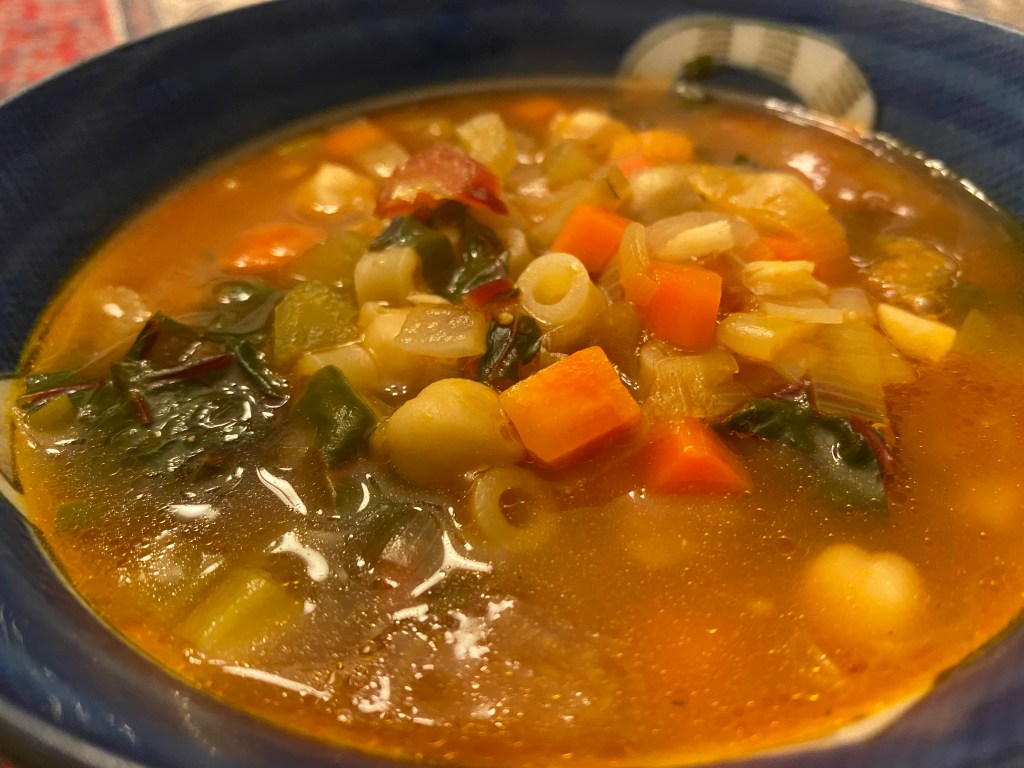
We had a craving for a plant-forward soup with Swiss chard, and we tried this recipe: https://cooking.nytimes.com/recipes/1013539-swiss-chard-and-chickpea-minestrone?smid=ck-recipe-iOS-share The parmesan rind is essential. For the 1/2 cup of soup pasta, we used ditalini.
Our minor modifications: first, we did not de-stem the chard; we love its crunchy texture and tartness. Instead, we used slightly more than half of a bunch of chard (stem and leaf), trimmed and sliced into chiffonade (see Note below). Second, the recipe is vegetarian, but we used 7 cups chicken broth (4 cups no salt, 3 cups hot water seasoned with 1 Tbsp Better Than Bouillon) instead of water. (Oct. 2022)
Note: If you are including the stem (as we did), we recommend not using an entire bunch of kale for the soup. Otherwise, the liquid to vegetable ratio will be off, and you’ll be stuck with too little liquid.
-
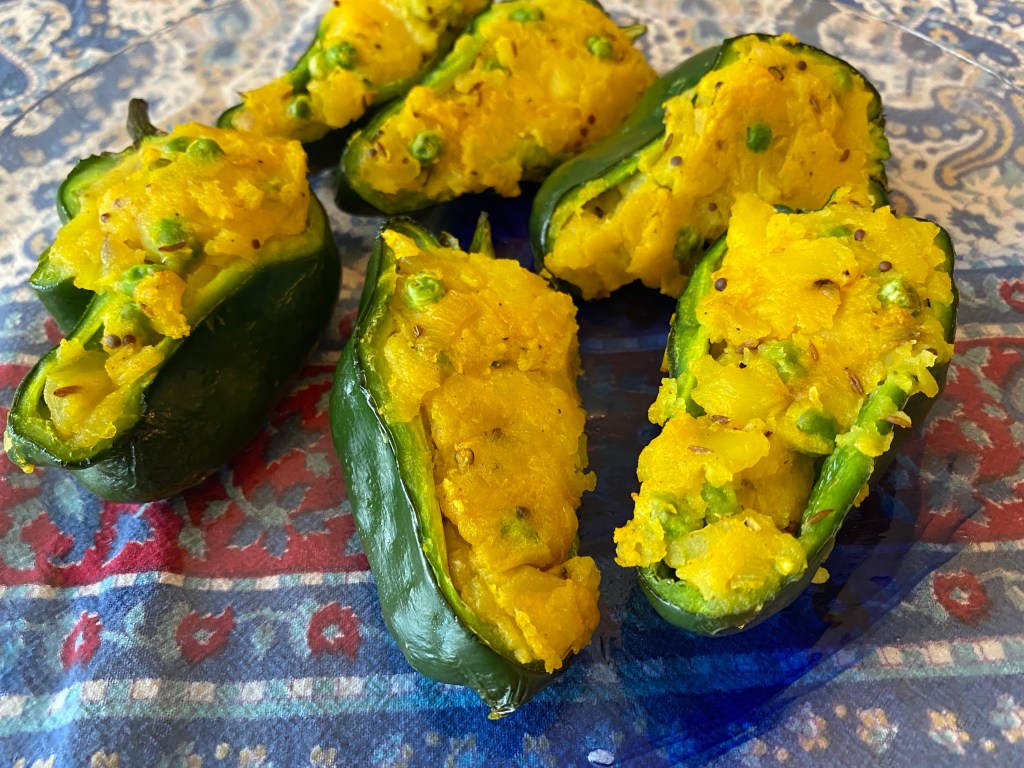
We received three homegrown poblanos and loosely followed this creative recipe: https://www.acouplecooks.com/samosa-stuffed-poblano-peppers/ We halved the recipe amounts but still had ample filling for three petite poblanos and 1 small bell pepper.
We made significant modifications for our 1/2 recipe: first, for the potato, we used 5 small-medium yukons (about 3/4 lb), peeled, quartered, and boiled until fork tender (about 10 mins). Second, instead of the specific aromatics recommended in the recipe, we used: 1/2 tsp cumin seeds + 1/2 tsp black mustard seeds, which we sauteed in 1 Tbsp heated ghee (so our version is vegetarian, not vegan). Then for the next step, we used: 1 small minced shallot, 2 tsp microplaned ginger, 1 Thai bird’s eye chili (minced), 1/4 tsp turmeric, and 1/4 tsp sweet paprika. For the peas, we used 3/4 cup frozen. We added juice from 1/4 of a lemon. Finally, based on other stuffed vegetable dishes we make, we increased the oven temp to 400 (from 375). We baked with foil on for 10 mins, then removed foil and baked another 15 mins. (Oct. 2022)
-
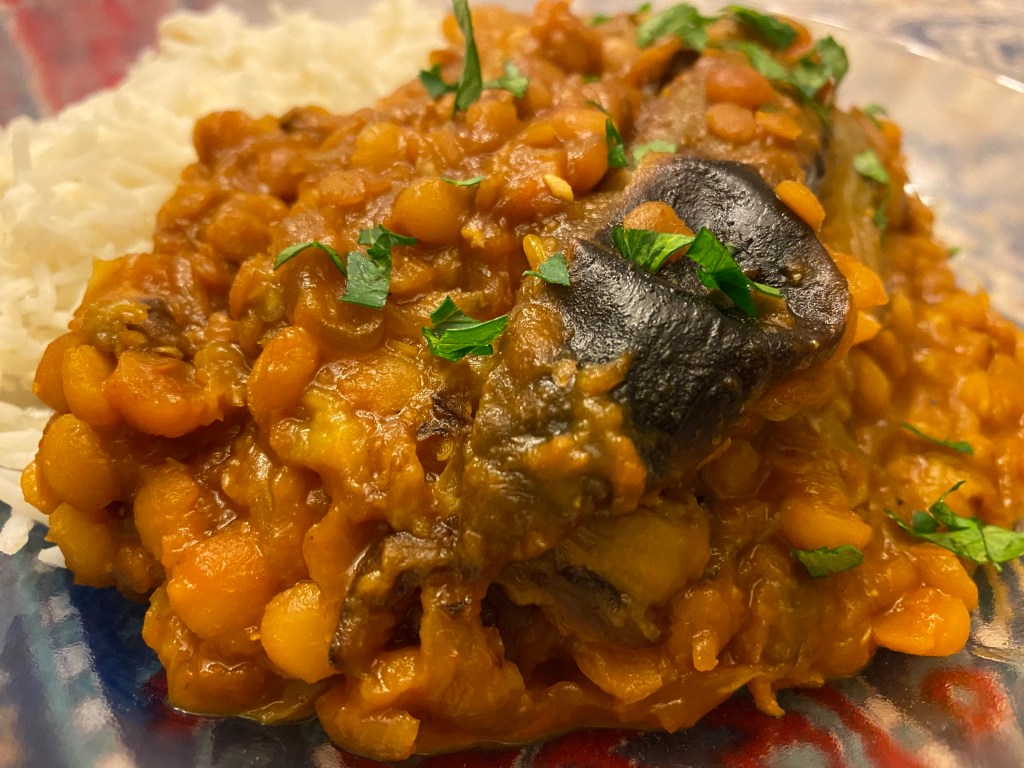
We were searching for a plant-forward version of one of our favorite Persian stews, khoresh gheymeh (beef and split yellow pea stew), and we tried this vegetarian dish: https://persianmama.com/vegetarian-khoresh-bademjan/. First, we couldn’t find Italian or Japanese eggplant, so we used two medium globe eggplants. We followed the author’s instructions on baking eggplant: https://persianmama.com/baked-eggplant/ We peeled our two globe eggplant, cut into vertical halves, and then cut into 1″ thick slices. Instead of tossing the eggplant pieces in oil in a large mixing bowl, we poured a light layer of canola oil into a rimmed half-sheet. Similar to prepping French toast, we swiftly dipped one side of each eggplant slice, and then the other, in oil before placing on a foil-lined, rimmed full-size sheet pan. We roasted at 450 (on two sheet pans) and then broiled for 2 mins.
Second, due to our pantry, we used 2/3 cup split yellow peas and 1/3 cup split pigeon peas (toor dal). Because they were different size legumes, we boiled them in separate small pots (the pigeon peas became tender about 5 mins sooner than the yellow peas).
Third, for the orange juice, we used four navel oranges and yielded slightly less than 1 cup (we supplemented with juice from half a lemon). For the 1/2 cup of lemon juice, we needed 2 lemons plus 1 lime. So if you want to make this recipe, we recommend keeping extra oranges and lemons on hand. (But see Note below.)
Fourth, for the pomegranate concentrate, we used 2.5 Tbsp Sadaf pomegranate molasses. At the end of cooking, we found the stew a bit too concentrated and acidic, so we stirred in 1/4 cup chicken broth (but you can use vegetable broth to keep this recipe vegetarian) and added a dash of salt and sugar for balance. The next time, after adding the citrus juice and water, we will simmer at very low (not a low-medium simmer.
Finally, we skipped the seasoned rice and served the stew with plain basmati rice. (This means we left all of the fried onion as part of the stew.) This stew was delicious and satisfying, and reminiscent of the khoresh gheymeh we loved so much. (Oct. 2022)
Note: Although delicious overall, this recipe’s citrus notes were overpowering. The next time we may use 4 dried Persian limes plus 1.5 cups broth instead of 1 cup orange juice and 1/2 cup lemon/lime juice. (Oct. 2022)
-
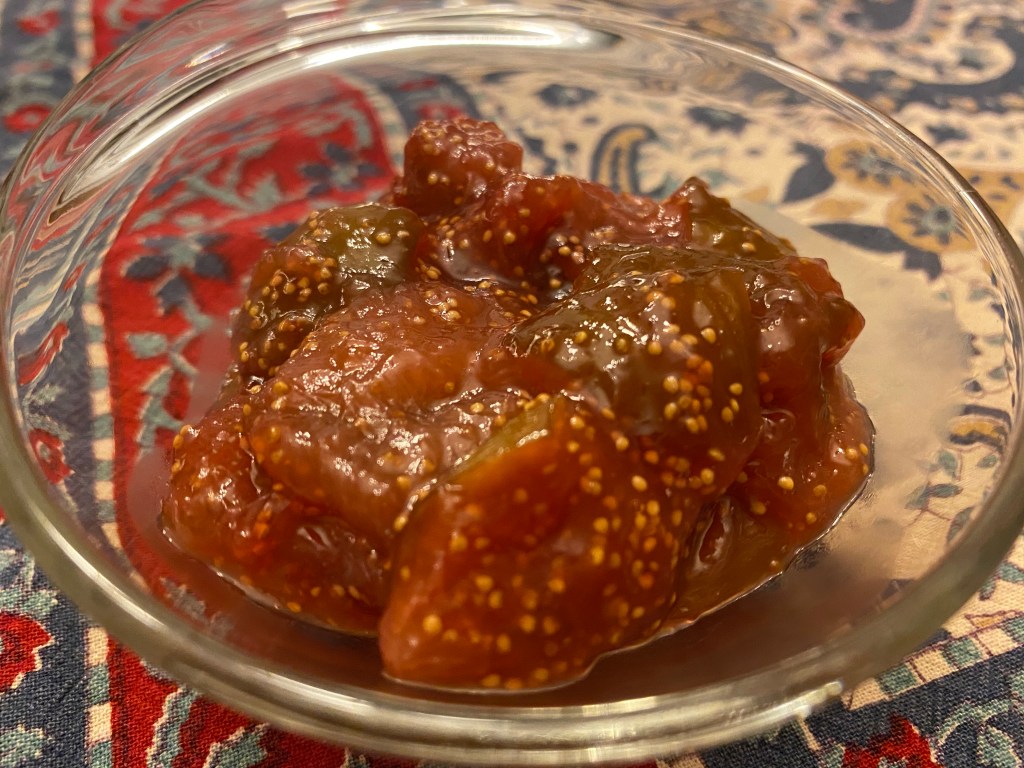
We had about 16 fresh figs left from our friends’ harvest, so we tried this recipe: https://goodiegodmother.com/fresh-fig-freezer-jam/ We used 1/3 c honey as the sweetener. We also found that we needed to simmer the mixture longer (about 45 mins) to reduce to the right texture. (Sept. 2022)
-
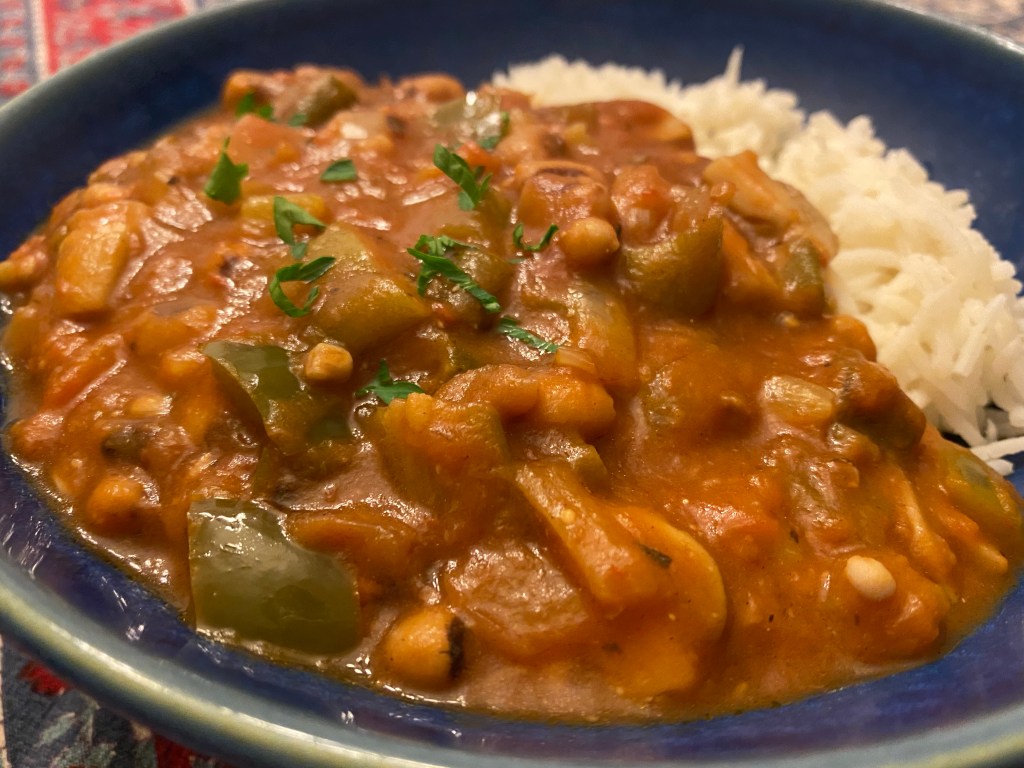
We were searching for a plant-forward gumbo, so we tried this recipe: https://www.cilantroandcitronella.com/vegan-gumbo/
Our modifications: first, for the vegetables we used 8 oz cremini mushrooms (slightly more than 10 mushrooms) and 2 cups frozen chopped okra. We briefly sauteed the mushrooms (for 3 mins) before adding the crushed tomato (we used a 15 oz can), spices, and broth. For the spices, we reduced the cayenne to 1/4 tsp. We found 2.5 cups broth more than sufficient, and we may even try reducing to 2 cups in the future. Second, for the beans we used a 15 oz can of seasoned black-eyed peas, which we rinsed and drained (see Note). Third, we used chicken broth instead of vegetable stock. Finally, we reduced the dark miso (we used Korean soybean paste, or doenjang) to 1/2 Tbsp (from 1 Tbsp) and supplemented with 1/2 Tbsp Worchestershire sauce. So our version is not vegetarian, but the original recipe is. (Sept. 2022)
Note: We recently discovered these seasoned beans, which have proven to be excellent shortcuts: https://gloryfoods.com/products/peas-and-beans/simply-seasoned-blackeye-peas/ To reduce sodium, we choose to thoroughly rinse and drain them prior to use.
-
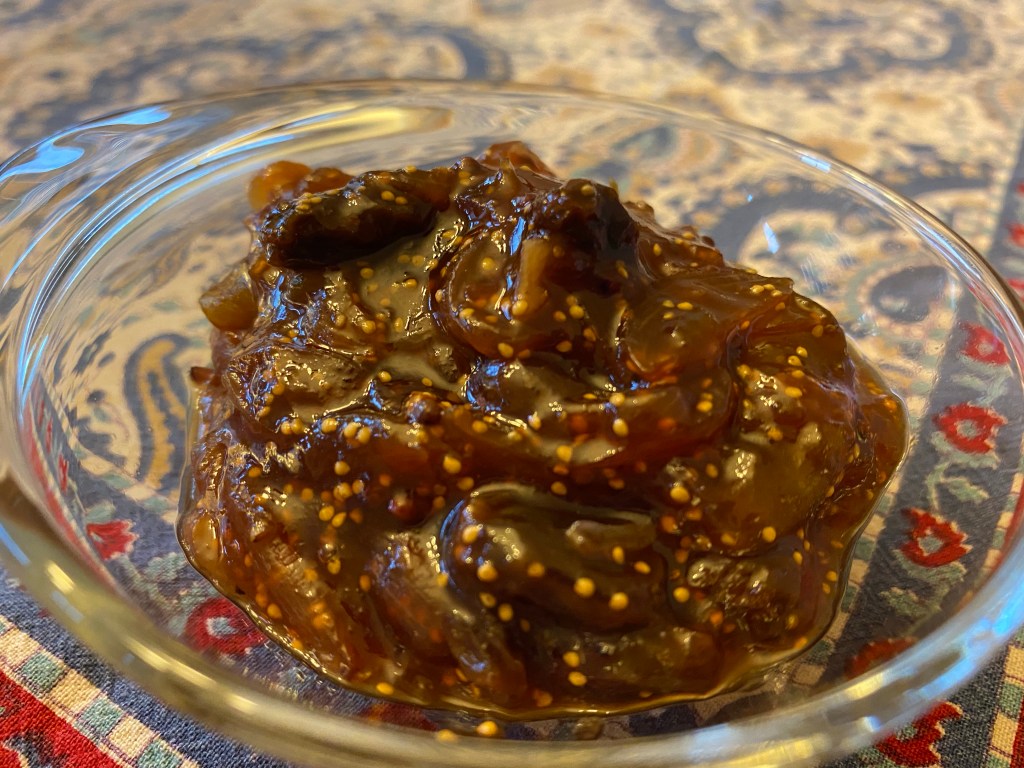
Our good friends Steve and Andrea generously gave us about 4 lb of figs harvested from their fig tree. We tried this chutney-like recipe: https://pastrychefonline.com/savory-fig-jam/ In terms of proportions, we used: 3 dry cups fresh, ripe green figs (see Note); 6 palm sugar lumps (called “small cubes” even though they are shaped like half-globes), and 2 tsp black mustard seeds.
Our modifications: first, we did not have a sweet or fruity hot sauce, so we added fruity flavors via fruit-infused balsamic vinegars (instead of plain balsamic vinegar): 1 Tbsp cherry balsamic plus 2 Tbsp Gravenstein apple white balsamic. For the hot sauce, we used 2 Tbsp Cholula hot sauce. Second, we used 2 tsp fish sauce per the recipe, so this jam is not vegetarian. The flavors are complex, layered, and delicious. (Sept. 2022)
Note: We are not sure which variety of green fig we used. Our best guess is Brown Turkey or Kadota: https://homesteadandchill.com/fig-tree-varieties/.
-
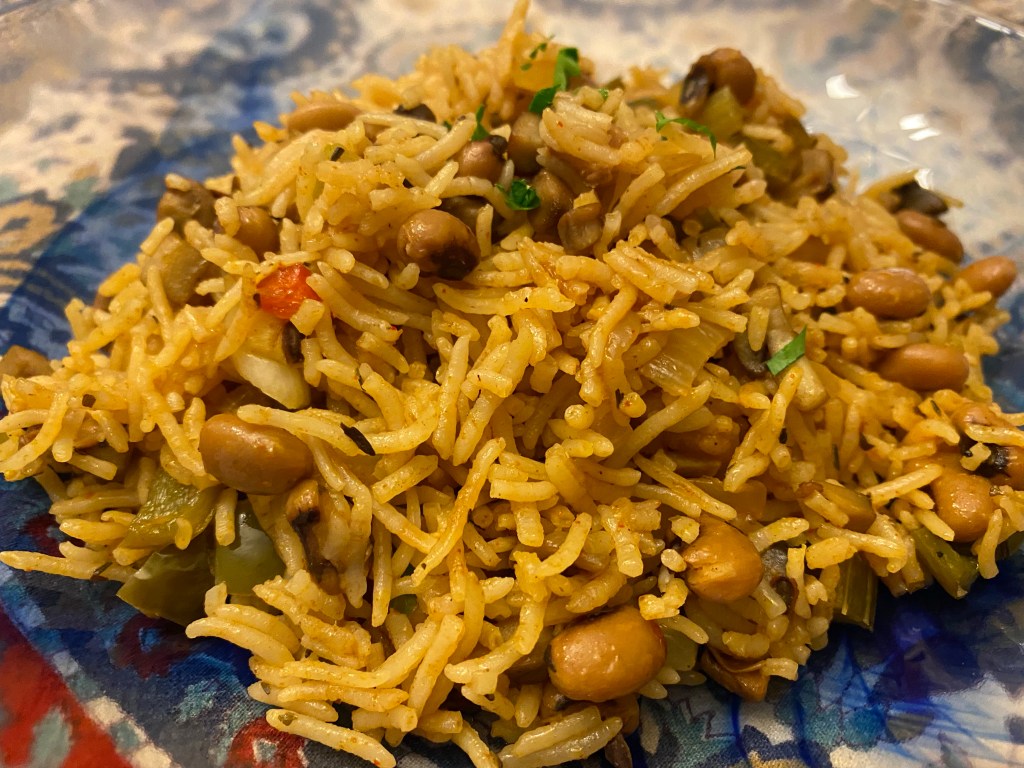
We had a craving for creole cuisine and decided to try this plant-forward take on dirty rice: https://savorandsage.com/mushroom-dirty-rice/ It reminded us a bit of Ghanaian jollof rice.
Our modifications: first, to add more texture, we halved the mushroom amount and supplemented with black-eyed peas. We used 8 oz (1/2 lb cremini mushrooms), trimmed and roughly chopped, which we sauteed in 1 Tbsp unsalted butter on high heat in a sauteuse (see Note 1 below). As the mushrooms cooked, they released liquid (which we sopped up with paper towels) and then started to brown. Second, after removing the browned mushrooms from the pan, we then heated 1 Tbsp unsalted butter plus 2 Tbsp olive oil before adding the diced onion, celery, and bell pepper. Instead of 1/2 serrano pepper, we used 1/2 red jalapeño. Second, we used basmati rice. Third, at the same step where we added the seasonings, white miso, Worchestershire sauce, and rice, we folded in 15 oz of canned, rinsed, and drained seasoned black-eyed peas (see Note 2) before adding the broth. We used no-salt chicken broth; even if you used vegetable broth, this recipe isn’t vegetarian due to the Worchestershire sauce. At the end of cooking, we added 1/2 tsp salt and 1/4 tsp sugar for balance. This dish tastes remarkably authentic and almost evokes a smoked meat flavor. (Sept. 2022)
Note 1: Our sauteuse is from Williams-Sonoma: https://www.williams-sonoma.com/products/williams-sonoma-thermoclad-stainless-steel-ultimate-pan/.
Note 2: We had hoped to use no-salt, canned black-eyed peas, but we stumbled upon Simply Seasoned Blackeye Peas by Glory Foods (15 oz can): https://gloryfoods.com/products/peas-and-beans/simply-seasoned-blackeye-peas/ Infused with smoky depth, these seasoned beans were a perfect complement to the dirty rice recipe. To reduce sodium, we thoroughly rinsed and then drained the seasoned peas before adding to the sauteuse. They were a lucky find and added another layer of flavor.
-
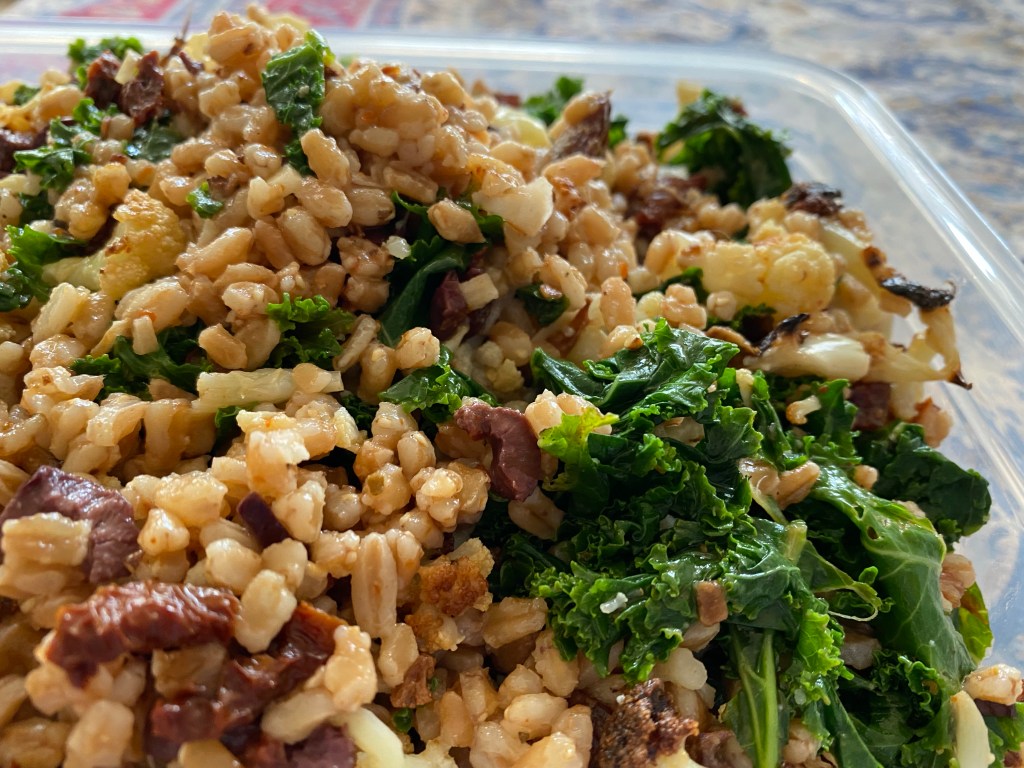
We wanted to make a hearty vegetarian dish for a potluck, so we tried this recipe from Cookie & Kate: https://cookieandkate.com/roasted-cauliflower-and-farro-salad-with-feta-and-avocado/ Our modifications: first, we omitted the feta. Second, instead of uncooked greens, we added about 2 cups of blanched kale (torn into bite-sized pieces prior to blanching, then rinsed in cold water and squeezed dry). Finally, we found the salad lacking pop, so we supplemented with a half a cup of finally diced medjool dates (pitted), 2 Tbsp red wine vinegar, 1/2 tsp sugar, and more olive oil (maybe 2-3 more Tbsp). We also seasoned with salt and black pepper to taste. We plan to add 2 Tbsp handtorn fresh herbs (spearmint and Thai basil) when we arrive at the potluck. (Sept. 2022)
Note: We prefer this recipe involving Israeli couscous and roasted cauliflower: https://piglettedc.wordpress.com/2022/09/18/roasted-cauliflower-and-farro-salad/
-
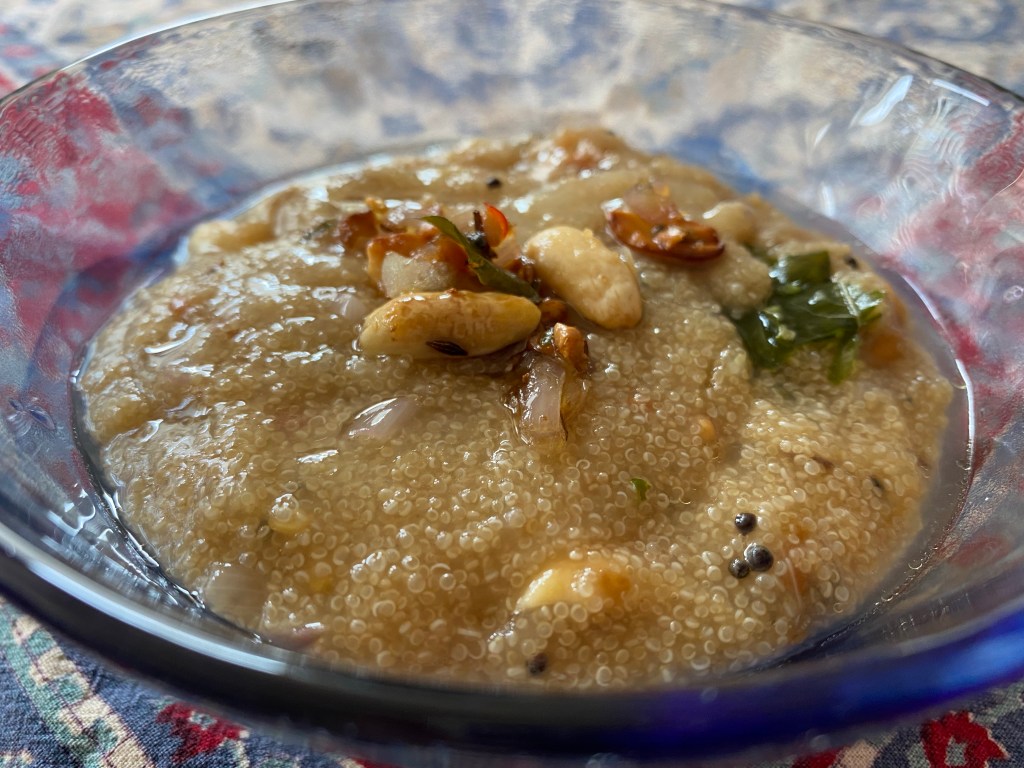
For weekend breakfasts, we routinely make amaranth porridge drizzled with maple syrup. However, one day after cooking the amaranth seeds (but prior to adding any seasonings), I craved a savory breakfast. We figured out how to make upma with the already-cooked amaranth.
First, follow this NYT recipe: https://cooking.nytimes.com/recipes/1014313-amaranth-porridge?smid=ck-recipe-iOS-share, which provides instructions for cooking 1/2 cup amaranth seed in water (we increase the amount to 1.5 cups plus 2 Tbsp water). After simmering for 30 mins, the yield will be about 1 1/2 cups of cooked amaranth. (With the additional 2 Tbsp of water, the consistency will be less viscous and more porridge-like.)
Second, while the amaranth is simmering, follow these instructions for upma aromatics (essentially, everything except for semolina): https://www.indianhealthyrecipes.com/upma-recipe-how-to-make-upma/ Our modifications: first, because my husband prefers sweet amaranth porridge, I typically make only a half-recipe of upma (thus, half the NYT amaranth recipe). Here are proportions: (1) heat 1 Tbsp ghee in a small pan, then add 1/4 tsp each mustard seeds and cumin seeds; (2) 1/2 tsp urad dal and 3/4 tsp split chickpea (chana) dal; 1 Tbsp peanuts (we use unsalted roasted Virginia peanuts, halved) and 4 raw cashews (halved, we use Swad brand); a small pinch of hing (asefoetida); 1 tsp ginger (we microplane frozen ginger root) and 1 Thai bird’s eye chili (finely diced); and 1 small shallot (diced). We often omit curry leaves based on our pantry. We then pour the contents of these hot oily aromatics into the amaranth pot (which contains only half of the NYT recipe), then mix gently. When serving, we added a squeeze of fresh lime juice. This was a simple shortcut recipe that yielded a delicious and satisfying breakfast. (Sept. 2022)
-
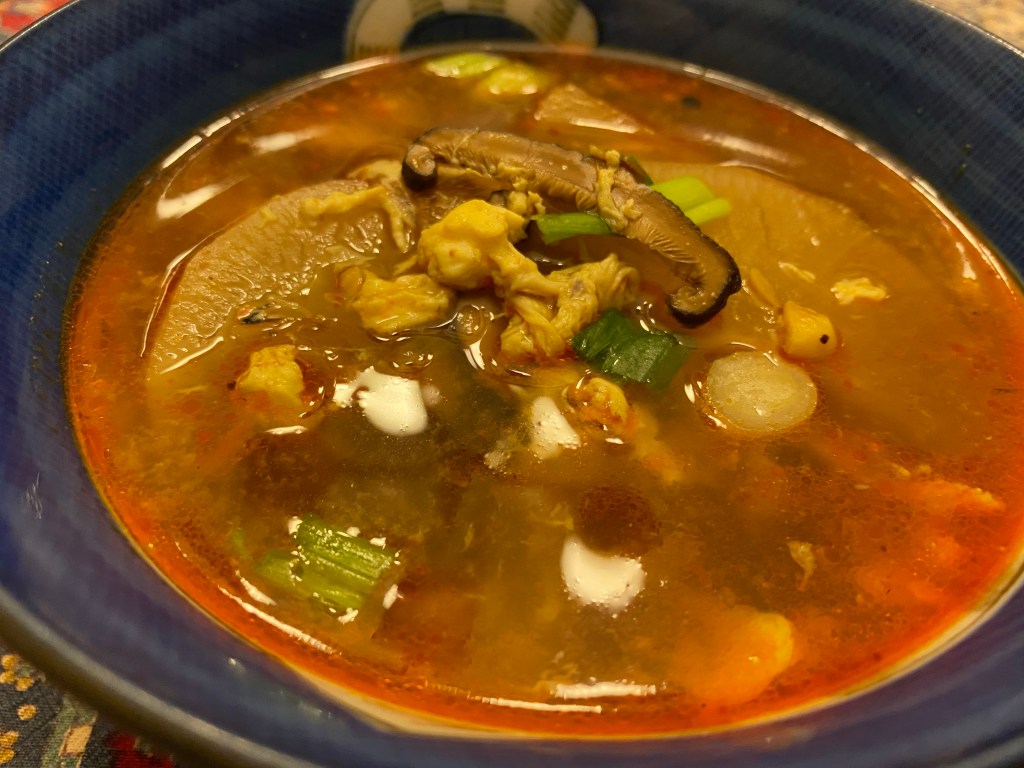
This is a plant-forward riff on a Korean spicy beef and daikon soup that had been a family favorite. You will need two pots for this recipe: one for the mushroom-kombu stock, and another for the soup.
First, in a medium soup pot, heat 10 cups of water with 10 dried shiitake mushrooms and an 8-9″ length piece of kombu. When it comes to a boil, remove the kombu and set aside (otherwise, the kombu may become slimy and affect the soup texture). (You will not need the cooked kombu for this recipe.) Reduce heat to low-medium, cover, and simmer the shiitakes for 20 mins. Remove the shiitakes, drain, and let cool for a few minutes.
Second, gently squeeze the reconstituted mushrooms (to remove excess liquid), discard stems, and julienne. Place the julienned shiitakes into a small mixing bowl, then add: 1 Tbsp Korean red pepper flakes, 1 Tbsp fish sauce, 2 Tbsp toasted sesame oil, ½ tsp salt, and 4-5 cloves minced garlic. Let marinate for about 5 mins.
Third, while the shiitakes are marinating, peel one large (about 1 ½ lb, but it can be up to 2 lb) Daikon radish and then cut into ½ inch thick penny slices (if the daikon is fairly narrow in diameter) or into half-moon slices (if the diameter is thick); as most Daikon are cone-shaped, I often cut penny slices along the bottom half and then half-moon slices for the upper half of the radish.
Fourth, heat a large Dutch oven on medium-high heat, and lightly coat the bottom with 1 Tbsp neutral oil, such as grapeseed or canola. Add the marinated shiitakes and sauté on medium heat until the shiitakes become somewhat crisp and lightly browned. Fold in the daikon slices, lightly coating them with the red-tinged oil. Pour in the mushroom-kombu broth, 1.5 Tbsp yondu sauce, and 1.5 Tbsp soup soy sauce. Bring to a vigorous boil for about 10 mins, and then cover and reduce heat to a medium-low simmer until the daikon is fully cooked (about 20 mins). Add 6 scallions, cut into 2-inch long straws (see Note below), and then simmer, uncovered, for another 5 mins.
Fifth, crack 4 eggs in a small mixing bowl. Gently mix with a fork, then drizzle into the simmering soup. Season the soup to taste with salt and black pepper.
Finally, chop 1 additional scallion and set aside. When ready to serve, garnish each serving with a sprinkle of chopped scallions. Serve with short-grain rice (we like Haiga, a type of brown rice that retains the rice germ but not the rice bran). (Sept. 2022)
Note: In lieu of scallions cut into straws, we have used 3 shallots, peeled and cut lengthwise. We then saute them in 1 Tbsp vegetable oil in the Fourth step, then add another tablespoon of oil prior to adding the marinated shiitakes .
-
Subscribe
Subscribed
Have a WordPress.com account? Log in now.

