-
I cook as a hobby, and I maintain this blog primarily to keep track of recipes that my family has enjoyed over the years. I started blogging back in 2015, in response to requests from friends for recipes they had seen me post on Facebook (but that I couldn’t easily catalog). My original blog was on another platform that became less user-friendly over time. I migrated my blog to WordPress earlier this year, and I’ve spent more time than expected reformatting the migrated posts.
This blog is and always will be a work in progress. For example, I currently provide Tags for posts, but I have not coded for Categories. I also generally try to share the recipes themselves in my posts, but in cases where the recipe is not available online, I try to identify the source (e.g., the cookbook title and author) as needed. In some cases, such as where a family has shared their recipe with me but hasn’t authorized me to share it widely, I post a photo of the dish with that proviso.
I recently added a Search widget to this blog. On the desktop version, the Search bar appears prominently on the left hand side. But for some reason, it is hidden on the mobile app. If you’re on your phone, tap on the SHOW tab at the top left of the home page. That will reveal another screen with the Search bar.
I hope you enjoy exploring my blog and find some recipes to try.
-
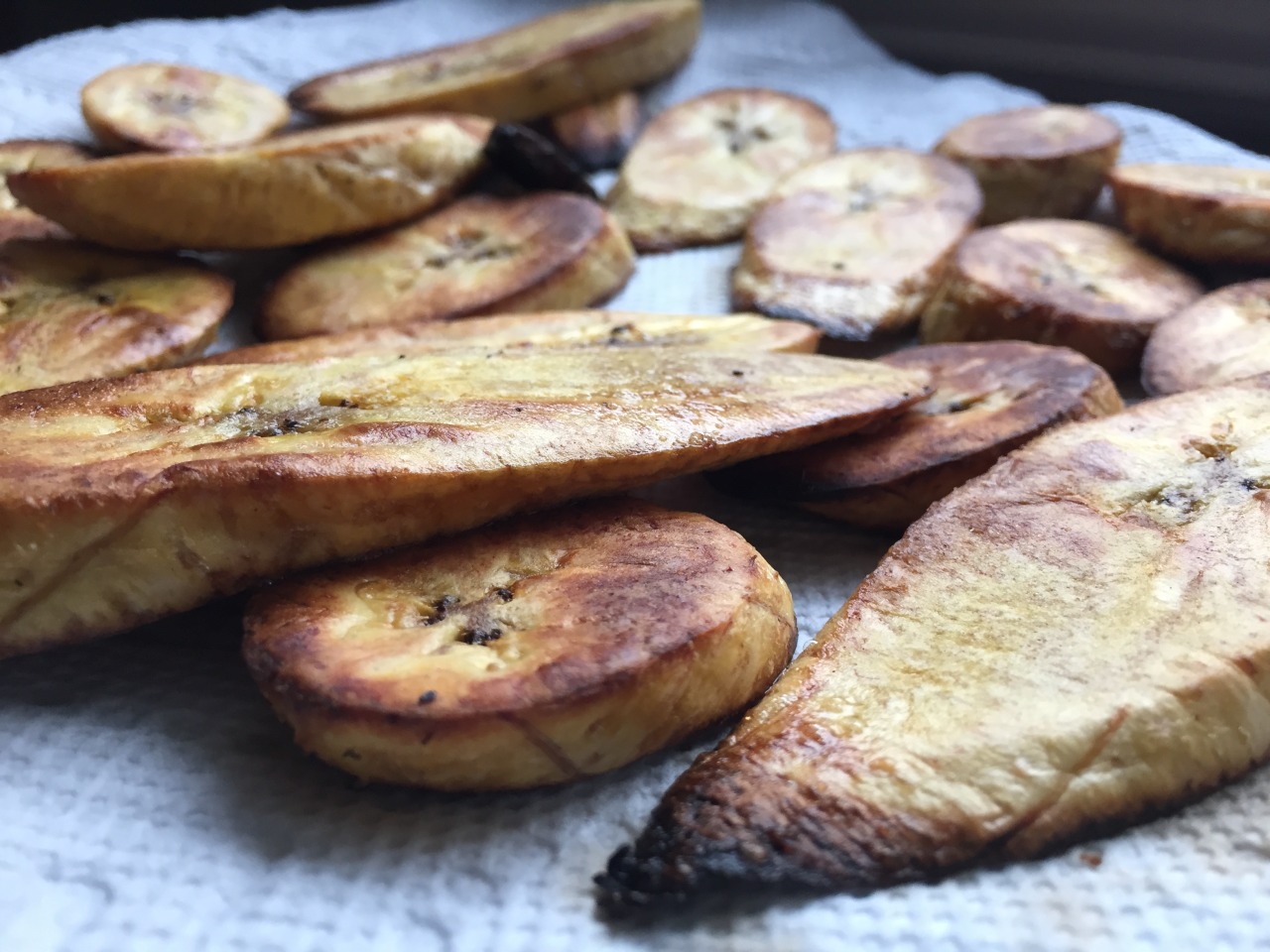
I got inspiration for this lighter alternative to fried plaintains from http://healthyeating.sfgate.com/healthily-cook-plantains-3827.html, except I coated the baking pan with some canola oil spray. Preheat oven to 450, then lightly spray a cookie sheet with canola oil. Place two plantains, cut on a ½ inch diagonal, on the cookie sheet, then lightly spray with canola oil. Bake in the middle rack for 15 mins, turning over midway so that both sides are browned. We used these oven-baked plantains as an accompaniment to Ghanaian red-red, which is posted separately here: http://piglettedc.tumblr.com/post/114578700191/ghanaian-black-eyed-pea-stew-with-fried-plantain (May 2015)
-
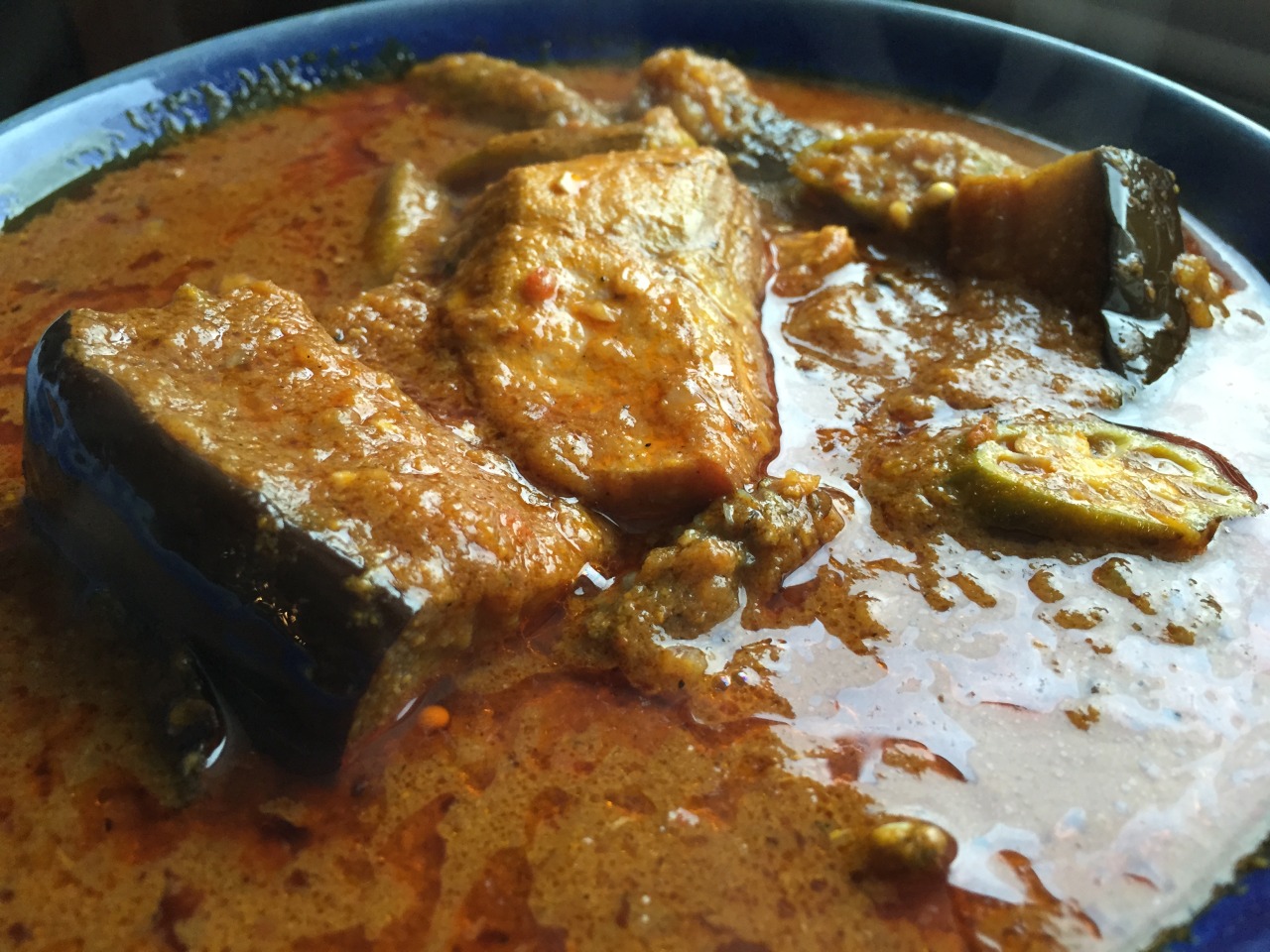
This recipe is a merger of a friend’s family recipe, The Africa News cookbook, and my own improvisation. First, cut 2 large eggplants into 1 x 2″ pieces, each with skin on. Place on a cookie sheet lightly sprayed with olive oil, then lightly spray each eggplant chunk with olive oil. Season lightly with salt and black pepper, then roast at 425 (possibly 450) until browned (about 15 mins, at midpoint tossing pieces to brown evenly) and set aside. You will need to do this twice, since the pieces of a single eggplant will fill a cookie sheet. In the mean time, puree the following ingredients (each of which should be roughly cut) together: 2 onions, 2 ripe medium tomatoes, 1 fresh or 2 frozen habanero peppers, 1 inch ginger (peeled), and 3 garlic cloves. Once pureed, add ¼ cup water and set aside. Second, place the broiled eggplant pieces in a large Dutch oven, then add 1 Tbsp creole seasoning, 1 tsp black pepper, 1 packet of onion soup mix, ½ tsp salt, and ¼ cup water. Stir to make sure eggplant is coated with the mixture, then cook on medium heat for 5 mins. Add the puree, then add ½ cup water. Bring to a boil, then cover and cook on medium (slow, rolling boil) for about 10 mins, stirring occasionally. While stew is simmering, heat a nonstick pan, spray with olive oil, then cook 1 lb salmon filet (skinless, boneless, and cut into 2 inch pieces) until browned on each side; lightly season with salt and black pepper. It’s OK if the center remains raw. Repeat process until all salmon pieces are browned on both sides, then add to the stew pot. Third, add 28.2 oz GhanaFresh palmnut cream concentrate, 28.2 oz water, 3 Tbsp tomato paste, and 2 cloves. Stir gently. When boiling, reduce to a simmer and add 1.5 lb okra (trimmed and cut on a diagonal, about 2 pieces per pod). Cover and let simmer until red palm oil rises to the top (about 20 mins). Season to taste with salt, if necessary. Serve with rice or kenkey. (May 2015)
-
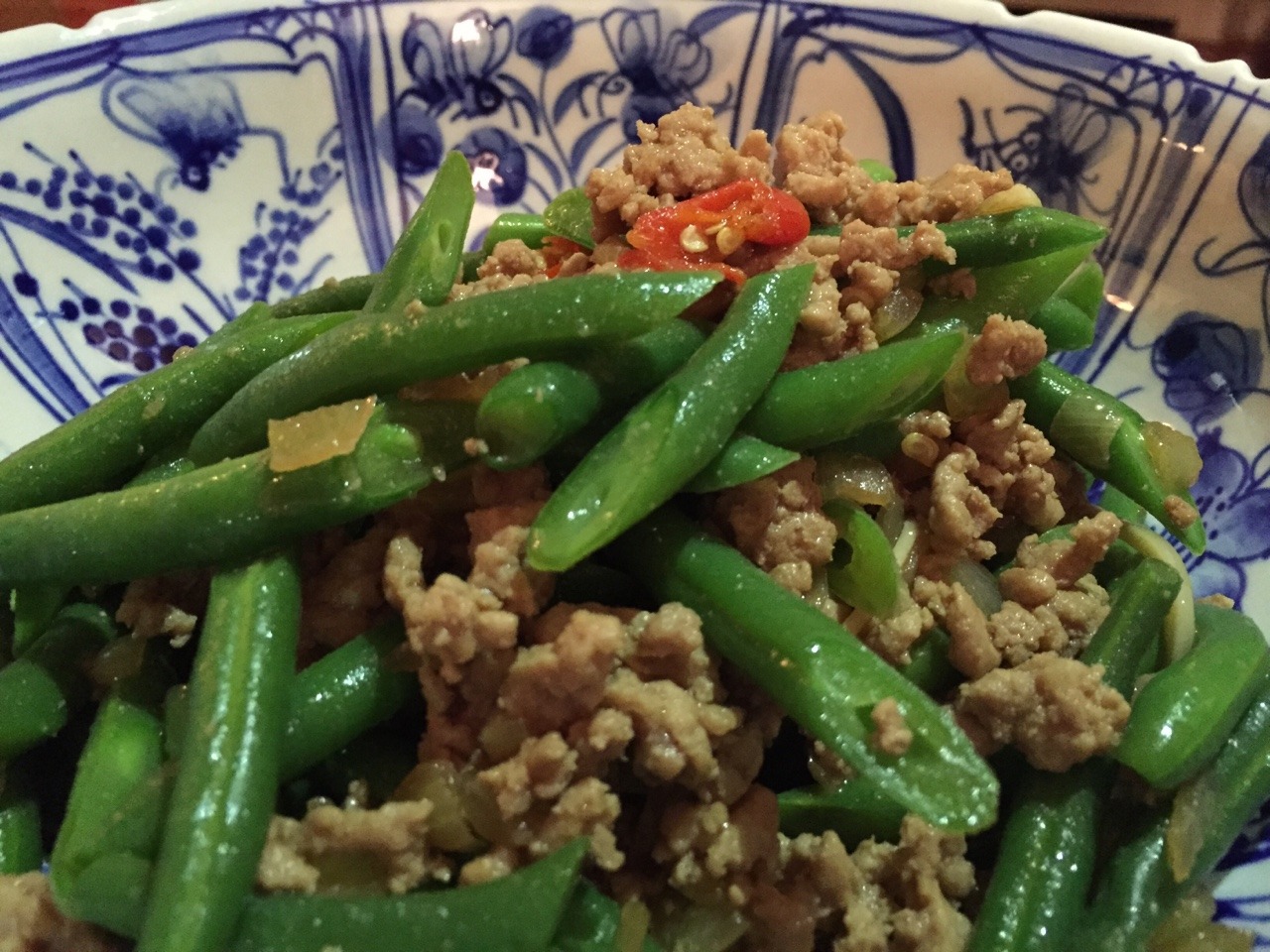
Recipe from Harumi’s Japanese Home Cooking: Simple, Elegant Recipes for Contemporary Tastes cookbook, available at: https://www.amazon.com/dp/1557885206/ref=cm_sw_r_sms_api_Kd9mxbMVKKNVD (May 2015)
-
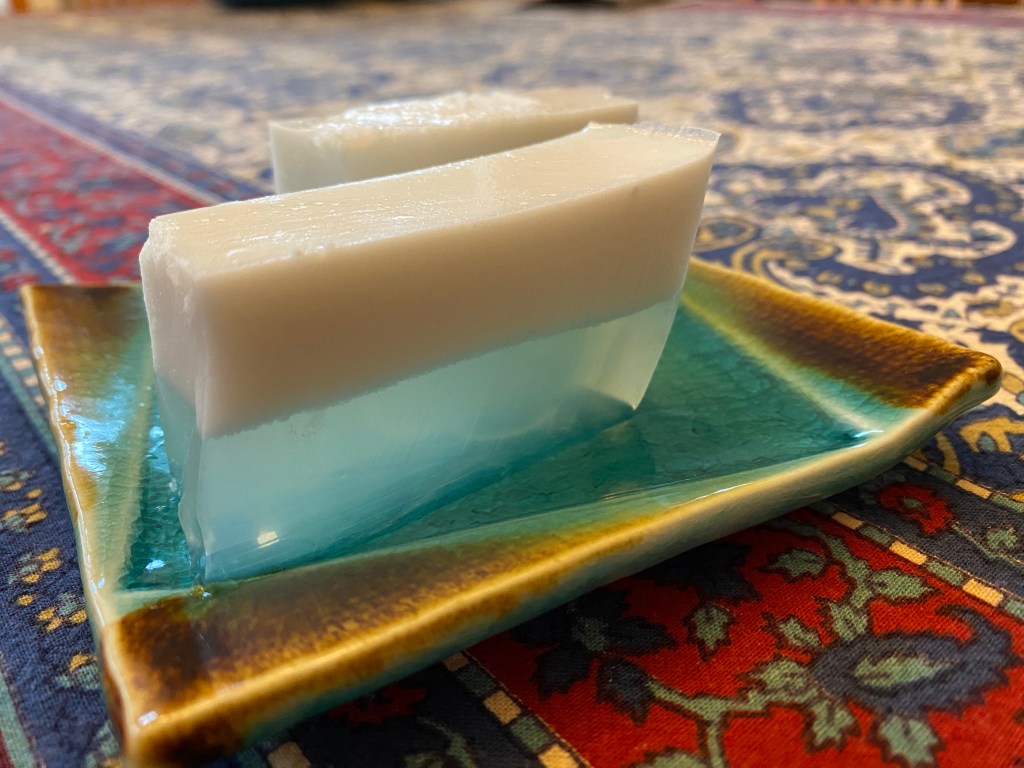
This is one of my favorite Burmese desserts, a firm gelatin made of only a few ingredients. My dear friend Juju shared this recipe. Using a medium sauce pan, combine 1 ½ Mugs (see Note 1 below) white sugar, 1 package (0.88 oz) Telephone brand agar powder, 1 tsp (or slightly less) salt, and 5 Mugs of water. Bring to a boil, then add 27 oz coconut milk (preferably two 13.5 oz cans Chaokoh brand ). Keep uncovered. Let simmer gently for 10-15 minutes, stirring to avoid clumps. Pour mixture into a 9×12 Pyrex baking dish with built-in handles (or alternatively, one 8×8 baking dish and another container for overage). Leave the filled baking dish uncovered on the counter for about 20 mins to cool (see Note 2 below), then refrigerate for a few hours until firm. To serve, cut into h’ors d’oeuvre sized pieces.
The coconut milk should rise to the top, leaving a nearly transparent agar layer on the bottom (see Note 2 below). The kyaw kya is firm enough to be served as finger food. (May 2015)
Note 1: According to Juju, 1 Mug = 10 oz, which is the volume of our Johnson & Wales blue coffee mug, leaving a 1/2″ from the top of the mug. (Sept. 2024)
Note 2: We found that this method increases the likelihood that the coconut milk will float to the top, resulting in two distinct layers. (Sept. 2024)
-
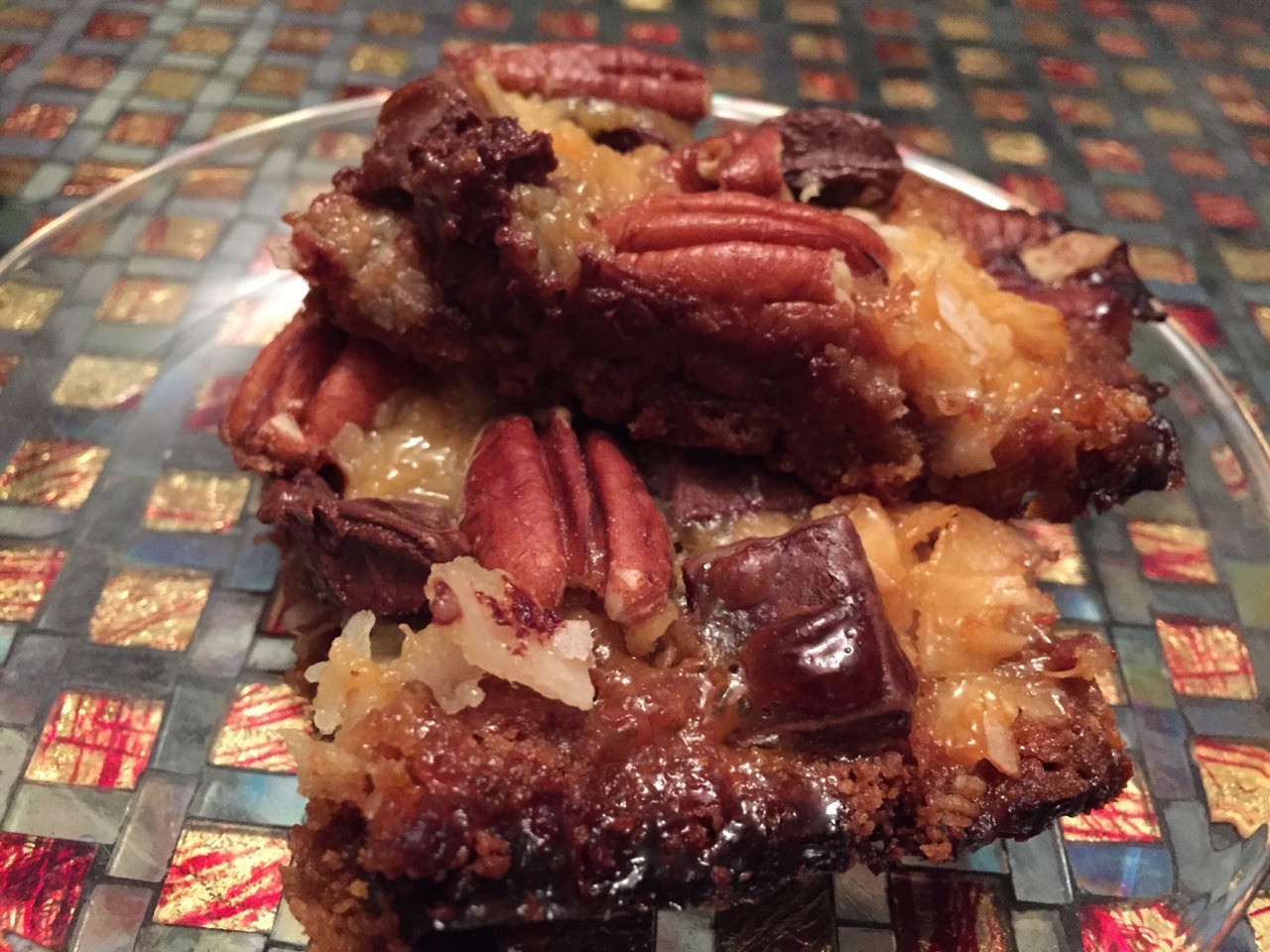
This is an upscale version of a childhood favorite. Recipe by Andrea Nguyen available here: http://www.vietworldkitchen.com/blog/2015/05/updated-magic-7-layer-cookie-bar-recipe.html#more Our modifications (not pictured): first, instead of a quarter sheet, we use a 9×13″ glass baking dish, the inside of which we brush with a neutral vegetable oil. After baking, we do not place this in the freezer (there isn’t enough room). Second, we often use Ghirardelli dark chocolate chips instead of chocolate chunks, reduce the sugar to 2 Tbsp, and reduce the salt to ¼-½ tsp. To avoid sticking, make sure to grease the baking dish well with a neutral oil or butter. (May 2015)
Note: During the pandemic, we tried this recipe with Guittard semi-sweet baking chips, which were flat, uneven disks that worked pretty well. (Aug. 2020).
Source: Andrea Nguyen, author and teacher, Vietworldkitchen.com.
-
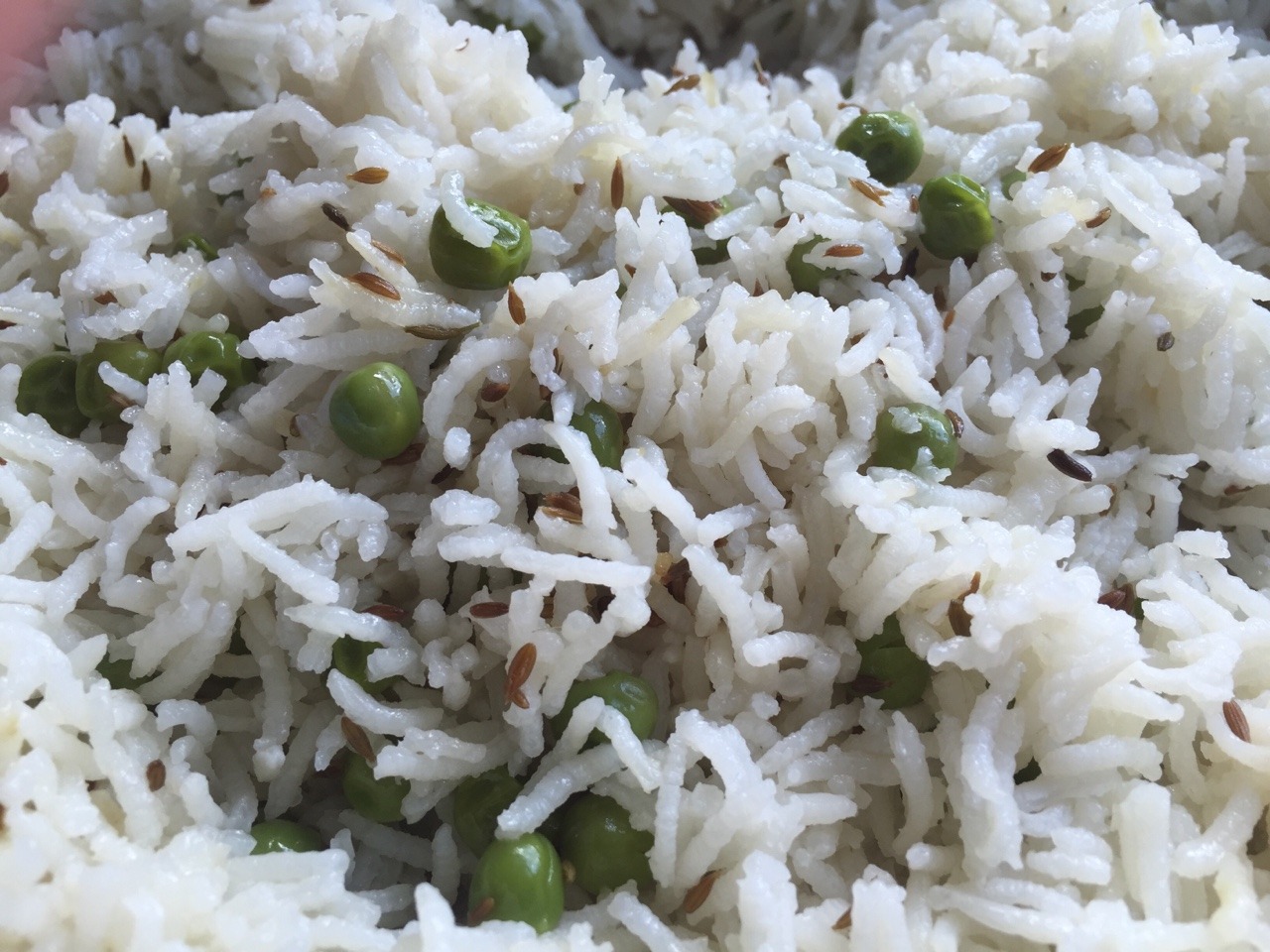
Rinse and drain 1 dry cup Basmati rice. Heat 2 Tbsp vegetable oil in a medium saucepan, then add 1 tsp cumin seeds. Let brown for about 10 seconds (do not burn), then add the rice and stir, coating the rice with the oil. Add 2 cups water, ½ tsp salt, and ½ cup frozen peas. Bring to a rolling boil, then cover and reduce to a simmer until water is completely absorbed (about 10-15 mins). Once you see dimples in the rice (indicating that all water is absorbed), turn off heat but let stand, covered, for an additional 5 mins. Recipe from Entice With Spice by Shubhra Ramineni. (May 2015)
-
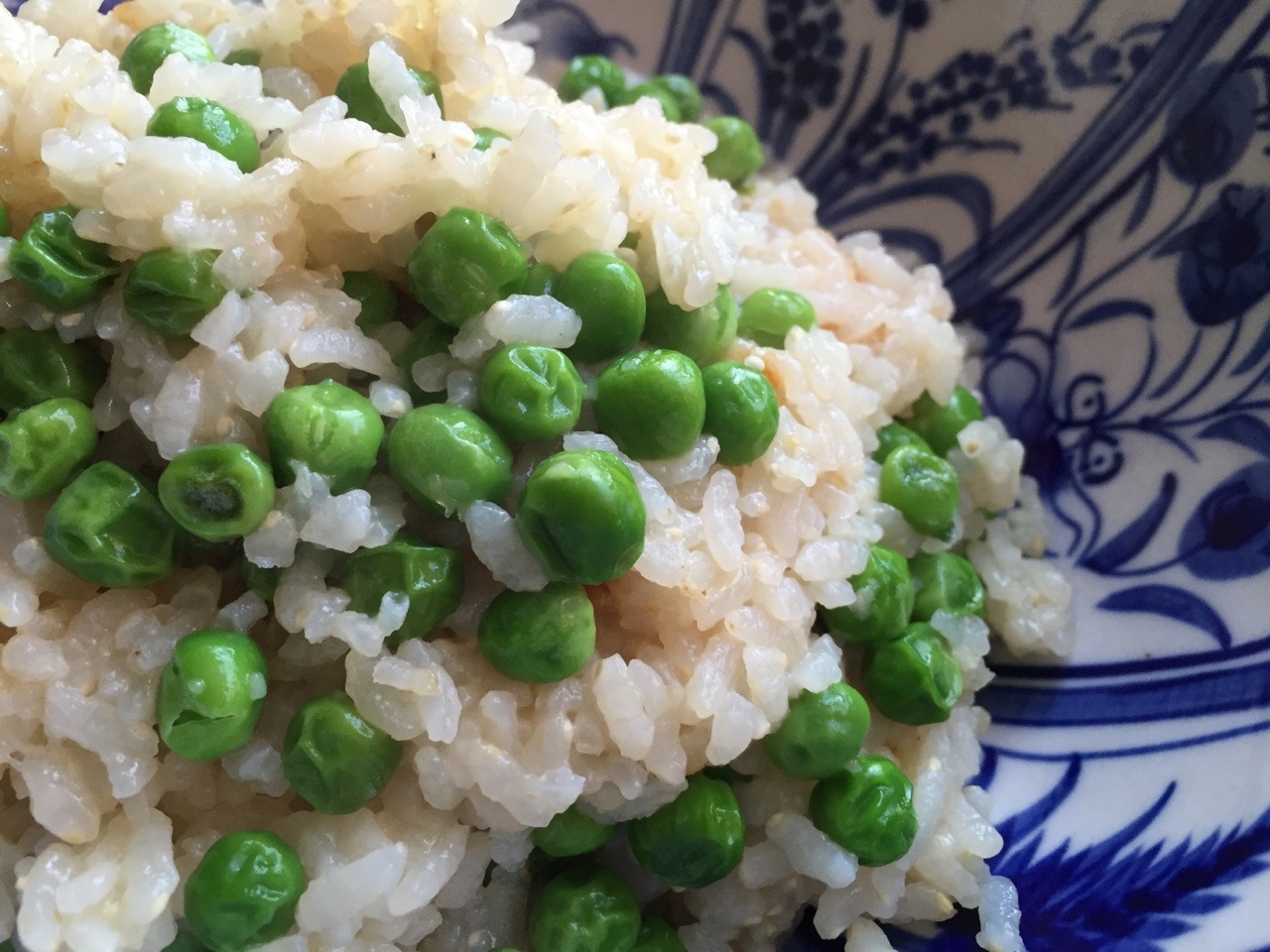
Rinse and drain 1½ dry cups uncooked Japanese medium grain or haiga rice for 30 mins, then add to the rice cooker inner pot. Cover with 1 ¾ cups chicken broth, 1 Tbsp sake, and 1 tsp soy (the combined rice and liquid should meet the “2” line mark on the inside of the rice cooker inner pot). Use rice cooker as normal (setting to “cook” and waiting for the cooker to switch to “warm”). Once rice cooker stops emitting steam, add 1 ½ dry cups of frozen peas, close rice cooker lid, and leave alone for a few minutes. Lightly season with salt before serving. Recipe from Harumi’s Japanese Home Cooking: Simple, Elegant Recipes for Contemporary Tastes, available on Amazon at http://a.co/0Vom0gh (May 2015)
Variation 1: We made this with 2 rice cooker cups jasmine rice. After rinsing the rice, we added 1 cup unsalted chicken broth, 1 Tbsp sake, and 1 tsp soy sauce. We then carefully added water until the combined rice and liquid reached the “2” line mark in the rice cooker. We then followed the instructions as described above. (June 2021)
-
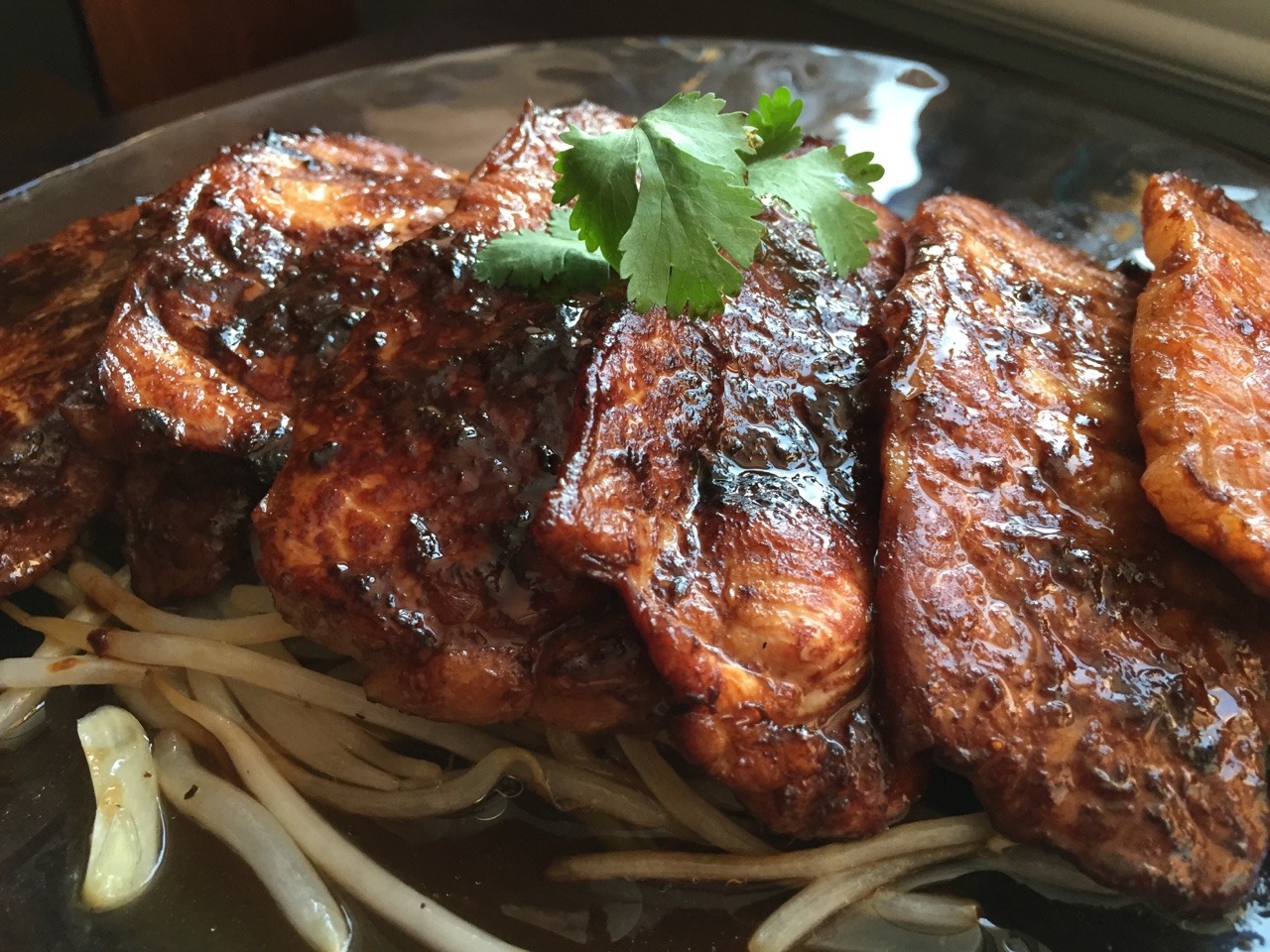
The marinade is 3 Tbsp soy, 2 Tbsp mirin, and 1 Tbsp microplaned ginger for 2/3 lb thinly sliced pork (preferably pork butt, but shabu shabu-style pork belly is OK, too). Dip each slice in marinade, one at a time, then pan fry in cycles until complete. Separately, clean and trim root ends off of mung bean sprouts (about 16 oz). Heat pan with some oil, then add 2 garlic cloves (sliced). When fragrant, add bean sprouts and sauté on high heat until sprouts are lightly cooked (about 2 mins). Place sautéed bean sprouts in a log shape on serving plate, then layer pork slices on top. Serve with Japanese seasoned rice with peas. Recipe from Harumi’s Japanese Home Cooking: Simple, Elegant Recipes for Contemporary Tastes https://www.amazon.com/dp/1557885206/ref=cm_sw_r_sms_api_Kd9mxbMVKKNVD (May 2015)
-
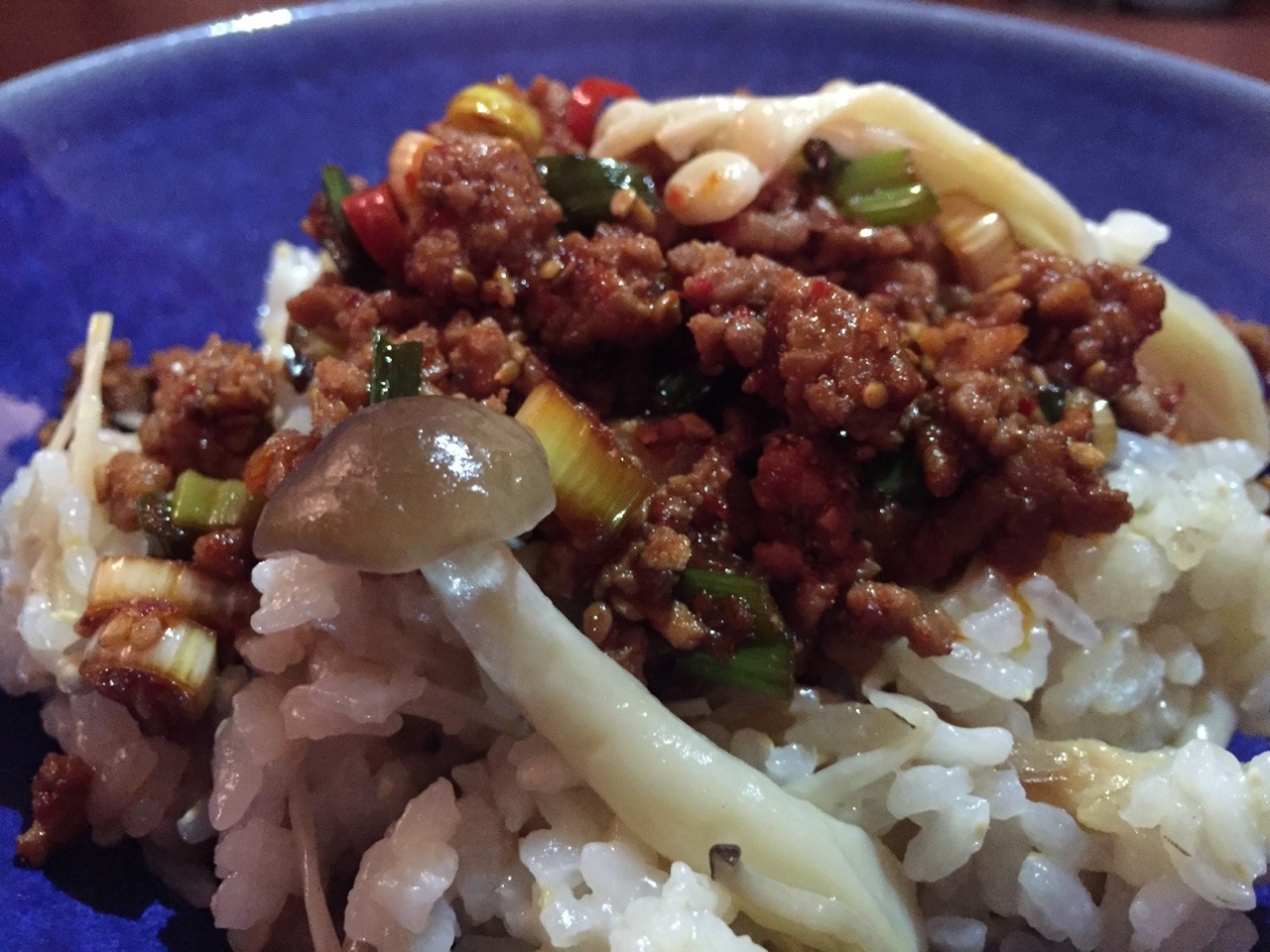
We had some leftover enoki and bunashimeji mushrooms, so we tried this recipe: http://www.beyondkimchee.com/mushroom-rice-bowl/. Because the amount of heat was higher than expected and the sauce very salty, we recommend reducing the pepper flakes and fresh pepper by half and reducing the soy sauce from 7 Tbsp to 4 Tbsp. Other modifications: first, to make the mushroom liquid, pulverize 3 dried shiitakes and soak the mushroom powder in 2 ½ cups hot water; second, use 6-8 fresh shiitakes (instead of reconstituted dry) for the rice mixture; and third, triple the minced pork (from 1/3 lb to 1 lb) but leave the amount of seasonings for the meat mixture the same (except for the amount of pepper and soy, as discussed above). We also let the soy sauce mixture simmer with the pork for 1-2 minutes rather than cutting off the heat immediately. Finally, we often use minced chicken instead of pork. (May 2015)
-
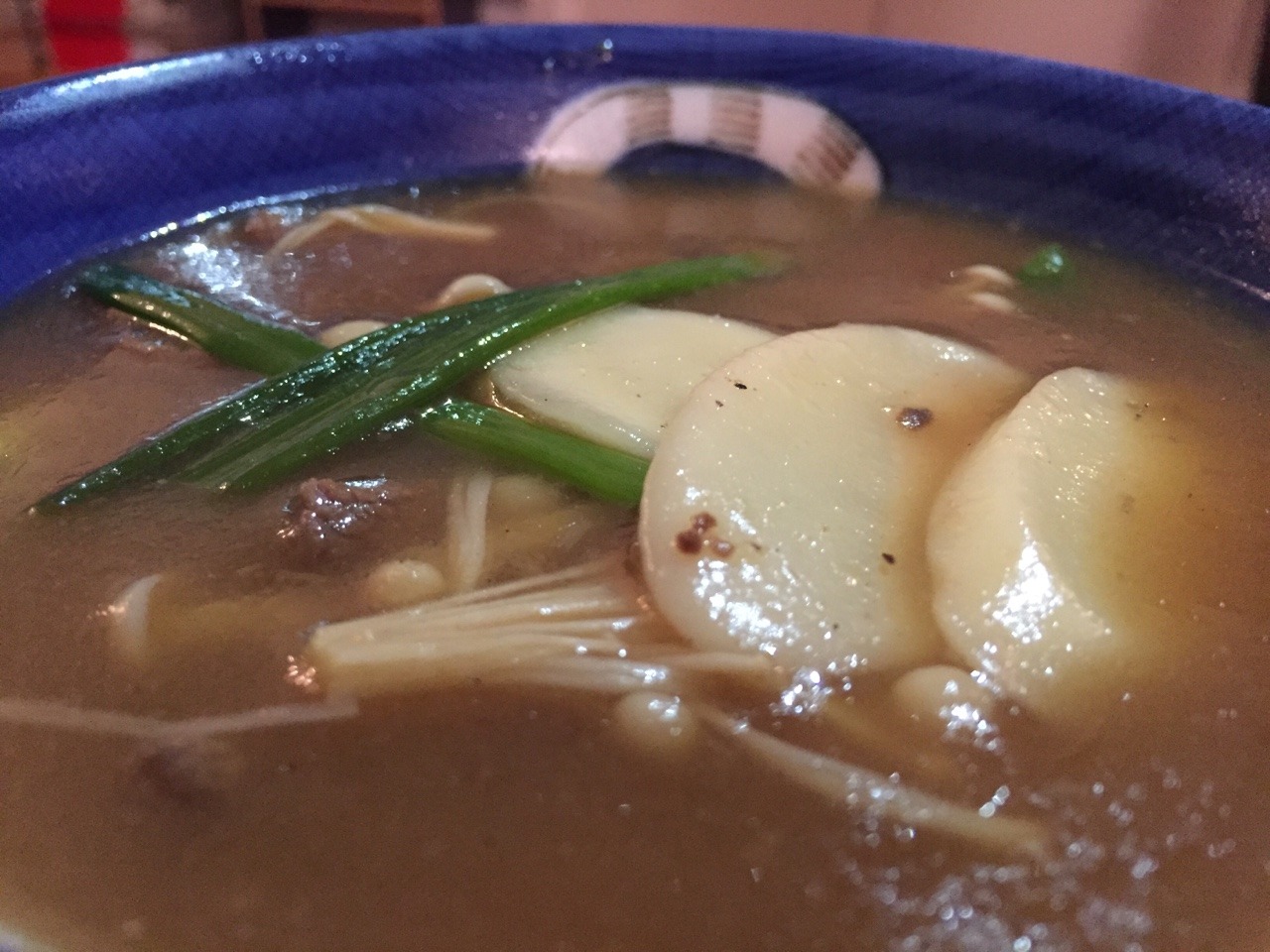
This is a recipe from my childhood and one of Daniel’s favorite soups. Soak about 1 lb frozen sliced Korean rice cake in water for 15 mins, then drain, making sure no slices are stuck together. Sauté ¼ lb julienned beef in sesame oil until browned, then add about 8 cups water. Season to taste with Korean beef bouillon powder (sogogi dashida) and Korean soy bean paste (doenjang); I typically do a 3:1 ratio. Bring to a boil, then add the drained rice cakes and let cook until rice cakes are al dente (about 8 mins). During the last minute, add 2 scallions cut into straws (we also added a handful of enoki mushrooms). Season to taste with garlic powder and black pepper. Serve and enjoy. (Apr. 2015)
-
Subscribe
Subscribed
Have a WordPress.com account? Log in now.

