-

I cook as a hobby, and I maintain this blog primarily to keep track of recipes that my family has enjoyed over the years. I started blogging back in 2015, in response to requests from friends for recipes they had seen me post on Facebook (but that I couldn’t easily catalog). My original blog was on another platform that became less user-friendly over time. I migrated my blog to WordPress earlier this year, and I’ve spent more time than expected reformatting the migrated posts.
This blog is and always will be a work in progress. For example, I currently provide Tags for posts, but I have not coded for Categories. I also generally try to share the recipes themselves in my posts, but in cases where the recipe is not available online, I try to identify the source (e.g., the cookbook title and author) as needed. In some cases, such as where a family has shared their recipe with me but hasn’t authorized me to share it widely, I post a photo of the dish with that proviso.
I recently added a Search widget to this blog. On the desktop version, the Search bar appears prominently on the left hand side. But for some reason, it is hidden on the mobile app. If you’re on your phone, tap on the SHOW tab at the top left of the home page. That will reveal another screen with the Search bar.
I hope you enjoy exploring my blog and find some recipes to try.
-
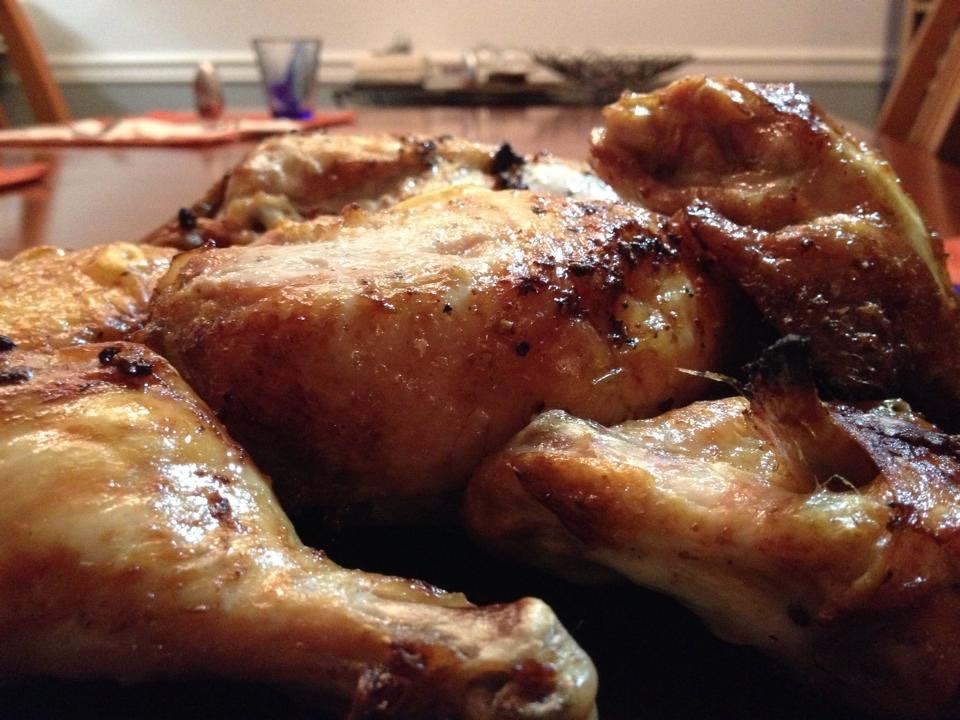
Marinate 4 lb of bone-in, skin-on chicken parts (I prefer a mix of bone-in breast, thighs, and drumsticks) in 3 ½ Tbsp Maggi seasoning (we reduced to 2 ½ Tbsp), 4-5 large minced garlic cloves, ½ tsp sugar, ¼ tsp salt (we reduced to 1/8 tsp), ¾ tsp black pepper, and 2 ½ Tbsp neutral vegetable oil overnight. Preheat oven to 400, and cover the top of a baking sheet with foil; lightly spray the foil with oil so that chicken skin will not stick to it. Place the marinated chicken pieces, skin side down, in a single layer on the foil-lined baking sheet (see Note below). Let cook for 15 minutes, then turn chicken pieces over and cook until juices run clear, about 35 mins. (July 2014)
Note: You likely will need two foil-lined baking sheets. If that is the case, place the smaller pieces on a baking sheet and roast it in the middle rack of your oven. Place the larger pieces, such as breast and larger thighs, on the second baking sheet and roast it on the lower rack. The breast may need an additional 5 mins to roast than the other pieces.
This recipe is from Into the Vietnamese Kitchen: Treasured Foodways, Modern Flavors (Ten Speed Press, 2006) by Andrea Nguyen.
-
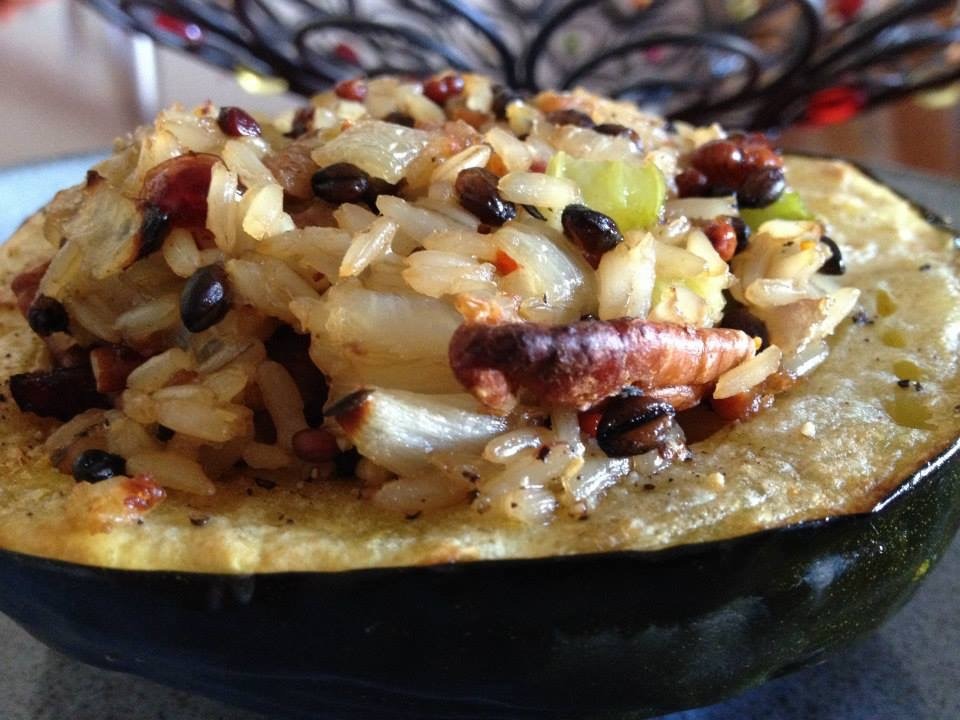
Preheat oven to 450. Cut three acorn squash in half, removing seeds and membranes. Place, cut side up, on cookie sheet and brush the cut parts and the hollow with 1 Tbsp melted unsalted butter and a little salt and black pepper. Roast in oven until partially cooked (about 35 mins). In the mean time, prepare the stuffing: first, bring 2 ½ cups chicken broth to a boil, then add 1 tsp butter and 1 cup brown rice (here, I used Trader Joe Brown Rice Medley, composed of long grain brown rice, black barley, and daikon radish seeds). Cover and simmer until rice is tender (about 35 mins). While rice is cooking, sauté hot Italian pork sausage (casings removed) in a wok, then when browned, set aside. Using the same wok, add a little olive oil, then sauté 4 celery stalks, 1 onion, 1 shallot (each chopped) until fragrant. Season lightly with salt and black pepper. Add 1-2 sprigs thyme (leaves only), then add cooked pork sausage, cooked rice, and lightly mix. Add ½ cup toasted pecans (roughly broken up) and ¼ cup chopped cranberries. By now the acorn squash should be partially cooked. Spoon the rice mixture into each acorn hollow (about ½ cup), lightly brush the cut squash and the rice mixture with butter, then continue to roast until the squash is fork-tender (about 20 mins). Serve immediately and enjoy. This recipe is based on Roasted Acorn Squash with Wild Rice Stuff by Aida Molllenkamp, available on chow.com, with modifications (addition of pork sausage, brown rice instead of wild rice, ½ cup pecan instead of 2/3 cup, use of olive oil instead of butter for sautéing). (Nov. 2013).
-
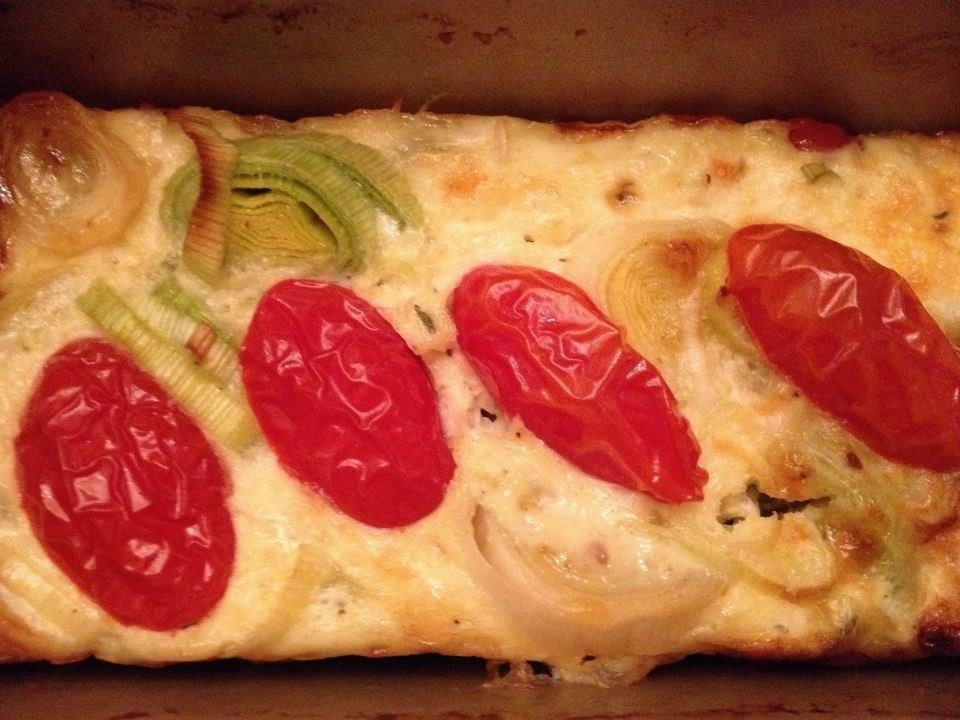
Saute 1 large link (about 1/4 lb) uncooked hot Italian sausage (we used Whole Foods’ mix of pork and chicken, with casings removed) until browned, then let cool and set aside. Separately, lightly mix 3 eggs with 1 cup low-fat milk, then fold in 3 oz shredded Gruyere cheese, 3 sprigs thyme (leaves only), 3 large sage leaves (julienned), a dash each marash (a type of Middle Eastern pepper), salt, and black pepper. When well mixed, add 2 leeks (whites only, cut into thin penny slices), about 20 cherry tomatoes (halved), and the cooked sausage. Pour into 4 lightly greased mini-loaf pans. Bake until knife comes out clean (about 45 mins). This recipe is based on Potato Leek Quiche, a blog recipe I found randomly online, and Country Quiche by Trisha Yearwood, available on Food Network, with modifications (addition of marash, thyme, and sage). (Dec. 2013)
-
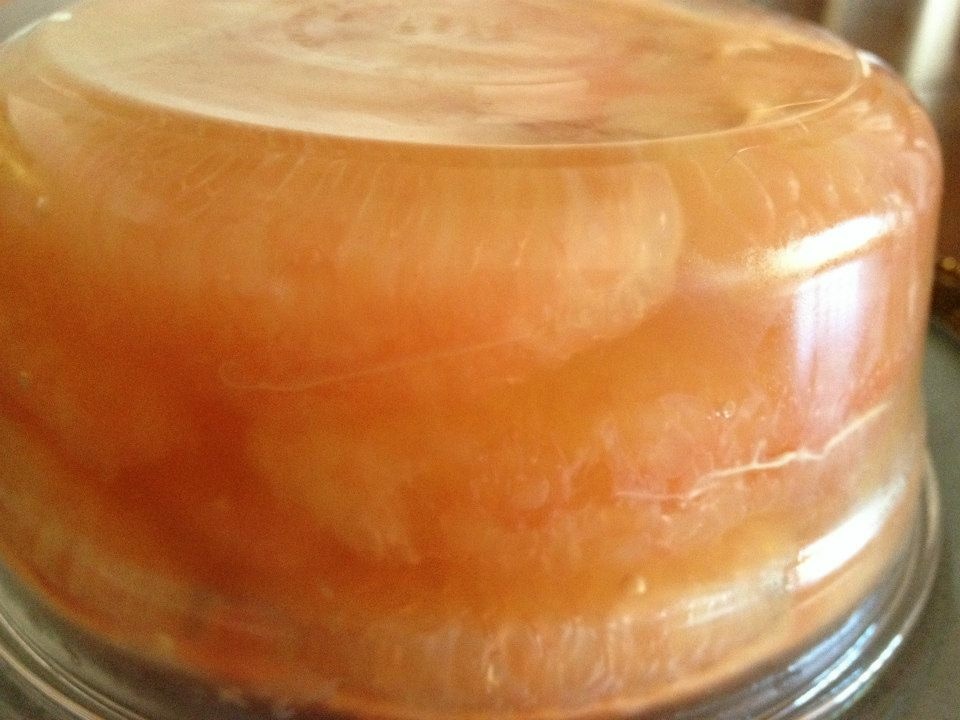
During my childhood, a Japanese family friend, Mrs. Otsuka, made grapefruit jello, which she served in grapefruit shells (similar to lemon sorbet being served in a hollowed-out lemon). A few years ago, I finally tracked down a Japanese recipe for this dish, which turns out to be quite simple. First, lightly spray the inside of the gelatin mold(s) with cooking spray (see Note 2 below). Second, using a boning knife, cut the top and bottom of two grapefruit, then carefully cut the rind off each grapefruit, using vertical strokes, until the flesh is exposed and pith gone (see Note 3 below). Gently remove the segments and place them in a mixing bowl, making sure to capture any remaining grapefruit juice. Set aside grapefruit segments and juice. Third, heat 1 cup water in a saucepan until it’s almost boiling,
then turn off. Add 2 Tbsp sugar and 1 Tbsp honey, stir until dissolved. In a separate bowl, mix 1 Tbsp unflavored gelatin (1 Tbsp = 1 ½ packets Knox brand) with 4 Tbsp room-temperature water. Slowly stir the gelatin mixture into the sugar-honey water until dissolved. Add 2 Tbsp grapefruit juice to the liquid. Finally, place the grapefruit segments in molds, then pour gelatin mixture into each mold. Refrigerate until set (a few hours). This recipe is from: http://japanesefood.about.com/od/japanesedessertsweet/r/grapefruitjello.htm.Note: After a few failed attempts to dislodge the jello from its unsprayed glass mold, I gave up and took the photo of the jello in its glass bowl. (Jan. 2014)
Note 2: Based on other online recipes for gelatin molds, many recommend lightly spraying the inner mold with cooking spray. I have found that this helps with glass molds but is not necessary for plastic molds. (Dec. 2017)
Note 3: Useful guidance on how to segment grapefruit:
https://heartbeetkitchen.com/2016/recipes/type/breakfast/how-to-segment-a-grapefruit-the-easy-way/ (Dec. 2017) -
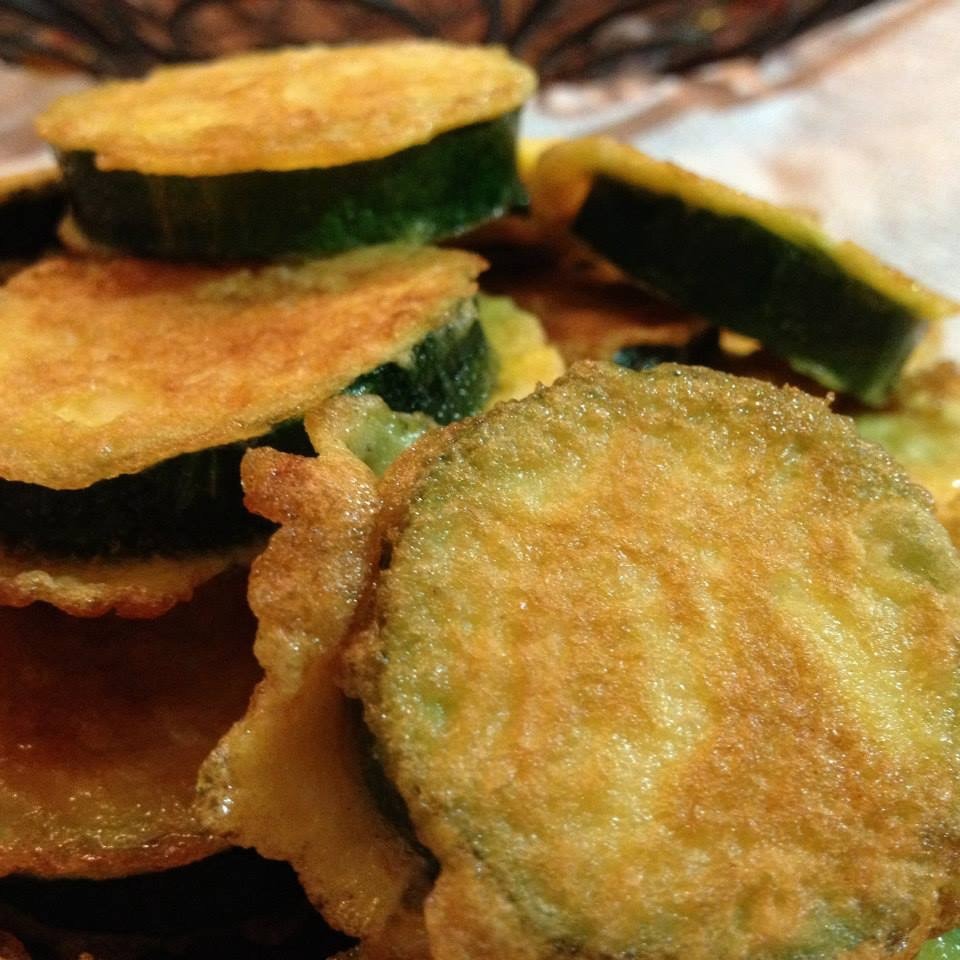
Slice 2 zucchini into ½ inch penny slices. Set up two small bowls on the stove: one with 3 Tbsp flour, the other with 3 eggs mixed with 1 tsp water and a dash of Korean beef bouillon (sogogi dashida); if you use a vegetarian bouillon powder, this can be vegetarian. Dip a few zucchini pieces in flour, then in the egg mixture, and place on a hot, oiled skillet. Brown well on each side, then place on a paper towel-lined plate. Serve with soy-dipping sauce (see Egg-dipped flounder for recipe): https://piglettedc.tumblr.com/post/114626122201/korean-egg-dipped-flounder-saengsun-chon-cut-%C2%BDThis recipe is based on a recipe my beloved maternal grandmother (Halmoni) taught me when we cooked in the kitchen together. I credit Halmoni for instilling in me a love of food. (Jan. 2014)
-
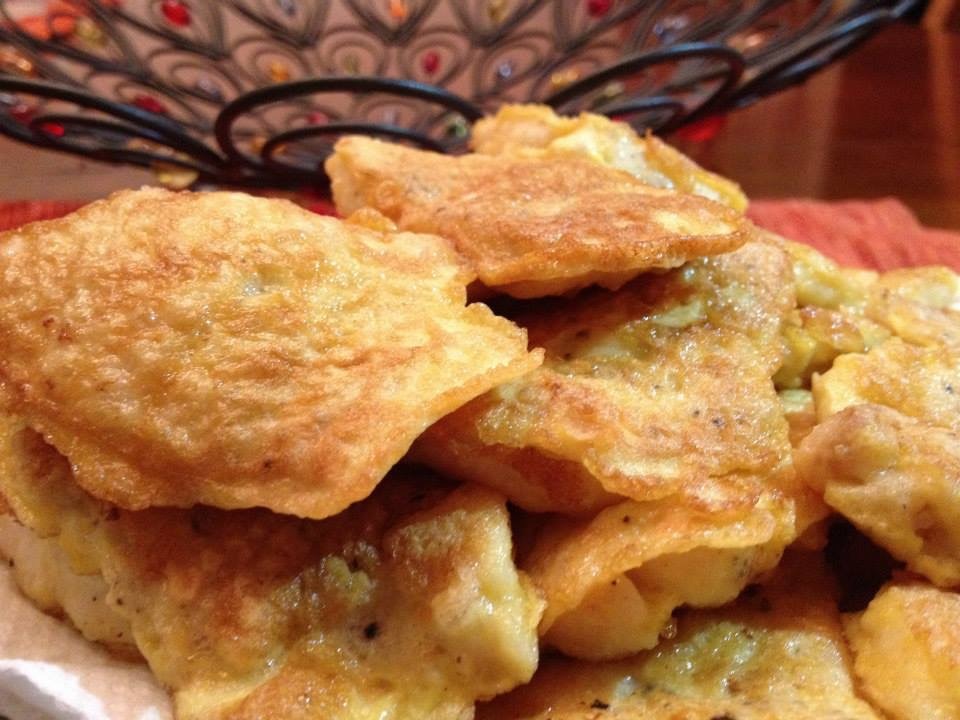
Cut ½ lb flounder filet (boneless, skinless) into bite-sized (1 ½ inch) pieces. Lightly season with salt and black pepper. Set up two bowls next to the stove: one small bowl with 3 Tbsp flour, another with 1 egg, ½ tsp water, and a little Korean beef bouillon seasoning (sogogi dashida). Heat a large skillet, add some canola oil, then coat a few pieces of flounder, dip in egg mixture, and gently place on the oiled skillet. Lightly brown on each side (flounder cooks quickly, so keep a close eye), and then place on a paper towel-lined plate. Serve with soy dipping sauce (yangnyum): 1 Tbsp soy sauce, 1 ½ Tbsp rice vinegar, ¼ tsp each sugar, toasted sesame seeds, and red pepper flakes. Serve immediately. This recipe is based on Everyday Korean Cooking by Mary Jeeyoung Park and Hae Ok Park (limited publication), with modifications (addition of beef bouillon). (Jan. 2014)
-

This is a Cretan specialty that I saw on Anthony Bourdain’s No Reservations many years ago, and that I
made only once before (in 2011) because it is so time-consuming and phyllo so temperamental. Preheat oven to 375. For the filling: combine 15 oz ricotta cheese, 8 oz cottage cheese, 4 oz cream cheese, 1 Tbsp sugar, 1/8 tsp nutmeg, and 1/8 tsp cinnamon. Cut phyllo sheets into four long strips; this is extremely challenging to do without tearing the phyllo. Take two layers of the strips, brush top layer with melted butter, and add a tsp of filling. Roll in a triangle shape until mid-way, then butter some more. Roll to the end, then place on baking sheet (I used parchment paper) and butter the top. Bake for approx. 20 mins, let cool slightly, and serve with a dab of honey. This recipe is from The Art of Filo Cookbook by Marti Sousanis, with modifications (cinnamon and honey). (Jan. 2014) -
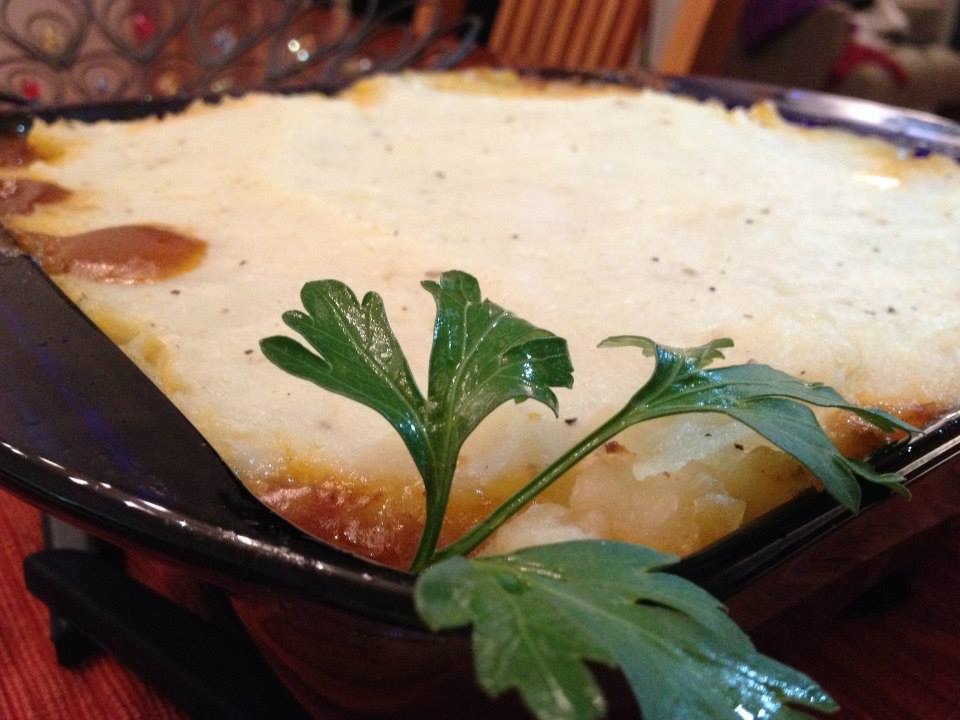
This is virtually identical to classic shepherd’s pie except for the addition of turnip to mashed potato (clapshot), which is a Scottish specialty. Heat 2 tsp oil in a wok, cook 1 chopped onion until wilted, then add 1 lb minced beef (here, bison). Season with a little salt and pepper. When browned, stir in 1 Tbsp flour and 5 oz hot beef stock. Bring to a boil, then add 1 Tbsp tomato paste, 1 Tbsp Worcestershire sauce, about ½ cup frozen peas, and 2 Tbsp chopped parsley. Reduce heat, cover, and simmer for 15 mins. In the mean time, boil 2 Yukon Gold potatoes and 2 purple topped turnips, each peeled and cut into large chunks) until tender, then mash and mix with 1-2 Tbsp butter, some milk (about ¼ cup), and salt and pepper. When smooth, set aside. Using a 8 x 8 baking dish, pour minced meat mixture in, then cover with mashed potato mixture. Bake in a preheated oven at 350 for about 35 minutes, then serve. This recipe is from Sue Lawrence’s Scottish Kitchen, with some modifications (addition of milk to the mashed potato topping). (Jan. 2014)
-
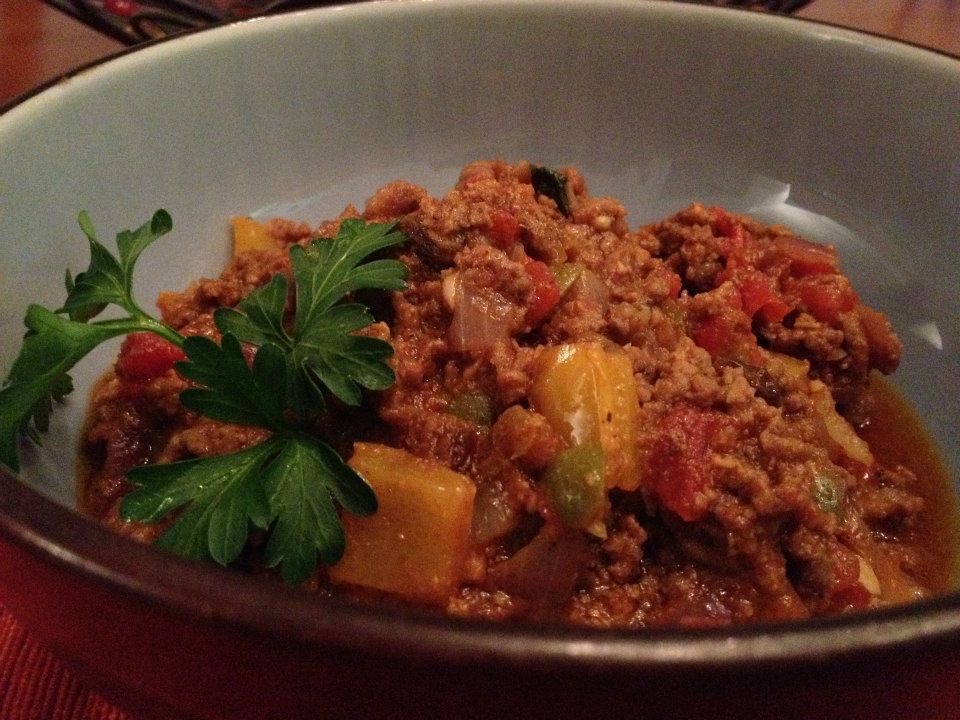
Inspired by our recent trip to Miami, I tried my hand at picadillo. In a large wok, heat olive oil, then sauté 1
chopped red onion, 1 yellow bell pepper, and 4 minced garlic cloves. When onion is translucent, add 2 tsp cumin, ½ tsp paprika, and some salt and pepper. A minute later, add 1 ½ lb minced beef, then sauté
until browned. Add ¼ cup each chopped raisins (here, golden) and Spanish olives, 1 cup tomato sauce, and 1 tsp each balsamic vinegar. Season to taste (I added 1 more tsp vinegar, 3 sprigs fresh marjoram, ¼ tsp cinnamon, 1/8 tsp ground cloves, and 4 oz drained, canned diced tomatoes). Simmer until flavors meld (about 25 mins). Serve with rice and beans. This recipe is based on The Cuban Kitchen by Raquel Rabade Roque, with modifications (the additional ingredients when I seasoned to taste). (Jan. 2014). This cookbook was a gift from my friend Annette’s mother. -
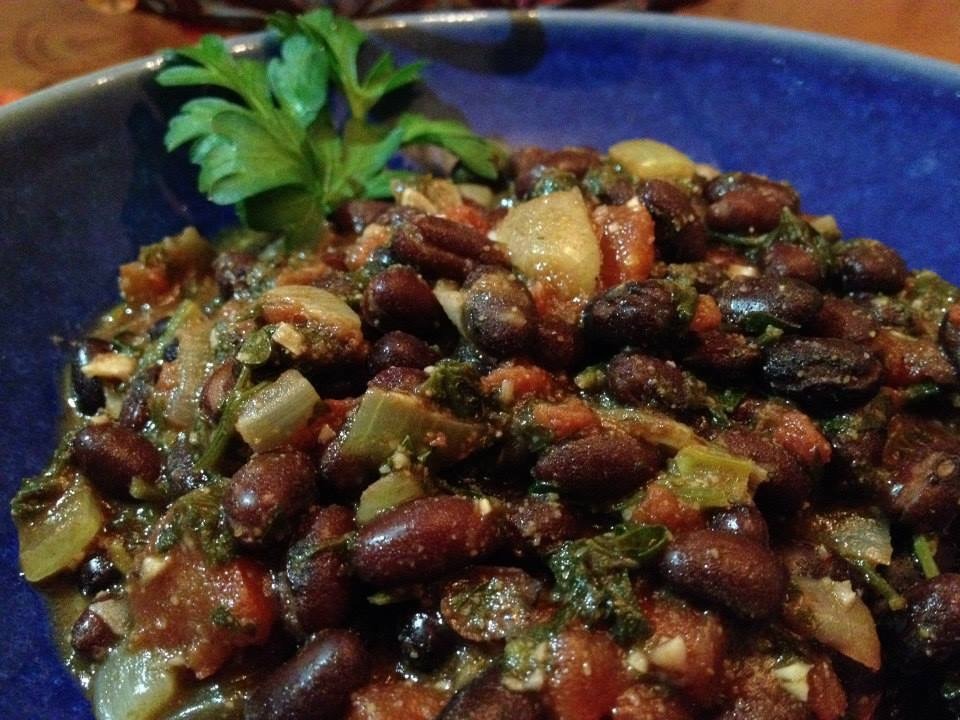
This is a recipe I learned from Cristian’s cooking class in Tampa in October 2010. Mix the following in a bowl: 3 diced Roma tomatoes (I forgot fresh tomatoes, so I used 4 oz of drained, canned diced tomatoes), diced ½ onion, chopped ¼ bunch curly parsley, 3 minced cloves garlic, and 2 tsp cumin. Heat olive oil in a pot, then add the tomato-parsley mixture. Saute until the ingredients have cooked and most liquid is gone (about 10 minutes). Add one 15 oz can of black beans, including liquid. Mix well, then cover and let simmer until flavors meld (about 10 mins). I seasoned with salt and pepper, and also added 1 tsp red wine vinegar and a dash of sugar for brightness. This is based on Venezuelan Pabellon Recipe by Chef Cristian Feher (black bean recipe only). (Jan. 2014)
-
Subscribe
Subscribed
Have a WordPress.com account? Log in now.

