-
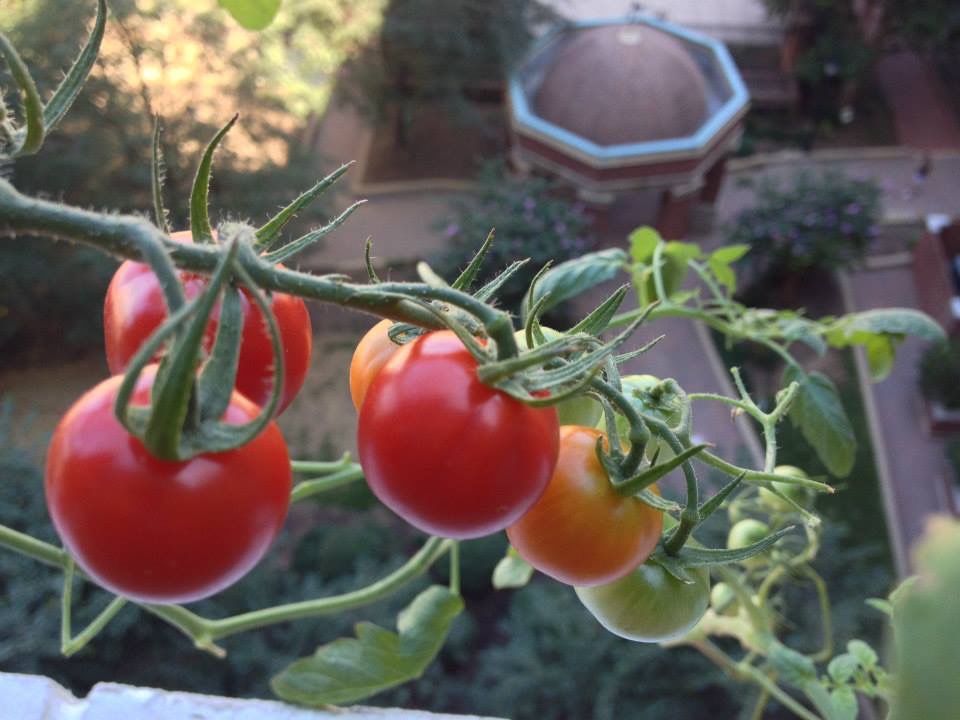
I cook as a hobby, and I maintain this blog primarily to keep track of recipes that my family has enjoyed over the years. I started blogging back in 2015, in response to requests from friends for recipes they had seen me post on Facebook (but that I couldn’t easily catalog). My original blog was on another platform that became less user-friendly over time. I migrated my blog to WordPress earlier this year, and I’ve spent more time than expected reformatting the migrated posts.
This blog is and always will be a work in progress. For example, I currently provide Tags for posts, but I have not coded for Categories. I also generally try to share the recipes themselves in my posts, but in cases where the recipe is not available online, I try to identify the source (e.g., the cookbook title and author) as needed. In some cases, such as where a family has shared their recipe with me but hasn’t authorized me to share it widely, I post a photo of the dish with that proviso.
I recently added a Search widget to this blog. On the desktop version, the Search bar appears prominently on the left hand side. But for some reason, it is hidden on the mobile app. If you’re on your phone, tap on the SHOW tab at the top left of the home page. That will reveal another screen with the Search bar.
I hope you enjoy exploring my blog and find some recipes to try.
-
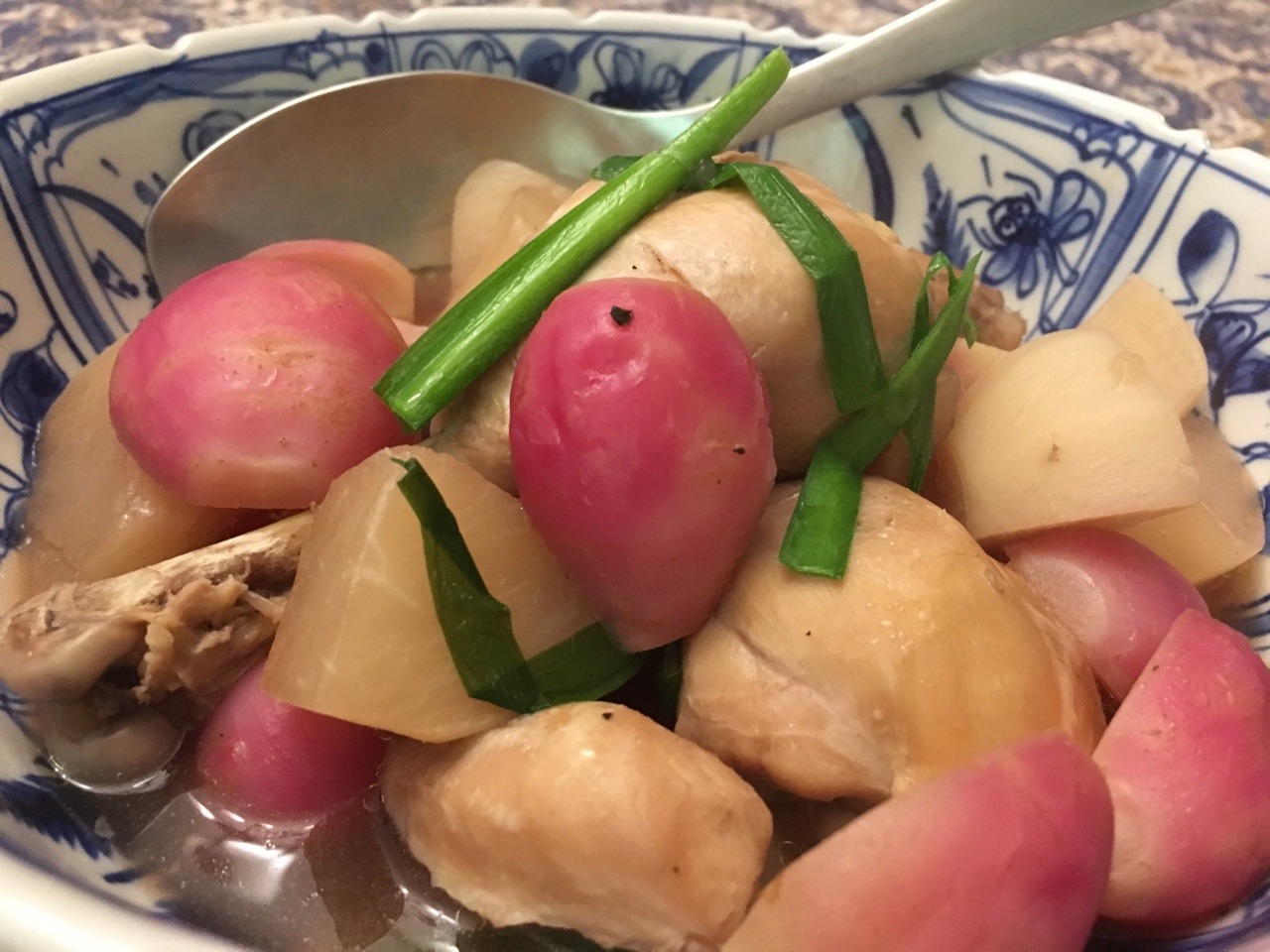
We tried this recipe: https://www.cookforyourlife.org/recipes/simmered-chicken-with-daikon-radish/ Our modifications: we used 6 skinless drumsticks, 1 ½ purple topped turnips (peeled and cut into 2×2 cubes), and one bunch red radishes (trimmed and either halved lengthwise or left whole, depending on size). We added some freshly ground black pepper. To nearly cover the chicken and radish, we ended up adding 1 more cup water. (Aug. 2018)
-
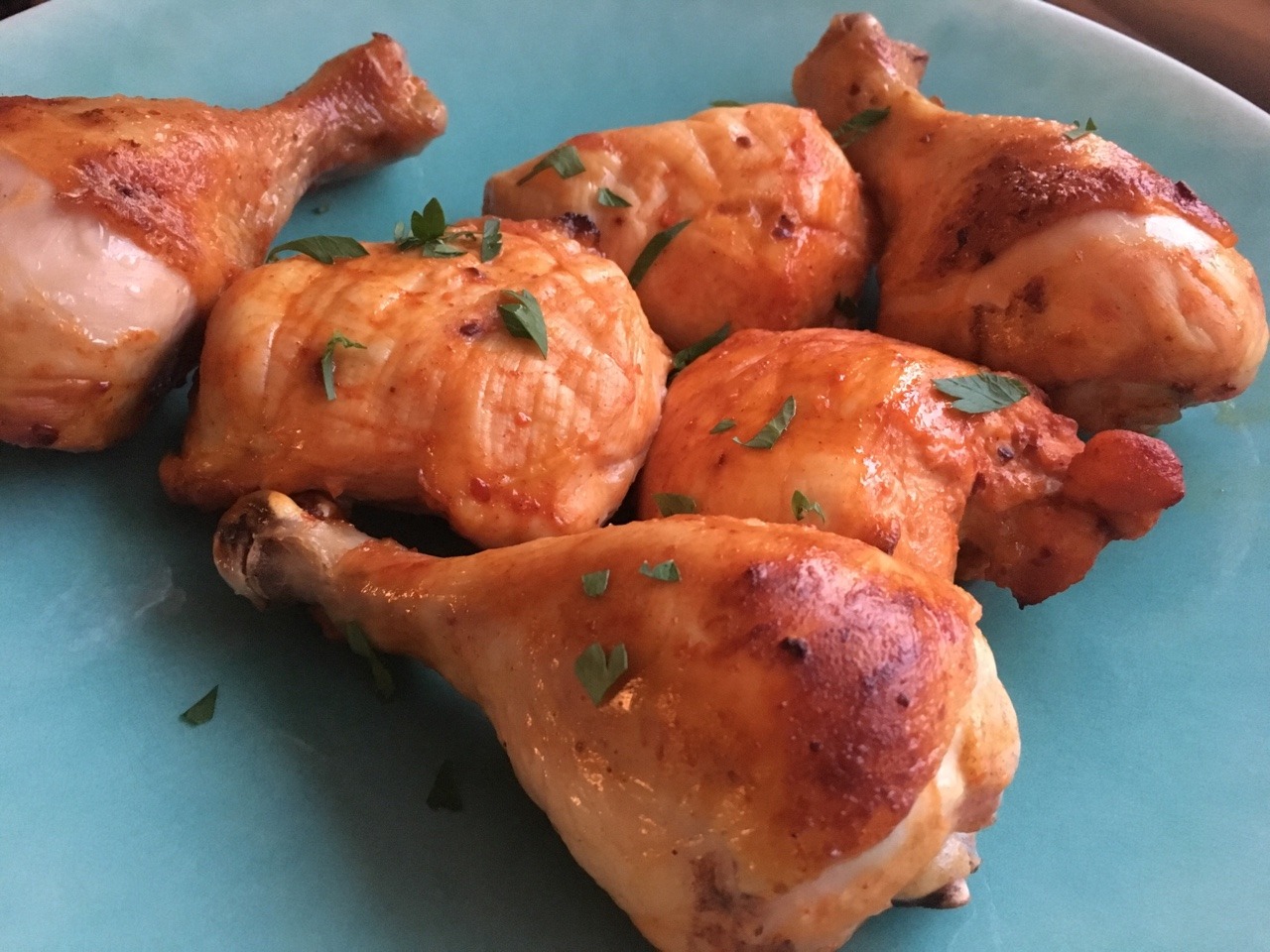
We learned about this shortcut recipe from my friend Andrea: For 9 pieces of chicken (here, 3 boneless skinless breasts cut in half widthwise and 6 skin-on, bone-in drumsticks), marinate in 1 ½ Tbsp Weber garlic-sriracha seasoning (a dry seasoning) and 2 tsp 2% plain yogurt (we used Greek), making sure the seasoning and yogurt are evenly distributed among the chicken pieces. We marinated overnight. When ready to cook, preheat oven to 425 (see Note 2). Prepare two baking sheets, line each with foil, then place a baking rack in each. Mist each rack with oil spray. Place the drumsticks on one baking rack in a single layer, and place the half-breasts on the other. Place the drumstick tray on the bottom rack of the oven and the breast rack on the middle rack. Oven-roast, turning over midway, until the knife comes out clean (about 45 mins for breast, 50 mins for drumsticks). We also finished the drumsticks under the broiler to crisp the skin (broiler on low, top rack for a few mins). We served this with oven-roasted asparagus and jasmine rice. (Aug. 2018)
Note: The original recipe from Andrea was 18 pieces chicken, 3 Tbsp Weber seasoning, and 1 Tbsp 2% plain yogurt.
Note 2: You also can preheat oven to 400. Then line two baking sheets with foil (we recommend against spraying the foil with oil, as the skin and fat from the chicken releases a lot of oil when roasting). Then place the chicken (skin side down) for 15 mins. Then turn over and continue baking until knife comes out clean (about 35-40 mins), for a total cooking time of 50 to 55 mins. (Jan. 2019) -
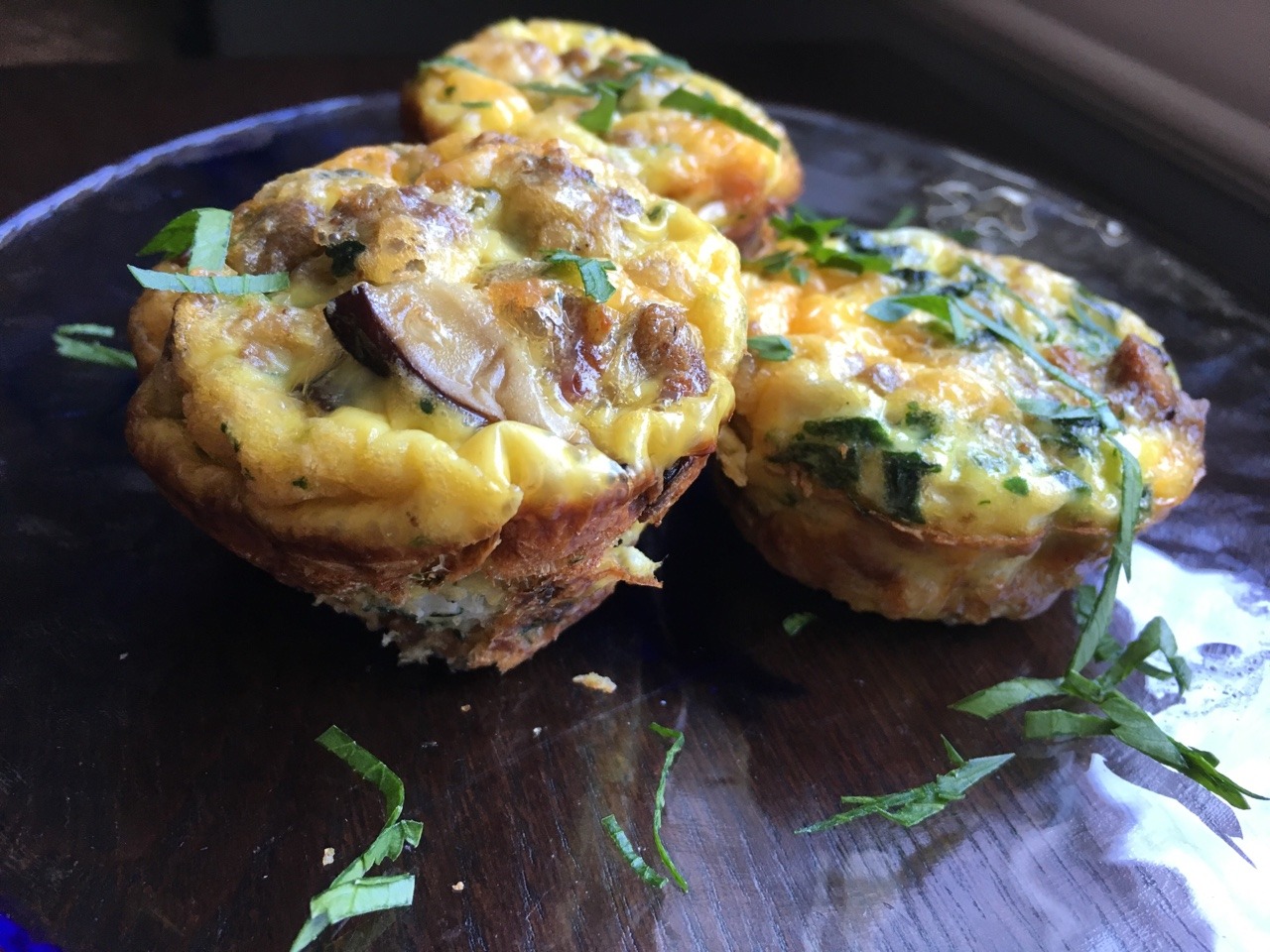
We loosely followed two recipes: https://cafedelites.com/breakfast-egg-muffins-3-ways/ and https://www.williams-sonoma.com/m/recipe/frittata-sausage-wild-mushrooms-cheddar.html. Here is the recipe: first, preheat oven to 350 and prep the ingredients: chop 2-3 shallots (we used an electric handheld chopper). Roughly chop 6 veggie sausage patties so that they are crumbled (we used a 8 oz package of 6 Morningstar original sausage patties, which we also chopped in the handheld chopper). Wash, dry, and slice 3.5 oz (about 6-7 medium) fresh shiitake mushroom into ½ inch x ¾ inch slices. Prepare about ½ cup spinach; we used frozen chopped spinach, so we rinsed and then towel-dried it to squeeze out all excess water; this is important to avoid watering down the frittata. Shred about 1 cup of sharp cheddar cheese, and divide in half (two ½ cup portions). Second, lightly spray your muffin tins with oil; we ended up filling 20 muffins, so we used two 12-muffin tin pans. Third, saute the chopped shallots in a little oil (we used a 10-inch cast iron pan) on medium heat, lightly seasoning with black pepper. When wilted and fragrant, add the shiitakes. Saute for 1 minute, then add the crumbled veggie sausage. Add a little oil if needed. Saute until sausage is slightly browned and fragrant, then remove from heat and let cool slightly. Fourth, crack a dozen large eggs in a large mixing bowl. Add a splash (2 Tbsp) of milk. Whisk, then stir in the sausage mixture. Add in the spinach, making sure to the spinach is well dispersed in the egg-sausage mixture (because we used frozen, squeezed spinach, we had to make extra effort to separate the pieces out to avoid large chunks of spinach). Fold in half of the shredded cheese. Fifth, using a small ladle, evenly distribute the mixture into the muffin tins, so that each filled tin is about 2/3 full (in our case, we filled 20 of 24 available muffin tins). When finished, evenly distribute the remaining ½ cup of shredded cheese (about ½ tsp per muffin). Finally, bake at 350 until done (about 20-25 mins). We plan to enjoy these for Sunday breakfast and have the remainder for breakfast at work; the Cafe Delite link provides tips on storage. (Aug. 2018)
Note: We found the dish very egg-yolk heavy and dense. The next time, we may try (1) a mixture of egg whites and whole eggs or (2) try a 3 egg to 1 cup milk ratio such as here: http://piglettedc.tumblr.com/post/114716332676/sausage-leek-and-tomato-frittata-saute-1-hot -

We tried this recipe: https://cooking.nytimes.com/recipes/12558-minty-fruit-salad We added a dash of black pepper. (July 2018)
-
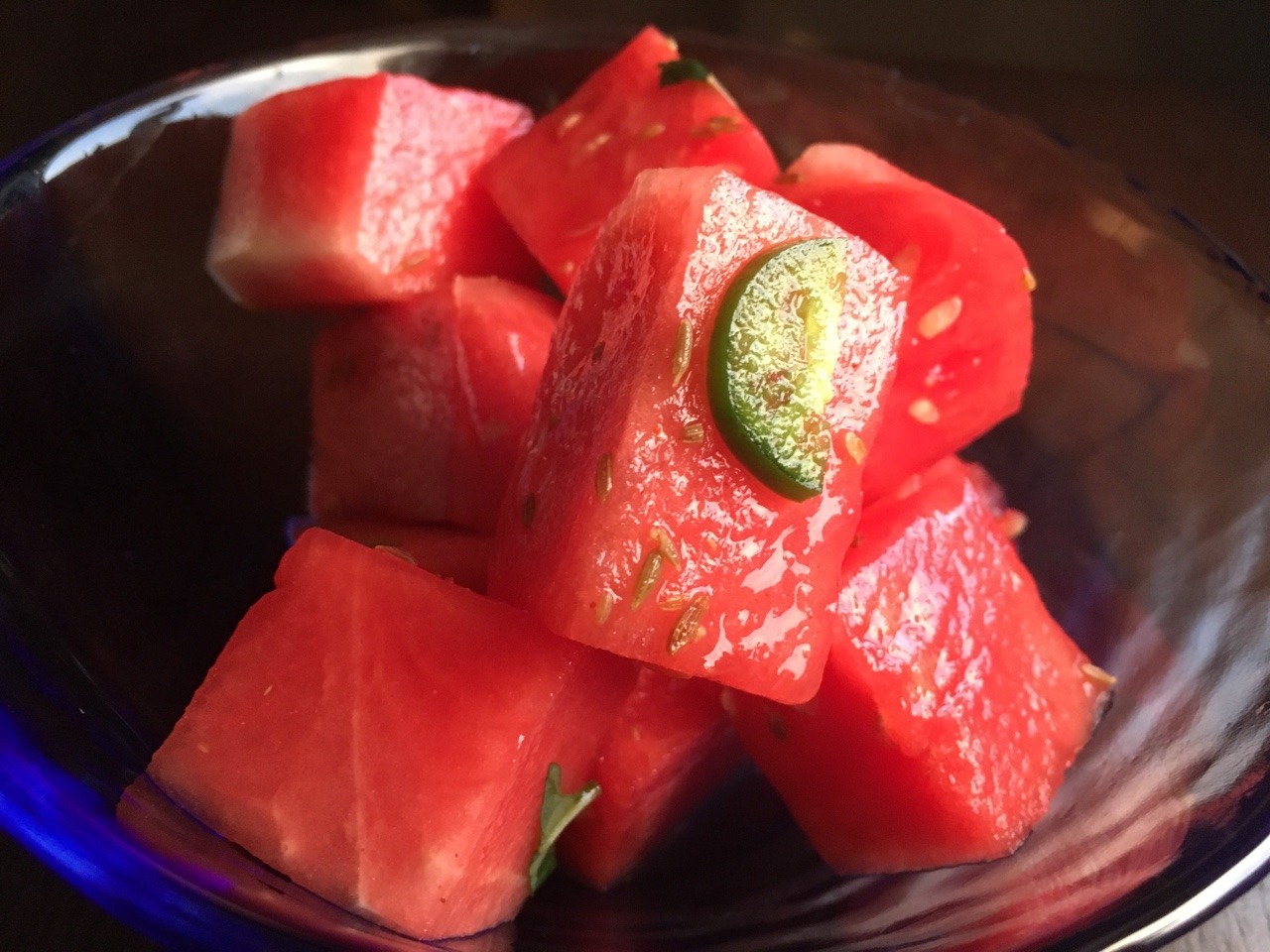
We tried this recipe: https://cooking.nytimes.com/recipes/1018775-watermelon-chaat We didn’t have amchoor (green mango powder), so we substituted with ¼ tsp tamarind soup base. (July 2018)
-
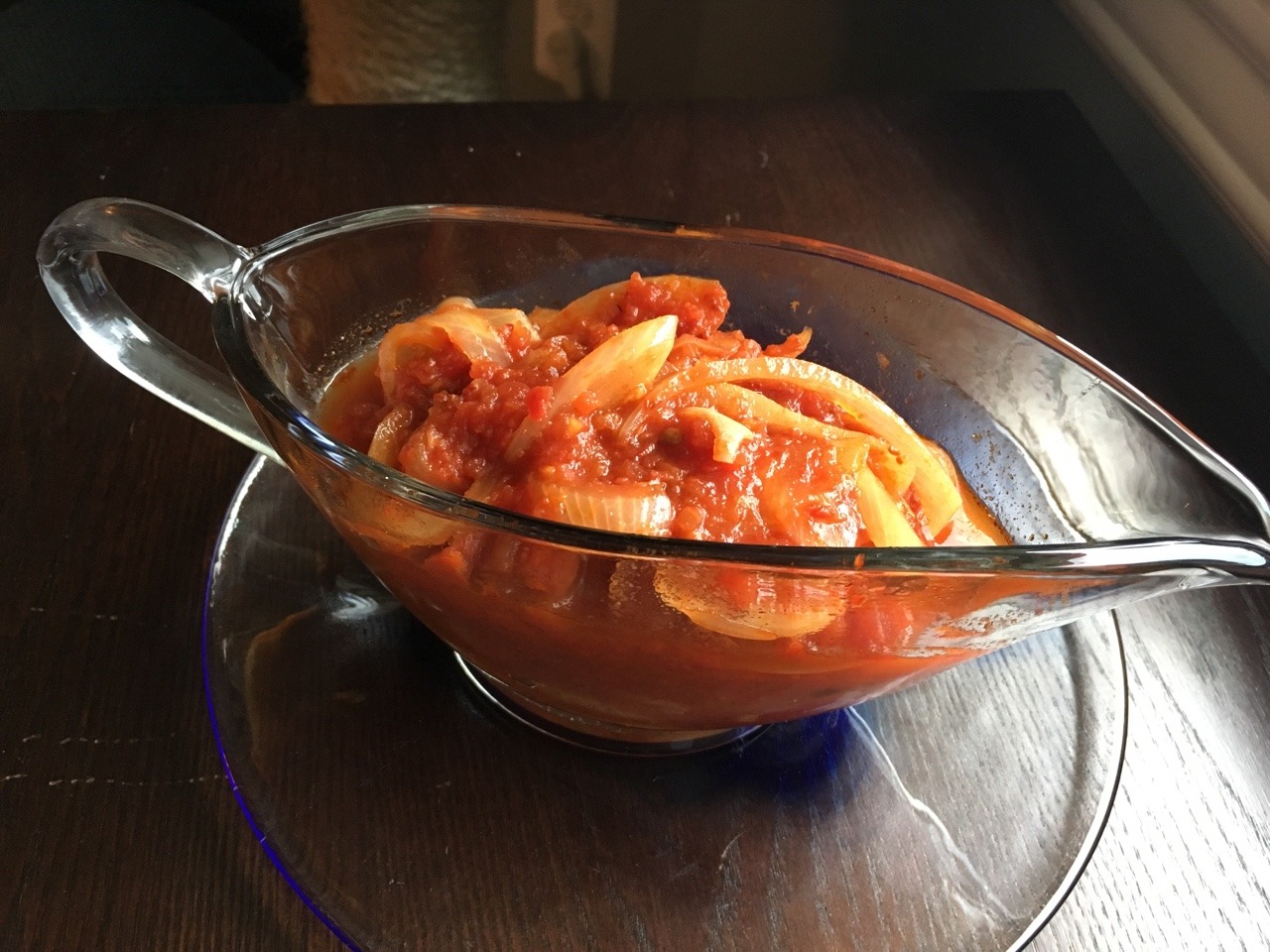
We tried this recipe: https://cooking.nytimes.com/recipes/3506-chipotle-chili-sauce To make 2 cups (16 oz) of while peeled tomatoes, we used a 14.5 oz can of no salt whole peeled tomatoes plus 3 small Roma tomatoes (peeled). We also used 3 chiles in adobo sauce. We found the sliced onions intrusive; the next time we will mince them (or puree in a hand mixer) and perhaps reduce the amount to half an onion. (July 2018)
-
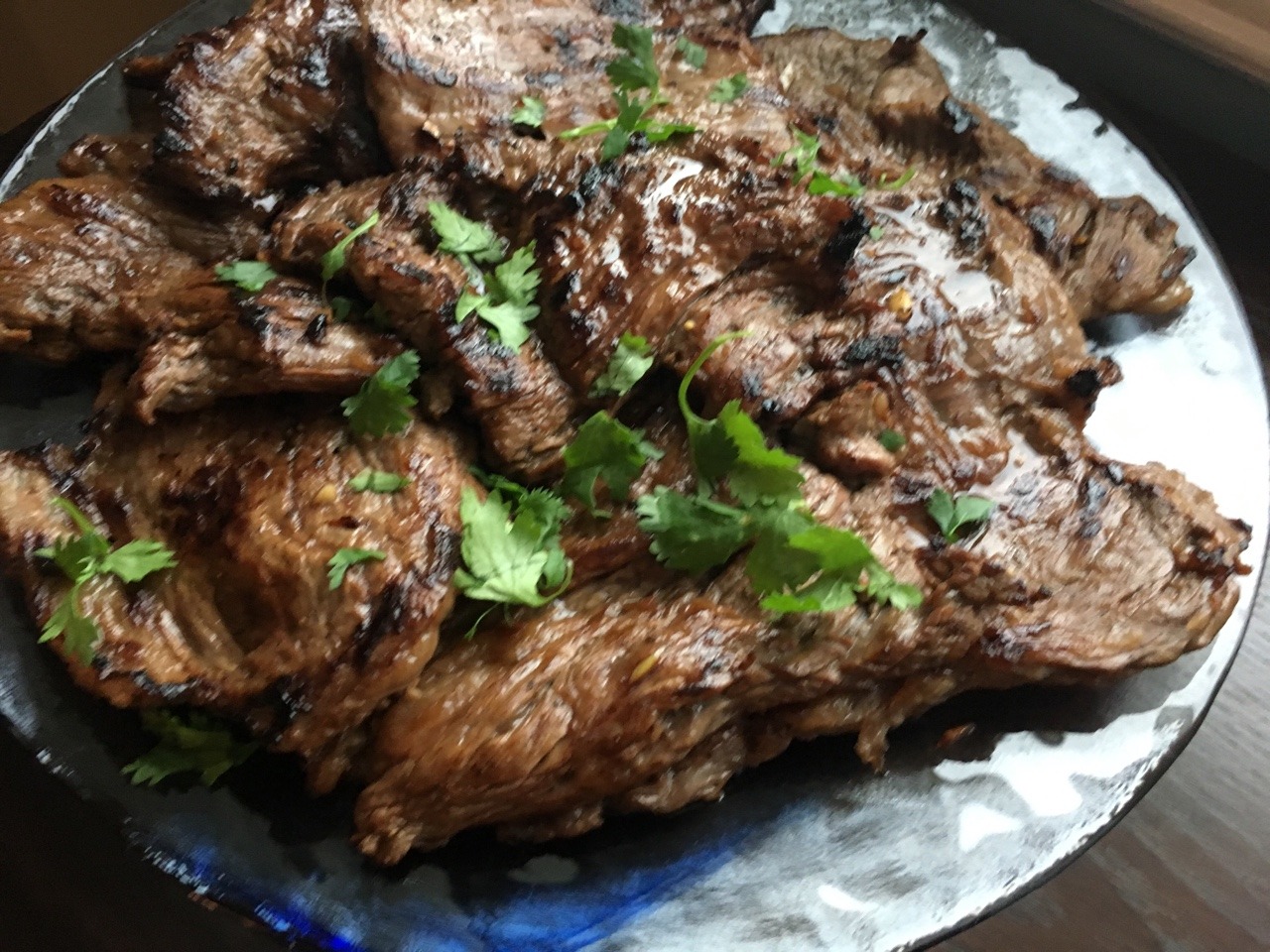
We tried this recipe: https://cooking.nytimes.com/recipes/3505-fajitas-meat-filled-tortillas-with-hot-sauce It is harder to execute than expected: the instructions call for halving the skirt steak width, which we did with a boning knife. We tried oven-broiling the individual slabs of skirt steak, but they wouldn’t brown in the oven. So we resorted to a hard sear on medium-high heat in a nonstick omelet pan. We served the skirt steak with chipotle sauce (recipe here: http://piglettedc.tumblr.com/post/176174597181/chipotle-chili-sauce-we-tried-this-recipe), warmed tortillas, guacamole, and pinto bean stew (http://piglettedc.tumblr.com/post/176174081786/mexican-pinto-bean-stew-with-fire-roasted). (July 2018)
-
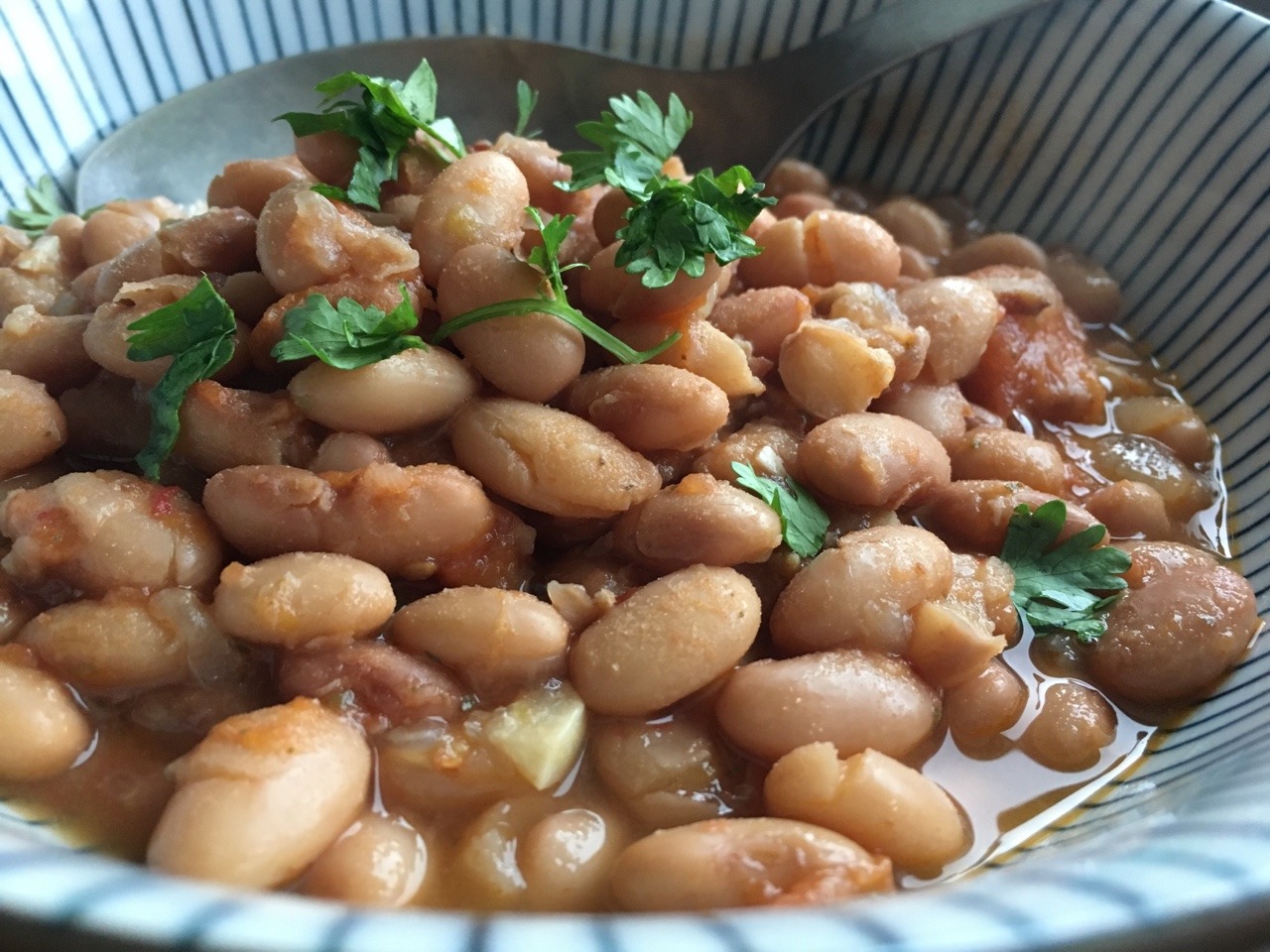
We tried this recipe: https://www.seriouseats.com/recipes/2016/06/frijoles-charros-mexican-pinto-beans-bacon-recipe.html Our modifications: first, we made fire-roasted tomatoes following this recipe: http://piglettedc.tumblr.com/post/176167609311/fire-roasted-tomatoes-broiler-version-we-tried Second, we used about three ½ inch matchsticks (1 ½ inch width total) of 5 frozen bacon slabs. Finally, to reduce sodium overall, we used homemade fire-roasted tomatoes (instead of canned), no-salt chicken broth, and reduced or omitted most added salt. (July 2018)
-
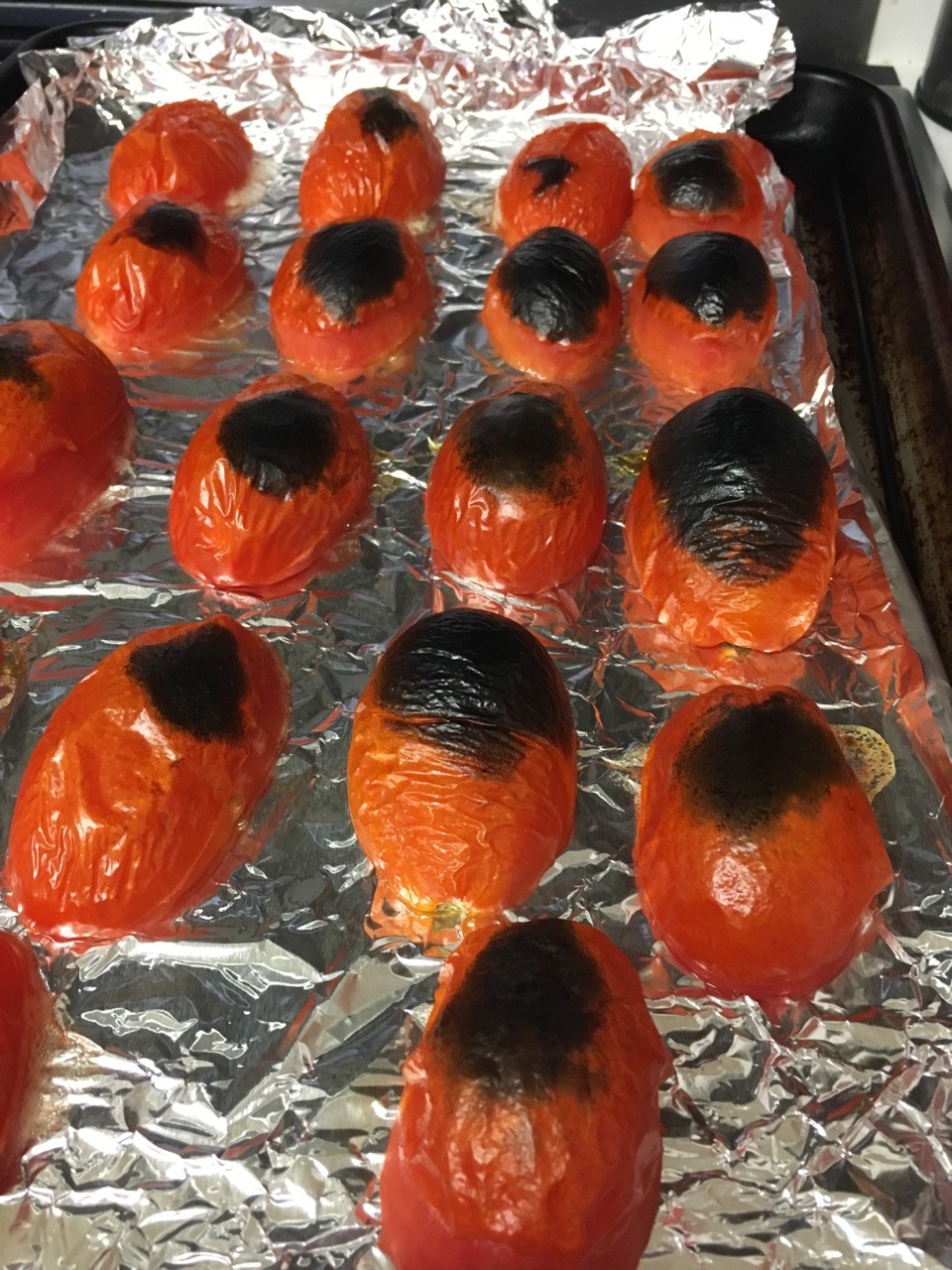
We tried this method for a recipe that called for 28 oz canned fire-roasted tomatoes: https://www.thekitchn.com/quick-tip-roasting-tomatoes-un-59853 We lined our rimmed baking sheet with foil. To maximize exposure to the flames in our gas oven broiler, we cut our Roma tomatoes in half lengthwise. For 28 oz canned, we substituted with 1 ½ lb Roma tomatoes (about 9 small to medium Romas). At 4 inches from the high broiler setting, these tomatoes were fire-roasted in less than 5 mins. We forgot to rotate the tray, which would have been helpful. (July 2018)
-
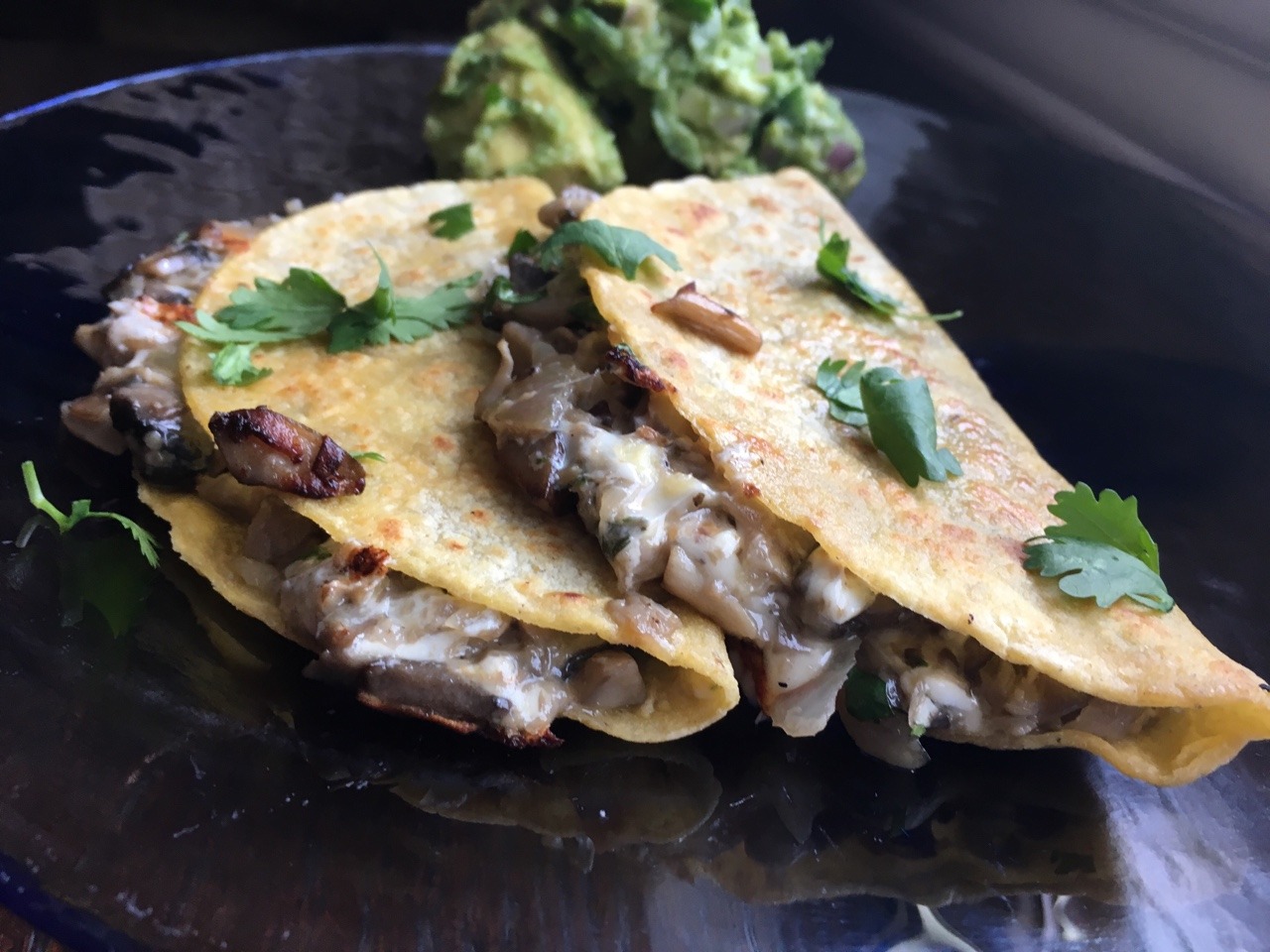
We tried this recipe: https://cooking.nytimes.com/recipes/1016137-wild-mushroom-quesadillas Our modifications: first, we used a mix of yellow oyster (8 oz) and cremini mushrooms (8 oz), which we finely chopped before sautéing (rather than mincing after cooking). Second, for the cheese, we used 6 oz each of freshly grated muenster and fresh mozzarella. Finally, we added a pinch (¼ tsp) of epazote, a Mexican herb, to the coriander powder and dried Greek oregano. We served these quesadillas with simple guacamole, details here: http://piglettedc.tumblr.com/post/148260873751/simple-guacamole-recipe-here (July 2018)
-
Subscribe
Subscribed
Have a WordPress.com account? Log in now.

