-
I cook as a hobby, and I maintain this blog primarily to keep track of recipes that my family has enjoyed over the years. I started blogging back in 2015, in response to requests from friends for recipes they had seen me post on Facebook (but that I couldn’t easily catalog). My original blog was on another platform that became less user-friendly over time. I migrated my blog to WordPress earlier this year, and I’ve spent more time than expected reformatting the migrated posts.
This blog is and always will be a work in progress. For example, I currently provide Tags for posts, but I have not coded for Categories. I also generally try to share the recipes themselves in my posts, but in cases where the recipe is not available online, I try to identify the source (e.g., the cookbook title and author) as needed. In some cases, such as where a family has shared their recipe with me but hasn’t authorized me to share it widely, I post a photo of the dish with that proviso.
I recently added a Search widget to this blog. On the desktop version, the Search bar appears prominently on the left hand side. But for some reason, it is hidden on the mobile app. If you’re on your phone, tap on the SHOW tab at the top left of the home page. That will reveal another screen with the Search bar.
I hope you enjoy exploring my blog and find some recipes to try.
-
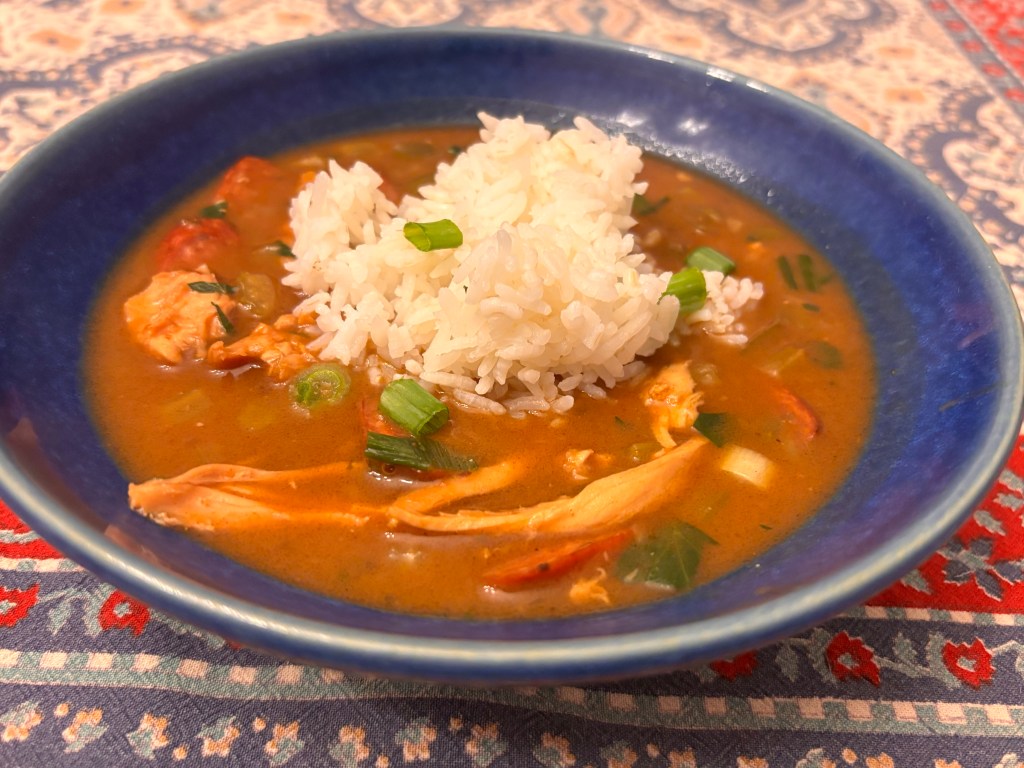
We made roasted buttermilk-marinated turkey breast (bone-in) for Thanksgiving. We used 1.5 lb hand-shredded leftover turkey for this Chef John recipe: https://www.allrecipes.com/spicy-turkey-gumbo-recipe-8744687.
Our modifications: first, we used 3/4 of a 10 oz box of Aiden’s Chicken Andouille sausage (3 of 4 sausages), which is a slight decrease from the 8 oz called for in the recipe. For the aromatics, we followed the proportions of onion, celery, and green bell pepper in the recipe. For the cayenne, we used 1/8 tsp cayenne powder (ours is extremely hot) and nearly 1/2 tsp Kashmiri (low-heat) red pepper powder.
Second, for the roux, we mixed 1/2 cup avocado oil with 3/4 cup all-purpose flour in an oval Le Creuset terracotta baking dish. Stirring periodically, we roasted at 350 until its color looked like dark caramel (about 75 mins).
Third, we used 2 quarts store-bought no-salt chicken broth, but we simmered the broth with the turkey breast carcass for additional flavor. We let that simmer for 20 mins while the sausage was browning.
Fourth, after adding the shredded turkey, we tasted the gumbo and found it underseasoned. We added 1/2 tsp Cajun seasoning (ours was from The Spice Shop in London).
Finally, we found the gumbo was ready 20 mins after adding the turkey. We folded in the chopped scallions and minced parsley during the last 5 mins of simmering.
We served the gumbo with 1/4 cup cooked white long grain rice and a garnish of chopped raw scallions. (Nov. 2026)
Note: We learned that Cajun gumbo tends to use a darker roux and is thinner, without tomatoes. https://www.tastingtable.com/1774785/creole-vs-cajun-gumbo-difference/
-
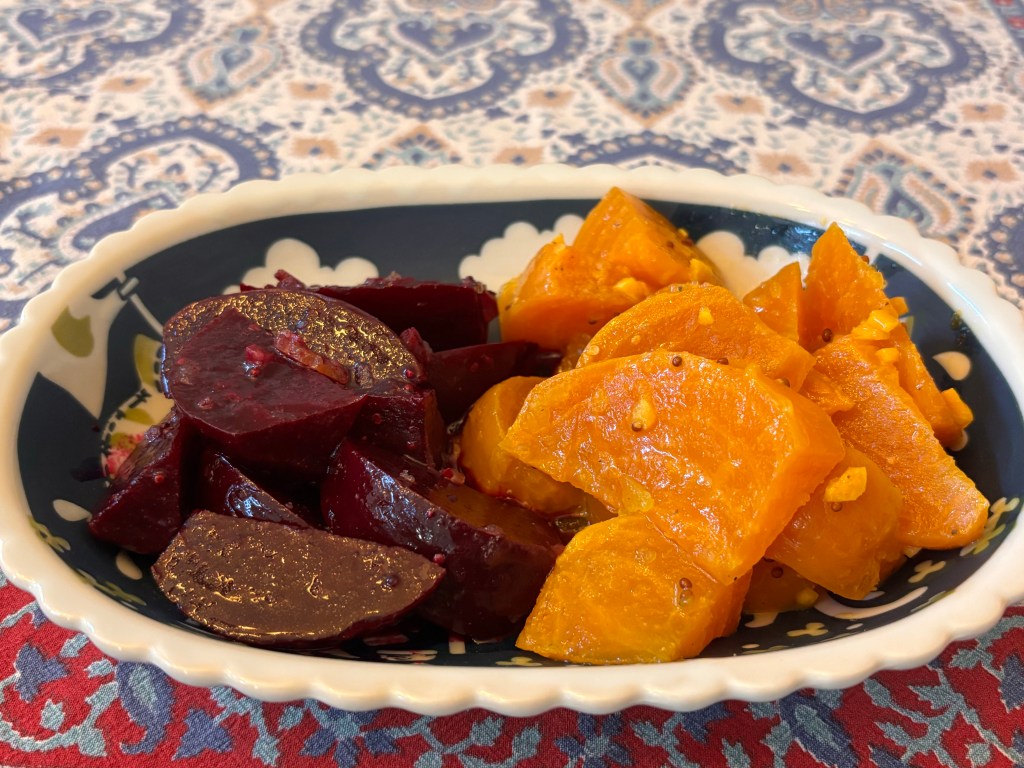
For Thanksgiving, we roasted golden beets and red beets, cut them into wedges, and then marinated them in a simple lemon and mustard vinaigrette overnight.
We roasted the beets at 425 following this recipe: https://cookingadventures.blog/2015/03/25/roasted-beets-this-is-one-of-my-favorite/
To keep the colors from bleeding, we tossed and marinated the golden beets in a separate container from the red beets.
Here is the original marinade for four beets total (2 golden, 2 red): we whisked together 1 Tbsp apple cider vinegar, the juice of one medium lemon (about ¼ cup, or 4 Tbsp), 2 tsp sugar, 2 tsp Dijon mustard (or 1 tsp Dijon mustard + 1 tsp whole grain mustard), ½ tsp salt, ¼ tsp black pepper, and 2 minced garlic cloves. We next whisked in 3 Tbsp olive oil before tossing the half the vinaigrette with the golden beets and the remaining half of the vinaigrette with the red beets. We stored the golden beets and red beets in separate containers to marinate overnight. (See Note below.)
For this particular Thanksgiving, we roasted 9 golden beets and 9 red beets. We preheated the oven to 425, individually wrapped in foil. And then spread along 3 levels of the oven. It took us 90 mins to ensure the 18 beets were fully roasted and tender. For the marinade, we roughly increased the vinaigrette to match that proportion (except as noted): roughly 1/4 cup apple cider vinegar, juice from 5 lemons (about 1.5 cups), 2 Tbsp mustard (1 Tbsp Dijon + 1 Tbsp Maille whole grain mustard), salt to taste (about 1 tsp salt), black pepper to taste (about 1/2 tsp), and 9 minced garlic cloves. I initially was concerned this vinaigrette would be overpowered with garlic, but perhaps the acidity from the apple cider vinegar and lemon juice mellowed out the garlic’s sharpness!overnight. (Nov. 2026)
Note: the vinaigrette is loosely based on this recipe: https://www.myrecipes.com/recipe/beets-with-dill-walnuts.
-
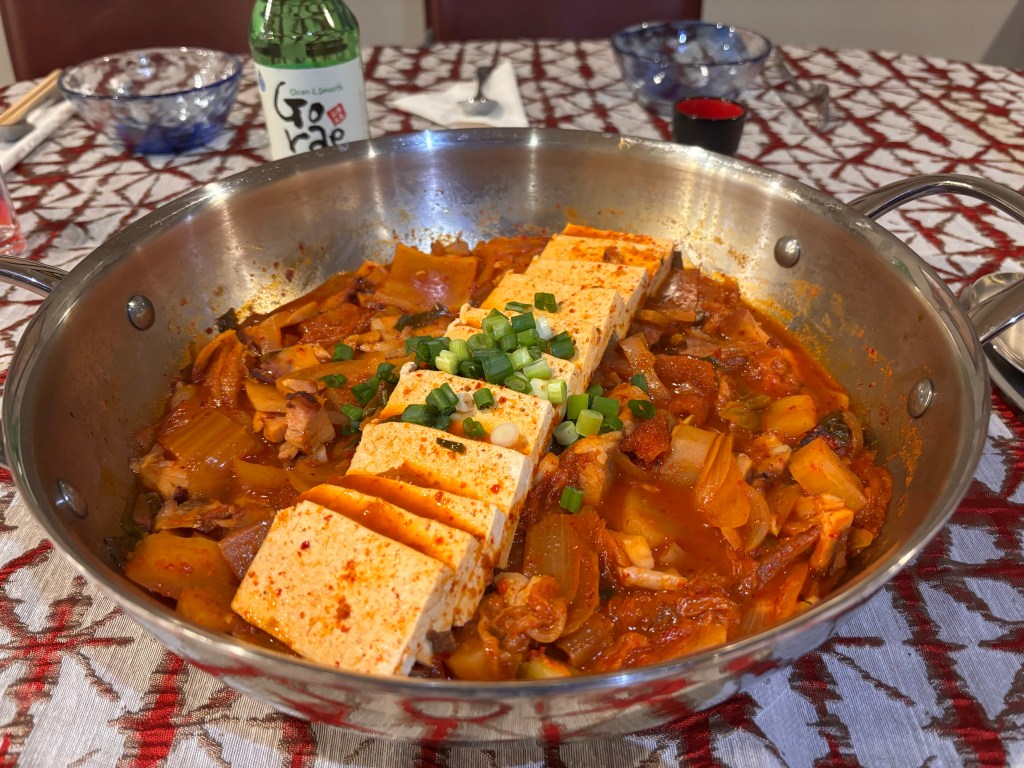
We recently had a delicious kimchi jjigae at one of our favorite Korean restaurants, Maru. We decided to try this recipe by Maangchi: https://www.maangchi.com/recipe/kimchi-jjigae. The video in the recipe was particularly helpful to demonstrate technique, such when to let the stew vigorously boil at medium-high heat.
Our modifications: first, we made the anchovy, daikon, kombu, and scallion head stock per the instructions. We still had some daikon leftover, so we added it to the stew later.
Second, for the kimchi we used 3/4 lb aged cabbage kimchi (Bibigo brand) and 1/4 lb radish kimchi (Jongga brand), each cut into bite-sized pieces. We added 1/4 cup kimchi liquid.
Third, in addition to the sliced onion, we added 1/2 lb fully cooked crispy skin pork (leftovers from a local Cantonese restaurant)—cut into bite-sized pieces—and the remaining daikon (about 1 cup, peeled and thinly sliced along the vertical). We added 2 cups of strained anchovy broth, and we set aside the remaining 1/2 cup for future use (see Note below).
Fourth, we omitted the 1 tsp salt. Instead, after cooking the stew for 10 mins, we added 1 tsp fish sauce to the kimchi stew, stirring it in before we placed the sliced tofu overtop and then cooked for an additional 15 mins. Other than that, we followed the recipe.
This was delicious, and we enjoyed it a lot. It was the closest to restaurant-level kimchi jjigae we have made at home. (Nov. 2026)
Note: We have about half the stew left, but only 3 out of 12 slices of tofu. This is because the mild-tasting tofu offset the spiciness of the jjigae (akin to Indian raita balancing out a spicy biryani). When we reheat the jjigae, we may add 2 Tbsp to 1/4 cup (4 Tbsp) of the anchovy broth to the stew, then add supplement with more slices of new (uncooked) tofu and reheat, covered on medium heat, for 10-15 mins.
-
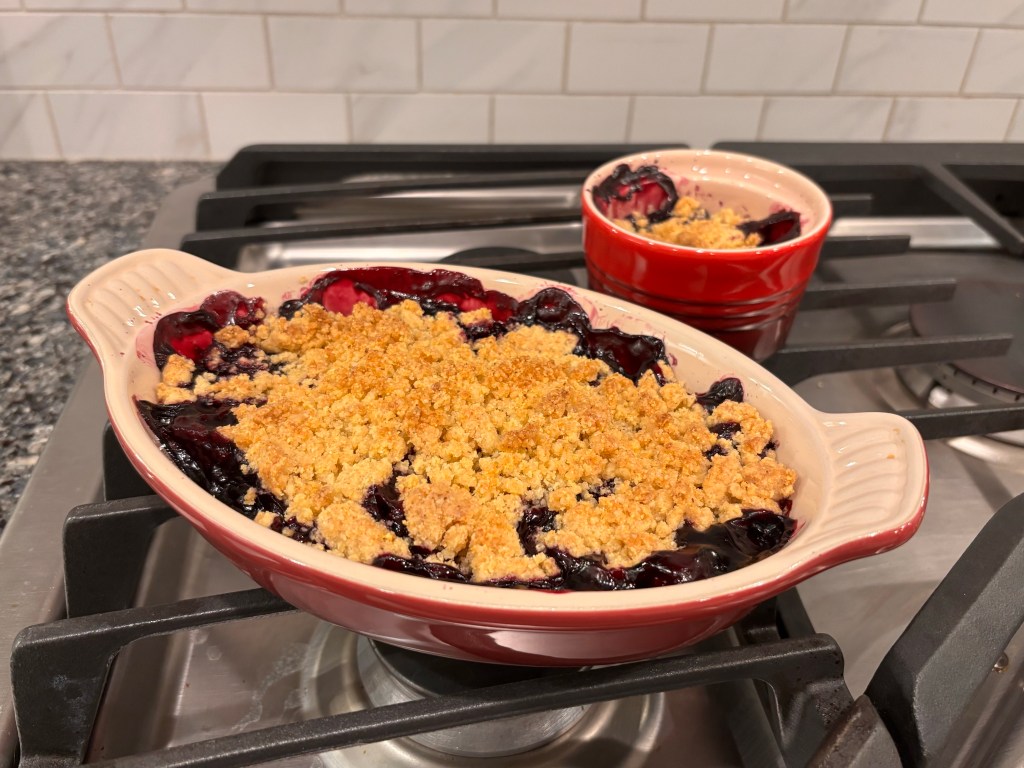
This is the first recipe we are trying from the Baking for Two cookbook by America’s Test Kitchen. We did not have large enough ramekins, so we used a combo of a 14-36 (14” or 36 cm) Le Creuset oval terracotta baking dish and one 3 3/4” diameter ramekin. We buttered the inside of each vessel and preheated the oven to 375.
For the filling: combine 2 cups blueberries, 1/4 cup white sugar (we used citrus zest-infused sugar), 1 1/2 tsp (i.e., 1/2 Tbsp) cornstarch, and a pinch of salt. (See Note below.) Distribute the blueberry mixture into the baking dish and ramekin.
For the topping: combine 1/2 cup all-purpose flour, 1/3 cup fine (not stone-ground) cornmeal, 1/4 cup light brown sugar, 1/4 tsp vanilla extract, and a pinch of salt. Once well-mixed, fold in 4 Tbsp melted unsalted butter until the mixture has a sandy texture. Using clean hands, sprinkle the topping over the blueberries.
Place the baking dish and ramekin on foil-lined sheets. Bake in the 375 degree oven on the top shelf for 30 mins, rotating halfway through baking. (Nov. 2026)
Recipe from America’s Test Kitchen, Baking for Two (2025), available for sale here: https://shop.americastestkitchen.com/baking-for-two.html.
Note: The next time, we will add 1 Tbsp freshly squeezed lemon juice to the blueberry mixture for balance.
-
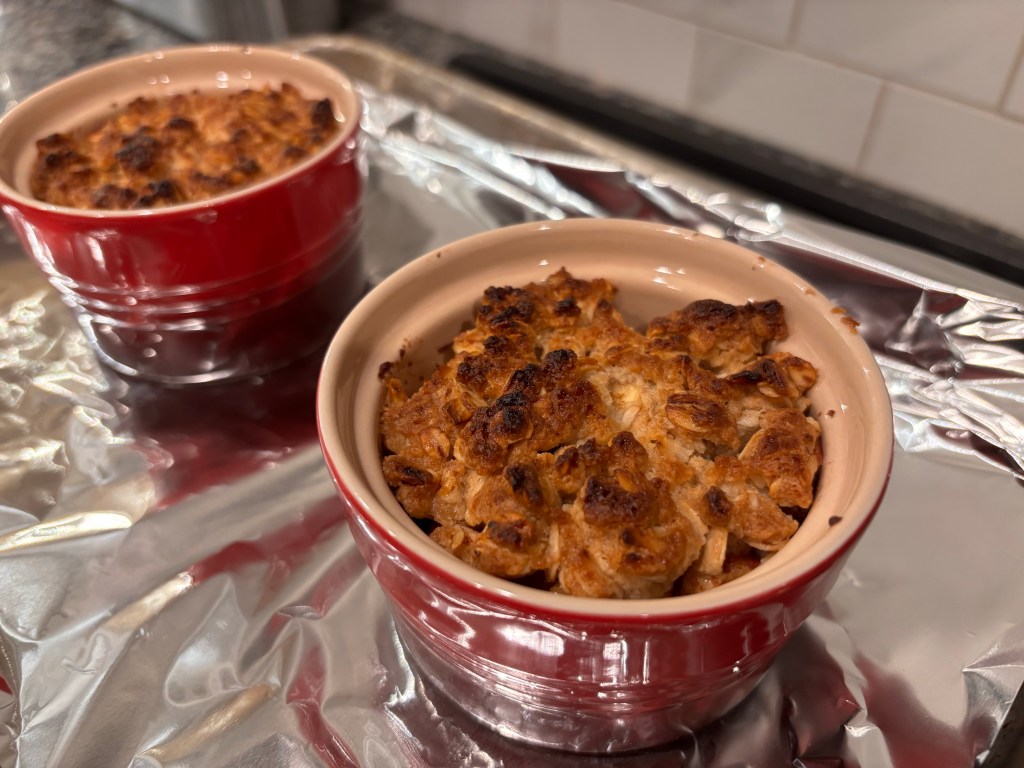
We had a craving for apple crisp. We decided to try this recipe: https://kathleenscravings.com/single-serve-apple-crisp/. We enjoyed this a lot and may try more of these smaller batch desserts (see Note below).
Our modifications: first, we used two ramekins that were 3 3/4” in diameter. We also preheated the oven to 350.
Second, we used a medium Cosmic Crisp apple, quartered, cored, and partially peeled. Then we cut the apple quarters into bite-sized pieces (3 slices along the axis, then 3-4 across the axis).
Third, we followed the recipe, including the ingredient proportions (see Note 2 below). We filled each ramekin about 2/3 full with the seasoned, chopped apple before crumbling the oat mixture overtop.
We placed the two ramekins on a foil-lined quarter sheet on the top rack of her oven. We baked the crisp at 350 for 35 mins, then changed to broil to brown the top of the crisp. (Nov. 2026)
Note: This recipe is from a cooking blog dedicated to single-serve desserts: https://kathleenscravings.com/single-serve-dessert-recipes/.
Note 2: The recipe called for cinnamon, white sugar, and flour to season the apple. The next time, we will add a pinch of nutmeg for depth.
-
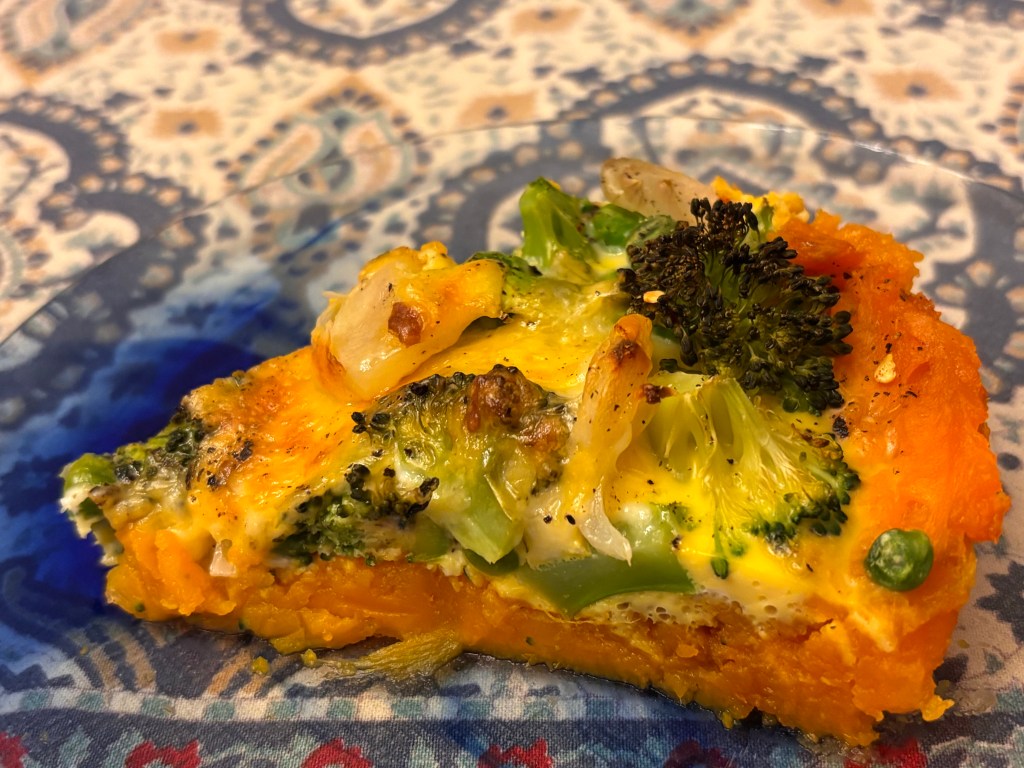
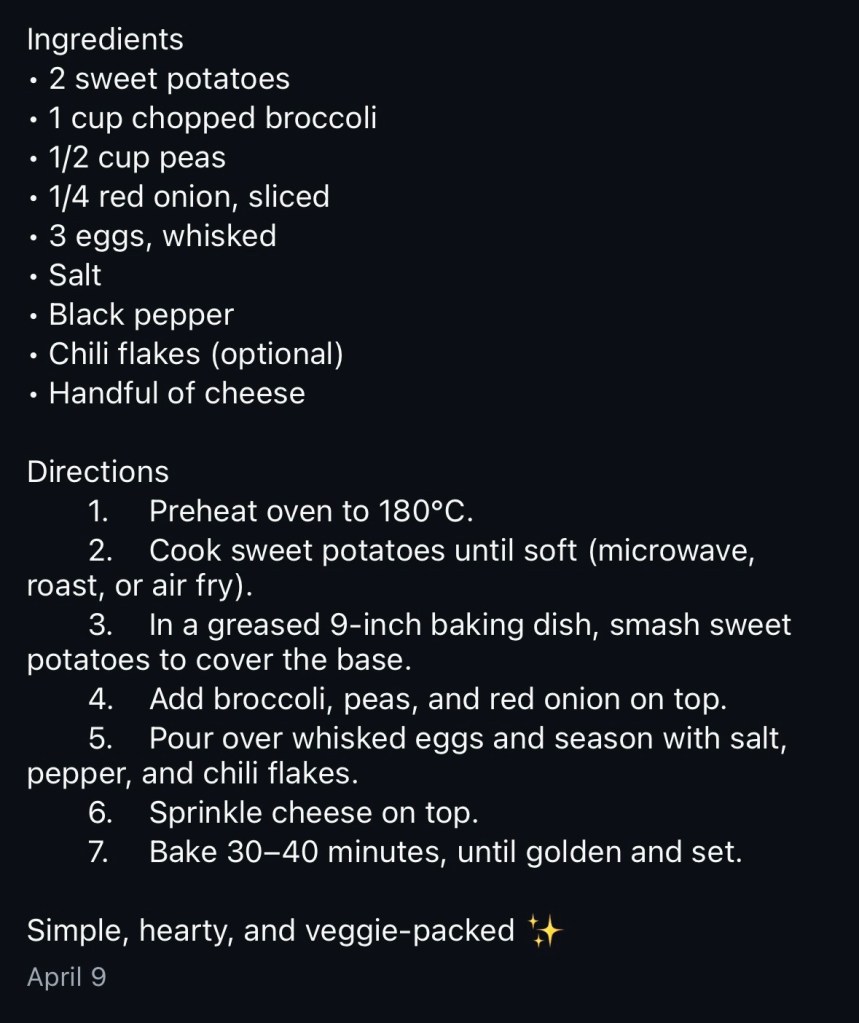
We tried this recipe from the Doctor Bowl on Instagram: https://www.instagram.com/p/Dd6SHSPHHhM/?srtk=M2UwanZ1cnR2Yndy. She calls it “sweet potato egg veggie bake.”
Here is the written recipe:
Our modifications: first, we used 2 medium and 1 small orange sweet potato, which we baked (skin on, fork-pierced, drizzled with canola, and wrapped in foil) for 50-55 mins at 425 Fahrenheit. We set aside to cool.
Second, we preheated the oven to 360 F (which is roughly 180 Celsius).
Third, we used a lightly oiled 10” cast iron pan, then smushed the cooked sweet potato (without peel) into the base, pushing the sweet potato against the sides by 1” in height. We lightly sprinkled with salt and a little crushed red pepper. While doing that, we steamed the broccoli mini-florets in the microwave for about 2 mins.
Fourth, we used 1 medium shallot in lieu of a 1/4 red onion. We also rinsed and drained 1/2 cup frozen peas to bring them to room temp. we scattered the broccoli, peas, and shallot over the sweet potato crust.
Fifth, we used 3 large eggs and lightly whisked with 1 Tbsp milk. We tossed in 1 Tbsp shredded cheddar (we used Tillamook triple cheddar blend) before pouring over the veggies. Then, we topped the egg mixture with 2 Tbsp shredded cheddar, then placed the cast iron on the top rack of our oven.
The recipe projected 30-40 mins, but we found the egg mixture fully cooked by 25 mins (our knife came out clean).
We enjoyed this recipe and found it hearty and satisfying. (Nov. 2026)
-
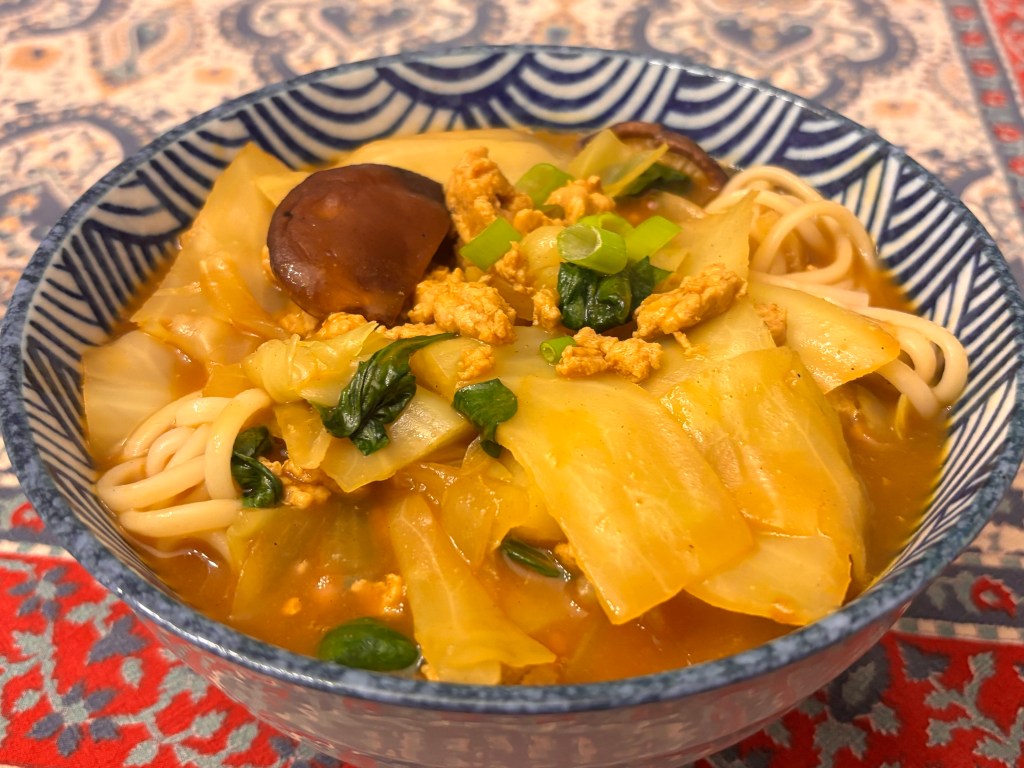
We love the flavors of Japanese curry, and we decided to try this curry udon recipe: https://www.justonecookbook.com/curry-udon/. To make it more plant-forward, we added vegetables that we had on hand (e.g., some green cabbage, one small Yukon potato, a handful of spinach).
First, using a medium nonstick Dutch oven, we doubled the recipe as follows: 1 medium onion (sliced along the axis), 1 Tbsp microplaned ginger (which we added), which we sauteed in 2 Tbsp neutral oil; 1/2 lb minced chicken, 1 small Yukon potato (peeled and cubed), and 1/4 head green cabbage (cut into 2 x 4” slices); 6 cups dashi broth (see recipe below); 4 cubes S&B curry cubes (1 sealed package, which is half a 7.8 oz box); 2 oz baby spinach; 1 Tbsp + 1 tsp soy sauce; and finally, a few minced scallion greens (about 2 Tbsp) and the reconstituted shiitakes as garnish.
Second, we learned a useful tip from this recipe. Using a large ladle of broth, we dissolved a cube of Japanese curry with chopsticks in a ladle of hot broth. We did this with each of four cubes, one at a time.
Third, we made 2 servings of udon. To serve, we placed the udon in bowls and ladled the curry broth overtop. We enjoyed the contrasting textures of minced chicken, potato chunks, tender cabbage, and baby spinach.
Dashi broth recipe: in a separate smaller pot, we combined 5 inches kombu, 2 dried shiitake mushrooms, and 6 dried anchovies (cleaned and gutted) with 6 cups water. We brought this to a boil, reduced to simmer, and simmered on low for 10 mins. After removing all solids, the broth was ready to use.
-
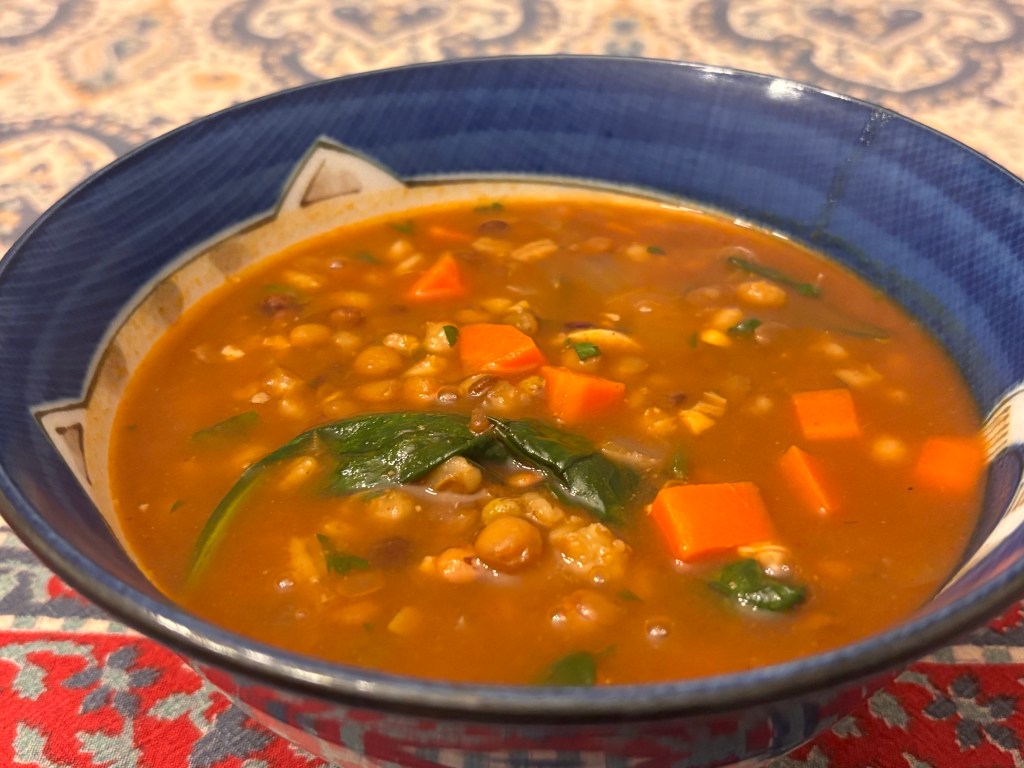
We tried this recipe for a plant-forward soup: https://www.bowlofdelicious.com/lentil-barley-soup/.
Our modifications: first, for the lentils we used 1/2 cup each brown lentils and French puy (gray) lentils. We also used 1/2 cup pearl barley (not quick-cook barley). We soaked the lentils and barley for 30 mins, then drained and set aside.
Second, we generally followed the recipe, but at the end of cooking, we found the soup too viscous. We added 1 additional cup of unsalted broth, for a total of 7 cups broth (we used 4 cups chicken broth, 3 cups beef broth).
Third, at the end of cooking we folded in 3 oz baby spinach (whole, not chopped), juice from 2/3 of a lemon, and 1/4 cup each chopped fresh parsley and fresh cilantro. We found the soup underseasoned, so we added 1/4 cup shredded parmesan, a few dashes (about 1/2 tsp) Worcestershire sauce, 1 tsp aged red wine vinegar, 1/4 tsp sugar, and 1.5 tsp kosher salt.
The next time, we will add 2 parmesan rinds to the broth at the same time we add the uncooked lentils and barley (before simmering for 40 mins). (Oct. 2026)
-
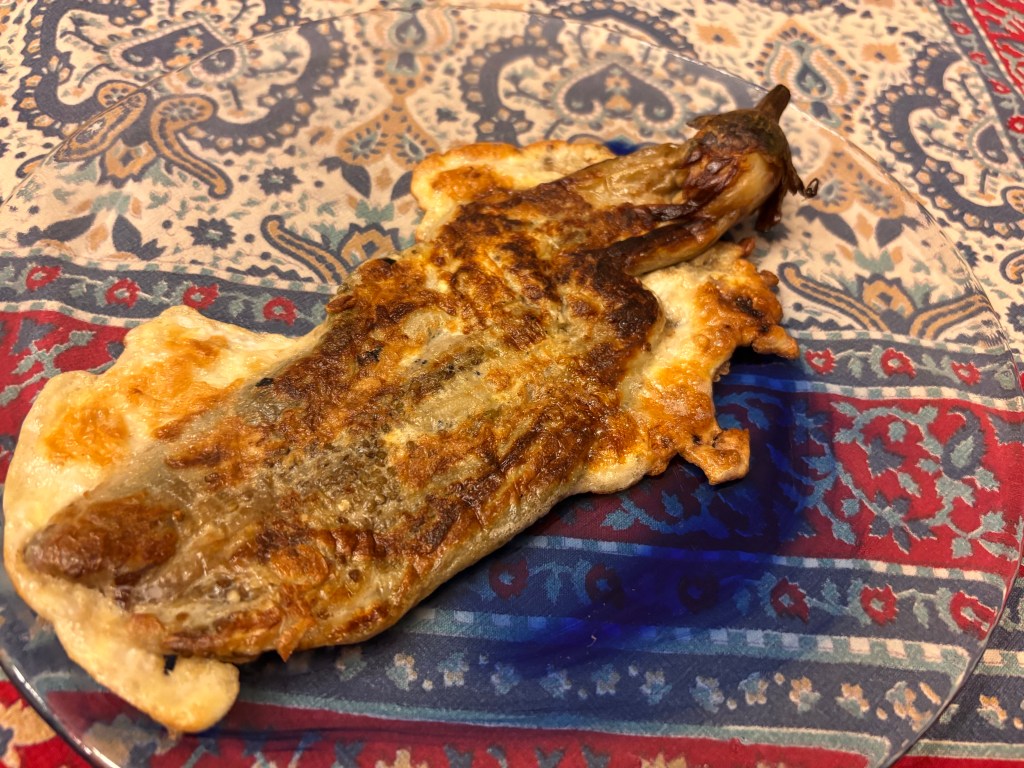
We have been intrigued by this Filipino recipe and tried it with Chinese eggplant: https://panlasangpinoy.com/filipino-vegetable-food-eggplant-omelet-tortang-talong-recipe/.
Our modifications: first, we made only one eggplant (a quarter of the recipe). We grilled the Chinese eggplant directly on our gas burner on medium heat. We charred it until the skin turned brown and the flesh appeared to soften (about 10 mins), but the stem in particular was undercooked. The next time, we will make an effort to grill it more evenly throughout the entirety of the eggplant.
Second, we scrambled one large egg in a medium mixing bowl. The next time, we will place the scrambled egg in a shallow ceramic bowl while dipping in the fanned-out eggplant. We followed the rest of the recipe. (Oct. 2026)
We served this with Filipino sour soup: https://cookingadventures.blog/2025/10/16/filipino-sour-soup-with-minced-pork-and-vegetables-sinigang-na-baboy/.
-
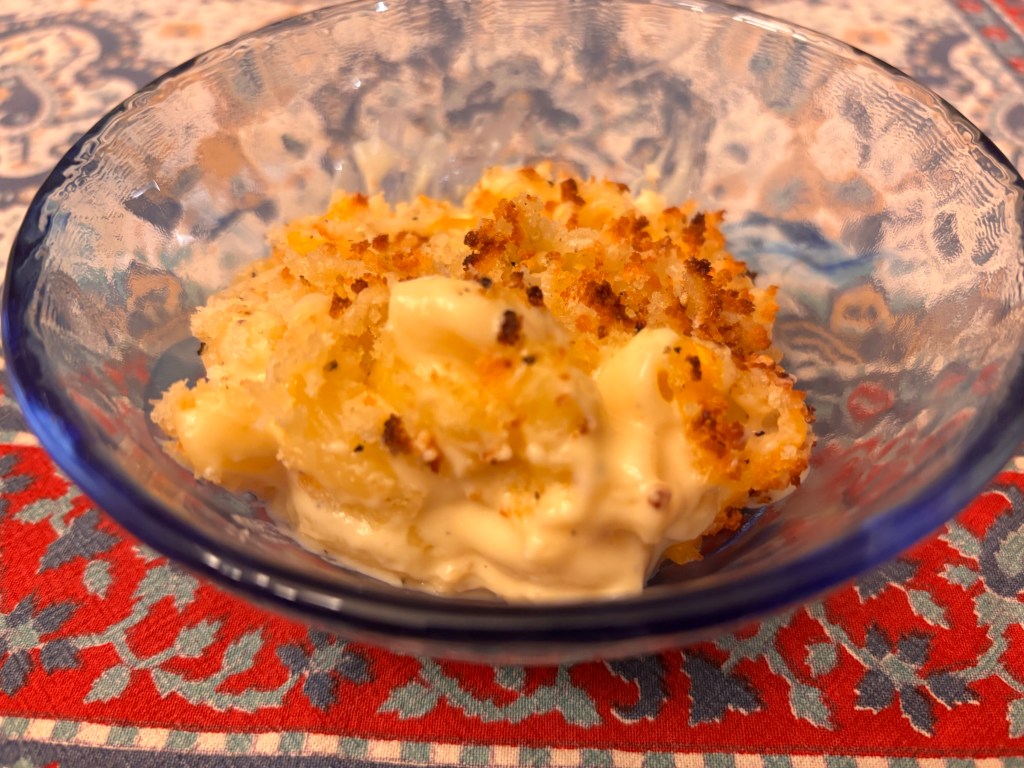
My husband loves mac and cheese, and we decided to try this recipe: https://cooking.nytimes.com/recipes/791299472-creamy-mac-and-cheese-with-buttered-crumbs?unlocked_article_code=1.G1E.ourk.neG1O0njXeTE&smid=ck-recipe-iOS-share
Our modifications: first, we halved the recipe as follows: for the main body, 12 oz (minus 1/4 cup, set aside) Trader Joe’s Ooey Gooey Cheese Blend (https://www.traderjoes.com/home/products.html), which is a combo of cheddar, gruyere, and havarti (see note below); 2 Tbsp unsalted butter, 3/4 tsp dry mustard powder, 2 Tbsp flour, 2 cups milk, 1/2 lb (8 oz) large elbow pasta, and 1/4 tsp freshly grated whole nutmeg. We used a splash of hot pasta water. We placed the contents in an 8×8” buttered baking dish.
Second, for the topping, 1/2 cup panko, 1 Tbsp melted butter, 1/8 tsp each salt and black pepper, and 1/4 cup of the set-aside Trader Joe’s Ooey Gooey.
Third, we found that the mac and cheese cooled too quickly. We broiled the casserole at the broiler setting on Low. But the main dish was not warm, so we then heated the entire casserole at 350 for 10 mins. (Oct. 2026)
We served this dish with this salad: https://cookingadventures.blog/2015/03/25/pear-avocado-and-spinach-salad-i-learned-this/ (we used honeycrisp apple instead of pear).
Note: The next time, we may hand-shred an 8 oz block of cheddar and a 6 oz block of gruyere, for a total of 14 oz shredded cheese.
-
Subscribe
Subscribed
Have a WordPress.com account? Log in now.

